Gloves are the gear riders care least about and pay for fastest. The hands hit first in almost every off, they sit directly in the wind, and they decide whether you can still work the throttle and the brake lever after three hours in cold rain. Nothing else on the bike fails this completely when you choose the wrong one.
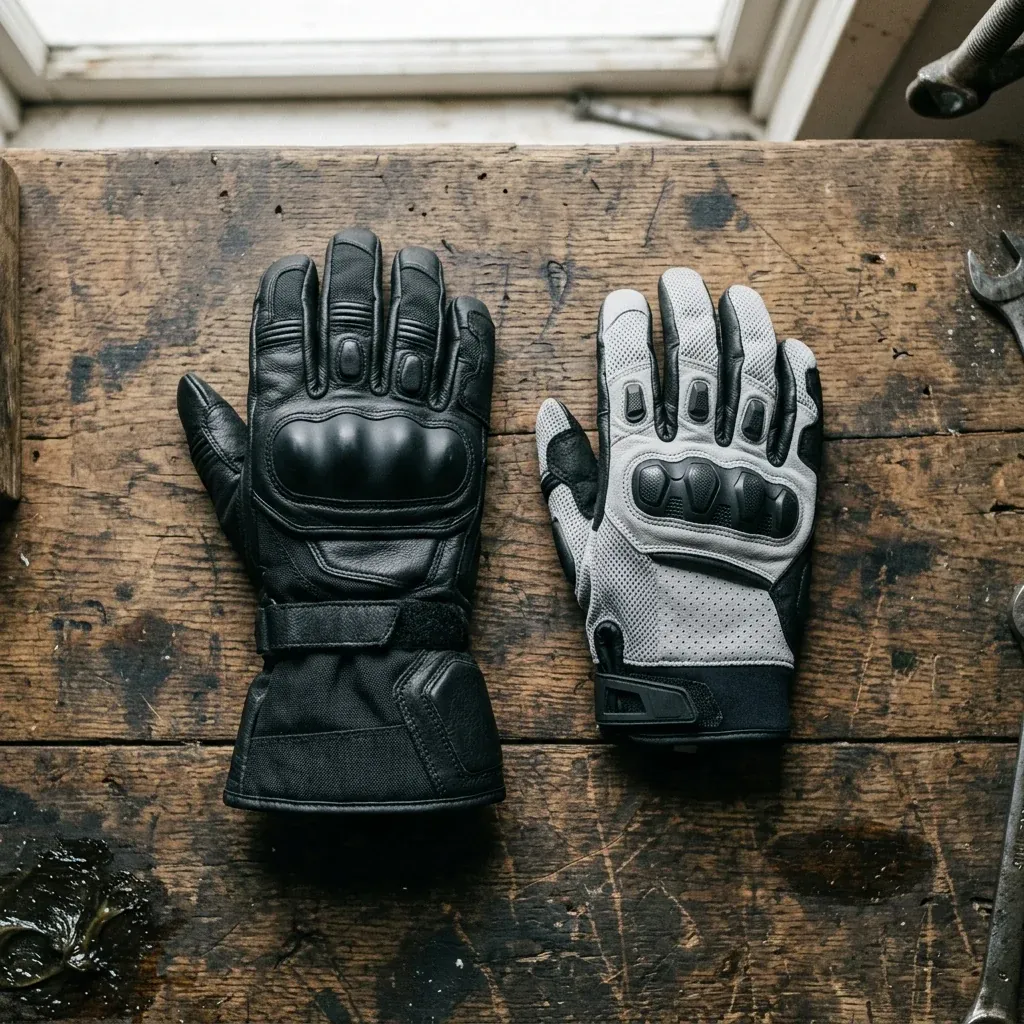
Updated for the 2025–2026 season. This best adventure motorcycle gloves 2026 guide ranks seven gloves by the seasons and use cases they actually cover — hot summer, cold and wet, mid-season all-rounder, off-road, budget. Every recommendation is tied to a real ASIN on Amazon so you can check what is in stock in your size. No sponsored placements, no “industry favourites” we have never put on a hand. Riders looking at the late-2025 closeouts or the 2026 model-year refresh both end up with the same shortlist.
One glove will not cover every condition you will ride in. Most adventure riders end up running two pairs — a vented summer glove plus a waterproof or cold-weather glove — and swap at the start of the day based on the forecast, not the calendar.
Alpinestars Andes V3 Drystar gloves
One pair that covers four seasons — Drystar waterproofing, a goat-leather palm and sane money.
Check Andes V3 Drystar on Amazon →Quick Pick by Season and Use
A short summary for riders who do not want to scroll the whole guide:
- One glove, four seasons, sane money — Alpinestars Andes V3 Drystar.
- Cold and wet, premium budget — Klim Badlands GTX Long.
- Hot and dry summer touring — Rev’It Sand 4.
- Warm but rainy / unpredictable — Rev’It Sand 4 H2O.
- Hot weather on a budget, short cuff — Alpinestars SMX-1 Air V2.
- Off-road and dual-sport — Klim Dakar or Dakar Pro.
- First glove or backup pair — Kemimoto Hard-Knuckle.
Read past the table for the why behind each one.
At-a-Glance Comparison
| Glove | Season / Use | Cuff | Waterproof? | Material | Best For | Price |
|---|---|---|---|---|---|---|
| Alpinestars Andes V3 Drystar | All-season ADV | Gauntlet | Yes — Drystar | Goat leather + textile | One pair, four seasons, value | Check price → |
| Klim Badlands GTX Long | Cold & wet 4-season | Long gauntlet | Yes — GORE-TEX | Leather + textile + Thinsulate | Premium cold-wet ADV | Check price → |
| Rev’It Sand 4 | Hot/dry summer | Short | No | Abrasion mesh + leather palm | Maximum airflow summer | Check price → |
| Rev’It Sand 4 H2O | Warm & wet 3-season | Short-medium | Yes — hydratex | Mesh + TPU + leather palm | Rainy spring/autumn | Check price → |
| Alpinestars SMX-1 Air V2 | Hot-weather sport-tour | Short | No | Full-grain leather + 3D mesh | Best value summer glove | Check price → |
| Klim Dakar / Dakar Pro | Off-road & dual-sport | Short | No | Textile (Dakar) / goat leather (Pro) | Dirt-first riders | Check price → |
| Kemimoto Hard-Knuckle | Beginner / budget / backup | Short | No | Synthetic + TPU knuckle | First glove or backup pair | Check price → |
Price bands move week to week on Amazon, especially across sizes and colours — check the current price for your specific size before ordering.
The Seven Adventure Gloves Worth Buying in 2026
A note on sizing before the list. Gloves do not run true to size between brands. Most adventure gloves come up slightly small from the box, and insulated ones with a thermal liner are tighter again. Measure your hand at the widest point across the knuckles, compare against the manufacturer’s chart, and if the chart puts you between sizes, go up — especially for a four-season glove you will be wearing with a liner.
1. Alpinestars Andes V3 Drystar — Best All-Season / Best Value Waterproof
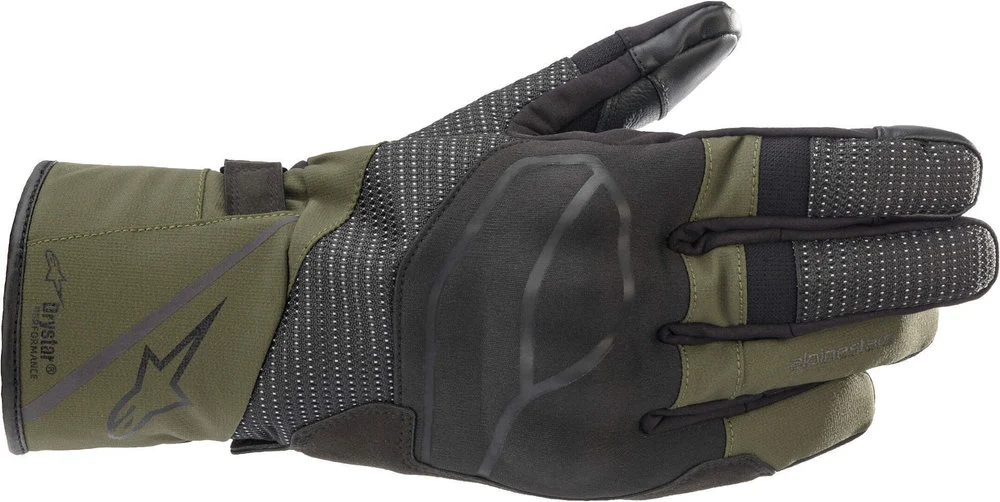
The Andes V3 is the glove most adventure riders should be running if they want one pair and one pair only. Goat leather palm, textile and stretch back of hand, Alpinestars’ Drystar membrane (waterproof and breathable enough to actually work), a hard polymer knuckle, reinforced palm slider, touchscreen-compatible fingertips, reflective panel, and CE EN 13594 Level 1 certification. The women’s Stella version is built on a proper female last instead of being a shrunken men’s glove.
In practice it does what almost no other affordable glove manages: a single pair that handles 8 °C and rain in the morning and 25 °C and sun in the afternoon without ever becoming the thing you complain about. The waterproofing genuinely keeps water out for the entire day, and the membrane breathes well enough that your hands are not soaking on the inside instead.
Best for: One-glove riders, mixed-climate Europe, anyone who refuses to swap gloves at every petrol stop. Weak point: Not as cool as a pure mesh summer glove in genuine heat. Runs slightly small — size up one if you wear a liner.
Check Alpinestars Andes V3 Drystar on Amazon →
For specific sizes (men) and the women’s Stella version:
Shop Andes V3 (men, M) → Shop Andes V3 (men, L) → Shop Andes V3 (men, XL) → Shop Stella Andes V3 (women’s, M) → Shop Stella Andes V3 (women’s, XL) →
If your sizing is between M and L on the chart, go L for the men’s and L for the Stella too — the fleece backing on the inner cuff takes up real space.
2. Klim Badlands GTX Long — Best Premium for Cold & Wet (4-Season)
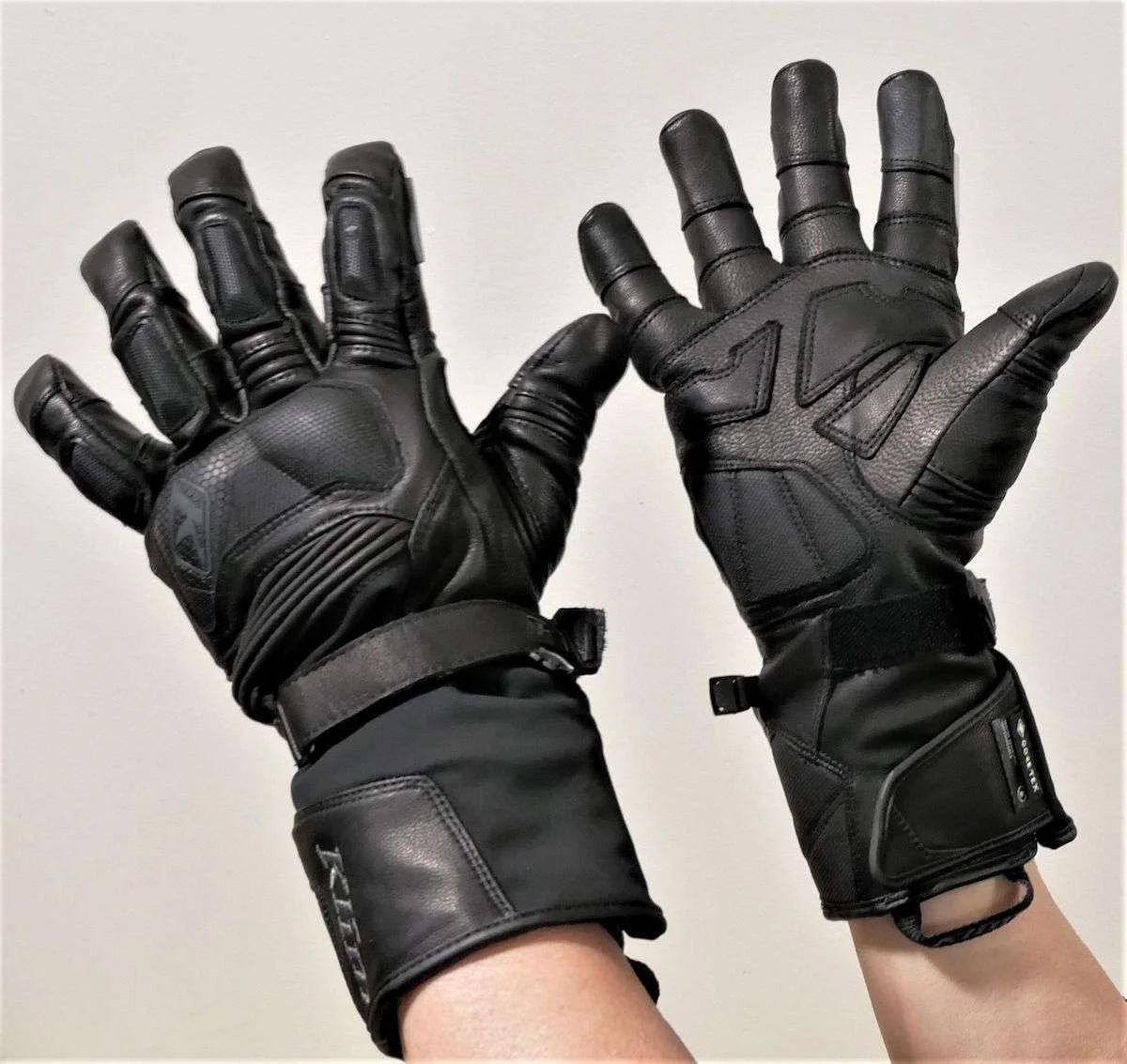
The Badlands GTX Long is the glove riders eventually buy after their third “I should have brought warmer gloves” trip. GORE-TEX with the GORE GRIP construction so the membrane sits directly against the inner surface instead of floating loose, 60 g of 3M Thinsulate over the back of the hand, polycarbonate knuckle armour over Poron XRD foam, a neoprene wrist seal that actually keeps water out of the cuff, and visor wipers on both index fingers. Expect to pay around the $270 mark depending on the colour and size.
The current generation tightened up the dexterity that always nagged on premium GORE-TEX gloves and added a “set-and-forget” wrist closure that does not need re-tensioning every time you take the glove off. It is heavy, hot in any weather above 20 °C, and overkill for casual riding — and a transformation of every cold-wet day on the bike.
Best for: Long ADV trips through changeable weather, cold-region riders, anyone who has been wet and miserable on a bike before. Weak point: Expensive, bulky, too hot for proper summer riding.
If you are running the matching jacket, our Klim Badlands Pro jacket review covers how the layered GORE-TEX setup works as a system across the same kind of weather.
Check Klim Badlands GTX Long on Amazon → Shop Klim Badlands GTX Long (S) → Shop Klim Badlands GTX Long (XL) →
Mid sizes are stocked across multiple Klim dealers — if your size is missing from the main listing, the parent page surfaces what is available.
3. Rev’It Sand 4 — Best for Hot/Dry Summer (Maximum Airflow)

The Sand 4 is what hot-weather adventure gloves look like in 2026. Abrasion-resistant stretch mesh across the entire back of the hand and the fingers, a TPR knuckle shaped to channel air into the glove rather than just sit on top of it, TPR sliders on the palm, finger and thumb tips, Rev’It’s Connect touchscreen system on the index and thumb, and FMVSS 218 / DOT certification. It is the matching glove to the rest of the Sand 4 outfit.
On a Mediterranean summer day at highway speed, the airflow is genuinely cooling — not just “less hot than a winter glove.” Off the bike at a fuel stop your hands actually dry instead of marinating. The trade is exactly what you would expect: in a real downpour the Sand 4 wets through completely in twenty minutes, and the lifespan on the mesh is shorter than on a leather glove that does not have to flex around woven fabric.
Best for: Mediterranean summer touring, hot-climate riders, anyone whose problem is heat not rain. Weak point: Soaks in real rain, mesh durability is honest rather than exceptional, no insulation for anything under 18 °C.
Check Rev’It Sand 4 on Amazon → Shop Sand 4 (Light Grey/Black, S) → Shop Sand 4 (Light Grey/Black, M) → Shop Sand 4 (Black, L) → Shop Sand 4 (Black, 2XL) →
The light grey/black is meaningfully cooler under direct sun than the all-black — pick by the climate you actually ride in.
4. Rev’It Sand 4 H2O — Best Waterproof Warm-Weather (3-Season)
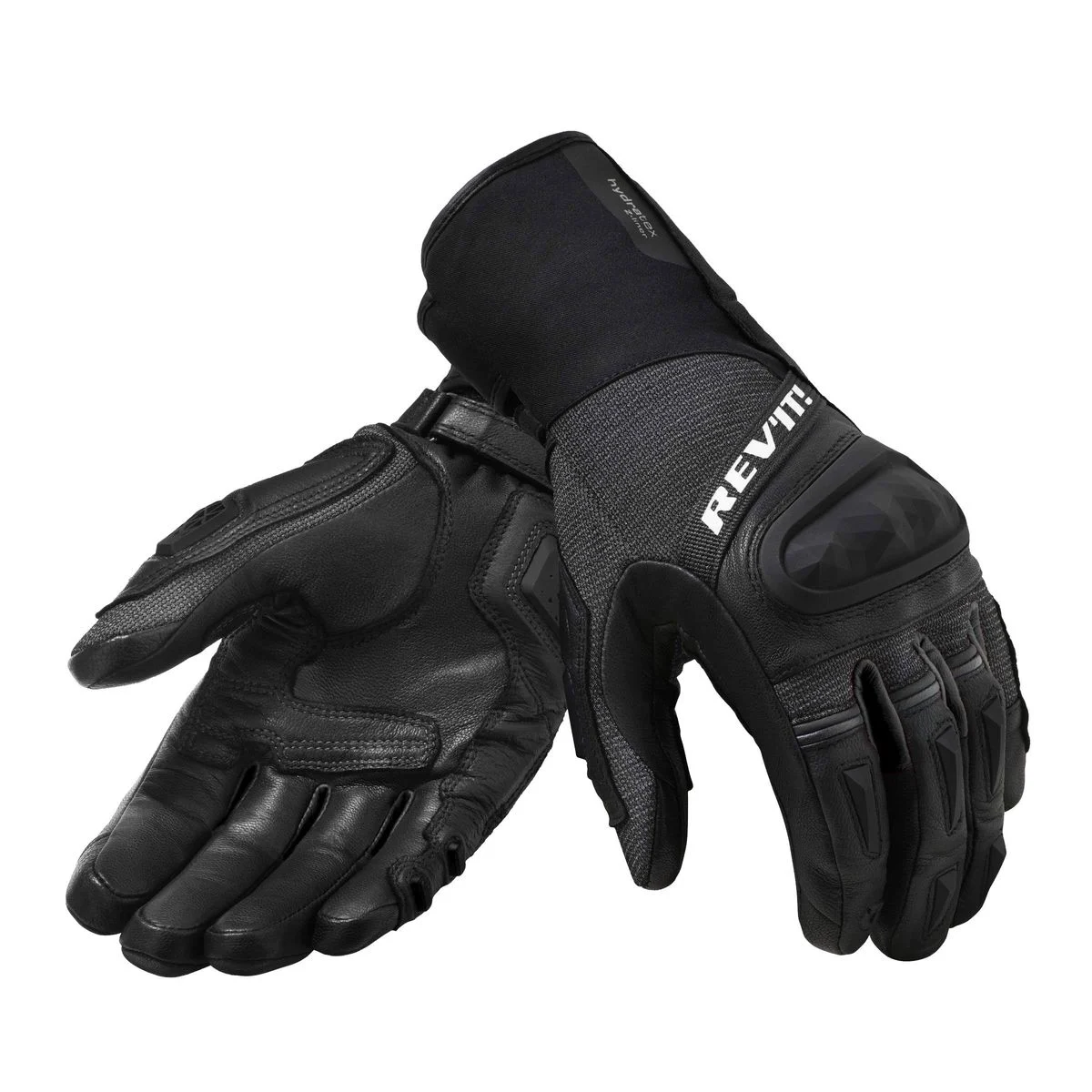
The H2O is the version that handles the spring tour where it should be 20 °C and sunny and is actually 14 °C and raining sideways. Same Sand 4 chassis with a hydratex Z-liner waterproof membrane and McFit construction so the membrane sits directly against the outer shell instead of floating, plus a TPU hard knuckle and the same finger, thumb and palm TPR sliders as the standard Sand 4.
Compared to the dry Sand 4 you lose maybe 30% of the airflow and you cannot tell from the outside — the dexterity stays at the level a real adventure glove needs, and the tactile feel on the controls is closer to a vented glove than to a winter one. It will not keep you warm at 5 °C, but it covers spring, summer and autumn on/off-road in a single glove if you can only carry one pair.
Best for: Unpredictable spring and autumn touring, riders who want one warm-weather glove instead of two. Weak point: Not as cool as the dry Sand 4 in genuine 30 °C heat, not warm enough for proper cold.
Check Rev’It Sand 4 H2O on Amazon → Shop Sand 4 H2O (Black/Red, 2XL) →
Sizing runs identical to the standard Sand 4 — if you have a known size in the dry version, the H2O will fit the same.
5. Alpinestars SMX-1 Air V2 — Best Value Short-Cuff Summer
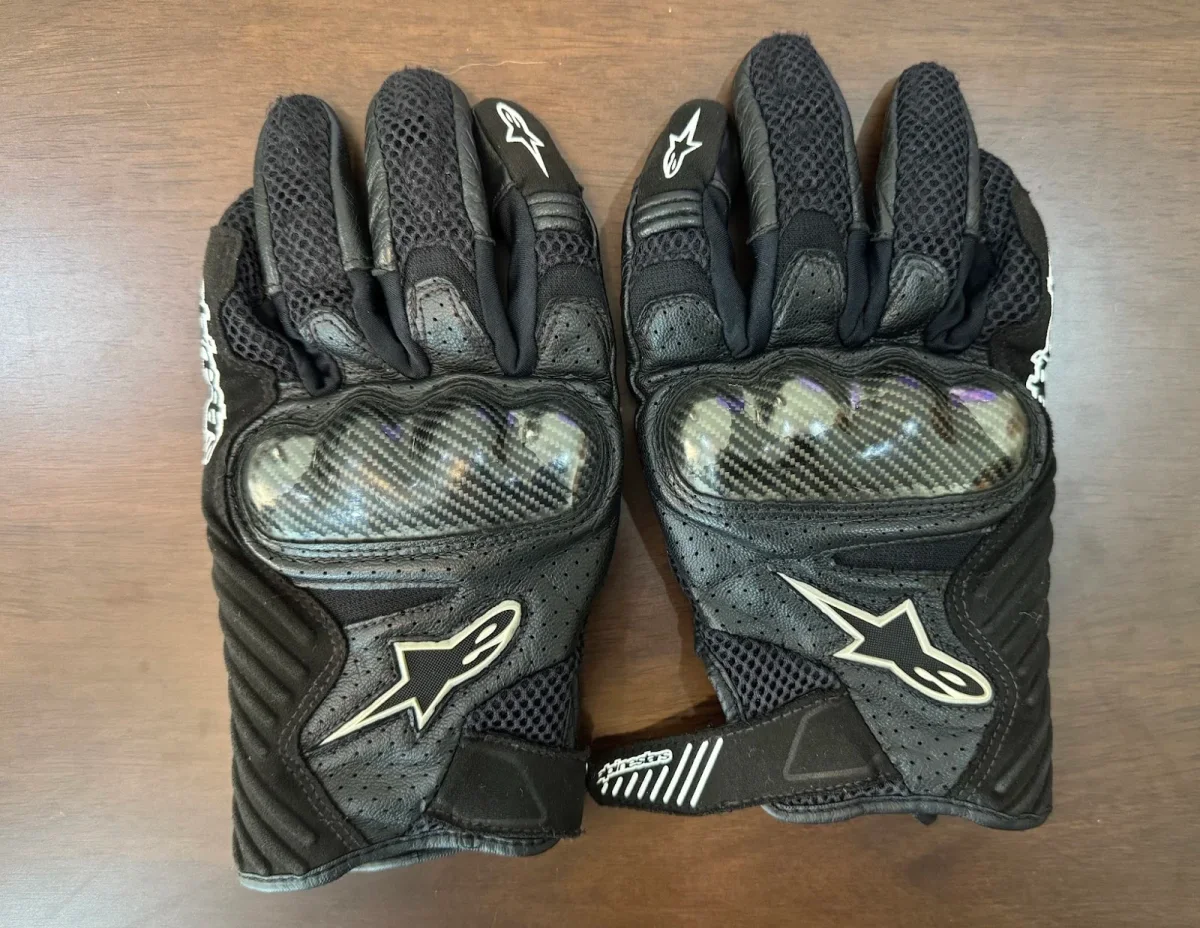
The SMX-1 Air V2 is the glove that punches the hardest for its price. Full-grain leather palm and base structure, 3D air mesh perforated panels across the back of the hand and the fingers, a hard polymer knuckle, pre-curved fit that takes zero break-in, CE certification, touchscreen-compatible fingertip, and a short cuff that slides under any jacket. It is consistently one of Amazon’s best-selling Powersports gloves for a reason — 500+ units a month is unusual for a category this fragmented.
It is not specifically built as an adventure glove — it is a sport-touring glove that happens to be excellent for warm-weather ADV use too. The full-grain leather palm wears better than the cheaper mesh-everywhere alternatives, and the short cuff is a real advantage in summer where a gauntlet just bakes your wrist. The Stella version is the right answer for women riders who do not want a “shrink and pink” treatment of the men’s pattern.
Best for: First-time buyers, second pair for hot summer days, sport-touring riders, women looking for a real Stella fit. Weak point: Short cuff means no rain/cold sealing, not specifically tuned for off-road impact patterns.
Check Alpinestars SMX-1 Air V2 on Amazon → Shop SMX-1 Air V2 (Black/White, S) → Shop SMX-1 Air V2 (Black/Red, L) → Shop Stella SMX-1 Air V2 (women’s) →
For women riders pairing this up with the rest of the kit, our best motorcycles for women 2026 and motorcycle outfit for women guides cover the bike and jacket choices that match the Stella line.
6. Klim Dakar / Dakar Pro — Best Off-Road / Dual-Sport
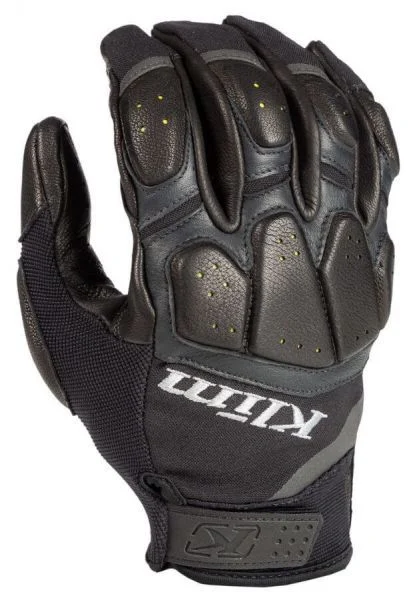
The Klim Dakar family is two gloves that look almost identical and behave very differently. The standard Dakar is a thin textile glove with goat leather palm reinforcement — minimal bulk, exceptional feel on the grips and the levers, designed for serious off-road where you want the bar to talk to you. The Dakar Pro uses a full goat leather construction with more structure on the back of the hand and noticeably better wear on rocky single-track. Both are short cuff, both are warm-weather, both are off-road-first.
What you are buying is the lightest competent ADV glove with no compromises for road comfort. The protection package is honest off-road logic — TPR knuckle, reinforced palm, no plastic plates that would catch on a fall. On the motorway you will feel every gust of wind, and at anything under 15 °C your hands will be cold. That is the trade.
Best for: Dual-sport, hard enduro, long off-road days where dexterity matters more than weather protection. Weak point: No wind sealing, no waterproofing, no insulation. Strictly summer + dirt.
Pair these with proper riding technique — our off-road riding tips for loaded adventure bikes guide covers what the Klim Dakar is actually built to do.
Check Klim Dakar Pro on Amazon → Shop Klim Dakar Pro (M) → Shop Klim Dakar Pro (2X, Cool Gray) → Check Klim Dakar (textile) on Amazon → Shop Klim Dakar textile (M) → Shop Klim Dakar textile (L) →
If you cannot decide between Dakar and Dakar Pro, the Pro is the right answer for anyone who also rides road sections to the trailhead. The textile Dakar is for riders who already drove the bike to the dirt.
7. Kemimoto Hard-Knuckle Touchscreen — Best Budget / Beginner
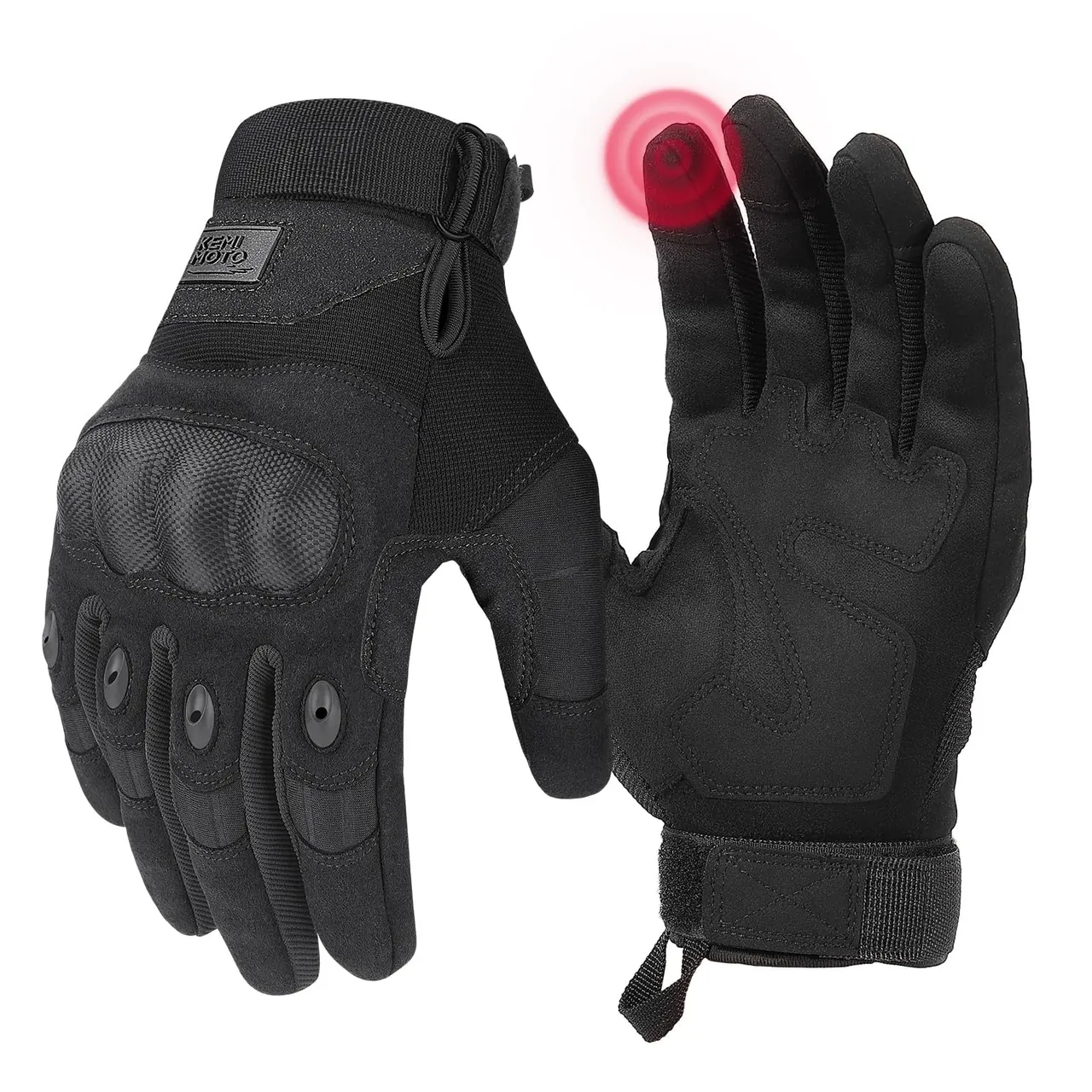
Kemimoto is the value brand riders end up with as a first pair or a backup pair. The hard-knuckle touchscreen model has a real TPU knuckle shell, anti-slip silicone palm padding, conductive thumb and index fingertips, an adjustable wrist closure, and men’s and women’s fitments. It is the glove that costs roughly a fifth of a premium ADV glove and is honest about being a fifth of the glove — usable, comfortable, basic.
What you are getting is entry-level protection at an entry-level price. No CE EN 13594 ADV certification, no premium leather, no waterproof membrane, no slider on the palm worth speaking about. For a new rider doing 5,000 km a year of mixed city and weekend riding, that is enough. For a backup pair to keep in the pannier next to your real gloves, that is plenty. For a 4,000 km adventure tour at speed, it is not the right tool.
Best for: New riders, urban commuting, backup pair in the pannier, riders who refuse to spend premium money on their first glove. Weak point: Not CE ADV-grade, materials and construction are budget-tier, no real waterproofing or insulation, lifespan is shorter than a premium glove.
Check Kemimoto Hard-Knuckle on Amazon → Shop Kemimoto on/off-road touchscreen → Shop Kemimoto dirt-bike silicone-palm →
If you are still putting together your first proper kit, the motorcycle outfit for men guide lays out the rest of the loadout these gloves slot into.
Buyer’s Guide: How to Actually Pick
Cuff Length Is the First Decision
Short-cuff (also called gauntlet-free) gloves slide under the jacket cuff, are easier to take on and off at petrol stops, breathe better in summer, and are the right answer for hot-weather and dual-sport riding. Long-cuff gauntlets sit over the jacket cuff, seal the wind out, keep rain from running down your wrist and into the sleeve, and are what you want for cold, wet or motorway-speed adventure touring. Most riders end up with one of each.
Material: Leather, Textile, or Mixed
Pure leather is the abrasion king and what every premium summer glove still uses on the impact zones. Textile and stretch mesh are lighter and cooler, but the abrasion resistance varies wildly by exact fabric. Most modern adventure gloves combine the two — leather on the palm, knuckle and finger reinforcements, textile across the back of the hand and the fingers for airflow. Look at where each material sits, not just whether the glove has both.
Protection and CE EN 13594
CE EN 13594 is the European standard for motorcycle glove protection. Level 1 is the entry point — many adventure gloves carry it, including the Andes V3 and the Sand 4 family. Level 2 is the higher impact and abrasion tier and is rarer at the price points in this guide. Look for a hard knuckle shell (TPU, polycarbonate or carbon), reinforced finger and thumb sliders, and a palm slider that helps your hand skate across the asphalt instead of grabbing. The Kemimoto sits below this standard — be honest with yourself about where you will use it.
Waterproof Membrane vs Ventilation
A waterproof membrane — GORE-TEX, Drystar or hydratex — keeps water out and adds an inevitable amount of warmth, which is exactly what you want in spring rain and exactly what you do not want in 30 °C July heat. Mesh and stretch panels do the opposite: maximum airflow and minimum protection from anything that falls out of the sky. There is no single glove that does both well, which is why most adventure riders end up carrying two pairs.
Touchscreen Fingertips Are Now Standard
Every glove in this list works with a phone or GPS touchscreen at the index fingertip, most also at the thumb. This is no longer a premium feature — if a 2026 adventure glove cannot work your GPS, do not buy it.
Sizing and Break-In
Snug across the palm, no bunching under the grip, 3-5 mm of clearance at the fingertips. If you are between sizes, go up — especially for an insulated or membrane glove. Leather stretches about 5-10% over the first month and conforms to your hand. Textile gloves change very little after the first ride. If the fingers are tight on day one, they will be tight forever.
The Two-Glove Reality
Almost every rider in this guide ends up running a vented warm-weather glove alongside a waterproof or cold-weather one. The Sand 4 plus Andes V3 covers most of Europe. The SMX-1 Air V2 plus Badlands GTX covers everything but extreme heat. The Klim Dakar plus Andes V3 covers the dual-sport rider who needs road competence too. Pick the pair, not the single glove that has to do everything.
What Riding You Do Changes the Answer
A lot of the glove question is bike-specific. Long-distance adventure riding pushes you toward an all-season membrane glove like the Andes V3 — the same logic that drives the tire picks in our best adventure motorcycle tires 2026 guide. Cold-region riders who push into winter add the Klim Badlands GTX. Hot-climate touring on something like the Royal Enfield Himalayan 450 or a Ténéré matches the Sand 4 or SMX-1 Air V2.
If you are still building the rest of the kit, the best adventure motorcycle boots 2026 and best adventure motorcycle helmets 2026 guides cover the head and feet half of the loadout these gloves complete.
Related Riding and Trip Guides
Gloves are only worth as much as the trip they let you finish. The how to pack a motorcycle for a 2-week camping trip piece covers the loadout that means you can actually carry two pairs of gloves without it being a problem. For where to use them, the Turkey TET route guide and the Trans Euro Trail for beginners write-ups show the kind of mixed conditions that argue for one summer pair and one waterproof pair in the panniers.
The Short Version
If you only need one sentence: ride mostly dry summer, run the Sand 4 or SMX-1 Air V2; want one glove that does almost everything, run the Andes V3 Drystar; ride cold and wet seriously, run the Klim Badlands GTX Long; ride dirt, run the Klim Dakar; new to all of this, start with the Kemimoto and upgrade once you know what you actually need. The wrong glove ends a trip three hours in. The right glove is the one you forget you are wearing.
Disclosure: Some of the links in this article are affiliate links. If you buy gloves through them, we may earn a small commission at no extra cost to you. It helps fund the road trips that make these independent gear comparisons possible — every glove in this guide was selected against real owner feedback, published manufacturer specs, and verified Amazon availability.
Frequently Asked Questions
Are short-cuff adventure motorcycle gloves safe enough?
For city riding, light touring and hot-weather use, a CE-certified short-cuff glove like the Alpinestars SMX-1 Air V2 is genuinely fine. The protection in the palm slider, knuckle shell and finger reinforcements is the same as on many gauntlet gloves. What you lose is wind sealing, rain protection and an inch of wrist coverage. For motorway speeds, cold weather or wet rides, a gauntlet that overlaps the jacket cuff is the better answer. Most adventure riders end up owning one of each rather than picking a single compromise.
Do I need waterproof gloves for adventure riding?
If you ride more than one trip a year that lasts more than two days, yes. Vented mesh gloves like the Rev'It Sand 4 are excellent for hot, dry summer riding, but they soak in twenty minutes of real rain and stay wet for hours. A waterproof membrane glove — Drystar, GORE-TEX or hydratex — keeps your hands warm and dexterous through the kind of weather that ends most badly-equipped trips early. The Andes V3 Drystar and Rev'It Sand 4 H2O are the affordable answers; the Klim Badlands GTX Long is the premium one.
Are budget motorcycle gloves like Kemimoto worth buying?
For commuting, learning, short rides and as a backup pair, the Kemimoto hard-knuckle gloves do the job. You get a real TPU knuckle shell, touchscreen fingertips and basic palm padding for a fraction of premium pricing. What you do not get is CE EN 13594 Level 1 or 2 certification, premium leather, or the abrasion resistance of a serious ADV glove. For high-speed touring or technical off-road, spend more. For a new rider's first set, they are an honest entry point.
How should adventure motorcycle gloves fit?
Snug across the palm and back of hand, with no bunched material under the grip, and roughly 3-5 mm of empty space at the fingertips. Most adventure gloves run slightly small from the box, especially insulated ones — if you wear a glove liner in winter, size up one. Leather gloves stretch around 5-10% over the first month and conform to your hand shape; textile gloves change very little after the first ride. If the fingers are tight on day one in the shop, they will be tight forever.
Leather vs textile adventure motorcycle gloves?
Leather still wins for raw abrasion resistance and is what premium summer gloves are built around. Textile mesh and stretch panels are lighter, dry faster and breathe better in the heat — most modern adventure gloves combine both, with leather on the palm and impact zones and textile on the back of the hand for ventilation. For pure summer riding, more mesh is better. For four-season or rough off-road use, more leather is better. Look at where each material is, not just whether the glove has it.
What are the best motorcycle gloves for hot weather touring?
For dry heat — Mediterranean summer, Spain, Turkey, Greece — the Rev'It Sand 4 with its wide-open mesh and TPR knuckle is hard to beat. The Alpinestars SMX-1 Air V2 is the value alternative, with full-grain leather and 3D mesh at less than half the price. If your hot-weather route includes thunderstorms or coastal showers, the Rev'It Sand 4 H2O trades a little airflow for a waterproof membrane and is the better single-glove answer. Carry two pairs if you can — a vented and a waterproof — and pick at the gas station based on the sky, not the calendar.