Helmet choice is the single most important gear decision a motorcyclist makes. Other gear protects parts of you. The helmet protects the part that runs everything else.
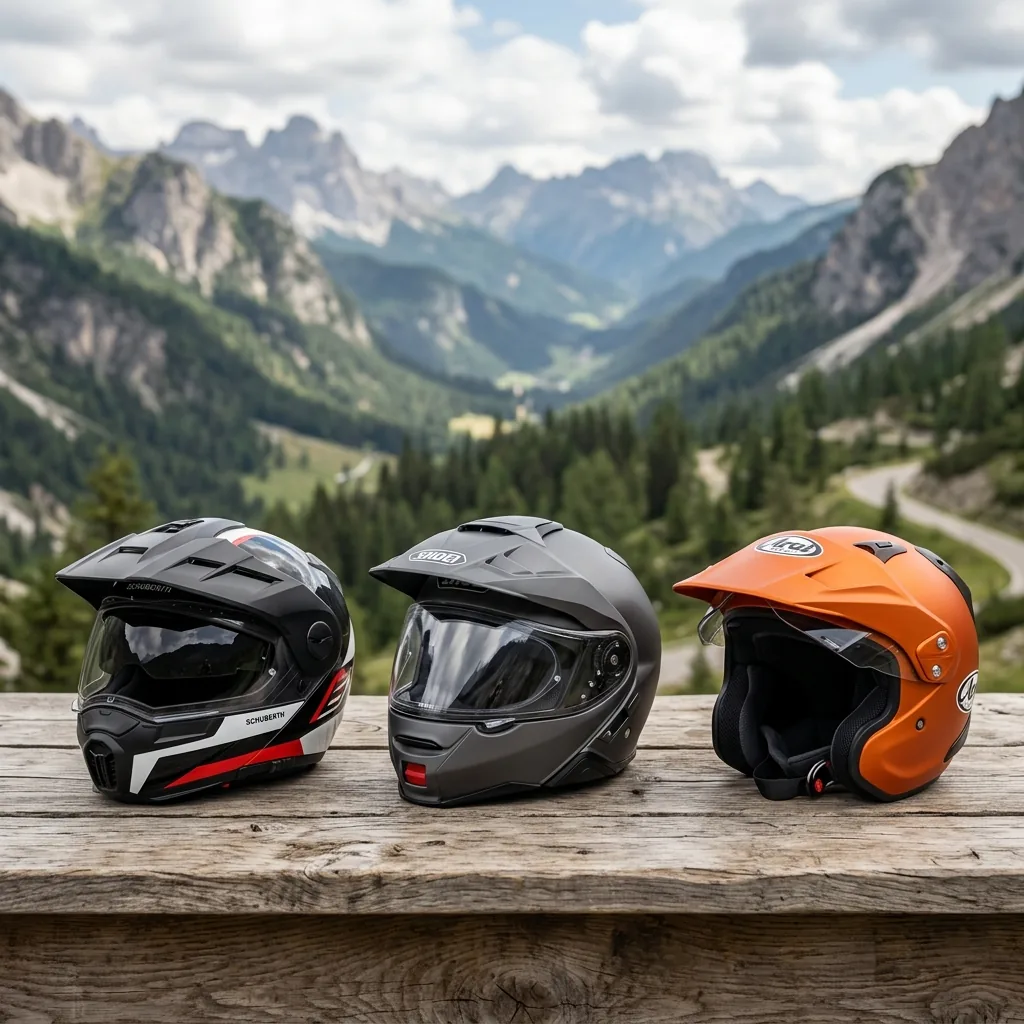
In 2026, the adventure helmet market splits four ways: dedicated adventure-style helmets with peak and goggle compatibility, modular touring helmets that flip open, full-face sport helmets that some ADV riders prefer for highway work, and budget options that have closed the gap with premium brands significantly in the last five years.
This best adventure motorcycle helmets 2026 guide covers the six helmets worth considering across all four categories, the ECE 22.06 standard that now matters, and the fit advice that decides whether any of them are actually right for you.
Introduction: Why ADV Helmets Are Different from Road Helmets
A pure road helmet is engineered for highway speeds, aerodynamic stability, and noise reduction. An adventure helmet adds three requirements: compatibility with motocross goggles, a peak/visor that shades the eyes off-road, and ventilation that works at low speeds (because off-road riders spend a lot of time below 30 km/h).
The trade-off: the peak creates lift at high speed, the goggle channel adds turbulence, and the ventilation that helps off-road also makes the helmet noisier on the highway.
A helmet built specifically for ADV makes these trade-offs deliberately. A repurposed road helmet doesn’t, and shows it.
ECE 22.06: The Standard That Now Matters
ECE 22.06 took effect in June 2023 across Europe. By 2026, almost every premium new helmet carries it. The new standard tests:
Impacts at higher and lower energies, not just one speed. Rotational acceleration (closely linked to traumatic brain injury). More impact points across the shell. Visor optical quality and abrasion resistance.
The practical takeaway: a 2026 helmet carrying ECE 22.06 is genuinely safer than a similarly priced helmet certified to the old 22.05 standard. The Shoei Hornet ADV is a notable exception — beloved by riders but still ECE 22.05 in late-2025 production. The replacement is due in spring 2026 and that’s the one to wait for if you want a Shoei.
DOT certification (US standard) is significantly weaker than ECE 22.06 and shouldn’t be used as the only safety check on a serious helmet purchase.
Full-Face vs Modular vs Adventure Style: Which for You?
Full-face: best protection, best aerodynamics, lightest weight in any given price bracket. Best for highway-focused riders and aggressive off-road riders who don’t need goggle compatibility.
Modular (flip-up): best for touring riders who do long days with frequent stops. Open the chin bar at fuel stops, eat without removing the helmet, talk to people without shouting. Slightly heavier and slightly less protective than equivalent full-face designs, but the convenience is real.
Adventure-style: best for genuine off-road riders. Peak shades the eyes, goggle compatibility lets you wear MX goggles in dust, low-speed ventilation works when you’re at walking pace. The peak creates lift above 130 km/h — a real downside for highway-heavy riders.
Most experienced ADV riders end up owning two helmets: an adventure-style for dirt days and a modular for touring days. If you’re buying one helmet to do everything, the adventure-style is the more flexible choice for true mixed-surface riding.
Best Adventure Motorcycle Helmet Options List 2026
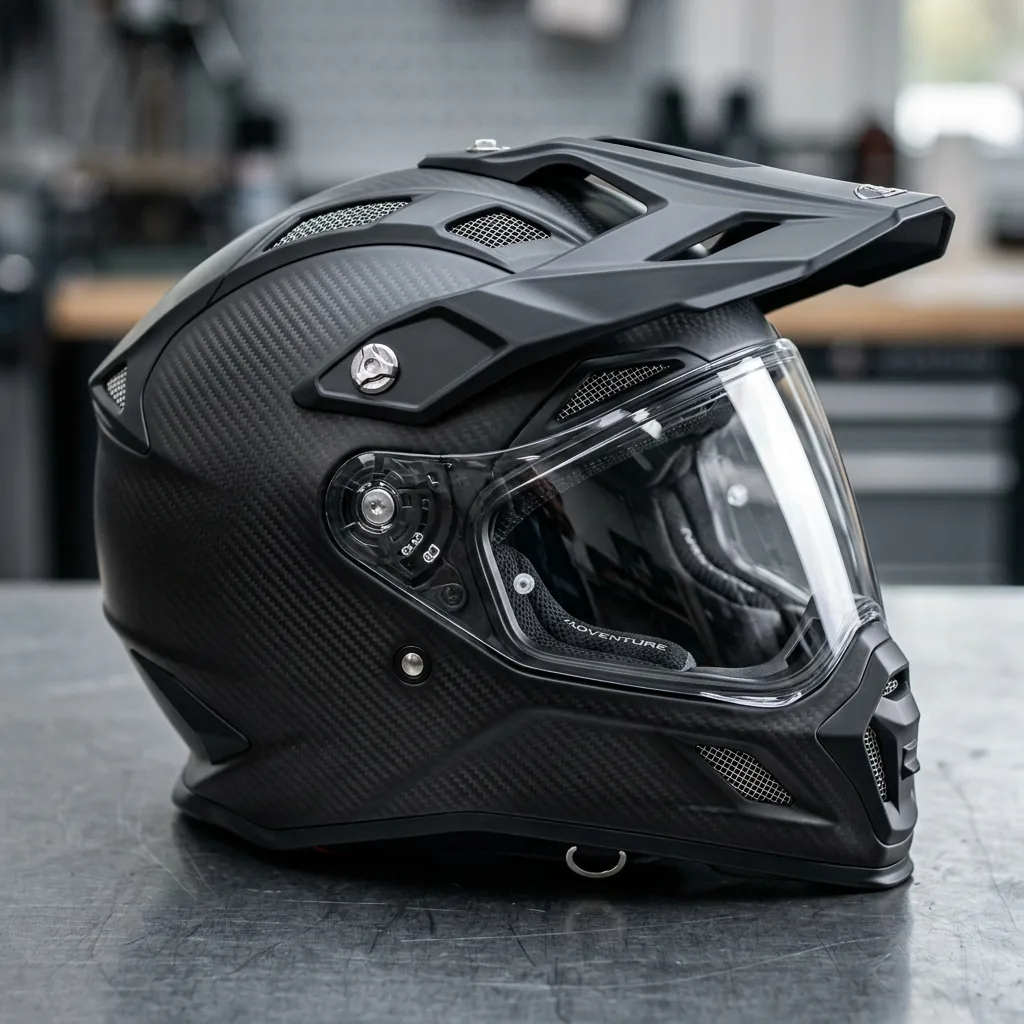
Six options that cover the price and use-case spectrum.
- Arai Tour-X5 / XD-5: premium ADV, ECE 22.06, fits intermediate oval (1,590 g)
- Klim Krios Pro: lightweight carbon ADV with MIPS option (1,350 g)
- Shoei Neotec 3: best modular touring helmet 2026 (1,650 g)
- Bell MX-9 Adventure MIPS: best budget ADV helmet (1,480 g)
- Nexx X.Vilijord: modular ADV crossover, unique design (1,580 g)
- HJC RPHA 91: value modular touring option (1,590 g)
1. Arai Tour-X5 (XD-5 in US)
The benchmark adventure helmet. Around $890. ECE 22.06 certified. Hand-finished shell, intermediate oval fit, peak and goggle compatibility both done correctly. The build quality is what you’re paying for — Arai’s shell consistency and liner construction is the longest-running standard in the industry.
The fit is famously head-shape specific. If you’re not an intermediate oval, the XD-5 will give you hot spots. Try it on. The Arai dealer experience is the right way to buy this helmet.
Shop Arai Tour-X5 / XD-5 on Amazon →
2. Klim Krios Pro
Around $879. The lightest premium ADV helmet on the market at about 1,350 grams. Carbon fiber shell, MIPS option, Klim’s own ECE 22.06 certification. Designed specifically for riders who split time between pavement and dirt.
The fit runs slightly more intermediate-to-long-oval than the Arai. Owners on ADVRider.com consistently report that the Krios Pro is more comfortable for long-distance riding than the heavier alternatives — the weight difference shows up after hour six.
Shop Klim Krios Pro on Amazon →
3. Shoei Neotec 3
The best modular touring helmet sold today. Around $799. ECE 22.06. Internal sun visor, intercom-ready, low noise levels that genuinely match a full-face. Heavier than dedicated ADV helmets at 1,650 g but the touring-focused features earn the weight back over long highway days.
Not an off-road helmet. No peak, no goggle compatibility. For riders whose ADV time is 80% pavement, the Neotec 3 is often a better choice than a true adventure helmet.
4. Bell MX-9 Adventure MIPS
Around $250. ECE certified, DOT certified, MIPS-equipped. “Universally comfortable fit” is the consistent comment across forum reviews — Bell’s intermediate oval shell works for a broad range of head shapes.
It’s heavier than premium options at 1,480 g and the materials are less refined. But the protection is real, the fit is friendly, and the price-to-capability ratio is the strongest in the segment. The right first ADV helmet for someone new to the category.
Shop Bell MX-9 Adventure MIPS on Amazon →
5. Nexx X.Vilijord
Around $550. Modular adventure helmet — a category most brands don’t bother with. The chin bar flips up like a touring modular, but the helmet keeps the ADV peak and goggle compatibility. A genuinely unique design.
Heavier than dedicated ADV helmets at 1,580 g. The trade-offs of a modular show up in noise levels and aerodynamics. For riders who want one helmet that handles long touring days plus occasional off-road, the X.Vilijord is one of the few options that doesn’t force a choice.
6. HJC RPHA 91
Around $499. Modular touring helmet, ECE 22.06, internal sun visor, intercom-ready. Effectively a value alternative to the Shoei Neotec at about 60% of the price.
Build quality is one tier below the Shoei but the protection is fully comparable. For riders who don’t want to spend $800 on a modular, the RPHA 91 is the right pick.
Fit First: Why This Matters More Than the Brand
A helmet that fits poorly is dangerous, distracting, and short-lived. The right approach:
Try the helmet on in person before buying. Walk into a dealer with at least an hour to spend. Try multiple sizes in multiple shapes. Wear each helmet for at least 15 minutes — the pressure points that develop over time don’t show up in the first 30 seconds.
The three head shape categories:
Round oval: short front-to-back, wide side-to-side. Fits Bell, HJC RPHA, some Schuberth models.
Intermediate oval: the default Western head shape, slightly longer front-to-back than round. Fits Arai, Shoei, Klim, most premium brands.
Long oval: noticeably longer front-to-back. Fits some Arai models, Bell M9 series, certain Scorpion models.
A $700 Arai that doesn’t match your head shape is worse than a $200 Bell that fits perfectly. Brand snobbery in helmet purchasing is how people end up with expensive headaches.
Intercom Compatibility
For 2026, intercom compatibility is a baseline requirement for any touring helmet purchase. The Cardo Packtalk Edge and Sena 50S are the two dominant systems and both have published integration lists for major helmet brands.
Modular helmets generally have better speaker pockets and chinstrap routing for intercoms. Adventure helmets with peaks can be more finicky for camera mounting because of the curved shell geometry.
For deeper comparison of the intercoms themselves, see our best motorcycle intercom systems guide.
Who Should Buy What
You ride 80% pavement with occasional dirt: Shoei Neotec 3 or HJC RPHA 91. The modular convenience earns its weight back on long highway days.
You ride 50/50 pavement and dirt: Klim Krios Pro or Arai XD-5. The dedicated ADV design is the right tool.
You ride 80% dirt with occasional highway: Klim Krios Pro or Bell MX-9 Adventure MIPS. The off-road ventilation and goggle compatibility matter.
You’re buying your first serious ADV helmet on a budget: Bell MX-9 Adventure MIPS. Real protection, real ventilation, $250.
You want one helmet to do everything: Nexx X.Vilijord. The modular-ADV crossover is the rare design that doesn’t force compromise.
FAQ
For helmet-related accessories, see our best motorcycle intercom systems guide and Klim Badlands Pro jacket review.
Disclosure: Some of the links in this article are affiliate links. If you buy gear through them, we may earn a small commission at no extra cost to you. It helps fund the road trips that make these independent gear comparisons possible.
Frequently Asked Questions
What is ECE 22.06 and why does it matter for adventure helmets in 2026?
ECE 22.06 is the current European helmet safety standard that took effect in June 2023, replacing ECE 22.05. The new standard tests impact at higher and lower speeds, tests rotational acceleration (linked to brain injury), and tests more impact points across the shell. Any helmet you buy new in 2026 should carry ECE 22.06 — older 22.05 helmets are still legal to sell in some markets but represent older protection technology.
Are MIPS helmets actually better for motorcycle riders?
MIPS adds a low-friction layer between the helmet shell and the liner that allows about 10-15mm of rotation during an angled impact, reducing rotational forces on the brain. The research on motorcycle-specific benefit is mixed but the technology consistently performs well in Virginia Tech's helmet ratings. For about $30-50 of additional cost, MIPS is worth it if a comparable helmet offers it. The Bell MX-9 Adventure MIPS is the most popular MIPS-equipped ADV option in 2026.
Full-face, modular, or adventure-style helmet — which is best for ADV riding?
Depends on riding style. Full-face offers the best protection and aerodynamics — best for fast highway and aggressive off-road. Modular offers convenience for long touring days (fuel stops, eating without removing the helmet) at a small protection compromise. Adventure-style (with peak and goggle compatibility) gives the off-road feel and works with MX goggles, but the peak creates lift at high speed. Most owners on ADVRider.com end up with adventure-style for off-road days and a modular for highway touring.
How much should I spend on an adventure motorcycle helmet?
$250 buys a genuinely good helmet in 2026 — the Bell MX-9 Adventure MIPS is universally well-reviewed and properly certified. $500-700 buys mid-tier premium with lighter weight and better materials (Klim Krios Pro, Shoei Hornet ADV). $800+ buys top-tier brands (Arai Tour-X5) with the best fit consistency and longest service life. A $200 helmet that fits perfectly is better than a $900 helmet that fits badly.
Why does helmet fit matter more than brand?
A poorly fitting helmet shifts on the head during impact, allowing more direct contact between skull and shell, and is more likely to come off entirely in a crash. It also distracts the rider through pressure points, hot spots, and noise. A $700 Arai that doesn't match your head shape is a worse helmet than a $200 Bell that fits perfectly. Head shape categories — round, intermediate oval, long oval — vary by brand, and fitting in person before buying is non-negotiable for new rider helmet purchases.