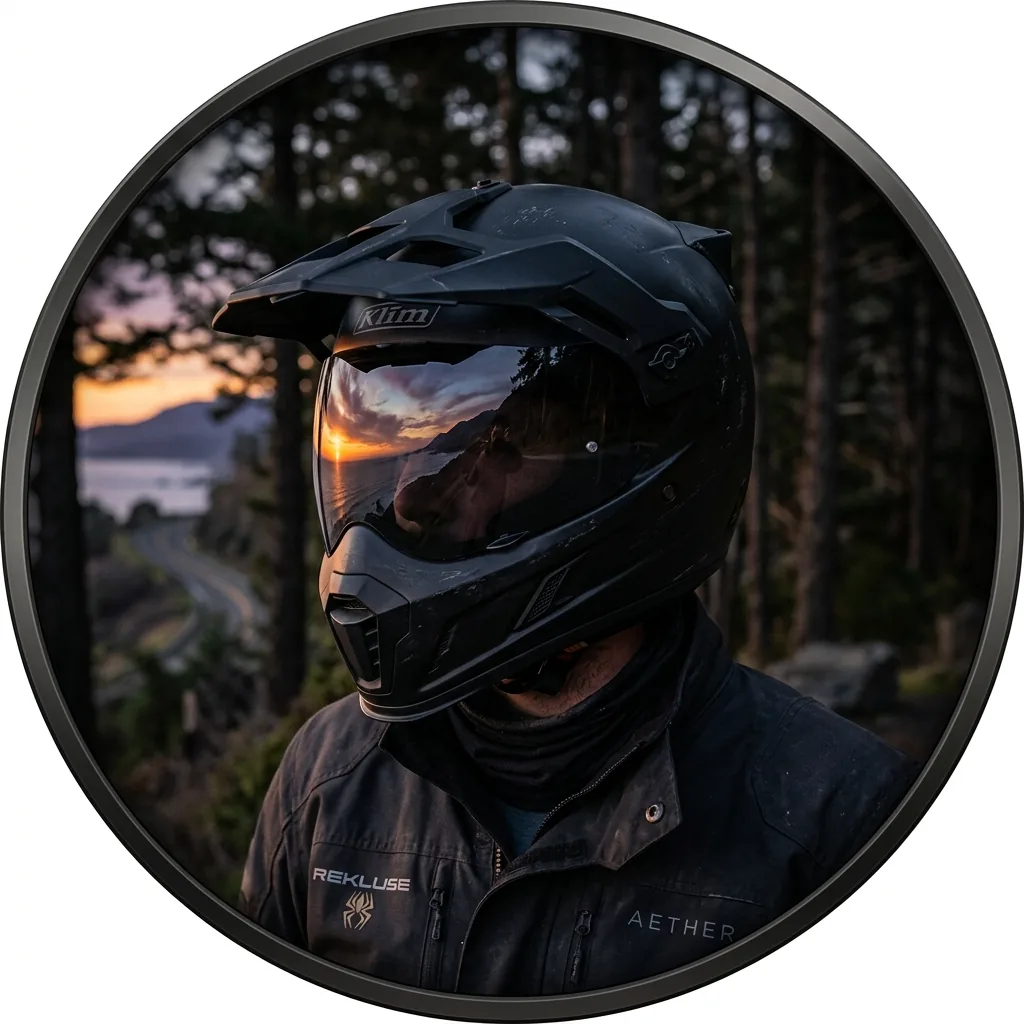
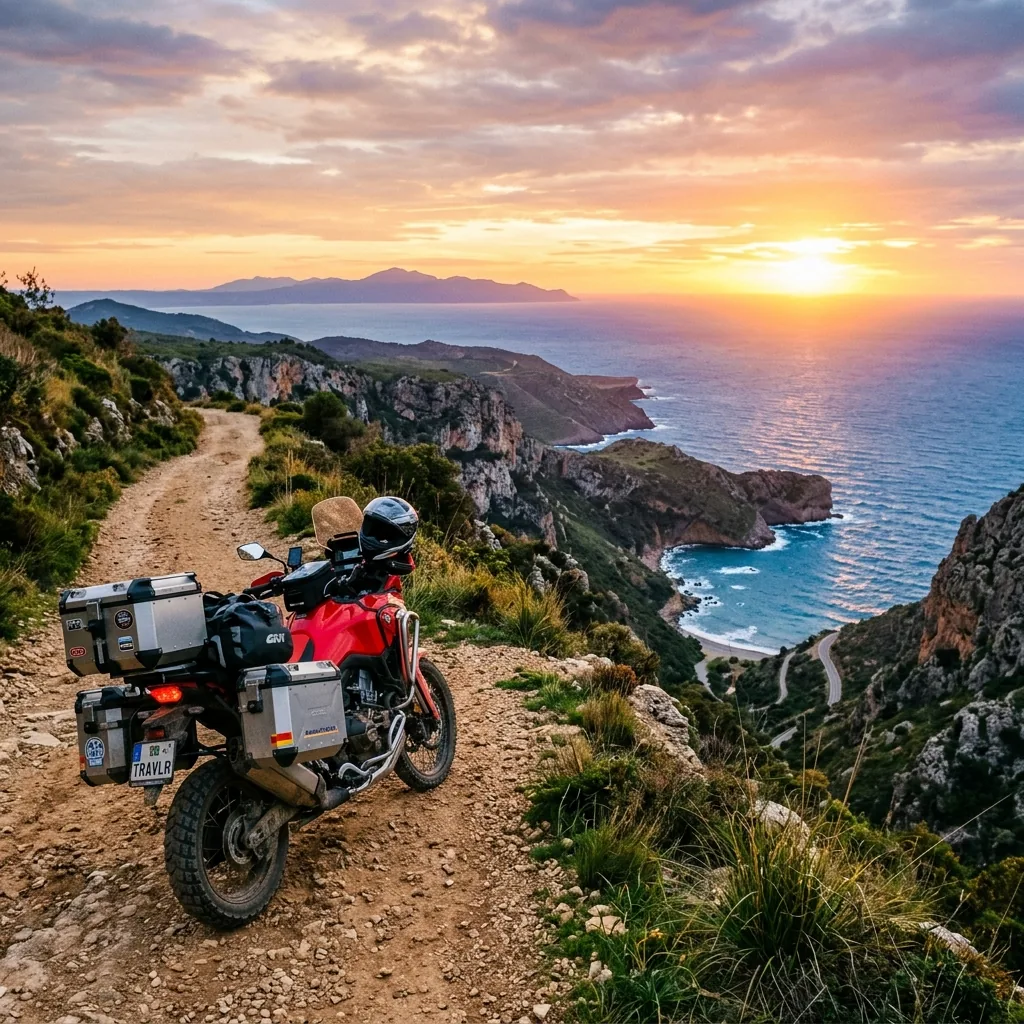
I sat in front of the Klim checkout page for four minutes before I clicked buy. Fifteen hundred dollars for a jacket. That’s more than I paid for my CFMOTO 250NK with a rear rack and a fresh chain, and I knew it. But the weekend before, I’d ridden home from the Kaçkar Mountains in a $300 textile shell that wet out by Saturday lunch — and the cold sat in my forearms for two days afterward. I was done with budget compromises.
Six months and roughly 12,000 kilometers later, the Klim Badlands Pro has been through Bosnian downpours, dust on the Romanian Carpathians, a 35°C afternoon outside Antalya, and one slow gravel low-side near Datça. This klim badlands pro review is what I actually learned — what’s worth the money, what’s hype, and the honest answer to whether $1,500 buys you something you can’t get for half.
What You’re Actually Paying For
Short version: a 3-layer Gore-Tex Pro laminated shell wrapped in Cordura, with Superfabric patches over the impact zones. The waterproof membrane is bonded directly to the outer fabric, not a separate liner you zip in.
That distinction matters more than it sounds. On my old mid-tier jacket, heavy rain meant the outer shell soaked through inside twenty minutes. The membrane inside still kept me dry, technically — but the jacket weighed an extra two kilos in water, and when I peeled it off at camp the inside of my tent looked like I’d dragged a wet dog through it. With a laminated shell, the water beads on the surface and rolls off. The jacket weighs the same wet or dry.
Superfabric is the other thing you’re paying for. It’s a fabric coated in small ceramic plates — overlapping fish scales, basically. When you slide on asphalt or gravel, the ceramic faces eat the impact instead of the fabric tearing. I put this to the test (more on that in a second), and the Superfabric panels came out scratched but not torn through.
The build quality shows in small places too. The main zipper is a chunky YKK Vislon I can grip with winter gauntlets. Stitching is doubled at every stress point. Pick this jacket up off a hanger and it feels less like clothing and more like body armor that happens to be cut like a jacket.
Fit, Weight, and the Kidney Belt That Saves Your Shoulders
First thing I noticed when the UPS box landed: it’s heavy. Around 3.8 kg with all the armor in, in a Large. On a hanger it feels punishing. The first ride felt stiff and tank-like for about twenty minutes.
What changes things is the internal kidney belt — an elastic waist strap sewn inside the jacket that wraps around your hips and shifts the jacket’s load off your shoulders. Same principle as a backpack hip belt. The first time I cinched it down properly, the heaviness mostly vanished. I’ve done back-to-back 10-hour days on the Aegean coast and my shoulders weren’t sore. They were sore from a hundred other things, but not from the jacket hanging on them.
Sizing — Read This Before You Buy
Klim is American, and the cut is American. Boxy in the torso, generous in the chest, room for layers. I’m 182 cm and 88 kg with a 106 cm chest — in Dainese or Revit I’m a solid XL. In the Badlands Pro, I’m a Large, with room left over for a fleece mid-layer or a heated jacket plugged into the bike battery.
If you’re slimmer, or you like that European fit that hugs everything, this isn’t your jacket. The Klim Carlsbad runs slightly tighter. The Revit Sand 4 splits the difference. My honest recommendation: don’t order the Badlands Pro online without trying it on first. Find a dealer, walk in with a fleece you’d actually ride in, and check the fit with that layer on.
Protection: The Armor Layout
You’re buying this jacket for protection. Klim did not cut corners.
Standard armor is D3O Aero Pro Level 2 in the elbows, shoulders, and back. D3O is the orange foamy stuff that’s soft under normal movement and goes rigid on impact — same family of armor used in MotoGP track suits, just less aggressive. The “Aero Pro” variant Klim uses has a vented honeycomb shape, so air actually passes through it instead of building up sweat under the pad.
Here’s how the protection stacks up against what most adventure jackets ship with from the factory:
| Protection Zone | Klim Badlands Pro | Typical ADV Jacket |
|---|---|---|
| Elbow Armor | D3O Aero Pro Level 2 (Extended) | Level 1 (Short) |
| Shoulder Armor | D3O Aero Pro Level 2 | Level 1 |
| Back Protector | D3O Viper Level 2 (Large) | None or Level 1 |
| Chest Protection | Silicone Chest Protector (Included) | None (Pocket only) |
| Abrasion Panels | Superfabric & Cordura 3-Layer | Standard Polyester |
| Night Visibility | 3M Scotchlite Carbon Black | Basic reflective strips |
There’s also a perforated silicone chest pad. Klim is careful to note it’s not officially Level 2 rated, but it does what it needs to. The first time it earned its place was on a gravel descent near Akbük, when the rider in front of me kicked up a fist-sized rock that hit me square in the sternum. I felt the impact through my whole rib cage. I did not feel a bruise the next morning.
The low-side I mentioned earlier was nothing dramatic — maybe 25 km/h on loose gravel on a steep descent near Datça. I went down on my left side, slid two or three meters, and stood up annoyed but unhurt. The Superfabric elbow panel came out with surface scratches. The fabric underneath was untouched. My old jacket would have torn open on that same slide. I know because it had, on the same descent, the year before.
Venting: Does It Actually Breathe?
The standard knock on laminated Gore-Tex jackets is that they cook you alive in summer because the membrane blocks airflow. Klim’s answer is 12 ventilation ports scattered around the jacket. The important ones:
- Wrist vents — dual-zipper scoops on the forearms that pull air in and send it up your sleeve.
- Chest and bicep vents — four altogether across the front.
- Two big vertical exhaust vents down the back to dump hot air out.
- Collar fold-back hooks — small plastic clips that let you peel the collar flaps open at the throat for max airflow when it gets brutal.
The Mediterranean test went like this: 34°C, single carriageway between Marmaris and Datça, afternoon sun, no clouds. Sitting still at a traffic light? Sweaty, no surprise. Moving above 40 km/h with all vents open and the collar folded back? Genuinely comfortable. The wrist scoops pull a real volume of air up the sleeves and out the back exhaust. You feel it.
That said, this klim badlands pro review wouldn’t be honest if I didn’t name the limit: slow technical off-road in 35°C+ heat is brutal. No vent layout replaces a mesh jacket when you’re crawling up a rocky climb in first gear for twenty minutes. If most of your riding is desert single-track in summer, get a mesh jacket and accept that it’ll soak through in rain. You can’t have everything in one jacket. The Badlands Pro picks all-weather protection over hot-weather airflow, and that’s a defensible choice for what it is.
Waterproofing: The Two Tests That Mattered
Two genuine rain tests stood out on the trip.
First was a four-hour downpour through the mountain passes north of Žabljak, Montenegro. The kind of rain where commercial truckers were pulling onto the shoulder to wait it out. I’d been riding eight hours already and stopping was going to mean another night in the saddle, so I kept going.
Second was a shorter but more violent thunderstorm on the road into Trabzon — water sheeting across the asphalt fast enough that I dropped to 60 km/h on a 90 km/h highway, and even that felt sketchy.
In both cases, my t-shirt under the jacket was completely dry when I finally stopped. Not damp. Dry. The collar has a soft neoprene trim that prevents water from running down your neck, and the storm flap over the main zipper does its job. The cuffs sealed cleanly under my gauntlet gloves.
This is the whole point of laminated gear. You don’t have to pull over and dig a rain liner out of a pannier. You don’t have to flip your jacket inside-out at camp to dry it. You ride through, and when you stop, you take the jacket off, shake it once, and hang it up.
Storage: Ten Pockets, and Why That Matters
On a long trip, pocket layout matters more than people give it credit for. The Badlands Pro has ten pockets total. Six outside, four inside. The breakdown:
- Two hand pockets on the hips — water-resistant, big enough for a phone or a folded neck buff.
- Two chest pockets — I keep my ID and a small notepad in one, gum and a tire-pressure gauge in the other.
- A forearm card pocket on the left sleeve — perfect for toll tickets, customs receipts, the kind of thing you grab without dismounting.
- One large utility pocket on the lower back, big enough for a packable rain liner or a pair of spare gloves.
- Four internal zippered pockets, including a hidden passport pocket behind the back pad. That last one alone is worth the upgrade — I sleep with my passport on me in transit, and this is the only jacket pocket I trust for it.
There’s also a dedicated hydration bladder pocket on the back, with routing loops for the hose over the shoulder. I run a 2L Camelbak on stretches where I can’t stop for water — Anatolian plateau crossings, mostly — and being able to drink without taking a hand off the bars is a real safety thing, not a gimmick.
Klim Badlands Pro: Pros and Cons After 12,000 km
The honest summary of the klim badlands pro pros cons after six months on the road:
- Level 2 D3O armor in elbows, shoulders, and back — same standard as a track suit
- Laminated Gore-Tex Pro shell that does not wet out, full stop
- Built to last 8-10 years of hard use
- 12 vents plus collar fold-back actually move air at speed
- Internal kidney belt shifts weight off your shoulders
- 10 pockets including hidden passport slot and hydration bladder routing
- $1,500 for the jacket alone — matching pants add another $1,200
- Heavy (3.8 kg) and stiff out of the box; takes a few rides to break in
- American boxy cut won't suit slim European riding builds
- Slow technical off-road in 35°C+ heat will sweat you out — no vent system fixes that
Who Should Buy It — and Who Shouldn’t
After 12,000 km, here’s how I’d sort riders:
This jacket is for you if:
- You’re planning a multi-week or multi-month tour — TET, Pan-American, Cape to Cairo, anything that crosses weather zones.
- You ride year-round, including winter and shoulder seasons in cold rain.
- You’d rather pay once and own a jacket for a decade than replace mid-tier gear every two years.
- Safety is the line you don’t cut on.
Look elsewhere if:
- You ride 3,000 km a year, mostly dry weekends, mostly on tarmac. The Klim Carlsbad does the same job for around $850.
- You commute in a city with hot, humid summers. Get a mesh jacket — you’ll be miserable in this otherwise.
- You’re on a strict budget. The Revit Sand 4 (~$550) hits 80% of the protection and ventilation for a third of the cost.
- You want a slim, sporty cut. The Badlands Pro is built like a parka by comparison.
The answer to “is klim badlands worth it” comes down to riding mileage. If you’re putting 15,000+ km on a jacket every year for the next five years, the math works out at maybe 2 cents per kilometer. If you’re riding 2,000 km a year on dry Sundays, you’re paying for capability you’ll never use.
Care and Washing: Don’t Skip This
Quick note on maintenance, because this is where people destroy expensive Gore-Tex gear. A lot of riders never wash their technical jacket, worried that water and detergent will damage the membrane. The opposite is true. Dirt, road grime, and dried sweat clog the membrane pores over time, kill the breathability, and make the jacket wet out in places it shouldn’t.
Here’s the routine I run twice a season:
- Strip the armor. Pop out the shoulder, elbow, back, and chest pads. Close every zipper and Velcro tab so the rough edges don’t tear up the fabric in the drum.
- Wash with a technical detergent. Nikwax Tech Wash, Granger’s Performance Wash — those are the standards. Never use regular laundry detergent or fabric softener. They leave a residue that destroys the DWR coating that makes water bead up. Gentle cycle, 30°C, double rinse.
- Tumble dry warm. Twenty minutes on a low-warm setting after the jacket is mostly air-dried. The heat reactivates the DWR coating. Water that wasn’t beading anymore starts beading again. It feels like a free new jacket every time.
Final Verdict
The Klim Badlands Pro is not a jacket. It’s a piece of equipment that happens to be shaped like a jacket. The first time you wear it on a wet morning and you’re still warm and dry six hours later, you stop thinking about the price.
Through six months and 12,000-something kilometers, this thing kept me dry in storms I would have turned around in otherwise. It took a rock to the chest without complaint. It came out of one slow gravel low-side with nothing but scuffs. It is heavy. It is stiff for the first week. The price still stings if I think about it for too long. But it’s the best adventure motorcycle jacket I’ve ever worn, and if it tore tomorrow I’d buy the same one again on the same day.
Disclosure: Some of the links in this article are affiliate links. If you buy gear through them, we may earn a small commission at no extra cost to you. It helps fund the road trips that make these independent reviews possible — we test all gear ourselves before we recommend it.
Frequently Asked Questions
Is the Klim Badlands Pro waterproof?
Yes. The waterproof membrane is a 3-layer Gore-Tex Pro shell laminated directly to the outer fabric, not a separate zip-in liner. In a four-hour downpour through the mountains north of Žabljak, my t-shirt underneath stayed dry. Water beads on the surface and rolls off — the jacket weighs the same wet or dry.
Does the Klim Badlands Pro come with armor?
Yes. It ships with D3O Aero Pro Level 2 armor in the elbows, shoulders, and back, plus a perforated silicone chest protector. Same Level 2 standard you'd see on a track suit, just with a vented honeycomb shape for airflow.
Is the Klim Badlands Pro good in hot weather?
It vents well for a laminated Gore-Tex jacket — 12 ports and collar fold-back hooks. Above 40 km/h in 34°C summer riding I was genuinely comfortable. The honest limit is slow technical off-road in 35°C+ heat. No vent layout replaces a mesh jacket when you're crawling first-gear up a rocky climb. If most of your riding is summer single-track, get a mesh jacket and accept the rain trade-off.
How is the sizing on the Klim Badlands Pro?
American boxy cut. Generous in the torso, built for layering. I'm 182 cm and 88 kg with a 106 cm chest — XL in Dainese or Revit, Large in the Badlands Pro with room for a fleece mid-layer underneath. If you prefer a tight European racing fit, size down or look at the Klim Carlsbad.