Best ADV Bikes for Short Riders in 2026: Seat Height, Weight and Real-World Fit
I’m 5’4”. I dropped the first ADV bike I test-rode because I couldn’t get my foot down in time on a gravel parking lot surface. I’m not proud of it. The dealership was gracious about it, the bike was fine, and I learned something that turned out to be more useful than anything on the spec sheet: the published seat height is half the story at best.
The other half is standover geometry, tank width at the point where your legs straddle the bike, and the wet weight of the machine when you have to pick it up from loose ground with your full kit on and nobody around to help. Getting all three numbers right — not just the one in the brochure — is what separates a bike that works for a short rider from one that looks good on paper and punishes you every time you stop on an uneven surface.
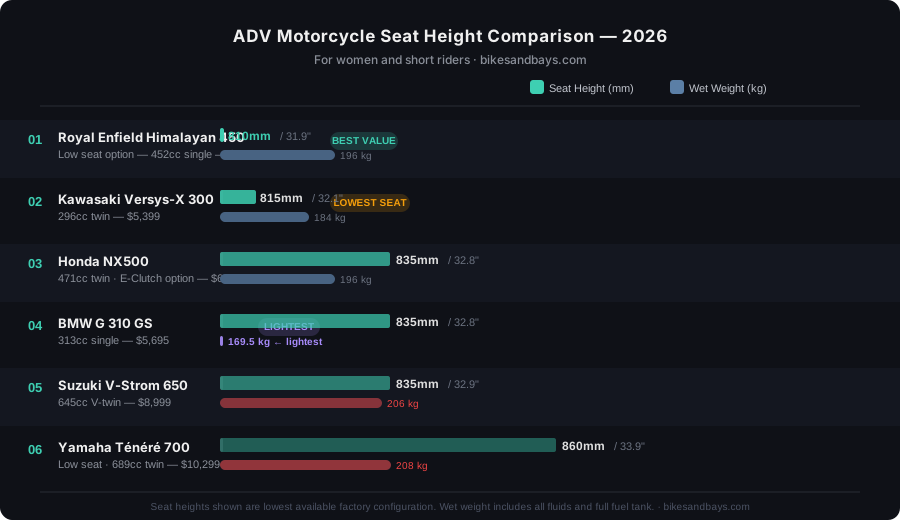
This guide covers six ADV bikes for riders in the 5’0”–5’5” range, ranked by real-world fit rather than marketing.
The Short Rider’s Three Numbers
1. Seat Height
This is the number manufacturers publish — measured from the lowest point of the seat to the ground with the suspension unloaded. Use it as a starting filter, not a final decision. It tells you nothing about tank width, seat taper, or where on the seat the low point actually sits.
2. Standover Height and Tank Width
A narrow-tanked bike at 835mm will feel more accessible than a wide-tanked bike at 820mm. Your actual leg clearance over the seat depends on the geometry of the seat and tank at your hip position, not just the vertical number. The Yamaha Ténéré 700 is the clearest example on this list: at 860mm in low-seat configuration, riders as short as 5’5” report both feet flat because the seat taper is aggressive enough to close the gap between height and reach.
Look for owner forums and reviews from riders of similar height. A 5’3” rider’s account of how a specific bike feels at a traffic stop is more useful than the published spec.
3. Wet Weight
Wet weight is what the bike weighs with all fluids loaded and a full tank — what you’re lifting if it goes over on a gravel slope. The difference between the BMW G 310 GS (381 lbs / 169.5 kg) and the Suzuki V-Strom 650 (454 lbs / 206 kg) is 73 lbs / 33 kg. Practice recovering a downed motorcycle before your first solo trip. Know what you can actually lift before you commit to a machine. Choosing proper ADV boots with stable soles is also crucial; check out our guide on ADV boot selection for short riders.
Bonus: Ground Clearance
Every centimeter you lower the bike — factory low seat, foam reshaping, suspension kit — removes roughly the same amount of ground clearance. On asphalt, this is often acceptable. On rocky off-road terrain, it’s a direct constraint on what lines you can run. Know what you’re giving up before you lower.
Short Rider Comparison: Six ADV Bikes in 2026
| Bike | Seat Height | Wet Weight | Ground Clearance | 5’2” Reach |
|---|---|---|---|---|
| Kawasaki Versys-X 300 | 32.1” (815mm) | 405 lbs / 184 kg | 7.9” | Both feet near-flat |
| Royal Enfield Himalayan 450 (Low) | 31.7”–32.5” adj. | 432 lbs / 196 kg | 9.1” | One foot comfortably flat |
| Honda NX500 | 32.8” (835mm) | 432 lbs / 196 kg | 7.1” | One foot flat |
| BMW G 310 GS | 32.8” (835mm) | 381 lbs / 169.5 kg | 8.7” | Slim tank improves reach |
| Suzuki V-Strom 650 | 32.9” (835mm) | 454 lbs / 206 kg | 6.5” | One foot, heavy at standstill |
| Yamaha Ténéré 700 (Low) | 33.9” (860mm) | 458 lbs / 208 kg | 8.9” | Tiptoe but slim seat |
Kawasaki Versys-X 300 — The Short Rider’s Starting Point
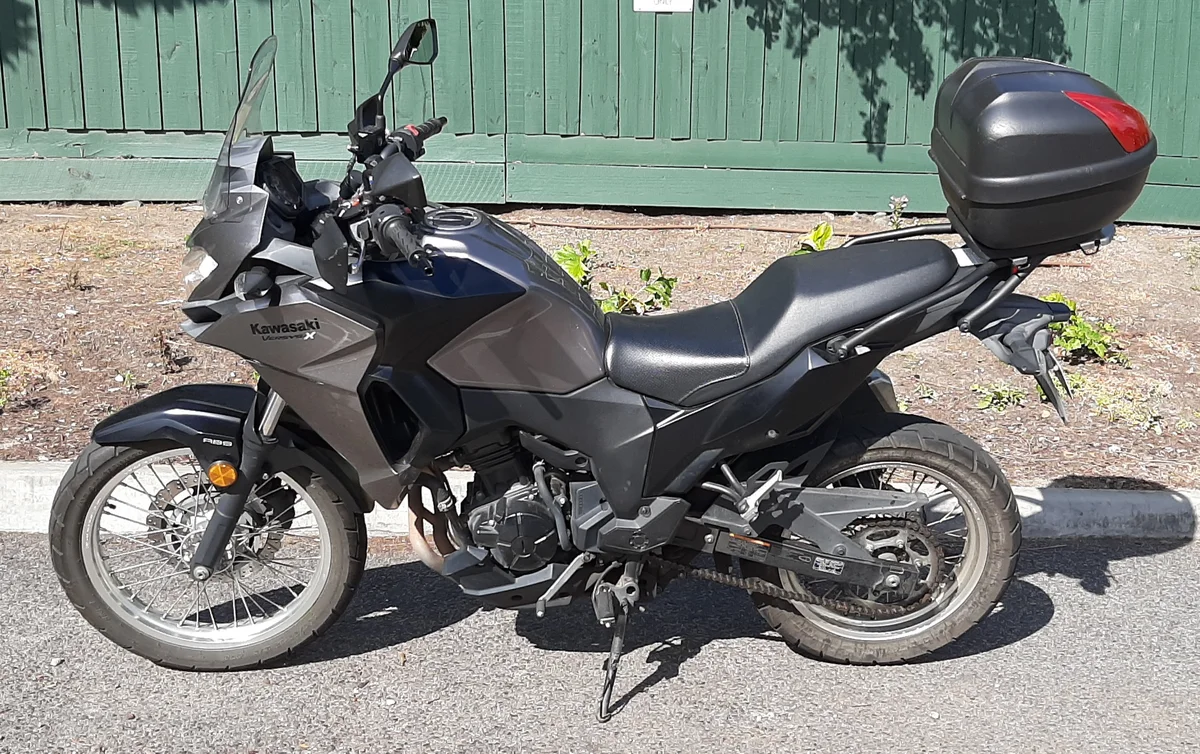
Price: ~$5,399 | Engine: 296cc parallel twin | Seat Height: 32.1” (815mm) | Weight: 405 lbs / 184 kg
At 815mm, the Versys-X 300 has the lowest published seat height of any ADV machine at this price point in 2026. The tank is narrow and the seat profile tapers toward the rider — which means the real-world standover for a 5’2” rider translates to both feet nearly flat at a stop. That combination of low number and narrow geometry is what puts this bike at the top of the list for very short riders.
The 184 kg wet weight is the second-lowest on this list. If this bike goes down on gravel, getting it back upright is a realistic solo operation.
Where it falls short is on performance. The 296cc parallel twin makes roughly 39 HP. For city riding, mountain roads, and routes up to 75 mph, it’s adequate. Sustained motorway cruising above 80 mph puts the motor near its limit — crosswinds push it around, and overtaking large vehicles requires planning rather than reacting. This is a bike for country routes and urban commuting, not cross-continent touring on high-speed roads.
For a short rider starting their first ADV bike, the Versys-X 300 is the most accessible entry point in the segment. Most riders will want to move up after 15,000–20,000 km when confidence and skill have grown — that’s not a flaw, that’s the right progression.
Short rider fit notes:
- 815mm + narrow tank: best real-world ground reach of any bike here
- 184 kg: manageable solo recovery after a fall
- Non-intimidating power delivery — appropriate for building skills
The catch:
- 296cc runs thin above 75–80 mph
- No traction control or riding modes
- Off-road capability limited to light gravel
- Basic suspension for rough tracks
Best for: Riders 5’0”–5’3”, first ADV bike, commuting and weekend routes. Shop Kawasaki Versys-X 300 Accessories on Amazon
Royal Enfield Himalayan 450 — Best Value for Short Riders
Price: $5,799 | Engine: 452cc single | Seat Height: 31.7”–32.5” (adj.) | Weight: 432 lbs / 196 kg
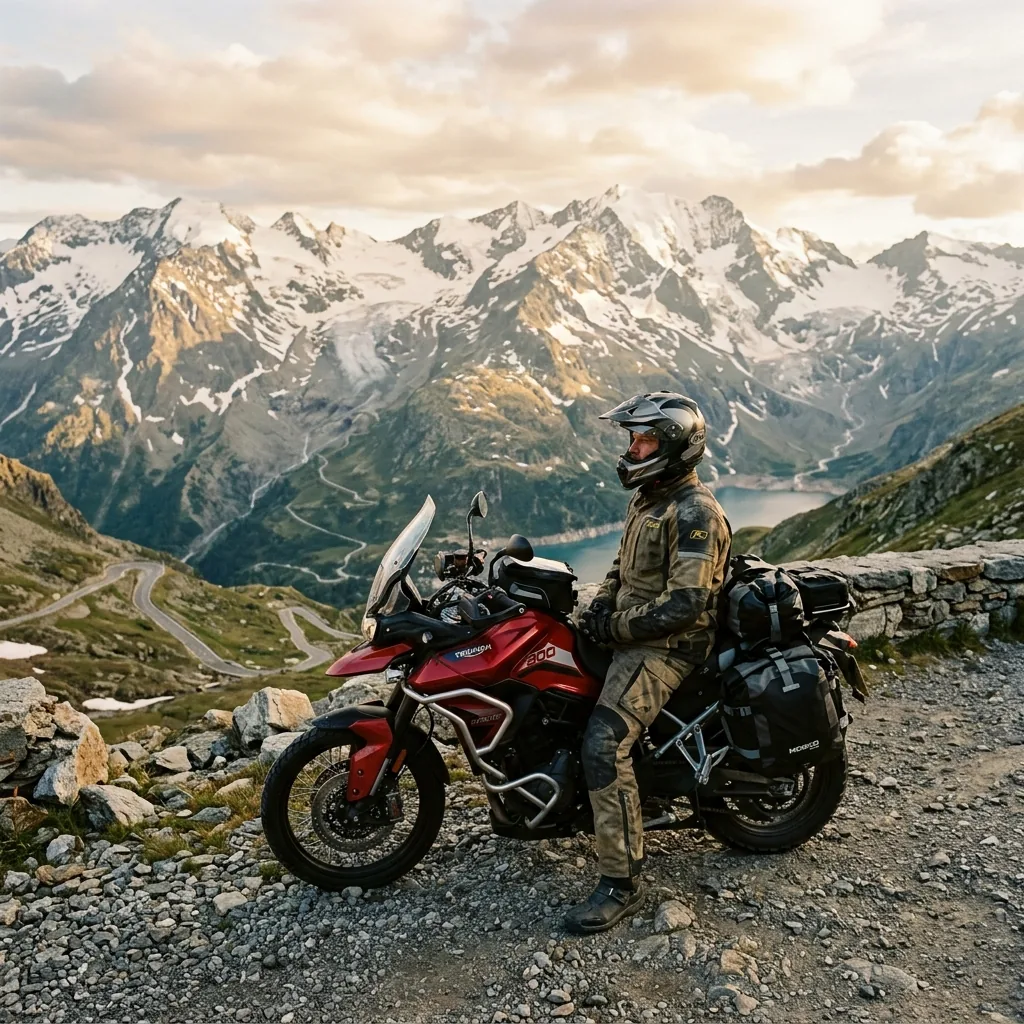
The Himalayan 450 is the most interesting entry on this list for short riders because Royal Enfield includes two seat options in the box at no extra cost: a standard 825mm seat and a low 810mm seat. In the low configuration, that’s 31.9” — lower than the Versys-X 300’s spec, on a significantly more capable motorcycle.
I’ve covered 8,500 km on a Himalayan 450 across Turkey and Bulgaria. I’m 5’4” with a 30” inseam. In the low-seat configuration, my left foot reaches flat with a comfortable knee bend, and my right foot touches with a slight lean — workable in every real-world stop I’ve encountered, from gravel parking lots to urban intersections on a slope.
The adjustable two-piece seat deserves more attention than it gets. You can shift the seat forward or back, which adjusts both the height at the point where you actually sit and your reach to the handlebars. For short riders with different torso-to-leg proportions, this matters.
The 452cc liquid-cooled single makes 40 HP and delivers it in a torquey, relaxed way that suits loaded touring. Four riding modes. 9.1” ground clearance. Showa suspension that handles rough unpaved roads better than the price suggests. At $5,799, this is the best capability-per-dollar ratio for a short rider who wants real ADV performance.
Short rider fit notes:
- Two factory seat heights: 810mm and 825mm — no extra cost
- Adjustable seat forward/back — tune for your torso-to-leg ratio
- 5’4” rider on 810mm: one foot comfortably flat, one foot with slight lean
- 196 kg: moderate, manageable with technique
The catch:
- Single-cylinder vibration noticeable above 90 mph
- Dealer network still expanding in some regions
- 196 kg requires some technique to recover from a fall
Best for: 5’2”–5’6”, first or second ADV bike, short riders who want genuine off-road capability. Shop Himalayan 450 Accessories on Amazon
Honda NX500 — The Reliable Middle Ground
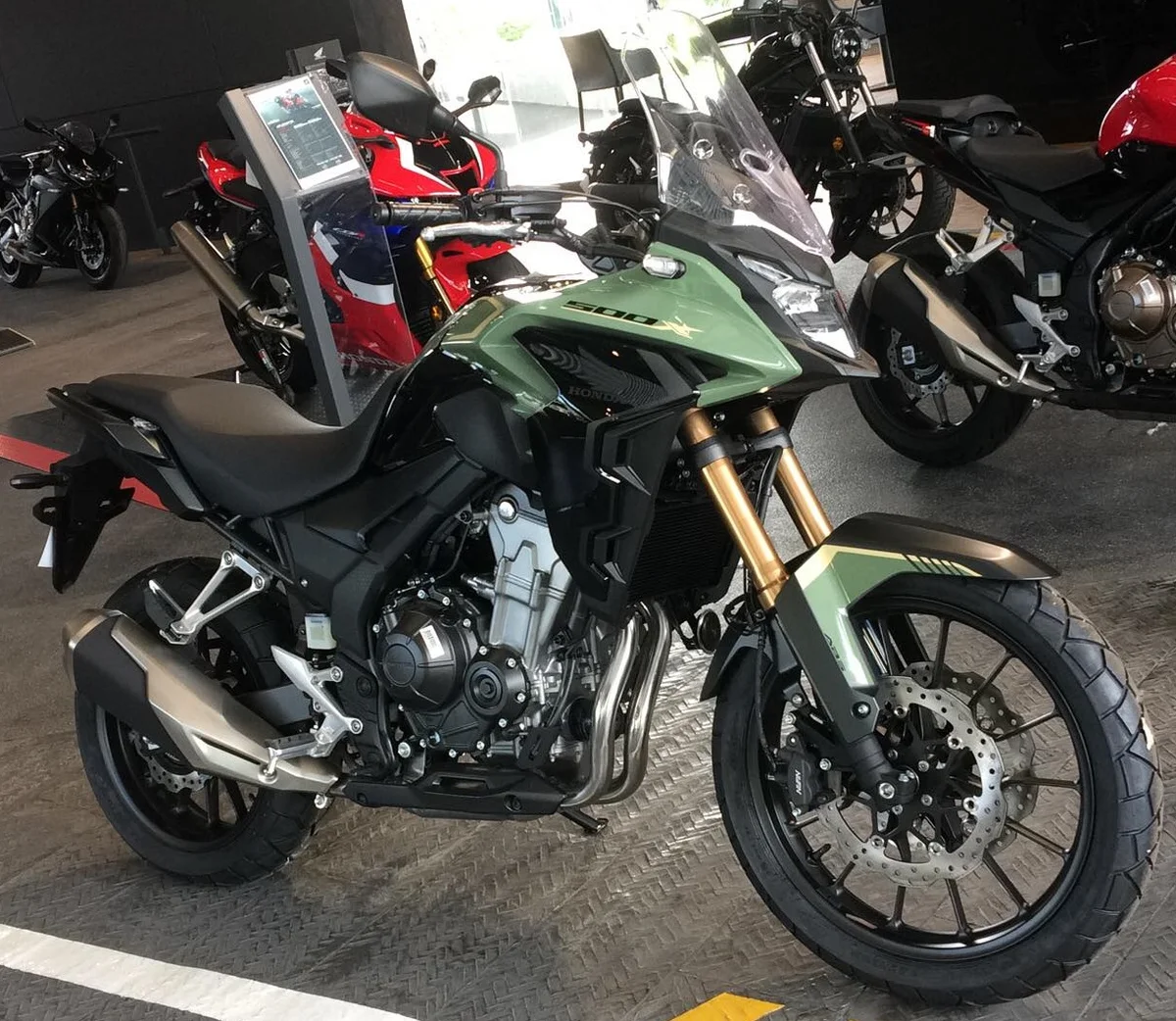
Price: $6,899 | Engine: 471cc parallel twin | Seat Height: 32.8” (835mm) | Weight: 432 lbs / 196 kg
The NX500’s 835mm seat height is 25mm above the Himalayan’s low setting — meaningful for the shortest riders, manageable with one-foot technique for most in the 5’3”–5’6” range. What distinguishes the NX500 for short riders specifically is the E-Clutch option.
E-Clutch is a clutch-by-wire system that prevents stalling in low-speed situations — not a DCT, but an automation layer over a standard clutch. In practical terms: the bike will not stall when you’re shuffling through a tight gravel parking area with full luggage, or creeping through an urban intersection where your foot placement is less than ideal. For a short rider managing an imperfect ground contact at a stop, removing the stall risk removes one layer of anxiety that compounds under pressure.
The slim seat profile on the NX500 also means the real-world reach is slightly better than the published spec. At 196 kg, it matches the Himalayan in weight. Honda dropped the price by $500 for 2026 while keeping the full tech package: 5” TFT screen, Honda RoadSync, HSTC traction control.
Short rider fit notes:
- 835mm with slim seat profile — real reach is better than spec
- E-Clutch option removes stall risk during low-speed management
- 196 kg: same as Himalayan, manageable with technique
The catch:
- No factory low seat option
- 7.1” ground clearance limits serious off-road use
- 835mm is a step above the Versys-X and Himalayan
Best for: 5’3”–5’7”, reliability-focused riders, those who want modern tech without the Himalayan’s network uncertainty. Shop Honda NX500 Accessories on Amazon
BMW G 310 GS — Lightest in Class
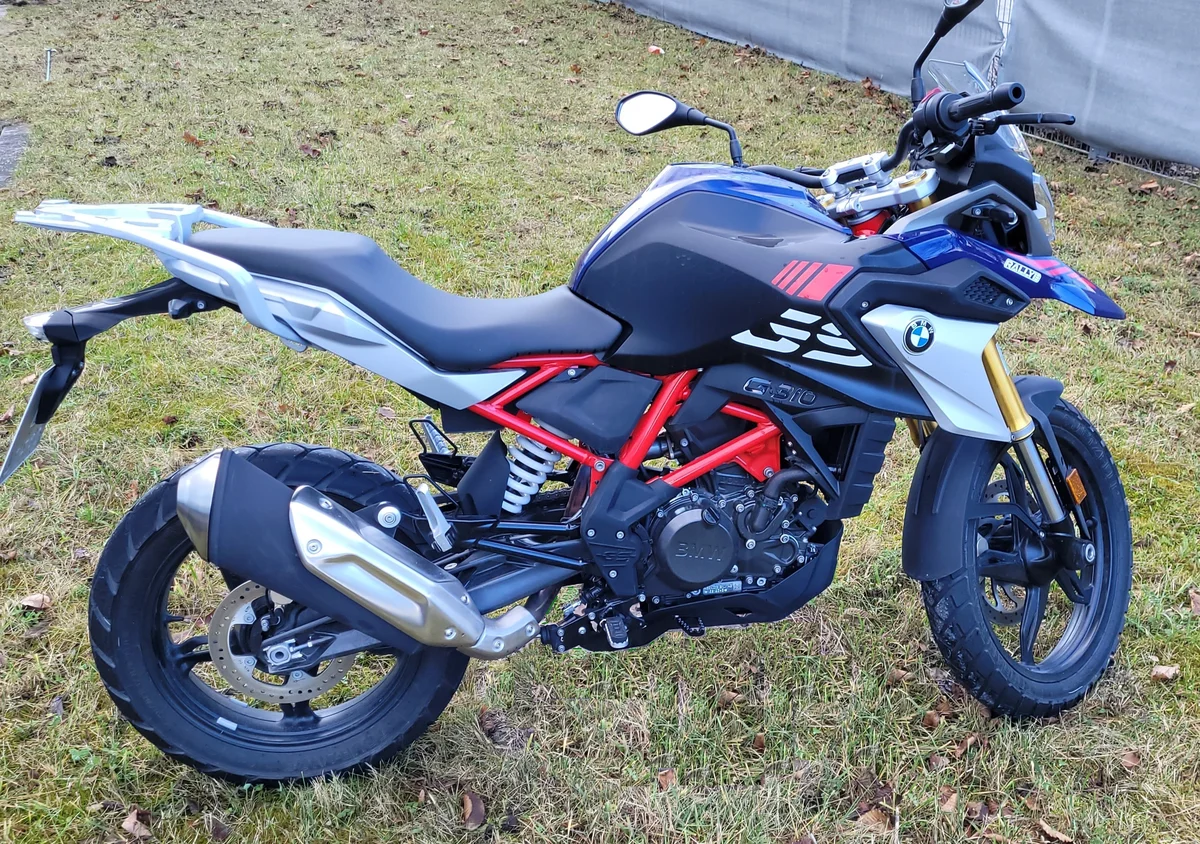
Price: $5,695 | Engine: 313cc single | Seat Height: 32.8” (835mm) | Weight: 381 lbs / 169.5 kg
The G 310 GS’s advantage for short riders is not its seat height — 835mm is the same as the Honda and Suzuki. The advantage is weight. At 169.5 kg / 381 lbs, it’s 14 kg lighter than the Honda, 15 kg lighter than the Himalayan, and 37 kg lighter than the V-Strom. If this bike goes over on a rough surface, you have a realistic chance of recovering it alone regardless of your size.
The narrow tank and slim lower seat profile further improve the real standover experience. A 5’3” rider will reach the ground better on this bike than the 835mm spec suggests — the tank doesn’t push the legs outward the way a wider machine does.
The 313cc single makes 34 HP. That’s adequate for city and mountain roads, less comfortable on open motorway stretches above 75 mph. The 11L tank limits range to roughly 130–150 miles per fill — the main operational constraint on longer routes.
BMW dealer service is well-distributed in Western Europe. For rural routes or Eastern European touring, this is something to plan around.
Short rider fit notes:
- 835mm + narrow tank: real ground reach better than spec
- 169.5 kg: easiest bike on this list to recover after a fall
- Non-intimidating power, appropriate for building skill
The catch:
- 11L tank: ~130–150 mile range per fill
- 313cc thin above 75 mph or in strong crosswind
- BMW dealer required for warranty service
- Less off-road capable than the Himalayan
Best for: 5’3”–5’7”, city and weekend routes, riders where weight management is the first priority. Shop BMW G 310 GS Accessories on Amazon
Suzuki V-Strom 650 — When You Want More Power
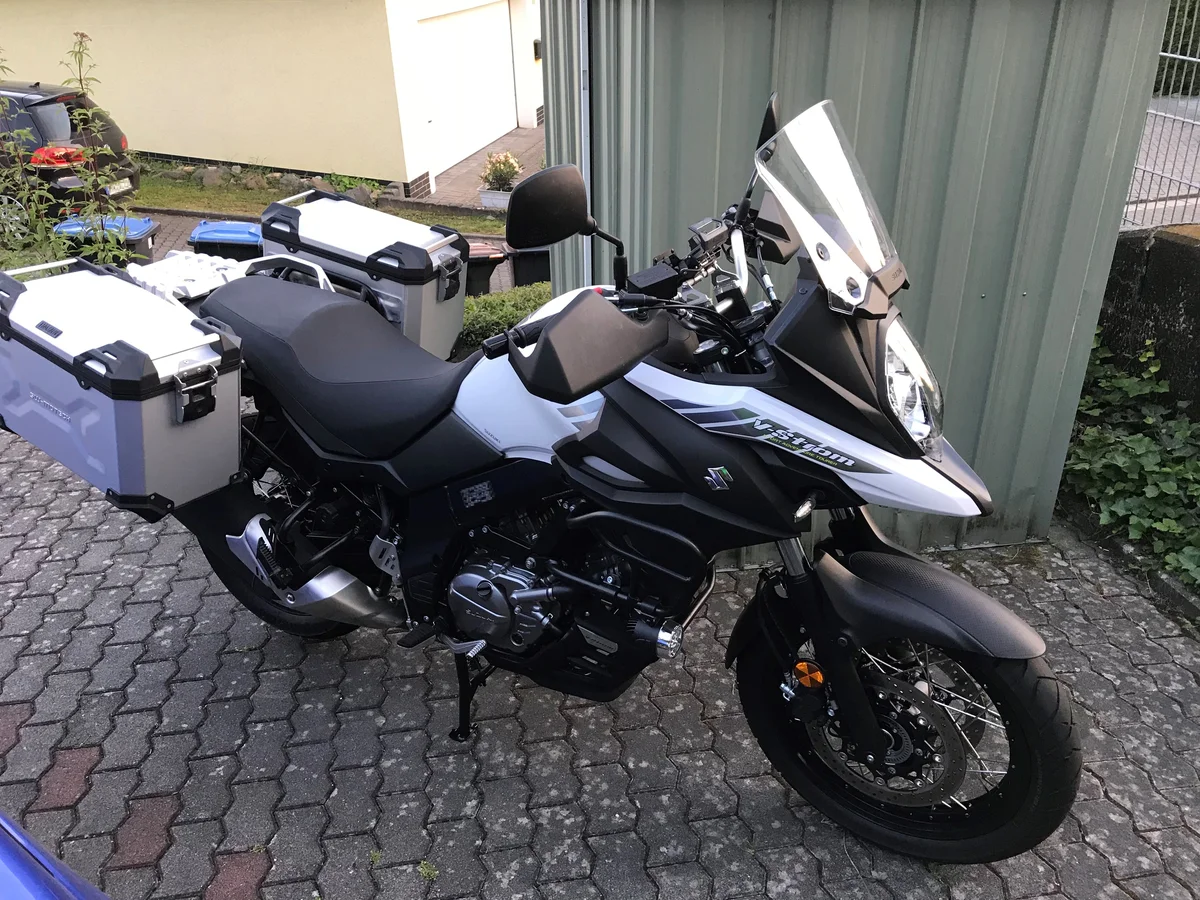
Price: ~$8,999 | Engine: 645cc V-twin | Seat Height: 32.9” (835mm) | Weight: 454 lbs / 206 kg
The V-Strom 650 sits 40mm lower than the standard Yamaha Ténéré 700 — which makes it the bridge between the accessible bikes above and the more demanding machine below. At 835mm, most riders 5’4” and above can manage one foot down with a reliable lean.
The primary trade-off is weight. At 206 kg / 454 lbs, the V-Strom is the heaviest bike on this list. At a standstill on any off-camber or loose surface, you feel the mass immediately. Slow-speed parking lot maneuvers require active focus. This is not the right machine for learning low-speed management — the weight penalizes mistakes more than any other bike here.
What you get in exchange is real touring capability. The 645cc V-twin makes ~68 HP, cruises at highway speeds with relaxed effort, and returns around 55–60 mpg for 200+ mile range. The upright position and genuine wind protection make long days manageable in a way the lighter machines above can’t fully match.
For a short rider who has sorted their low-speed technique and is ready for serious mileage, the V-Strom is a logical step up.
Short rider fit notes:
- 835mm — 40mm lower than standard Ténéré 700
- One-foot technique required; bike is heavy at standstill
- 206 kg: the most demanding recovery weight before the Ténéré
The catch:
- 454 lbs requires technique and physical confidence at slow speed
- 6.5” ground clearance limits off-road use
- $8,999 — significant price step up
Best for: 5’4”–5’7” riders with established technique, touring-focused, ready to move up in displacement. Shop Suzuki V-Strom 650 Accessories on Amazon
Yamaha Ténéré 700 Low — The Upgrade Target
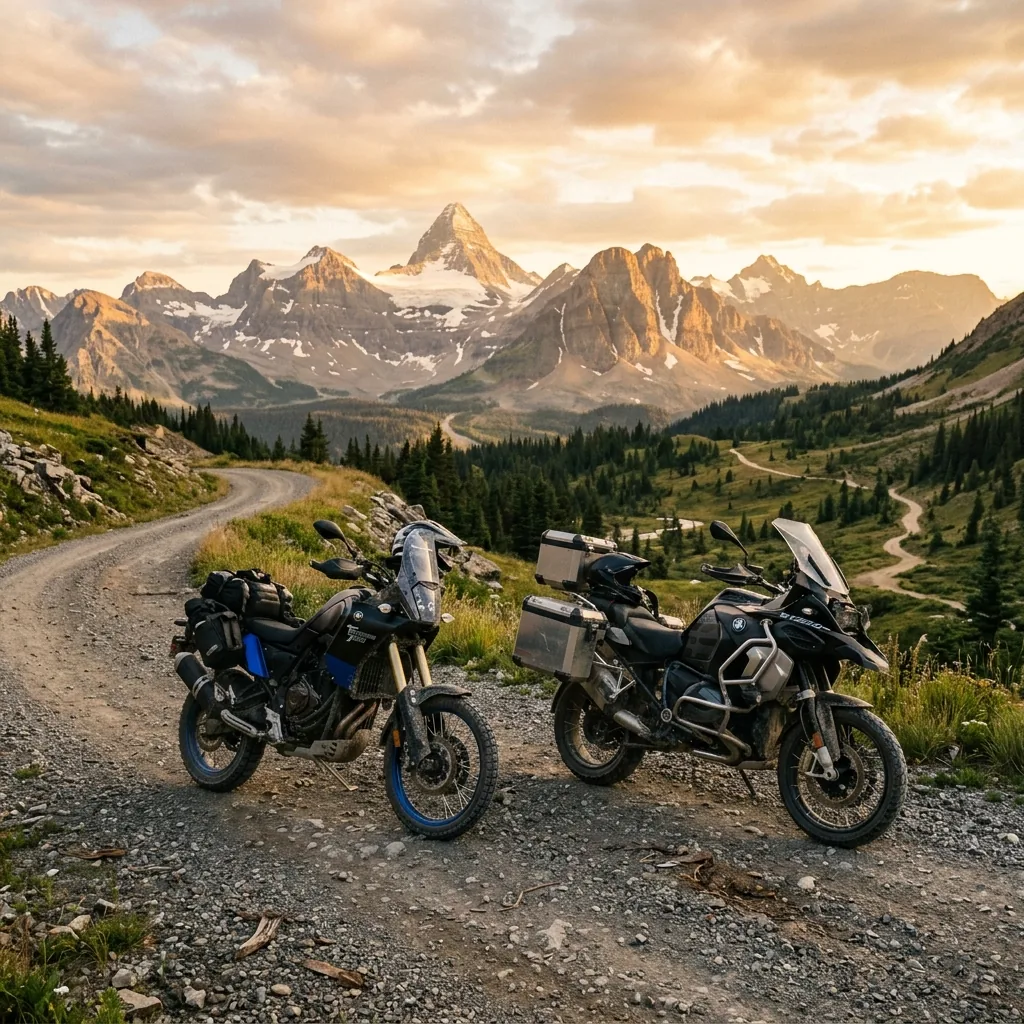
Price: ~$10,299 | Engine: 689cc twin | Seat Height: 33.9” (860mm) low seat | Weight: 458 lbs / 208 kg
The standard Ténéré 700 sits at 875mm (34.4”) — a hard stop for most riders under 5’6” without modification. The factory low seat brings it to 860mm (33.9”) with 20mm reduced suspension travel. It’s still the tallest bike on this list.
The reason it belongs here: the seat profile is narrow enough that a 169 cm (5’7”) rider can get both feet to the ground in low-seat configuration. A 5’4” rider can manage one foot flat with a reliable lean. The seat taper is what makes this possible despite the height, and it’s what makes the real-world reach better than the published spec implies.
For 2026, Yamaha added a 6.3” TFT display, MyRide navigation integration, and updated KYB suspension. The 689cc CP2 twin makes 72 HP. This is the most capable off-road machine on this list — the bike that will take you across mountain ranges and rough terrain that would stop the lighter bikes above it.
At 208 kg / 458 lbs, it’s the heaviest machine here. At 860mm, it demands established technique. This is not a bike to learn low-speed management on. It’s the bike you graduate to when those skills are already in place and your routes are ready for a machine without off-road limitations.
Short rider fit notes:
- 860mm low seat: workable for 5’4”–5’6” with technique
- Slim seat taper: real reach better than spec suggests
- 208 kg: most demanding recovery weight on this list
The catch:
- Tallest and heaviest machine on this list
- Requires established low-speed technique before committing
- Low seat reduces suspension travel
- $10,299
Best for: Experienced short riders, 5’4”+ with established technique, serious off-road goals. Shop Yamaha Ténéré 700 Accessories on Amazon
Lowering Options Explained
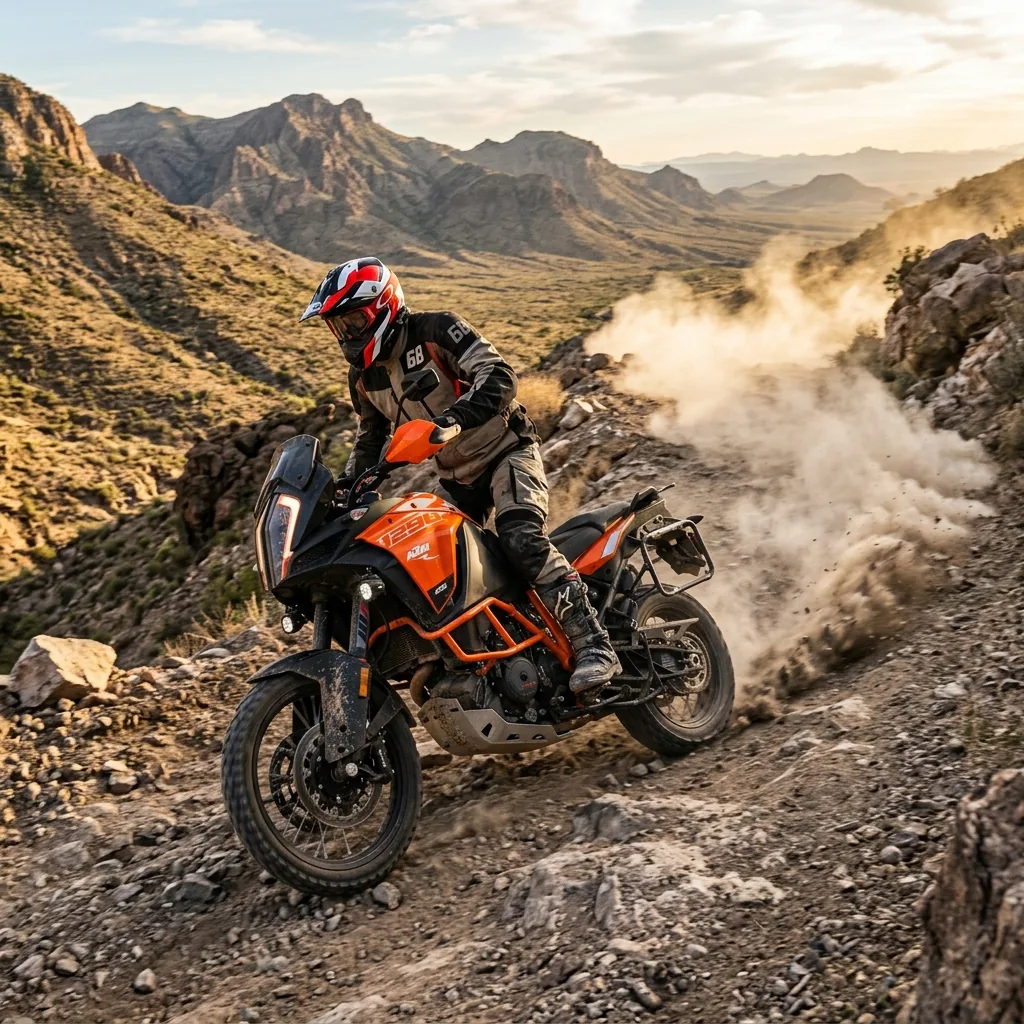
If the bike you want sits 10–30mm too high, four approaches exist. Each has a different cost.
Factory low seat — always the first choice. The Himalayan 450 and Ténéré 700 both include this at no extra cost. Minimal suspension travel reduction, no geometry change, no warranty issue. Start here before considering anything else.
Aftermarket foam reshaping — a specialist removes and reshapes the foam to lower the seat 15–30mm. No effect on suspension geometry or ground clearance. Trade-off: reduced padding, which becomes noticeable after 300+ km in a day. Combine with a gel insert to compensate for comfort loss.
Suspension lowering kit — adjusts preload or replaces linkages to lower the entire ride height. Each 20mm of seat height removed this way removes roughly 20mm of ground clearance. On asphalt-focused touring, this is a more acceptable trade. On rocky off-road terrain, it’s a direct operational constraint.
Combination lowering — stacking foam reshape and suspension drop together. The reductions compound. So do the trade-offs. Know exactly what terrain you’re giving up before committing to multiple modifications. A fully lowered bike that bottoms out on a rocky trail is not an improvement.
Technique Over Bike Choice
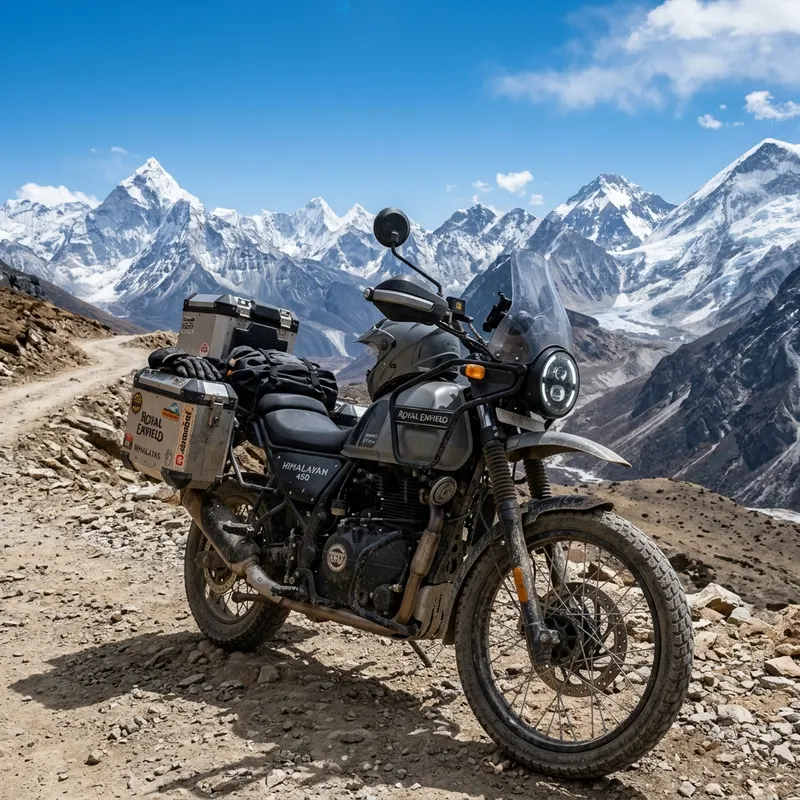
A shorter bike ridden without technique will drop. A taller bike with good technique won’t.
The one-foot technique: You do not need both feet flat simultaneously at every stop. Lean the bike slightly toward the planted foot, which is flat. The other foot stays on or near the peg. This is how professional ADV riders on large-displacement machines manage every stop. It’s a learnable skill that takes an afternoon to practice and opens up every bike on this list to riders who currently think they’re stuck with the lowest seat heights.
Offset lean stopping: When you anticipate a stop on uneven ground — gravel, camber, mud — plan which side to lean toward before you arrive. The lean is a planned tool, not an accident after the fact.
Slow-speed maneuvering practice: Before any long trip, practice U-turns, tight figure-eights, and backward walking with a full luggage load. The technique for managing a 200 kg motorcycle at walking pace is different from riding it at highway speed, and most drops happen below 15 mph.
The actual point: Many professional short-statured riders — of any gender — ride large machines that look inaccessible on a spec sheet. The limiting factor is technique, not height. A 5’2” rider with well-practiced slow-speed skills will manage the Himalayan 450 more confidently than a 5’6” rider without them.
Real Short Rider Accounts
ADV Moto’s 2025 long-term test of the Himalayan 450 included a 5’4” rider with a 30” inseam. After 6,000 km: the low-seat configuration was workable from day one, the adjustable seat position helped dial in the forward reach, and the bike never felt intimidating at speed. The main complaint was single-cylinder vibration above 90 mph — a function of displacement, not height.
RevZilla’s reader community has substantial feedback on the Versys-X 300 from short riders. The consensus from 5’2” owners: both feet genuinely near-flat at stops, manageable recovery weight, power adequate for all but sustained motorway use. The most consistent comment: “this is exactly what I needed for my first year.”
The common thread across all short rider accounts: you will drop the bike at some point, probably in the first season. Choose something you can recover from. Get that skill practiced. Then move up to a more capable machine when your riding has outgrown it.
FAQ
Final Word
The right ADV bike for a short rider in 2026 is the one that matches your current skill level, your planned terrain, and your honest assessment of what you can manage if it goes down on a remote stretch.
For most short riders starting out, that’s the Himalayan 450 in low-seat configuration: real off-road capability, factory-fitted seat-height solution, and $5,799 that doesn’t require compromise. For riders under 5’2” who want both feet flat from day one, the Versys-X 300 is the right starting point. For riders whose skills and budget are ready for the next level, the Ténéré 700 is the goal to build toward.
Don’t forget to configure your navigation setup for your first long trip. For women riders specifically, our best motorcycles for women in 2026 guide covers ergonomic considerations beyond seat height that are relevant to this decision. Our complete ADV gear guide covers what to wear once you’ve chosen the machine. And if you’re looking hard at the Himalayan 450, our Royal Enfield Himalayan 450 long-term review covers 8,500 km of real-world use in detail. Having a premium ADV jacket also makes a big difference in comfort.
Disclosure: Some product links in this article are affiliate links. We earn a small commission if you purchase through them, at no extra cost to you.
Frequently Asked Questions
What seat height is manageable for a 5'2" rider?
With both-feet-flat as the requirement, the Kawasaki Versys-X 300 at 815mm and the Royal Enfield Himalayan 450 at 810mm in low-seat configuration are the top options. With one-foot technique — the standard ADV approach — bikes up to 835mm are accessible for most 5'2" riders depending on tank width.
Should I always buy the lowest seat height ADV bike?
No. Seat height is one of three numbers that matter. Wet weight and tank width affect real-world manageability just as much. A slightly taller but significantly lighter bike may be more manageable overall — the BMW G 310 GS is the example in this comparison.
Can I lower any ADV motorcycle?
Most ADV bikes can be lowered through some combination of seat modification and suspension adjustment, but every method has trade-offs. Factory low seat options are always the first choice. Check manufacturer guidance before modifying suspension — some configurations affect warranty coverage.
What's the difference between seat height and standover height?
Seat height is the vertical measurement from the lowest point of the seat to the ground. Standover height accounts for the width of the seat and tank at your hip position — it's the actual clearance when swinging your leg over the bike. A narrow-tanked bike has better standover clearance than a wide-tanked bike at the same published seat height.
Is it safe to lower a motorcycle suspension?
When done within the manufacturer's specified range by a qualified technician, yes. Aggressive lowering beyond the designed geometry can affect cornering stability. Always do a controlled test ride after any suspension modification before riding in demanding conditions.