
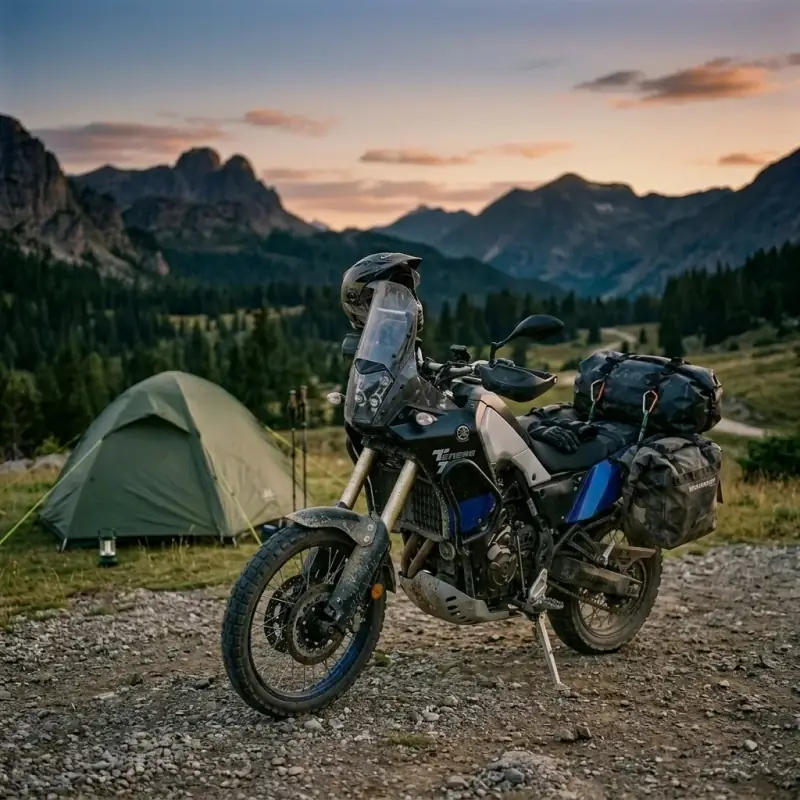
The Ténéré 700 exists to do exactly one thing well: carry a rider and a camp into places that don’t have hotels, and bring both back. This review covers the standard Ténéré 700 — not the higher-spec Rally edition or the new Ténéré 900. Past twelve thousand kilometres. Most of them loaded, a lot of them on gravel — owners build up the kind of perspective a launch-day road test never can, and this guide pulls that long-term picture together.
This is not a spec sheet with adjectives. You can get the bore and stroke anywhere. This is what the bike is actually like to own and abuse over a long stretch of real travel: what holds up, what wears, what annoys at hour three, and who should and shouldn’t buy one — drawn from extensive long-term owner reports, rider-forum threads and independent testing.
Disclosure: Some of the links in this article are affiliate links. If you buy gear through them, we may earn a small commission at no extra cost to you, and it never changes a recommendation. Bikes & Bays carries zero sponsored content.
Where the T7 Gets Tested
The kilometres that matter for a verdict like this are earned on real trips, not a test loop. The terrain that exposes a loaded adventure bike is exactly the kind found on routes like the Turkey-to-Georgia Black Sea & Caucasus run — humid coast, alpine pasture, and loose, exposed mountain track that tells you very quickly whether a loaded bike is composed or terrifying — mixed with long tarmac transits, gravel forest roads, and nights camped wherever the day ends.
That matters because the T7 is sold on a promise of being equally happy commuting and overlanding, and the only way to judge that promise is to load it like an overlander and live with it — which is exactly the use these long-term owner reports reflect.
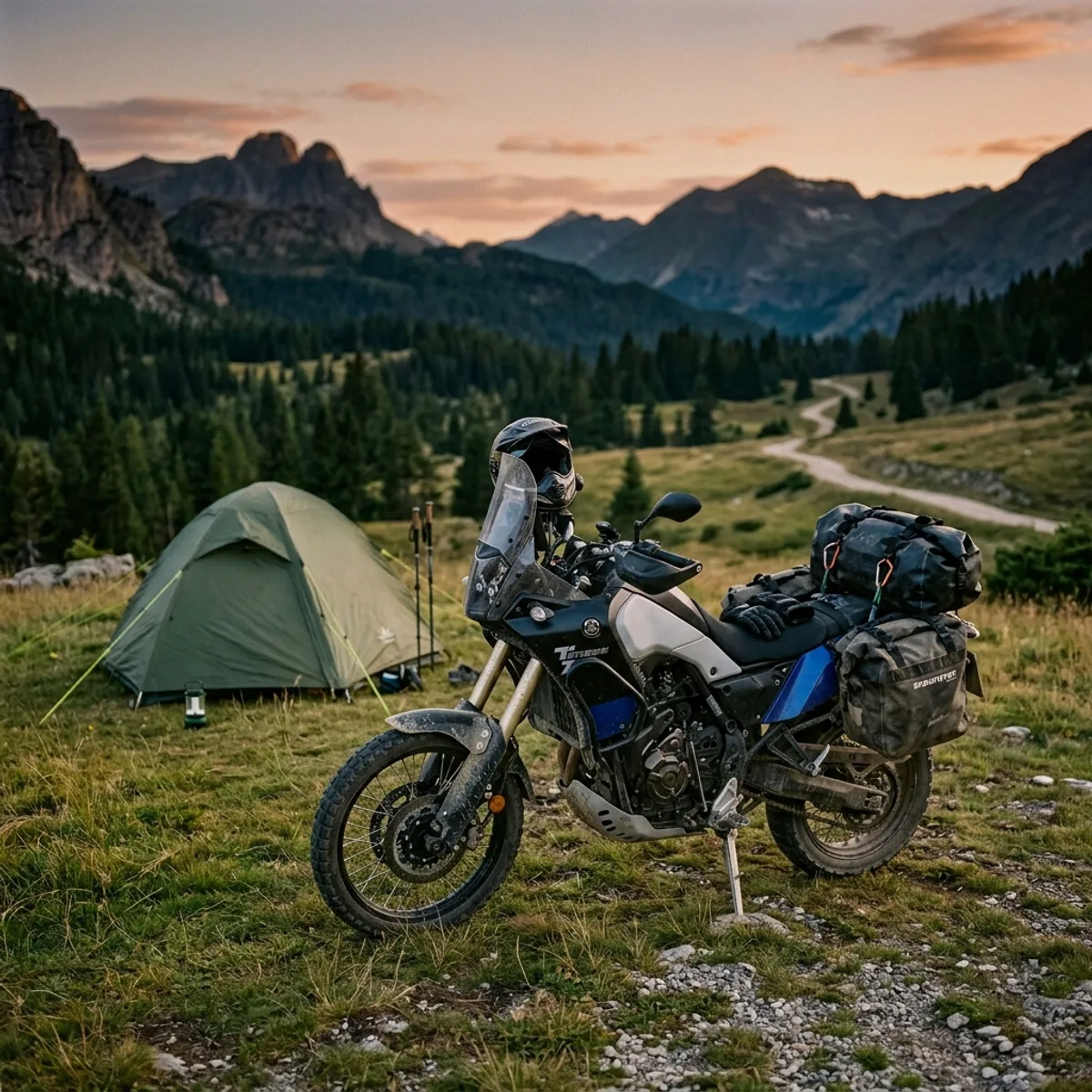
The Engine: The Reason People Keep One
The CP2 689cc parallel twin is the heart of the bike and the single best thing about it. It’s the same fundamentally tough 689cc engine Yamaha shares with the MT-07 (around 72 hp and 68 Nm), and it has the reliability reputation to match.
What you feel is torque low down, a flat usable spread through the middle, and just enough character at the top to keep it fun. On a loaded bike that low-end pull is everything — climbing a gravel switchback two-up-equivalent (rider plus full camp), you want the engine to lug without complaint, and this one does. Past 12,000 km it’s widely reported to put no foot wrong mechanically: no drama, no warning lights, no measurable oil consumption.
This is the engine that makes the T7 a sensible bike to take somewhere remote: simple, proven, and easy to live with.
Fuel Range in Practice
Forget the brochure figure. Here’s what owners actually plan around.
Loaded, on mixed roads, the reliable rule of thumb is 300 km as a safe planning leg, with most riders starting to hunt fuel by around 320–360 km depending on pace and headwind. Ridden gently you can stretch it; ridden hard off-road, into wind, with a full load, it comes down. The engine is efficient for its size, but a fully kitted travel bike is not a solo commuter, so it’s wise never to plan to the theoretical maximum.
For routes like the Caucasus passes, where stations thin out fast, that means filling at every opportunity in the highlands and carrying a small reserve. The 16-litre tank is adequate, not enormous; enough for real touring, not enough to be complacent.
Seat Comfort: The Honest Problem
This is the part of the review owners agree on more than any other.
The stock seat is fine for the first hour or two. After that it becomes a genuine endurance test. It’s firm, flat and unforgiving, and on a long multi-hour touring day it will have you standing on the pegs purely for relief. It’s comfortably the most common complaint about the bike and it’s the first thing most serious owners replace.
A good aftermarket comfort or gel seat fundamentally changes the bike for long-distance work. If you’re buying a T7 to tour, price the seat upgrade into the purchase from day one — a good aftermarket comfort or gel seat is the kind of upgrade that pays for itself on the first 600 km day. Two things worth knowing before you order: Seat Concepts quotes roughly six to eight weeks for T700 seats not in stock, so a foam kit is not a fix for a trip that is close, and a strap-on cushion is. Seat cushions and comfort upgrades sets the two options against each other.
Wind Protection: Manage Your Expectations
The small stock screen does very little. At motorway speeds you get a fair amount of windblast on the chest and helmet, and on a long transit day that’s fatiguing. It’s a deliberate design choice. The T7 is built rally-flavoured and minimal, not as a wind-tunnel tourer. But it’s worth knowing before a 500 km highway slog to reach the fun bit.
A taller touring screen helps noticeably. It won’t turn the bike into a full-dress tourer, and adding a big screen can introduce buffeting if you get the height wrong, so it’s worth choosing carefully. A well-chosen taller touring screen is the second cheap upgrade most owners make after the seat.
Loaded Handling, On and Off Road
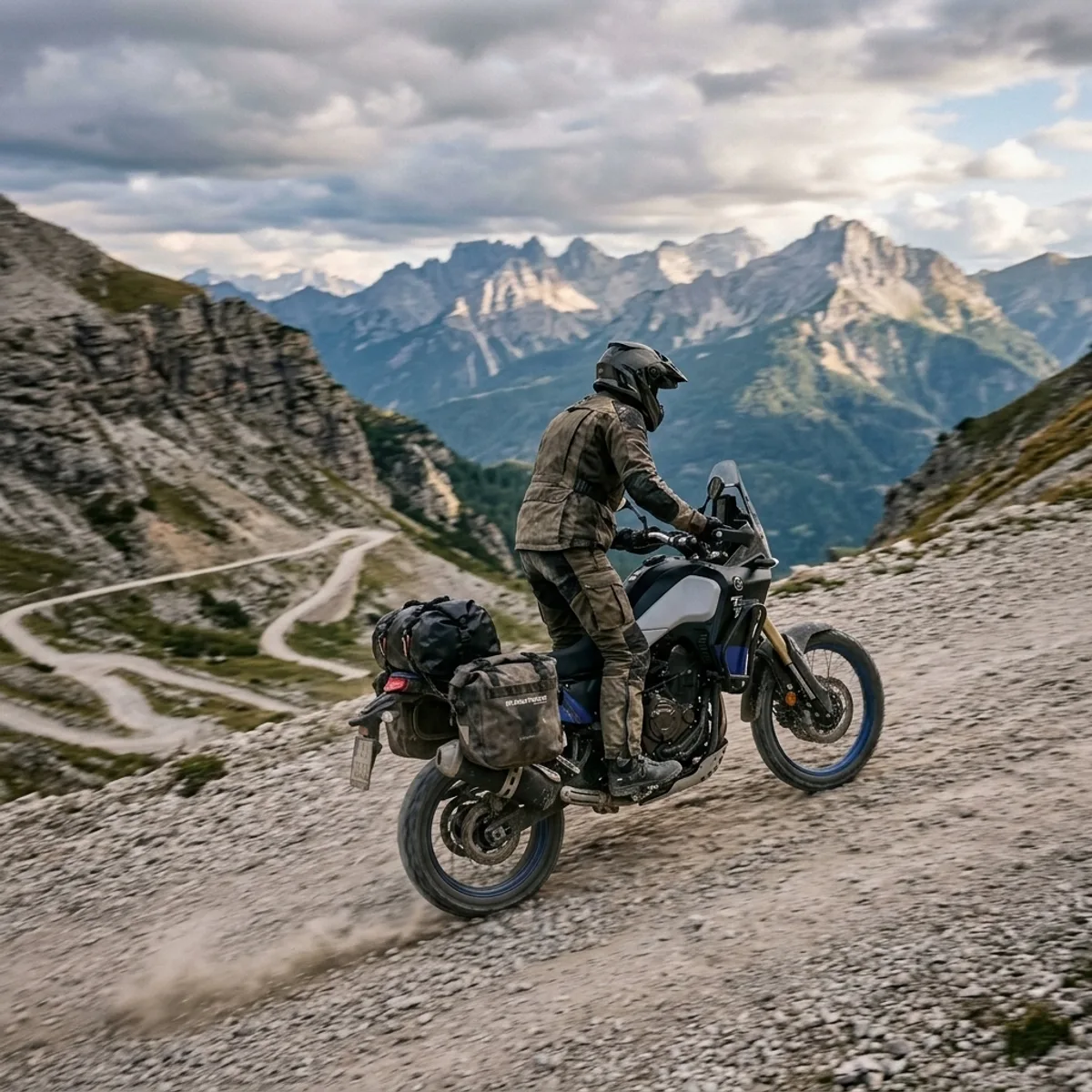
Here the T7 earns its reputation. Loaded with soft luggage and a full camp, it stays composed. On tarmac it’s planted and predictable. Off road, the long-travel suspension and relatively low-tech-but-effective chassis let you stand up and ride it properly. It rewards good footwork and a relaxed grip.
The honest caveat is weight when things go wrong. Fully loaded, on a loose climb, it is a lot of bike to pick up alone, and you will, at some point, pick it up alone. It’s lighter and more manageable than the big 1200/1250-class adventure bikes, which is exactly why it wins out over them for genuine remote travel, but it is not a lightweight trail bike. Know which side of that line you sit on.
Luggage choice is part of handling, too. Soft bags are the usual pick for this kind of riding. The reasons why (crash behaviour, weight, security trade-offs) are laid out in the soft vs hard panniers comparison.
What Wears Out: The Honest Wear Log
The useful question for any travel bike isn’t “is it reliable?” in the abstract. It’s what actually degrades over real use. Across 12,000+ hard kilometres, here’s what owners consistently report wearing on the T7:
- Tyres. The consumable that matters most on a bike like this; mixed-surface use chews them faster than pure road miles.
- Chain and sprockets — normal wear, accelerated by grit from gravel and stream crossings. Clean and lube religiously on a travel bike.
- Brake pads; normal wear, nothing unusual.
- Fasteners — a couple of bolts wanted re-torquing after sustained hard off-road sections. Not a fault; just the reality of vibration plus rough ground. Carry the tools and check them.
What did not happen: no engine issues, no gearbox issues, no electrical gremlins, no consumption surprises. For a travel bike, that simplicity is the whole point — routine maintenance stays routine, and nothing on the list above needed a workshop.
Pros and Cons
- CP2 engine — torquey, efficient, faultless over 12,000 km
- Mechanically simple and proven — a sensible bike to take somewhere remote
- Composed loaded handling on tarmac and gravel alike
- Lighter and more manageable than the big 1200/1250-class adventure bikes
- Rewards proper standing-up off-road technique
- Strong aftermarket and parts availability
- Stock seat is punishing past hour two — near-mandatory upgrade
- Minimal wind protection from the small stock screen
- Tall seat height; shorter riders will feel it
- Heavy to pick up alone when fully loaded
- Basic electronics compared to pricier rivals (switchable, not deeply configurable)
Who It’s Right For, and Wrong For
Right for: the rider who genuinely travels — loaded trips, mixed surfaces, nights away from services, and wants one honest, fixable bike to do it on without the bulk and intimidation of a big-bore tourer. If that’s you, the T7 is close to ideal, and after a seat and a screen it’s hard to fault for the money.
Wrong for: the rider who mostly does long motorway slabs and wants luxury, wind protection and electronics out of the box — a more touring-focused machine will be comfier. And it’s a stretch for a true beginner planning heavy off-road touring: the height and loaded weight are real. If you’re early in your riding, sit on one and read the best motorcycles for long-distance touring comparison to see where the T7 sits against the alternatives before you commit.
FAQ
The questions riders ask most — real fuel range, the seat, reliability, beginner-friendliness, the downsides, and luggage — are answered in the box above. The one-line version: the Ténéré 700 is the honest mid-weight adventure bike, mechanically faultless in long-term owner use past 12,000 km, badly let down only by a stock seat you’ll replace and a screen you’ll upgrade. Buy it for travel, budget for those two changes, and it’ll go further than bikes costing far more.
This long-term review is built from owner reports, rider-forum threads and independent testing, and is not sponsored. Some links above are affiliate links; if you buy through them, we may earn a small commission at no extra cost to you.
Frequently Asked Questions
What is the real-world fuel range of the Yamaha Ténéré 700?
In loaded touring use, owners consistently report a tankful reliably covers a planning range of roughly 320–360 km before they start actively looking for fuel, with a bit more available when ridden gently. The CP2 engine is efficient, but a loaded bike into a headwind drinks more than a solo commuter, so it's wise never to plan to the theoretical maximum. The practical takeaway: treat 300 km as a safe planning leg and carry a small reserve for remote sections where stations are sparse.
Is the Ténéré 700 seat comfortable for long days?
The stock seat is the T7's most common complaint by a wide margin. It's fine for the first couple of hours and becomes a genuine problem on long multi-hour days — firm, flat, and unforgiving. It is the first thing most owners change. A comfort or gel aftermarket seat transforms the bike for touring; if you plan big days, budget for one from the start rather than enduring the stock unit.
Is the Yamaha Ténéré 700 reliable?
Past 12,000 km the CP2 engine has a strong reputation for being faultless — it's the same fundamentally robust parallel-twin used across Yamaha's lineup. What owners report needing attention over that period is wear-and-consumables (tyres, chain, brake pads) and the odd bolt that wants re-torquing after hard off-road sections, not engine or drivetrain failures. It is a mechanically simple, honest bike, which is a large part of its appeal for remote travel.
Is the Ténéré 700 good for beginners?
With caveats. The engine is forgiving and the bike is friendly on the road, but it is tall and, fully loaded, it is a lot of bike to pick up alone on a loose surface. For a confident rider stepping up it's superb. For a true beginner planning heavy off-road touring, the seat height and loaded weight are real considerations — sit on one, and read a dedicated beginner-bike comparison before committing.
What are the main downsides of the Ténéré 700?
The stock seat, basic wind protection from the small screen, fairly basic switchable-but-not-configurable electronics compared to pricier rivals, and a tall seat height that shorter riders feel. None of these are dealbreakers — most are cheap to address — but they're real, and an honest buyer should price the seat and screen upgrades into the purchase.
Soft or hard panniers on a Ténéré 700?
Soft luggage is the popular choice for serious off-road touring on the T7 — it's lighter, it doesn't try to break your leg in a fall, and it suits the bike's adventure intent. Hard panniers make more sense for security-focused road touring. The whole decision is broken down, with crash behaviour and weight data, in the soft-vs-hard panniers comparison linked below.