
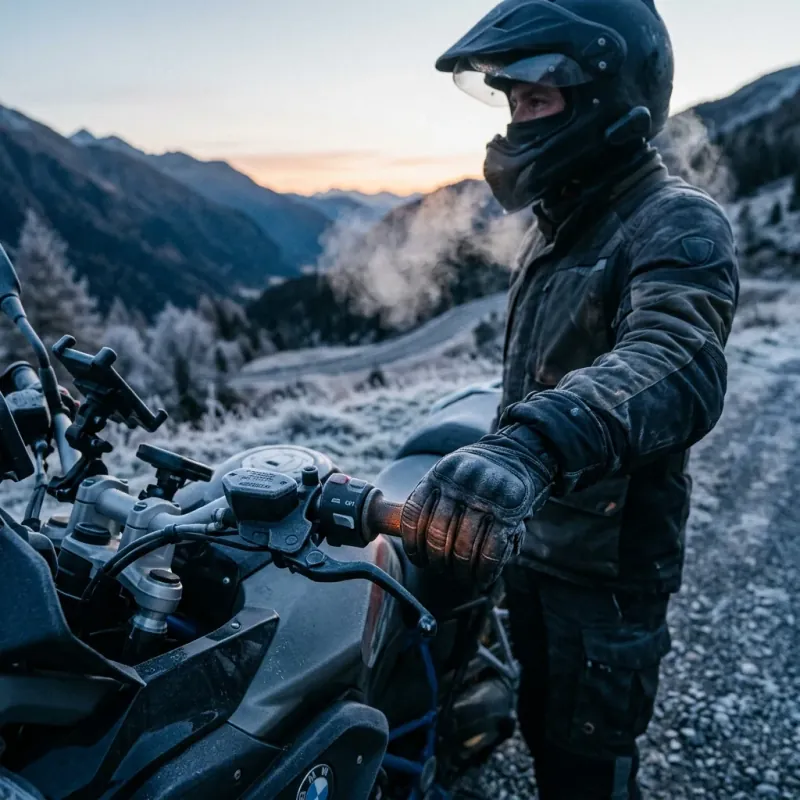
Cold hands don’t just make a ride unpleasant. They end it. There’s a point, somewhere around the second hour in single-digit temperatures, where your fingers stop working the levers properly and the only sensible thing to do is stop. Heated gear is the kit that pushes that point back by hours, and your riding season forward by months. It’s the difference between parking the bike in October and still riding it in February.
But almost every “best heated gear” list buries the one decision that actually shapes your purchase: 12V bike-powered versus 7V battery-powered. Get that right and everything else follows. So I’ll explain that call first, tell you where to spend first (it’s not the jacket), and then give you the picks — from the heated grips every rider should fit, to a wired liner for serious cold.
Oxford Heaterz Premium Adventure grips
The best first heated upgrade for any adventure bike — cheap, permanent, fixes the worst cold spot.
Check Oxford Heaterz Adventure on Amazon →12V vs Battery, and Where to Spend First
Before any of it, one thing worth getting right: heated gear works with windproof layers, not instead of them. At road speed the wind sets what your body is actually dealing with — by the National Weather Service’s own formula, 5°C air at 100 km/h works out to roughly −3.4°C on exposed skin — so a heated liner under a jacket the wind gets through is fighting a losing battle. Our guide to riding in cold weather covers the layering that makes everything below work properly.
Two questions decide your whole heated-gear setup.
Power source:
- 12V bike-powered — wires into the motorcycle, so unlimited runtime and maximum heat. Best for long, genuinely cold days. The cost: you’re tethered to the bike, and high-draw items can strain a small bike’s charging system.
- 7V battery-powered — runs off rechargeable packs, so it’s portable (walk around camp still warm) with no wiring. The cost: 2–10 hours of runtime and less peak heat.
Where to spend, in order:
- Heated grips — cheapest, permanent, and they fix the worst cold spot (your hands) directly. Start here, always.
- Heated core (jacket liner) — warming your core keeps your whole body warmer through circulation. The biggest comfort jump after grips.
- Extremities (heated gloves, vest). The finishing touch for the coldest days.
Most riders should fit grips first and only then decide whether they need more. With that framework, here’s the lineup.
Heated Gear Compared — Side by Side
6 Heated Items — Side by Side
| Item | Power | Type | Price | Rating |
|---|---|---|---|---|
| Best First UpgradeOxford Heaterz Premium Adventure grips | 12V (bike) | Grips | $$ | |
| PremiumGerbing 12V Heated Jacket Liner 2.0 | 12V (bike) | Jacket liner | $$$$ | |
| Savior Heat Heated Gloves | 7.4V battery | Gloves | $$$ | |
| Savior Heat Heated Jacket | USB battery | Jacket | $$$ | |
| ORORO Heated Gloves | 7.4V battery | Gloves | $$ | |
| Oxford Essential HotHands grips | 12V (bike) | Grips | $ |
1. Oxford Heaterz Premium Adventure — Best First Upgrade
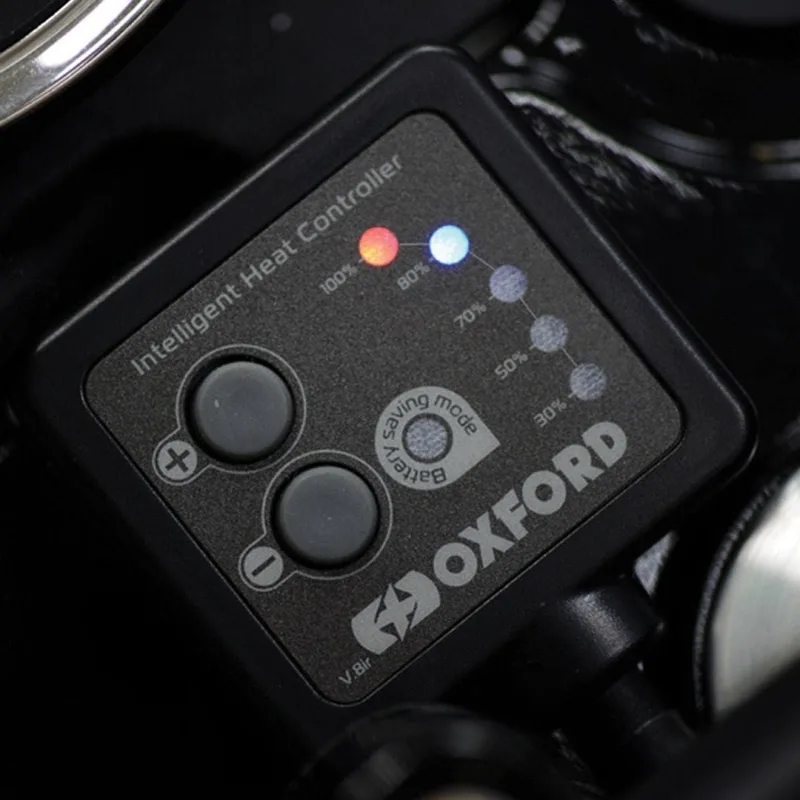
If you buy one piece of heated gear, make it the Oxford Heaterz Premium Adventure grips. They’re the highest-value upgrade in this whole guide: they fix your hands. The first and worst place to feel the cold — permanently, for around $90, and once they’re on the bike you never have to think about charging or wiring anything again.
Five heat settings — from a gentle 30% up to a genuinely hot 100% that reaches around 122°C — let you dial in exactly what you need, the weatherproof construction handles rain and grime, and the ADV-length grips suit adventure bars. They wire into the bike, so the warmth is unlimited as long as you’re riding, and the controller is simple to use with gloves on. For anyone who rides into autumn and winter, this is the single best money you’ll spend, and it’s why they’re the top pick.
Fitting them takes a bit of work (you’re replacing the grips and wiring to the battery), and they’re bike-powered so they don’t help off the bike. But as a permanent fix for cold hands, nothing beats them.
Disclosure: some links below are affiliate links. If you buy through them we may earn a small commission at no extra cost to you.
Check Oxford Heaterz Adventure on Amazon →
- Fixes the worst cold spot permanently
- 5 heat settings, weatherproof
- Unlimited runtime off the bike
- Best value in heated gear
- Requires fitting and wiring
- No help once you're off the bike
2. Gerbing 12V Heated Jacket Liner 2.0 — Premium Core Heat
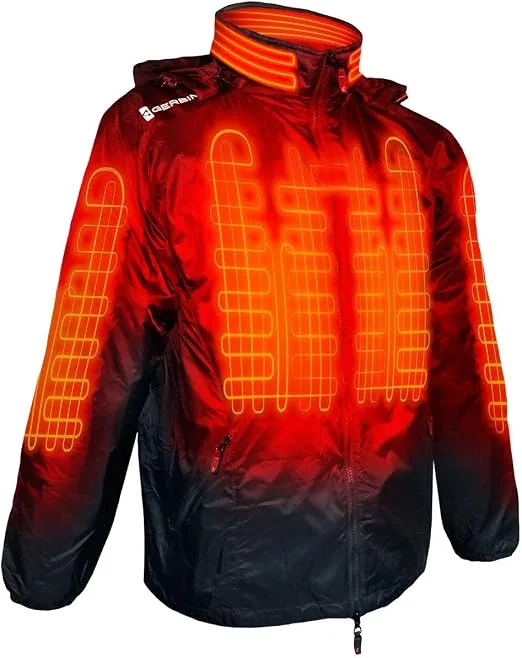
For serious, all-day cold, the Gerbing 12V Heated Jacket Liner 2.0 is the gold standard. Seven Microwire heating zones — one on the collar, two across the chest, two in the sleeves and two at the back — wrap your core, wired into the bike for unlimited runtime, so on a freezing 400-mile day it’s still pumping out heat when a battery liner would have died hours ago. Warm your core and your whole body follows.
This is the liner for the rider who genuinely tours in winter or rides through cold mountain passes, worn under a shell like the Klim Badlands Pro jacket. The heat is even and hot, the fit is trim enough to layer under riding kit, and the Microwire construction is more comfortable and durable than older heated elements. Around $220 buys the most capable heated layer here.
The thing to watch is current draw: a 12V liner pulls real wattage, so on a small bike you need to check the charging system can spare it (see the FAQ). For a mid-size or bigger ADV bike ridden in real cold, it’s the one to beat.
Check Gerbing 12V Liner on Amazon →
- 7 zones, genuinely hot core warmth
- Unlimited runtime off the bike
- Trim enough to layer under a shell
- The serious-cold benchmark
- High draw — check small-bike charging
- Premium price, needs wiring
3. Heated Gloves — Battery or 12V, and the Number That Decides It
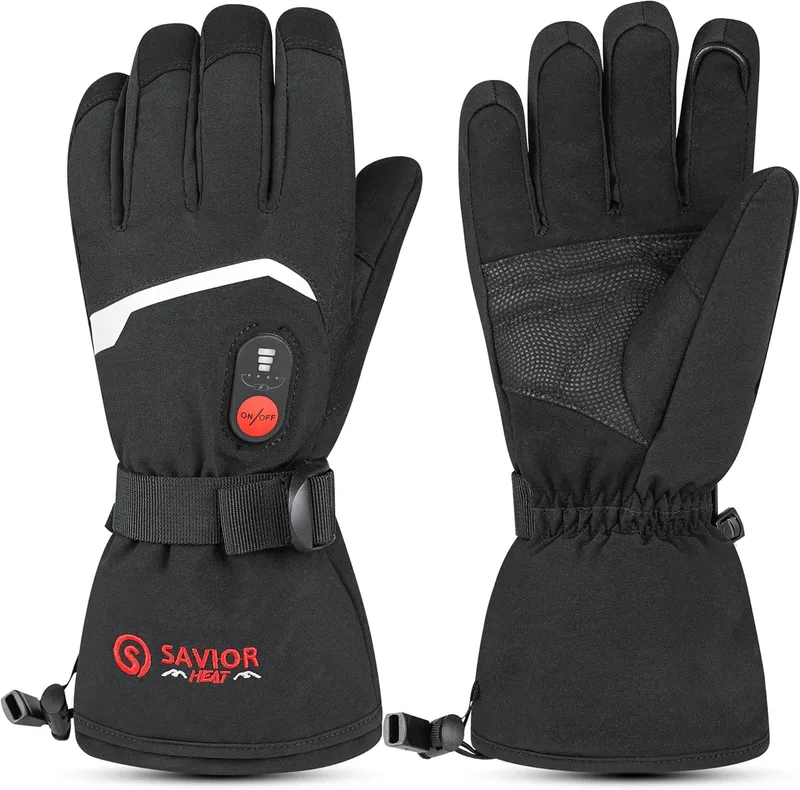
Gloves cover the half of the hand that grips cannot reach, and the category splits by power source rather than by price. Battery gloves run from 7.4V packs in the cuffs: nothing to wire, nothing taken from the bike, and they keep working after you park. Wired 12V gloves never run out and produce considerably more heat, at the cost of a lead you unplug at every stop and a system to install.
How much more heat is calculable from the manufacturers’ own published figures, and it is the thing worth knowing before you spend. A wired glove sits around 13 watts a hand; a battery glove advertising eight hours is running closer to two. That arithmetic, the certification split between brands, and the pair-by-pair picks are all in the dedicated guide — best heated motorcycle gloves.
Two things to carry over from it. Fit first: elements and battery pockets add bulk, and a glove too thick to work the levers cleanly is worse than a cold hand. And read the construction, not the title: several of the best-selling battery gloves in this category are ski or work gloves with no impact protection and no motorcycle certification, which is a different product from the one the listing implies.
Check Savior Heat Gloves on Amazon →
Check ORORO Heated Gloves on Amazon →
4. Savior Heat Heated Jacket — Budget Core Heat, No Wiring
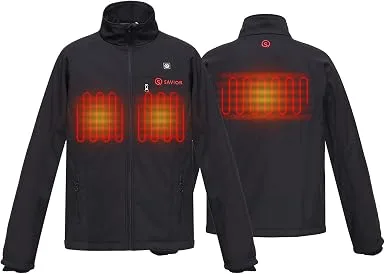
If you want heated core warmth without wiring anything into the bike, the Savior Heat Heated Jacket is the easy entry point. It runs off a 5200mAh USB battery pack. The same kind you’d use to charge a phone. So there’s zero installation: charge it, put it on, ride. Around $140 gets you into heated-core territory for far less than a wired liner.
It’s the sensible choice for the rider who rides in moderate cold a few times a season and doesn’t want to commit to wiring, or who wants warmth they can also wear off the bike around camp. The heat covers the core well, and because it’s battery-powered it works on any bike regardless of charging output; no stator maths required.
It won’t match a 12V liner for sustained heat on a brutal all-day ride, and the battery limits runtime. But as a no-fuss, no-wiring way into heated core warmth, it’s a useful budget option.
Check Savior Heat Jacket on Amazon →
- No wiring — USB battery pack
- Works on any bike, any charging system
- Wearable off the bike too
- Affordable core heat
- Battery limits runtime
- Less sustained heat than a 12V liner
5. Oxford Essential HotHands — Best Budget Grips
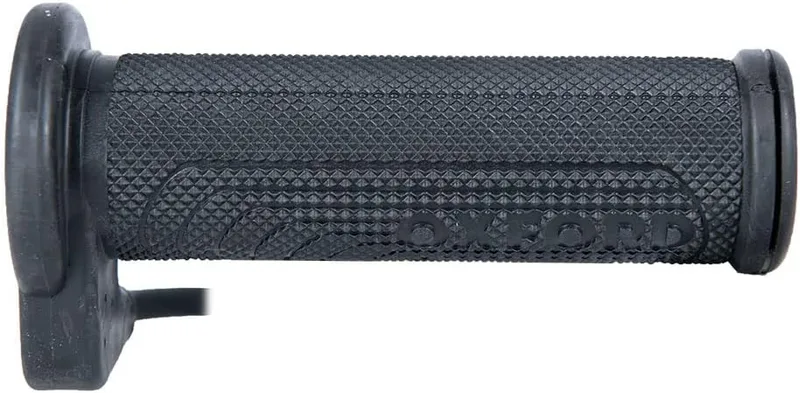
If the Heaterz Premium are more than you want to spend but you still want heated grips, and you should. The Oxford Essential HotHands grips are the cheaper way to get them. Around $60 for a simpler Oxford grip with a thumb warmer, bike-powered like their pricier sibling, fixing the same worst-cold-spot problem for less.
You give up some of the Premium’s heat levels and refinement, but the core benefit is intact: permanent, wired-in warmth for your hands at a budget price. For the rider who wants the single most valuable heated upgrade without spending $90, these deliver it. It’s the same advice as the top pick; fit grips first; just at a lower price point.
What you give up versus the Adventure grips is a couple of heat settings and some of the weatherproof ruggedness. But as a budget route to warm hands, they’re the sensible choice.
Check Oxford HotHands on Amazon →
- Cheapest route to heated grips
- Thumb warmer included
- Same wired-in, permanent benefit
- Fewer heat levels than the Premium
- Less rugged build
How to Choose: A Quick Buying Guide
- Spend in order: grips first, then a core liner, then gloves/vest. Don’t start with the most expensive item.
- Pick your power source: 12V for long, deep-cold days; 7V battery for convenience, portability, and small bikes with tight charging.
- Check your bike’s charging budget before fitting a high-draw 12V liner — small singles like the Himalayan or G310GS can’t always spare the watts for a liner plus grips plus lights. Add up everything you run and leave a margin (full explainer in the FAQ).
- Layer it right: a heated liner goes under your shell, against a thin base layer, not over a thick jumper that insulates the heat away from you. Thin is the operative word here — which base layer weight to buy covers why the layer under a heated liner is a different purchase from the one you’d wear without it.
- Plan around it: heated gear is what makes shoulder-season touring and cold mountain passes comfortable. It widens the calendar on a long-distance touring bike.
Heated gear also pairs naturally with the right cold-weather textiles — a roomy four-season pant from the adventure riding pants guide leaves space for a heated layer underneath.
FAQ
The five questions riders ask most — 12V vs battery, where to spend first, battery drain, whether battery gloves are warm enough, and running a 12V liner on a small bike; are answered in full at the top of this page.
The short version: fit heated grips first. The Oxford Heaterz Premium Adventure are the pair to get; the Gerbing 12V liner is the serious-cold core upgrade; the Savior Heat gloves and jacket give portable, wiring-free warmth; the ORORO gloves are the cheap way to test heated hands; and the Oxford HotHands are budget grips. Match the power source to your bike and your riding, and ride months longer than you do now. If the specific question you came with was grips or gloves, we take that apart properly in heated grips vs heated gloves — they heat different halves of your hand, which is why the answer is not the one most lists give.
Buying for someone else? Grips are the only heated item on this page that isn’t sized to a body, which makes them the one safe heated gift — see our gift guide for adventure motorcyclists for the rest of that reasoning.
Prices and availability change constantly. The figures here are approximate guides, not live quotes. Check the current price through any link before buying.
Disclosure: Some links in this article are affiliate links. If you buy gear through them, we may earn a small commission at no extra cost to you.
A note on the prices: these are indicative US retail figures as of June 2026, not live quotes. Gear pricing moves constantly and varies by region and retailer — the figure on the linked product page is always the one that counts.
Frequently Asked Questions
Should I buy 12V bike-powered or 7V battery-powered heated gear?
This is the decision that should drive your whole purchase. 12V gear wires into the motorcycle's electrical system, so it has unlimited runtime and the highest heat output — perfect for long, genuinely cold days in the saddle, but you're tethered to the bike and you have to wire it in. 7V battery gear runs off rechargeable packs, so it's portable (you can walk around camp or the shops still warm) and needs no wiring, but runtime is limited to roughly 2–10 hours depending on the heat level and it puts out less peak heat. The rule of thumb: if you ride long days in real cold, go 12V; if you want convenience, portability and no wiring — or you ride a small bike with limited charging output — go battery.
Where should I spend first on heated gear — grips, gloves, or a jacket?
Heated grips, almost always. Your hands are the first thing to go numb and the worst place to lose feeling because they work the controls, and heated grips are cheap, permanent, and fix that worst cold spot directly. After grips, a heated jacket liner is the highest-value next step because warming your core keeps your whole body — including your extremities — warmer through better circulation. Heated gloves and vests come after that. So the sensible order is grips, then core (liner), then extremities (gloves), rather than starting with the most expensive item.
Will heated grips or a 12V liner drain my motorcycle battery?
Heated grips draw more than their reputation suggests: Oxford rates the Heaterz Premium range at 48 watts (4 amps at 12 volts), which is the bottom of the same band as a heated liner rather than a negligible figure of its own. On a bike with generous alternator surplus that is still a non-issue, and the main risk is leaving them on with the engine off, which some kits prevent automatically. On a small single already running auxiliary lights and a charger, it is a number to add up rather than assume. A 12V heated jacket liner draws a lot more (often 40–90 watts), and that's where small adventure bikes can struggle: a Himalayan, CB/NX500 or G310GS has limited charging output, and running a liner plus heated grips together can exceed what the bike can spare. Check your bike's stator/alternator surplus before committing to high-draw 12V gear; if it's tight, battery-powered 7V kit sidesteps the problem entirely.
Are battery-powered heated gloves warm enough for real winter riding?
For most riders and most conditions, yes — 7.4V battery gloves with wrap-around heating elements keep hands comfortable down to near-freezing for a few hours on a charge. Where they fall short is sustained, deep cold (well below freezing) over long days, where their limited runtime and lower peak output show, and where 12V gloves wired to the bike pull ahead. A common and effective setup is heated grips for constant baseline warmth plus battery gloves for the back of the hand and fingers — together they cover far colder conditions than either alone. If you only ride into mild winter, battery gloves are plenty.
Can I run a 12V heated liner on a small adventure bike like a Ténéré or Himalayan?
Sometimes, but check first — this is the warning the spec sheets won't give you. A mid-size ADV bike like a Ténéré 700 usually has enough charging headroom for a heated liner on its own. A smaller single like a Royal Enfield Himalayan or BMW G310GS has much less surplus, and adding a high-draw liner on top of heated grips, auxiliary lights and a phone charger can outrun the alternator and slowly flatten the battery. Look up your bike's charging surplus, add up the watts of everything you run, and leave a margin. If the maths is tight, battery-powered 7V gear gives you heat without touching the bike's electrical budget.