
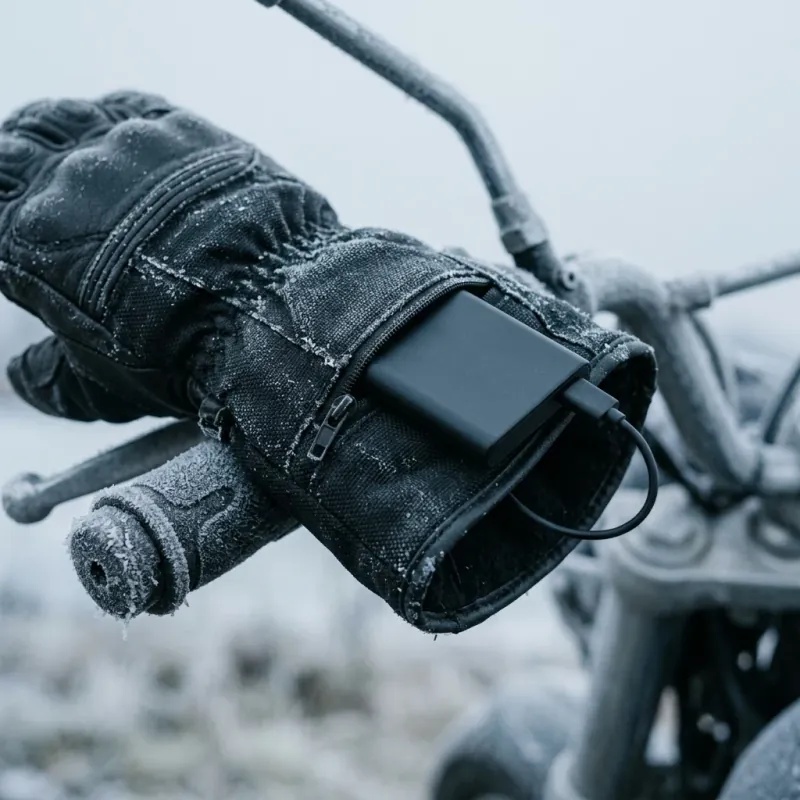
There is a particular kind of shopping that happens in October. It is dark at five, the last ride was the one where your fingers stopped reporting back somewhere around the second fuel stop, and you are looking at a page of heated gloves trying to work out which of them is telling the truth.
They all say hours. Six hours. Eight hours. Up to ten on low. It looks like the number you are supposed to compare, and it sits right there in the bullet points where a spec belongs.
It is the wrong number — or rather, it is the right number wearing a disguise. A runtime claim is a wattage claim. The battery holds a fixed amount of energy, and how long that energy lasts is decided entirely by how fast the glove burns it. Divide one by the other and you get the figure nobody prints: how much heat the glove can actually put into your hand.
Do that across the category and it rearranges itself. The gloves separate by power source rather than by price, a $100 pair and a $440 pair turn out to run at the same output when both promise eight hours, and a few of the things this category sells confidently stop making sense.
Disclosure: some links below are affiliate links. If you buy through them we may earn a small commission at no extra cost to you.
The arithmetic every listing leaves out
Two lines of school physics, and then we can use them on everything.
A lithium pack’s energy is its voltage times its capacity. A 7.4V pack rated 2350mAh — that is 2.35 amp-hours — holds 7.4 × 2.35 = 17.39 watt-hours. Watt-hours are energy; watts are the rate you spend it. So if a glove empties a 17.39Wh pack in two hours, it was drawing about 8.7 watts the whole time.
Turn it around and you have a tool:
Watts per hand = the pack’s watt-hours ÷ the hours claimed.
Every battery glove gives you both halves. The capacity is on the pack or in the listing; the runtime is in the marketing. They just never appear in the same sentence.
The method checks itself against REV’IT!
This would be a neat trick and nothing more if there were no way to test it. There is, and it comes from a manufacturer that publishes unusually complete data.
REV’IT!‘s battery page for its heated gloves states the pack as “7.4V, 2350mAh, 17.39Wh” — they have done the watt-hour conversion themselves — and lists four modes by runtime and by percentage of full power: Boost at 100%, Performance at 75%, Normal at 50%, Eco at 25%, running 130, 170, 240 and 480 minutes respectively.
So the percentages are a published answer key. Derive the watts and see whether they land where REV’IT! says they should.
| Mode | Maker’s % | Runtime | Derived W/hand | Derived % |
|---|---|---|---|---|
| Boost | 100% | 130 min | 8.0 | 100% |
| Performance | 75% | 170 min | 6.1 | 76% |
| Normal | 50% | 240 min | 4.3 | 54% |
| Eco | 25% | 480 min | 2.2 | 27% |
Four for four, within a couple of points. The derived figures run slightly above the labelled percentages at the low settings — 27% where the label says 25% — and the honest position is that two data points do not identify the cause. The likeliest candidate is that some of the draw does not scale with the heat setting at all: a controller, an indicator LED and the pack’s own protection circuit cost the same whether the element is at full or a quarter, which is a larger share of a small number than of a big one. It could equally be that the percentages are nominal labels and the minutes are measured. Either way the discrepancy is small and it does not move the conclusion.
The point is not REV’IT!. The point is that the arithmetic survives contact with a manufacturer’s own numbers, so we can point it at the ones that publish hours and hope you never ask what they mean.
What a watt buys
Here is the category sorted by the only figure that compares across it. Published means the manufacturer states the power; derived means it was calculated from that manufacturer’s own battery and runtime figures.
| Glove | Power source | W per hand | Figure |
|---|---|---|---|
| Gerbing Vanguard 12V | Bike 12V | 13.0 | Published |
| REV’IT! Liberty H2O — Boost | 7.4V pack | 8.0 | Derived |
| Savior Heat SHG03 2.0 — High | 7.4V pack | 7.4 | Derived |
| Tourmaster Synergy Pro-Plus liner | Bike 12V | 6.6 | Published |
| ORORO Twin Cities — High | 7.4V pack | 4.9 | Derived |
| Savior Heat SHG03 2.0 — Low | 7.4V pack | 2.2 | Derived |
| REV’IT! Liberty H2O — Eco | 7.4V pack | 2.2 | Derived |
| ORORO Twin Cities — Low | 7.4V pack | 1.7 | Derived |
Read the bottom three rows together, because that is the finding. A $440 REV’IT! on its eight-hour setting and a budget ORORO on its 8.5-hour setting are separated by half a watt. They are not the same glove — the REV’IT! has a hard knuckle, a TPU palm slider, a taped waterproof membrane and a certification, and the ORORO has none of those — but as heaters, at the settings their marketing leads with, they are near enough identical.
Because the ceiling is set by the battery, not the brand. Every one of these packs is a 7.4V cell of roughly 15 to 22 watt-hours, sitting in a cuff, sized to fit a glove. Spending more buys leather, armour, a membrane and a warranty. What it cannot buy is a bigger supply of watts, because there is nowhere for the extra energy to come from.
One qualifier, because it matters and the arithmetic does not capture it: watts produced are not the same as warmth retained. A glove with 200g of PrimaLoft behind a taped membrane holds onto the heat it makes far better than a bare polyester shell does, so two gloves drawing identical power will not feel identical on your hand. Insulation is the other half of the equation and it is the half this table cannot measure. What the table does settle is the supply side — and no amount of insulation invents watts that the pack never had.
The same glove, wired and unwired
If the table still feels abstract, Gerbing runs the experiment for us with one product. The GT5 Hybrid takes power either from the bike or from its own battery pack in the gauntlet cuff. Same glove, same Microwire elements, same everything.
On the bike, Gerbing describes it as endless heat. On the battery, the company’s own figures are one hour on high, 2.5 on medium, 4 on low.
Nothing about the glove changed. Only the size of the tank did.
Two riders, the same weather, opposite conclusions
The arithmetic also predicts something you can go and check in the reviews, which is where a wattage figure stops being trivia.
A verified buyer of the ORORO — call it 4.9W on high — writes about riding in 25°F, roughly −4°C, and reports that on maximum the sensation is “lukewarm”. A verified buyer of the Gerbing Vanguard, at 13W and wired to the bike, writes about 28°F at 70mph and describes having to turn the gloves down to cool his hands off.
Those are near-identical conditions and opposite experiences, and the difference is not brand loyalty or hand physiology. It is a factor of roughly two and a half in the only variable that matters. A third data point sits between them: a Fly Racing Ignitor Pro owner reports the gloves are sufficient into the low 30s°F and cannot keep up in the 20s — which is about where a mid-power battery glove should run out of road.
Those are three owner reports rather than a measurement, so treat the boundary as anecdote with a mechanism behind it rather than a number to plan a January Alps crossing around. But they point the same way, and the direction is the useful part: somewhere around −4°C is where rider descriptions of battery gloves change, from warm to merely present. Your own wall moves with your screen, your speed and what your core is doing.
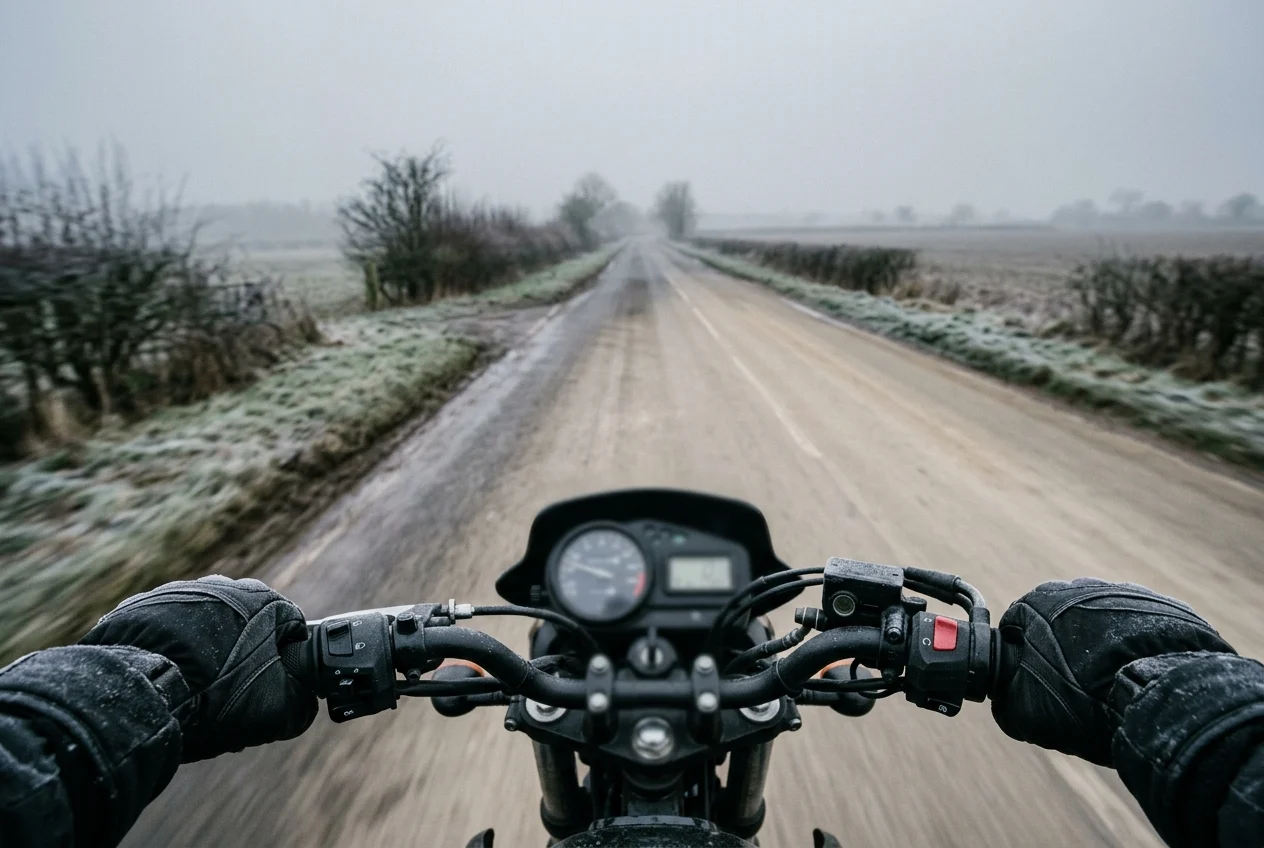
What “heated motorcycle gloves” returns on Amazon
Most people do this shopping in one place, and the search itself is part of the problem.
An amazon.com search for heated motorcycle gloves, run on 16 September 2026, returned this in its first twenty organic listings — twice in the same session, though results there are shaped by account, location and browsing history, so your own page will differ in the details:
- Six results with no heating element at all. Four of those are ventilated gloves: the Alpinestars SMX-1 Air V2 appears twice and the Troy Lee Designs AIR twice, and both are built to flow air through the back of your hand in summer. The other two are thermal-lined leather gauntlets with no electronics.
- Five genuine motorcycle heated products, being the Tourmaster liners and gloves, TourMaster’s older Synergy 2.0, California Heat’s 12V gauntlet and Milwaukee Leather’s heated models.
- The remaining nine are ski, hunting, work or USB hand-warmer gloves with “Motorcycle” inserted into the title string, alongside skiing, snowboarding, hiking, fishing and camping.
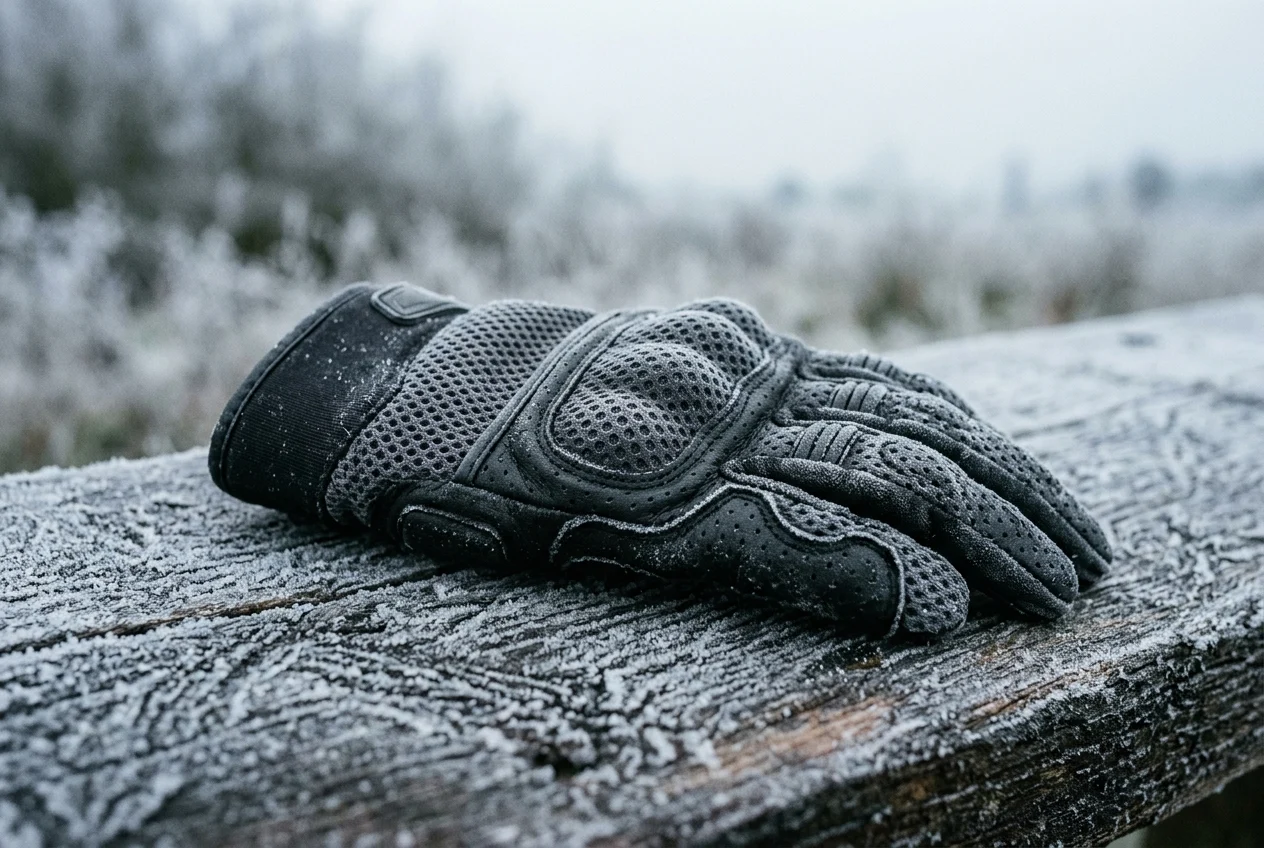
That is the environment the category lives in, and it explains the two things that follow: why certification matters more here than in most gear categories, and why a regulator has had to get involved.
It is also worth knowing when you read star ratings. In that same result set, the genuine motorcycle heated gloves cluster between 3.3 and 4.1 stars, while the ski-and-outdoor crossovers sit at 4.0 to 4.3. The crossovers are not better; they are being graded by people standing still. A glove that is pleasant on a chairlift is being asked a much easier question than one at 110km/h in rain.
The certification split, and the dilemma it creates
EN 13594:2015 is the European standard for motorcycle gloves. Level 1 is the lower-penalty tier, aimed at protection without wrecking dexterity; Level 2 asks for more — longer abrasion, wider cut testing, a much longer cuff, and impact protection that is optional at Level 1 and mandatory at Level 2. KP on the label means the knuckle protector passed its own impact test. Cuff length alone separates them starkly: at least 5mm beyond the wrist line for Level 1, at least 50mm for Level 2.
Now line the category up against it.
| Glove | EN 13594 | Publishes watts | On amazon.com |
|---|---|---|---|
| Keis G601 | Level 2 KP | No | No |
| REV’IT! Liberty 2 H2O | Level 1 KP | No | No |
| Alpinestars HT-7 | Level 1 KP | No | No |
| Merlin Minworth II | Level 1 KP | No | No |
| Gerbing Vanguard | Not stated | Yes | Yes |
| Tourmaster Synergy Pro-Plus | Not stated | Yes | Yes |
| Fly Racing Ignitor Pro | Not stated | No | Yes |
| Savior Heat | Not stated | No | Yes |
| ORORO | Not stated | No | Yes |
The pattern is clean enough to be uncomfortable: the gloves that tell you how much heat they make do not tell you how they behave in a crash, and the gloves that are certified are European and largely absent from the shop most riders use. Searching amazon.com for the REV’IT! Liberty H2O returns nothing at all; searching for the Alpinestars HT-7 returns sponsored listings for a different brand’s ski gloves.
None of that means the uncertified ones are badly made. Gerbing’s glove is drum-dyed cowhide with Superfabric reinforcement at the palm, which is a serious construction by any reading. It means nobody has measured it against a published bar, so you are buying on brand reputation rather than on a test result — and you should know which of those two you are doing.
It also points at the neatest way out of the dilemma, which is not to solve it inside one glove at all. More on that in a moment.
The battery is the weak link, three times over
Once you start looking, the same component keeps turning up as the limiting factor.
First, the power ceiling — the table above. A cuff-sized 7.4V pack can supply roughly 8 watts for a couple of hours or roughly 2 watts for a working day, and no amount of money changes the physics of that.
Second, the cold. Battery University’s figure for lithium-ion is direct: a cell delivering 100 percent capacity at 27°C typically gives about 50 percent at −18°C. Glove packs live in cuff pockets, in clean air, on the coldest part of you, so a published runtime is a room-temperature number that the weather quietly trims. Two honest caveats: that loss is temporary, and the same source is explicit that capacity returns once the cell warms up, so a disappointing pack is not a dead one; and −18°C is well below the conditions most of this gear meets, so read it as a direction of travel rather than a figure to apply to your ride. The practical version is small: keep the spare pack inside your jacket rather than in a tank bag, and do not charge lithium in a freezing garage — charging below freezing is the one thing the cell chemistry genuinely will not tolerate.
Third, and this is the one nobody mentions, the warranty tells you the same thing.
| Brand | Heating element | Other parts | Battery |
|---|---|---|---|
| Gerbing | Lifetime | 1 year | 90 days |
| Keis | Lifetime | 2 years | 180 days |
Both companies will stand behind the heating element for as long as you own the glove. Neither will stand behind the battery past a few months. Manufacturers do not write warranties out of optimism; they write them out of return data. When the two most established names in heated motorcycle clothing both fence off the same component, they are telling you which part they expect to be replacing.
That is three independent lines of evidence — power, temperature and warranty — arriving at one conclusion. Buy the glove for the glove, and treat the pack as a consumable you will replace, the way you treat a chain.
Heat on a hand that cannot feel it
There is a reason this category has attracted a regulator’s attention, and the physiology behind it is specific to hands in the cold.
On 31 July 2025 the US Consumer Product Safety Commission warned consumers to stop using Velazzio Thermo1 battery heated gloves, saying they “can overheat or develop hotspots during use, posing a burn hazard to consumers.” The scale is the part worth pausing on: 137 reported overheating incidents, including 119 burn injuries, across about 58,700 units sold on Amazon since September 2019 at prices between $9 and $140. CPSC records that the manufacturer did not respond to a request for an acceptable recall, and tells owners to remove the battery and dispose of it as hazardous waste. In 2026 the Commission issued a comparable warning about heated insoles sold through the same channel, so this is a category pattern rather than one bad product.
Why hands, and why slowly? Burn research has a threshold for this. The classic time-and-temperature work found no injury below 44°C, and roughly six hours of contact required to damage the epidermis at 44°C — with each further degree between 44 and 51°C halving the exposure time needed. It is worth adding that a 2017 review in Burns notes this relationship has been widely misquoted over the decades, so treat it as a threshold rather than a prophecy.
The risk factors for that kind of slow, low-temperature burn are the ones a cold hand already has. Reduced sensation is one; poor circulation is the other. And cold does both on purpose: cold-induced vasoconstriction shuts down blood flow to the fingers to protect your core, which is exactly what impairs tactile sensitivity and dexterity. The body partially compensates with cold-induced vasodilation — the “hunting reaction” first described by Lewis in 1930, in which finger vessels reopen periodically after several minutes of cold — but the state you are in while riding is one of reduced feeling in the tissue nearest the heating element.
Manufacturers’ own element temperatures live in the relevant band. Tourmaster’s liner lists 52°C on high; Savior Heat’s Amazon listing gives 60–66°C on its top setting. That is the element, not your skin, and there is fabric in between — the two are not the same number and nothing here says a certified glove will burn you. But it is why every one of these products has a controller, why the CPSC notice is phrased around hotspots, and why the sensible habits are the boring ones: start on low, use the top setting to warm up rather than to cruise, and treat a spot that feels hot as a reason to stop and look rather than a quirk to ride through.
The gloves
Five products, in the order the argument above suggests rather than by price.
A word on what these cost, since the buttons below deliberately carry no price. Amazon ties price claims to live data, so a figure typed into a static page is both stale and against the terms — the button shows today’s number and this page will not guess at it. The shape of the spend is stable enough to be worth knowing, and it is not the order most people expect. The 12V liners are the cheapest way into real heat, and the reason is structural rather than a sale: you are buying a heating system and supplying the glove yourself. The wired Gerbing sits in the middle — $179.99 on Gerbing’s own site in September 2026 — with the battery gloves broadly around and below it. The certified European gloves are a tier of their own: REV’IT! lists the Liberty 2 H2O at $439.99, roughly two and a half times the Gerbing. Two warnings about that middle band. Those are manufacturer figures, not Amazon ones, and they move. And for both Savior Heat and ORORO the model on the brand’s own site is not the model the Amazon listing sells, so a price found on one does not describe the other — which is a good reason to read the listing you are actually buying from rather than the brand page that ranks above it.
Tourmaster Synergy Pro-Plus 12V liners — the way out of the dilemma
The most interesting product in the category is not a glove at all. A heated liner goes under the glove you already own, which means the certification question and the heat question stop competing: keep the EN 13594 glove you chose for crashing, and put the heat underneath it.
The numbers are published, unusually for this category. The listing states “12v DC power, 13.2w total power draw (pair), 1.2a total current (pair)” — so 6.6 watts a hand, roughly triple what a battery glove manages on its long setting, from a source that never runs out. Heat settings are given as 126°F/52°C, 113°F/45°C and 100°F/38°C, with carbon-fibre elements running from the back of the hand to each fingertip and a waterproof controller on the cuff.
Three things to know before you buy. The battery harness is not included and a Y-splitter is required, so budget for the wiring. A verified buyer notes the liners do not integrate with other makers’ systems, because Tourmaster puts a controller on each garment rather than running one central controller. And another reports the outer material is slippery enough to make the controls awkward, which is the standing risk with any liner — you are adding a layer between your hand and the lever, and the glove you wear over it now has to fit with that layer inside.
Best for: riders who already own a winter glove they trust, and anyone who wants wired-level heat without buying into a whole system.
Check Tourmaster Synergy Pro-Plus liners on Amazon →
Gerbing Vanguard 12V — the most heat available, and the most commitment
Gerbing publishes what nobody else does: “1.1 Amp Each” and 13W each, with a maximum of 135°F (57°C) at that draw. That is the highest verified figure in this guide and roughly 1.6 times the best a premium battery glove manages. The construction matches the numbers — drum-dyed aniline cowhide, an AQUATEX membrane, Superfabric reinforcement at the palm and edge of hand, 150g of Thinsulate, full gauntlet, Microwire running to the tip of every finger. It listed at $179.99 on Gerbing’s own site in September 2026.
The honest warnings are all about the system rather than the glove. The battery harness, Y-harness and temperature controller are sold separately, and a verified buyer puts it plainly — you will spend more on the wiring setup. That same reviewer describes turning the gloves down at 28°F and 70mph, which is the clearest endorsement in this article. Others rate them lower, and the pattern in the negative reviews is instructive: several describe almost no heat, which is what an unwired or uncontrolled 12V glove feels like. Gerbing also states on its own page that the fit runs smaller than a standard men’s glove, and sizing complaints are the most common theme across the brand’s listings.
Best for: long days in genuine cold on a bike with charging headroom, by someone willing to wire the bike once and be done with it.
Check Gerbing Vanguard 12V on Amazon →
Fly Racing Ignitor Pro — the battery glove built as a motorcycle glove
If wiring is off the table, the useful distinction is not price but who made the glove. The Ignitor Pro is a motorcycle-brand product first: full leather palm and fingers, a Hipora waterproof and windproof liner, 80g of Thinsulate through the glove and 20g in the palm so the controls stay readable, and a quoted 2.5 to 4 hours depending on setting.
Fly does not publish the pack’s capacity, so its wattage cannot be derived — and that absence is worth naming rather than glossing. Owner reports place it where a mid-power battery glove should sit: sufficient into the low 30s°F, out of its depth in the 20s. The same reviews carry the two failure modes that recur across this whole category, from three different brands: early electrical failure (one owner reports heating stopped after about a month, another that a pair did not survive a year) and water ingress despite the marketing (one simply says they were not waterproof as advertised).
Best for: riders who want a battery glove that was designed around riding, with realistic expectations about the ceiling.
Check Fly Racing Ignitor Pro on Amazon →
Savior Heat — a good heated glove, sold in the wrong aisle
This is one of the best-reviewed heated gloves on Amazon, at 4.3 stars across 371 ratings, and it deserves a clear description rather than a promotion.
Its listing title reads, in order, ski, motorcycle, work, snowboarding, hunting, hiking, camping, walking. The construction matches that title and not the second word in it: fleece lining, polyester shell, “windproof and breathable” — which is not a waterproofing claim. The pack is 7.4V and 2200mAh, with up to eight hours quoted on the lowest setting, putting it at about 2 watts a hand there. Savior’s own site lists a motorcycle-specific model, the SHG03 2.0, with a carbon-fibre knuckle shell and a 3000mAh pack, but that is a different product from the one the Amazon listing sells.
The reviews are consistent and mostly happy, and they tell you who this is for: skiers, an ebike commuter, someone clearing snow, a rider with Raynaud’s. Two separate buyers report getting soaked — one after a couple of hours of snow-clearing, one in rain, who adds that water in a powered glove was an unnerving discovery. A motorcyclist who bought them notes there is no grippy surface on the palm and that he adapted to it.
Best for: mild cold, commuting, and warmth off the bike — with no crash protection and no waterproofing to speak of. It is not a substitute for a motorcycle glove.
Check Savior Heat heated gloves on Amazon →
ORORO — the cheapest way to find out if heated hands suit you
Same category, same caveats, lower ceiling. ORORO’s own product page for the Twin Cities 3-in-1 gives a 7.4V 2000mAh pack with 3, 4 and 8.5-hour modes — about 4.9W, 3.7W and 1.7W a hand — with a polyester shell, water-resistant treatment and 3M Thinsulate. The Amazon listing for the premium version adds 150g Thinsulate and a leather palm.
Read ORORO’s own page carefully and the honest bit is what is not claimed: no knuckle armour, no EN 13594, and no presentation of the glove as motorcycle protective equipment. The reviews match the arithmetic almost too neatly — one buyer reports that at 25°F the maximum setting feels lukewarm, which is precisely what 4.9 watts against a −4°C windstream ought to feel like. Another uses them on a naked bike at 40°F and is delighted. Both are right, and the gap between them is the wattage.
Best for: finding out cheaply whether heated hands change your winter, before committing to a wired system.
Check ORORO heated gloves on Amazon →
Worth knowing, not buyable here
Four certified gloves sit outside this shopping trip and are worth naming, because they are what the certified end of the category looks like. Keis G601 — Level 2 KP, leather, hard knuckle and scaphoid guard, Hipora membrane, dual-powered from the bike or cuff packs, listed at £210. REV’IT! Liberty 2 H2O — Level 1 KP to EN 13594:2015, hydratex Z-liner with taped seams, PrimaLoft Gold 200g, hard knuckle and a TPU palm slider, $439.99. Alpinestars HT-7 Heat Tech Drystar and Merlin Minworth II, both Level 1 KP. If you are in Europe and can buy from a dealer, this is where the “heat and certification” answer lives.
Three checks before you spend anything
Check what the glove has to fit around. Heated gloves are bulkier than the same glove unheated, and a liner adds a layer inside whatever you already own. If you cannot cover the clutch lever with two fingers and feel the bite point, the heat has cost you more than it bought. Buy in person where you can, and read what glove fit should feel like before you order a size.
Check the size against the brand, not against your usual glove. Sizing in this category is inconsistent enough that it is the single most common complaint across every listing here, and it runs in both directions — Gerbing states on its own page that the fit runs smaller than a standard men’s glove, while the Tourmaster liner draws reports of a roomy hand with a short thumb. Two rules travel across brands. If you are buying a liner, the glove going over it needs room for a layer that was not there when you bought it, so the question is whether your existing glove has slack rather than what size the liner is. And whatever you buy, the fitting test is the lever, not the fingertip — a heated glove that measures right and cannot find the bite point is the wrong size.
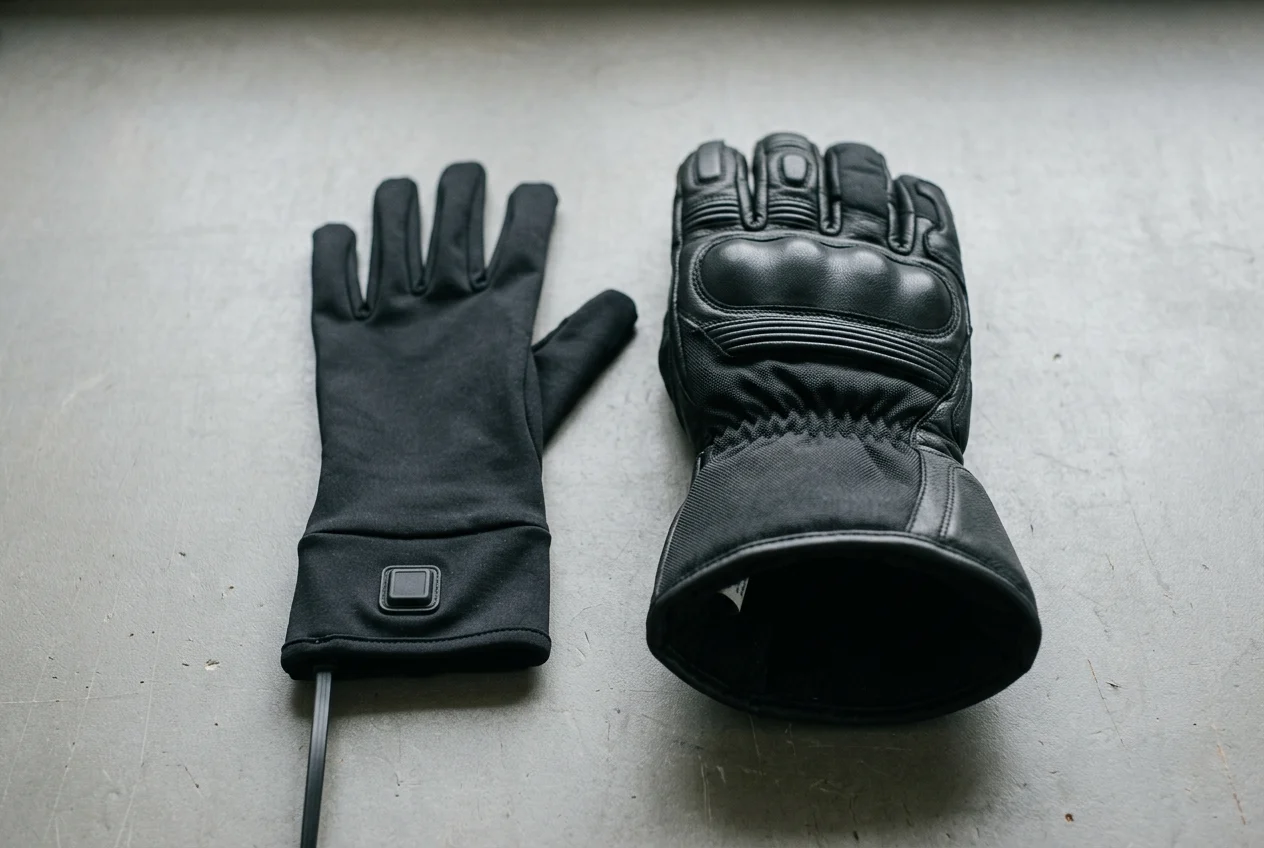
Check whether it is waterproof or merely resistant. This is the single most reliable complaint across the category, and it is usually a reading failure rather than a product failure: “windproof and breathable” and “water-resistant” are not waterproofing claims, and the listings that use them are not lying. A wet winter glove is a cold glove no matter how much power is running through it. If your riding includes rain, the membrane matters more than the wattage.
Check what you are plugging into. A wired glove is a load on the bike, and it is not the only one. Oxford rates its Heaterz Premium grips at 48 watts, a 12V jacket liner typically draws 40 to 90, and a pair of 13W gloves adds 26 on top. Small singles do not always have that to spare. The heated gear guide works through the arithmetic for adding it up, and if the sum is tight, that is a genuine argument for battery gloves — they take nothing from the bike at all.
Flying with them
If you ever fly to a ride, one rule catches people out. The FAA requires spare lithium batteries to travel in carry-on baggage only: up to 100 watt-hours without permission, 101–160Wh with airline approval, above that not at all. Glove packs are between roughly 13 and 22Wh, so the capacity limit will never trouble you — but a pack loose in a checked suitcase breaks the rule. Carry them in the cabin with the terminals protected.
A note on these numbers
The published wattages come from manufacturers’ own pages and listings read on 16 September 2026: Gerbing’s Vanguard page for 13W each and 1.1 amps each, Gerbing’s GT5 Hybrid page for the one-hour battery figure, and the Tourmaster Synergy Pro-Plus liner listing for 13.2 watts per pair. The derived wattages are calculated, not measured, from each manufacturer’s own battery capacity and claimed runtime — REV’IT!‘s battery page (7.4V, 2350mAh, 17.39Wh with four published mode durations), Savior Heat’s own SHG03 2.0 page and its Amazon listing, and ORORO’s Twin Cities page. Every derived figure is labelled as derived in the tables above. The method’s validation against REV’IT!‘s published percentages is shown rather than asserted, so you can check it yourself.
Deliberate omissions. No wattage figure is given for Keis, Fly Racing or Alpinestars: Keis does not publish one on its own product pages and the figures circulating elsewhere could not be confirmed against a second source, and Fly and Alpinestars publish runtimes without capacities, which makes derivation impossible. No wattage is extrapolated for the REV’IT! Liberty 2 H2O, whose 3000mAh packs are larger than the Liberty H2O’s but whose mode durations are not published. No runtime is derived for Gerbing’s hybrid pack, because two different capacities appear in circulation for it; only Gerbing’s own published hours are used. No prices are quoted for anything sold through the affiliate links above, in line with Amazon’s rules on price claims — the brand-site prices that do appear (Gerbing $179.99, REV’IT! $439.99, Keis £210) are dated to September 2026 and should be treated as the shape of the number. And no first-hand testing claims: this is a research guide, not a review, and the rider experiences described here are those of verified buyers, paraphrased and attributed as such.
Related guides
- Heated grips vs heated gloves — the question that comes before this one. Grips warm your palm, gloves warm the wind-facing half, and handguards are cheaper than either.
- Best heated motorcycle gear — grips, liners and vests, plus the electrical-budget arithmetic for adding a wired glove to a small bike.
- Best adventure motorcycle gloves — the unheated winter answer, including what a cold-and-wet glove looks like when it has been built for it.
- How to ride a motorcycle in cold weather — windchill, layering, and why heating your hands alone treats a symptom.
- Base layers for cold riding — warm the core and the hands improve as a consequence.
- Best motorcycle battery maintainers — the same lithium-and-cold problem, on the bike rather than in your cuff.
Frequently Asked Questions
How do I work out the wattage of a heated glove that is not in this guide?
Two numbers and one division, and both numbers are usually on the page you are already looking at. Take the battery voltage and its capacity in amp-hours — a 7.4V pack rated 2200mAh is 2.2Ah — and multiply them for the pack energy in watt-hours: 7.4 times 2.2 gives 16.28Wh. Then divide that by the runtime the maker claims. Eight hours from a 16.28Wh pack is a touch over 2 watts a hand. Do it for the top setting as well as the bottom, because the gap between them tells you how much range the controller really has. Two things to watch. If a listing gives a runtime but no capacity, as Fly Racing does, the sum cannot be done at all and you are being asked to buy on adjectives. And if the glove runs from the bike instead of a pack, skip the arithmetic — 12V brands publish amps directly, and amps times 12 is your answer.
Should I buy 12V or battery-powered heated gloves?
Answer three questions about your riding rather than comparing the gloves. How long are your cold days? Battery packs are counted in hours and the hot settings burn them fastest, so anything past an afternoon points to wired. What is your bike carrying already? A small single running grips, a charger and lights may not have the surplus for a wired glove on top, and a battery pack takes nothing from the bike at all. And do you need the heat after you stop? Wired heat ends when you switch off; battery gloves walk into the cafe with you. The honest cost of wired is not the glove but the installation and the tether — on Gerbing gloves the harness, Y-splitter and controller are all sold separately, so the price on the listing is not the price of a working system. The honest cost of battery is the ceiling, which is roughly a third to a half of what a wired glove produces.
Are heated motorcycle gloves CE certified?
Some are, and they are mostly not the ones sold on Amazon. EN 13594:2015 is the European standard for motorcycle gloves, with Level 1 for lower-penalty protection and Level 2 for more, plus a KP mark when the knuckle protector has passed its own impact test. Keis publishes Level 2 KP for the G601, and REV'IT! states Level 1 KP to EN 13594:2015 for the Liberty 2 H2O; Alpinestars HT-7 and Merlin Minworth II are also Level 1 KP. None of those four appears in an ordinary amazon.com search for the category. The gloves that do appear — Gerbing, Tourmaster, Savior Heat, ORORO — publish no EN 13594 level at all. That is not automatically a verdict on how well they are built, but it does mean nobody has measured their abrasion, tear or impact performance to a published standard, and on ORORO's own product page the glove is not presented as motorcycle protective equipment in the first place. The way out of that trade-off is a heated liner under the certified glove you already own.
What size heated gloves should I buy?
Not automatically your usual size, and the brands disagree with each other enough that this is the most common complaint in the category. Gerbing states on its own product page that the fit runs smaller than a standard men's glove. Owner reports on the Tourmaster liner describe the opposite problem, a roomy hand with a thumb that comes up short. There is no category-wide rule, so read the maker's own sizing note before the reviews and the reviews before you order. Two things do travel across brands. If you are buying a liner rather than a glove, the size that matters is the slack in the glove going over it — a winter glove that already fits snugly has nowhere to put a second layer, and you may need to size the outer glove up rather than the liner down. And the real fitting test is not finger length but the controls: cover the clutch lever with two fingers and find the bite point. If you cannot feel it, the glove is wrong however well it measures.
How many winters will a heated glove battery last?
Nobody publishes a cycle count for these packs, so the only published signal is the warranty — and it is a loud one. Gerbing warrants its Microwire heating elements for life, the plugs, connectors and controllers for a year, and the batteries and chargers for 90 days. Keis warrants its heating panels for life, the garments for two years, and the portable battery packs for 180 days. Companies do not draw those lines out of pessimism; they draw them out of returns. The failure mode riders describe matches it: not a pack that dies but a pack that used to manage a morning and now manages an hour, which is ordinary lithium ageing rather than a fault. Two practical consequences. Treat the pack as a consumable, like a chain. And before you buy the glove, check that replacement packs are sold separately — ORORO and REV'IT! both list them on their own, and a glove whose battery has been discontinued is just a glove.
Can heated gloves burn you?
The risk is real enough that a regulator has acted on it, and the mechanism is worth understanding rather than fearing. In July 2025 the US Consumer Product Safety Commission told owners of one Amazon-sold battery heated glove to stop using it, citing overheating and hotspots, with more than a hundred burn injuries reported. What makes hands the awkward case is not the temperature but the sensor: cold constricts the blood vessels in your fingers and dulls tactile sensation, and reduced feeling plus poor circulation are the two textbook risk factors for slow, low-temperature burns — the kind that need hours rather than seconds and hurt far less than the damage they do. Element temperatures quoted by makers run from roughly 38 to 66°C, though that is the element and not your skin, with fabric in between, and a certified glove from a serious brand is not waiting to injure you. The habits that matter are small: use the top setting to warm up rather than to cruise, drop to low once your hands are back, and treat a spot that feels hot as a reason to pull over and look.
Can I take heated glove batteries on a plane?
Yes, in your carry-on. The FAA's rules for passengers put spare — that is, uninstalled — lithium batteries in cabin baggage only, with anything up to 100 watt-hours allowed without special permission, 101–160Wh needing airline approval, and above that forbidden. Heated glove packs are tiny by that measure: the REV'IT! pack is 17.39Wh and typical 7.4V glove batteries land between about 13 and 22Wh, so the capacity limit is never the issue. The rule that catches people out is the bag. If you check a suitcase with the packs loose inside it, you have broken the rule, and losing a pack to a security bin at the start of a fly-and-ride trip is an expensive way to learn it. Pack them in the cabin, terminals protected.