
Thirteen hundred dollars for a jacket is a number that makes anyone pause — and $1,600 for the A3 version more so. It’s more than some riders pay for a used commuter bike. The case for it is simple to state: a laminated GORE-TEX Pro shell that doesn’t wet out, full Level 2 armour, and a jacket built to last a decade of touring. The case against is just as simple: most riders don’t need all of it.
What this review rests on: Klim’s own product pages (read 7 October 2026), and two named long-term reviews — Jan Marc Staelens’s six-week European tour in the Badlands Pro A3 for It’s Better on the Road, and Eric Archambault’s almost two years of daily use in a first-generation Badlands Pro for Six Zero Three. Nobody here has worn one — this is a review of the evidence, not a field test.
Disclosure: some links below are affiliate links. If you buy through them we may earn a small commission at no extra cost to you.
Check Klim Badlands Pro on Amazon →
Badlands Pro or Badlands Pro A3?
Klim currently sells two versions, and the difference matters to the price:
| Badlands Pro | Badlands Pro A3 | |
|---|---|---|
| Klim US price | $1,299.99 | $1,599.99 |
| CE garment class | AA (EN 17092-3) | AAA (EN 17092-2) |
| Shell | 3-layer GORE-TEX Pro | 3-layer GORE-TEX Pro |
| Extra abrasion fabric | Superfabric on shoulders, elbows | Superfabric + Vectran fibre fabric |
| Shoulder / elbow armour | Rogue EXP CE Level 2 | Rogue EXP CE Level 2 |
| Back armour | Rogue CE Level 2 | Rogue CE Level 2 |
| Chest | Perforated XRD pads | Rogue CE Level 1 split pads |
Prices and specs from Klim’s US product pages, read 7 October 2026.
For touring and gravel, the AA Badlands Pro is the one most riders need. The A3’s AAA rating is the highest garment class in EN 17092 — worth paying for if you ride fast on tarmac a lot, or simply want the most abrasion protection money buys.
One thing to check if you’re buying used or on clearance: earlier generations used D3O armour rather than Klim’s Rogue pads, and the A3 Staelens reviewed was that earlier D3O version.
What You’re Actually Paying For
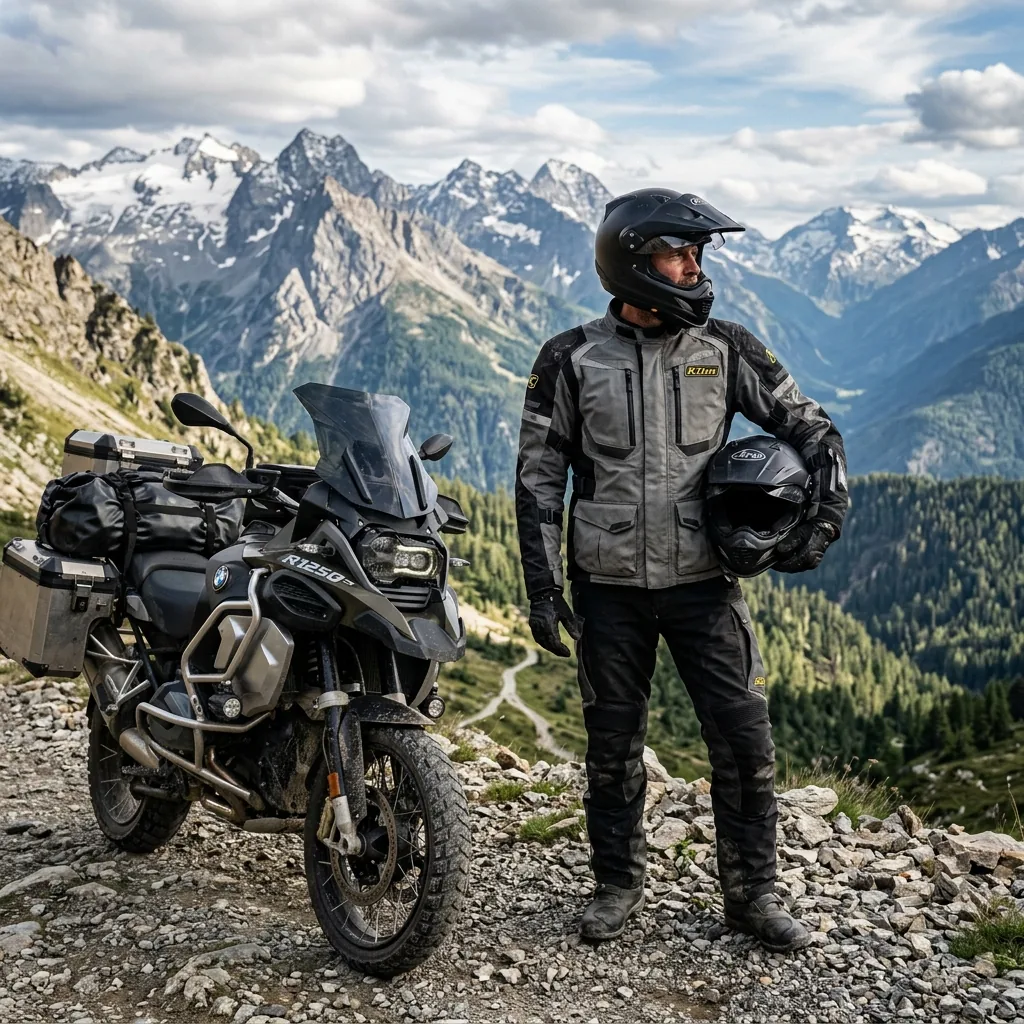
The laminated shell. The GORE-TEX Pro membrane is bonded to the outer fabric rather than hanging as a separate liner. That distinction matters more than it sounds. On a drop-liner jacket the outer fabric soaks through in heavy rain; the membrane behind it keeps you dry, but the jacket gains water weight and stays wet. On a laminate, water beads on the surface and runs off. GORE-TEX backs it with its “Guaranteed To Keep You Dry” promise.
Abrasion fabric where you land. Superfabric — a fabric printed with small ceramic plates — covers the shoulders and elbows; the A3 adds Vectran fibre fabric for abrasion and cut resistance.
Armour that’s already in it. Level 2 shoulder, elbow and back armour comes in the box, along with chest pads. On many adventure jackets the back pad is a foam placeholder or an optional extra.
The long-term evidence. The reason the Badlands Pro carries its reputation is what happens in a crash. Archambault went down in a 45 mph lowside in his first-generation suit and found “no evidence” of it on the sliding surfaces, with minor repairs costing under $250. Staelens crashed in the A3 and wrote: “I couldn’t see any scratches, let alone damage.”
Fit, Weight, and the Kidney Belt
The common complaint is weight. Staelens lists it first among the downsides, and both reviewers point to the same fix: the internal kidney belt, an adjustable waist strap inside the jacket that takes the load off your shoulders. Archambault found it helped “take the weight of the jacket off your shoulders,” particularly with a full hydration bladder in the back. Klim’s current version has access ports in the liner so you can adjust or stow the belt — Staelens’s one niggle on the earlier A3 was the belt’s retention.
Sizing
The cut is American: room in the torso for a fleece or heated layer. Staelens, at 6’3” and 200–210 lb, wears an XL Regular jacket and found Klim’s “sizing chart was spot-on.” Klim also fits compact shoulder and elbow armour to sizes MD and below and standard-size pads from LG up, so the armour sits where it should on smaller riders.
If you prefer a slim European fit, try one on before you buy. The Klim Carlsbad runs slightly closer, and the Rev’It Sand 4 sits between the two.
Venting: Does It Actually Breathe?
The standard knock on laminated GORE-TEX jackets is that they cook you in summer. Klim’s answer on the current Badlands Pro:
- Two large wrist vents with dual zippers that push air up the sleeves.
- Four core vents on the front (two double as pockets).
- Bicep intakes paired with tricep exhausts.
- Two back exhaust vents to let hot air out.
- A collar tab that folds the collar back for airflow to the upper chest.
Reviewers rate it highly for a laminate. Archambault called the airflow on his first-generation jacket “nothing short of amazing” and stayed comfortable above 90°F while moving; Staelens, on a full suit with 18 vents across jacket and pants, called it “the best-ventilated four-season suit I’ve ever worn.”
The honest limit is slow riding in real heat. No laminated jacket matches a mesh one when you’re crawling up a rocky climb in first gear at 35°C. If most of your riding is summer single-track, a mesh jacket and an oversuit will serve you better.
Waterproofing: Where It Earns Its Keep
This is the point of the jacket. Staelens rode “in pouring rain for hours” with alpine winds on his tour and reported the GORE-TEX Pro shell and YKK waterproof zips “did their job flawlessly,” adding that the suit “really does seal out the rain, without sealing in body heat and moisture.”
With a laminate you don’t pull over to dig a rain liner out of a pannier, and you don’t turn the jacket inside-out at camp to dry it. You ride through, and when you stop, you hang it up.
Storage
Klim’s storage list for the current jacket runs past a dozen pockets, including two water-resistant hand pockets, a waterproof external napoleon pocket, vertical chest and core pockets, a forearm ID/stash pocket, a concealed document pocket behind the back pad, a large dual-access back pocket, and an internal compartment for a 2 L or 3 L hydration bladder with hose routing. The bladder itself is sold separately — one of Staelens’s complaints.
Pros and Cons
- Laminated GORE-TEX Pro shell with the "Guaranteed To Keep You Dry" promise
- CE Level 2 shoulder, elbow and back armour as standard
- Named long-term reviewers report it staying dry through hours of rain
- Two reported crashes, jacket intact or repaired for under $250
- Wrist, core, bicep/tricep and back vents — unusually good airflow for a laminate
- Kidney belt takes the weight off your shoulders
- $1,299.99 (AA) or $1,599.99 (A3) — matching adventure motorcycle pants add a lot more
- Heavy — the most common complaint
- American cut won't suit slim European builds
- Slow riding in real heat will still sweat you out
- Hydration bladder sold separately
Who Should Buy It, and Who Shouldn’t
This jacket is for you if:
- You’re planning a multi-week or multi-month tour — the Trans Euro Trail, a trans-continental trip, anything that crosses weather zones.
- You ride year-round, including winter and shoulder seasons in cold rain.
- You’d rather pay once and keep a jacket for a decade than replace mid-tier gear every few years.
- Protection is the line you don’t cut on.
Look elsewhere if:
- You ride a few thousand kilometres a year, mostly dry weekends, mostly on tarmac. The Klim Carlsbad does much of the same job for far less; the best adventure motorcycle jackets guide ranks both against the rest of the field.
- You commute in a city with hot, humid summers. Get a mesh jacket.
- You’re on a strict budget. The Rev’It Sand 4 covers most of the protection and ventilation for a fraction of the cost.
- You want a slim, sporty cut.
Whether it’s worth it comes down to how much you ride. Spread over many years of heavy touring, the cost per kilometre gets small; on a few dry Sundays a year, you’re paying for capability you’ll never use.
Care and Washing: Don’t Skip This
A lot of riders never wash a technical jacket for fear of damaging the membrane. The opposite is true: dirt, road grime and dried sweat clog the membrane and the face fabric’s water-repellent finish, and the jacket starts to wet out in places it shouldn’t.
- Strip the armour. Take out the shoulder, elbow, back and chest pads. Close every zip and Velcro tab so the hooks don’t tear the fabric in the drum.
- Wash with a mild liquid detergent or a technical wash. No fabric softener. KLIM’s own instruction is a warm machine wash with a mild liquid detergent, followed by an additional wash and rinse cycle with no soap; GORE-TEX specifies 40°C for its garments.
- Tumble dry warm. KLIM says dry completely on medium heat, then put the jacket back in for a further twenty minutes to reactivate the water-repellent finish. This heat step is right for a laminate like the Badlands Pro and wrong for a lot of standard textile gear — the distinction our guide to washing riding gear is built around.
Final Verdict
The Klim Badlands Pro is the jacket other adventure jackets get measured against, and the evidence explains why: reviewers who’ve worn it for weeks and years report staying dry in hours of rain, comfortable with the vents open, and walking away from crashes with the jacket intact. It is heavy. The price stings. And for many riders, a Carlsbad or a Sand 4 is the smarter buy. But if you tour through every season, it’s the one to beat.
Check Klim Badlands Pro on Amazon →
Sources: Klim product pages for the Badlands Pro and Badlands Pro A3 (prices and specs read 7 October 2026); Jan Marc Staelens, “Klim Badlands Pro A3 Review”, It’s Better on the Road; Eric Archambault, “KLIM Badlands Pro Suit Review”, Six Zero Three.
Disclosure: Some of the links in this article are affiliate links. If you buy gear through them, we may earn a small commission at no extra cost to you, and it never changes a recommendation. Nothing here is sponsored.
Frequently Asked Questions
Is the Klim Badlands Pro waterproof?
Yes. The shell is 3-layer GORE-TEX Pro laminated to the outer fabric, not a separate zip-in liner, and it carries GORE-TEX's 'Guaranteed To Keep You Dry' promise. On a six-week European tour in the A3 version, reviewer Jan Marc Staelens rode for hours in pouring rain and reported the shell and YKK waterproof zips 'did their job flawlessly.'
Does the Klim Badlands Pro come with armor?
Yes. The current (fifth-generation) Badlands Pro ships with KLIM Rogue EXP CE Level 2 shoulder and elbow armour, a Rogue CE Level 2 back pad and perforated XRD chest pads. The Badlands Pro A3 upgrades the chest to Rogue CE Level 1 split pads. Earlier generations used D3O armour, so check which version a used or discounted jacket is.
What is the difference between the Badlands Pro and the Badlands Pro A3?
Certification and abrasion fabric. The Badlands Pro is CE AA (EN 17092-3) at $1,299.99 on Klim's US store; the A3 is CE AAA (EN 17092-2) at $1,599.99, adds Vectran fibre fabric for abrasion and cut resistance, and comes with Level 1 chest armour as standard. Both use the same GORE-TEX Pro shell, Rogue armour and kidney belt.
Is the Klim Badlands Pro good in hot weather?
For a laminated GORE-TEX jacket, it vents unusually well: two large wrist vents, four core vents, bicep intakes with tricep exhausts, two back exhausts and a collar that folds back. Reviewers have called the system excellent. The honest limit is slow riding in real heat — no laminated jacket matches a mesh one at walking pace on a hot climb.
How is the sizing on the Klim Badlands Pro?
American cut: room in the torso for layers. Klim's own size chart is the place to start — Staelens, at 6'3" and 200–210 lb, found it 'spot-on' and wears an XL Regular jacket. Note that sizes MD and below get compact shoulder and elbow armour, LG and up standard-size pads.