The hardest part of motorcycle camping isn’t the cold, or the packing, or sleeping on the ground. It’s the first trip — the leap from “I’d love to do that” to actually strapping a tent to the bike and riding off to sleep outside. Most people overthink it into never happening, or overspend on gear they don’t understand and have a miserable first night that puts them off for good.
So here’s the whole philosophy of this guide in one line: start small, one overnight, close to home. Do that, and motorcycle camping turns out to be one of the simplest, cheapest and most freeing things you can do on two wheels. This is how to make that first night a good one.
Disclosure: Some of the links in this article are affiliate links. If you buy gear through them, we may earn a small commission at no extra cost to you — and for beginners especially, I only point at entry-level kit I’d genuinely hand a friend starting out.
Start Small: One Overnight, Close to Home
The single best decision a beginner can make is to make the first trip almost boringly easy.
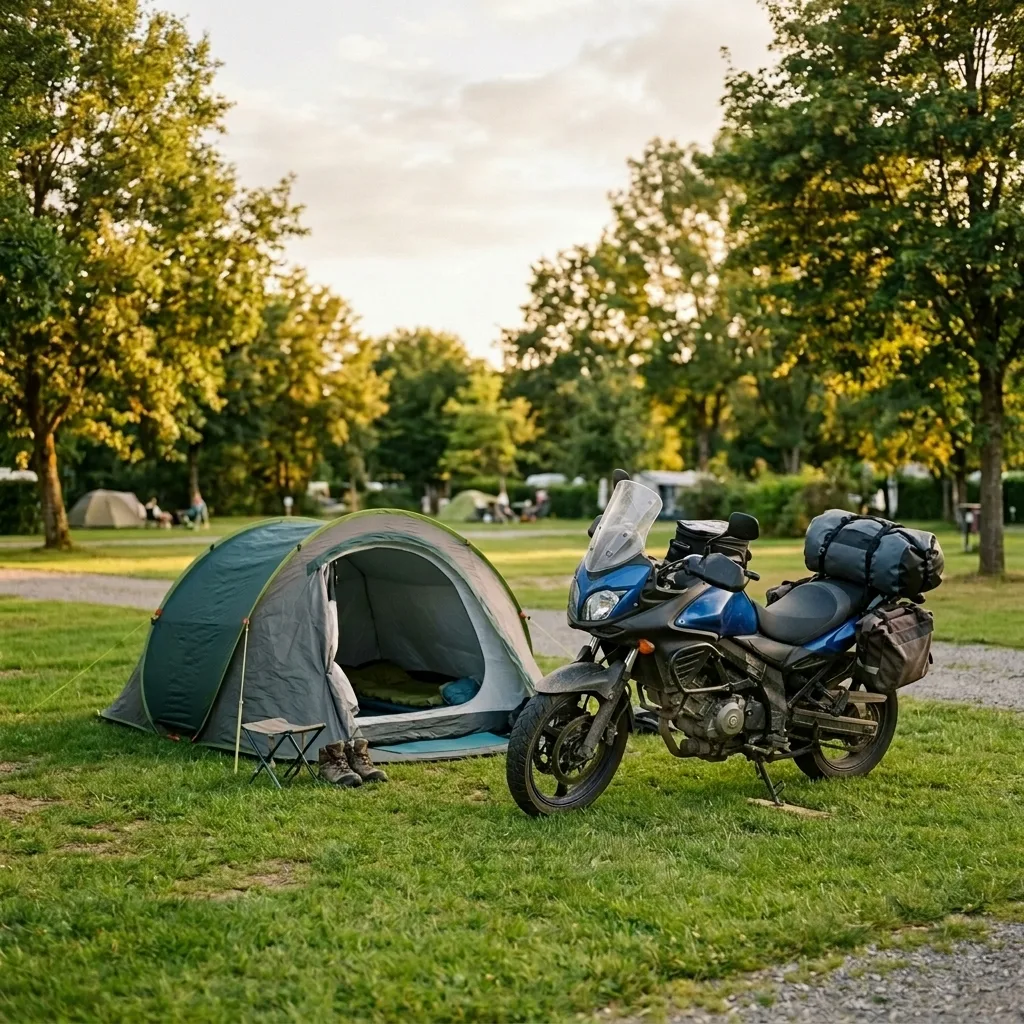
Pick a real campsite within an hour or two’s ride. Somewhere with a tap, a toilet, and the ability to bail if it all goes sideways. This is not the time for a remote wild camp up a mountain — that comes later, and it comes much more easily once you trust your kit. The first trip has exactly one job: test your gear and your routine somewhere safe.
When you treat the first night as a shakedown rather than an adventure, everything gets easier. A forgotten item is an annoyance, not a crisis. A cold night teaches you something instead of stranding you. You ride home the next morning knowing precisely what worked and what to change — and that is what makes trip two genuinely good.
Your first real wild-camp trip can wait until you’ve done this once or twice. When you’re ready for it, wild camping in Turkey is the kind of trip all this practice is building toward.
The Minimal First Kit (and Nothing More)
Beginners over-pack. Every single one. The skill you’re really learning is leaving things at home, so start lean and add only what you discover you miss.
Here’s the genuinely minimal list, grouped by what it does.
Shelter. A small, freestanding tent that packs down to fit your luggage. You don’t need a four-season expedition tent for a summer campsite. An entry-level tent is plenty to start — our best motorcycle camping tents guide covers what to look for as you upgrade.
Sleep system. A sleeping bag rated below the expected overnight low, plus an insulating sleeping pad. The pad matters as much as the bag — most cold first nights are caused by heat lost into the ground, not thin bags. A simple entry-level sleeping bag and an insulated pad are fine.
Cooking & water. A small gas canister stove, a single pot/mug, a spork, and enough water. A hot drink in the evening and a coffee in the morning is most of what camp cooking is for at this level. Skip the fire — a stove is safer, legal almost everywhere, and packs tiny.
Light & safety. A head torch (hands-free is the point), a basic first-aid kit, and your bike’s tool kit plus a tyre repair kit.
Carrying it. You do not need to buy a full luggage system for trip one. An entry-level soft luggage set or even a good dry bag bungeed securely to the rear will get you there. Before you spend big on luggage, read the soft vs hard panniers comparison — what you carry decides how much luggage you actually need, not the other way around.
That’s it. Clothes you already own, the food you fancy, and the list above will get you through a comfortable first overnight. Everything else is comfort you can add once you’ve earned the opinion.
How to Load It Without Upsetting the Bike
A loaded bike handles differently, and a badly loaded bike handles worse. Three rules cover almost everything:
- Heavy low and forward. Dense items (tools, water, stove gas) go low in the panniers or tank bag, not high on the rear rack. High weight makes the bike feel top-heavy at low speed.
- Balance left to right. Uneven weight makes the bike pull and tires you out. Split the load evenly between sides.
- Don’t build a tower on the back. Piling everything tall and far back lightens the front end. Spread it out and keep the rear load modest.
Doing this by feel is hard when you’re new, so use the tool we built for exactly this:
Lay out your kit with Pack My Bike
Drop each item into a pannier, top box or tank bag and see your left-to-right balance and weight distribution before you ride. The fastest way for a beginner to load a bike that handles properly.
Open Pack My Bike →Rookie Mistakes to Skip
You’re going to make some of these anyway. Skip as many as you can:
- Over-packing. If in doubt, leave it out. You’ll carry far less on trip three than trip one.
- Spending big too early. Buy entry-level, learn your preferences, then upgrade the few things that actually limited you. Most expensive first purchases are the wrong purchases.
- Going too remote. A campsite near home beats a mountain wild camp for a first trip, every time.
- Skimping on the sleeping pad. The pad keeps you warm from below. A good bag on bare ground still leaves you cold. Don’t cheap out here.
- Pitching late or badly. Arrive with daylight to spare. Avoid low ground (cold air and water pool there), exposed ridges (wind), and anywhere you can’t see properly. Flat, durable, sheltered.
- Not balancing the load. Covered above — it’s the difference between a bike that feels normal and one that feels nervous.
Get the Printable Checklist
I’ve turned everything above into a one-page checklist you can print and tape inside a pannier lid — the exact kit list and a pre-ride packing check, in the order I actually use it. It’s free; drop your email and I’ll send it over.
Your First-Overnight Checklist
Here’s the same list to tick off before you ride. (Tap each item to check it — your progress saves on this device.)
- Tent, poles, pegs, footprint
- Sleeping bag (rated below the forecast low)
- Insulating sleeping pad
- Gas stove + fuel canister
- Pot/mug, spork, lighter
- Water (and a way to refill)
- Head torch + spare batteries
- First-aid kit
- Bike tool kit + tyre repair kit
- Dry bag or panniers, securely fitted
- Warm dry layers to sleep in
- Phone, charger, power bank
- Cash + cards + ID
- Food for the evening and morning
- Bin bag (leave no trace)
Print the one-pager above to keep a copy in the bike. Tick this list before every trip and over-packing quietly solves itself.
FAQ
The questions beginners ask most — what you actually need, how to pack it, where to go, whether you need expensive gear, staying warm, and the common mistakes — are answered in the box above. The whole thing in one line: start small, one overnight, close to home, with a minimal balanced kit; treat it as a shakedown; learn what you missed; then go further. That’s how every long-distance rider on this site started, and it’s how you will too.
When you’re ready to scale up, these same habits carry straight into a longer trip — the how to pack a motorcycle for a 2-week camping trip walkthrough is the natural next read, and the rest of the journal is full of where to point the bike.
Some links in this article are affiliate links; if you buy gear through them, we may earn a small commission at no extra cost to you. The printable checklist is sent by email via the signup above.
Frequently Asked Questions
What do I actually need for my first motorcycle camping trip?
Less than you think. The non-negotiables are shelter (a small tent), warmth (a sleeping bag rated for the night's temperature and an insulating pad), a way to make a hot drink (a small gas stove), water, a head torch, and a first-aid and tool kit. Everything else is comfort, not necessity. Borrow or buy entry-level versions for the first trip, learn what you actually miss, and upgrade deliberately afterwards rather than spending big up front on the wrong things.
How do I pack camping gear on a motorcycle without affecting handling?
Keep heavy items low and as far forward as practical, balance the weight evenly left to right, and don't pile everything tall on the rear rack — a tail-heavy bike goes light at the front. Pack soft, squashable items where they fill gaps. Use our Pack My Bike tool to lay your kit out and check the balance before you ride. A well-balanced light load is far more important for a beginner than expensive luggage.
Where should I go for my first motorcycle camping trip?
Somewhere close to home and easy — ideally a proper campsite within an hour or two's ride, not a remote wild camp. The goal of the first trip is to test your kit and routine somewhere you can bail out, get supplies, or simply go home if it goes wrong. Wild camping and big remote trips come later, once you trust your gear and know how you pack. Start small on purpose.
Do I need expensive gear to start motorcycle camping?
No. Entry-level gear is fine for your first trips and the smartest way to learn what you value before spending more. Borrow what you can, buy budget versions of the essentials, and only upgrade the items you discover actually limit you — usually the tent, sleeping bag, or pad once you've had a cold or wet night. Spending big before you know your own preferences is the most common beginner money mistake.
How cold will I be camping on a motorcycle, and how do I stay warm?
Colder than you expect — nights drop further than the daytime ride suggests, and the ground steals heat through a thin or missing pad. Warmth comes from three things: a sleeping bag rated below the expected low, an insulating sleeping pad (the pad matters as much as the bag), and dry layers to sleep in. Check the forecast low for where you're going, not where you live, and pick your bag and pad for that number with margin.
What are the most common beginner motorcycle camping mistakes?
Over-packing, spending too much on the wrong gear too early, going too remote on the first trip, skimping on the sleeping pad, pitching in a bad spot (low ground, exposed, or too late to see properly), and not balancing the load on the bike. Almost every one is solved by starting small, close to home, with a balanced light kit, and learning from one easy overnight before attempting anything ambitious.