The first tent I ever took on a motorcycle trip was a 4 kg, six-pole, two-bedroom monster I’d bought for car camping with friends. I strapped it to the passenger seat of my CFMOTO 250NK with three ratchet straps and rode 280 km to a beach near Marmaris. The handling was awful, the wind on the highway tried to pull the tent off twice, and when I got there I realized I’d packed nothing else because there was no room.
That was the day I learned: on a motorcycle, weight and pack size aren’t preferences. They’re the whole game.
A tent that weighs 4 kg and packs to the size of a small dog ruins your bike’s handling on dirt, kills your gas mileage, and eats every cubic centimeter of your luggage. A tent that weighs 1.5 kg and packs to a loaf of bread leaves room for cooking gear, a fresh layer of clothes, and a coffee setup. It’s the same trip with a completely different feel.
Over three seasons I’ve pitched tents on Aegean cliffs in 50 km/h wind, in Kaçkar Mountain downpours that flooded the floor twice in one night, and on rocky bays where no stake would drive. This guide is what I’d actually recommend if you walked up and asked me what to buy. I’ll cover the best motorcycle camping tents for six different riders — ultralight, all-weather, budget, and full bike-garage setups — and tell you which one fits which trip.
The Contenders: At a Glance
Six tents, side by side. Sort by what matters to you.
All 6 Tents — Side by Side
Click any column to sort ↕| Tent | Weight | Pack Size | Type | Price | Rating |
|---|---|---|---|---|---|
| Editor's PickBig Agnes Copper Spur HV UL2 | 1.4 kg | 50 × 15 cm | Ultralight Dome | $550 | |
| Decathlon Forclaz MT900 2P | 1.95 kg | 39 × 12 cm | Durable Dome | $200 | |
| Lone Rider Mototent | 5.44 kg | 60 × 20 cm | Bike Garage Tent | $700 | |
| MSR Hubba Hubba NX 2 | 1.72 kg | 46 × 15 cm | Durable Dome | $480 | |
| Best ValueNaturehike Cloud Up 2 | 1.7 kg | 40 × 13 cm | Budget Semi-Geodesic | $110 | |
| Redverz Atacama Expedition | 6.0 kg | 53 × 23 cm | Large Garage Tent | $750 |
1. Big Agnes Copper Spur HV UL2 — The One I Keep Reaching For
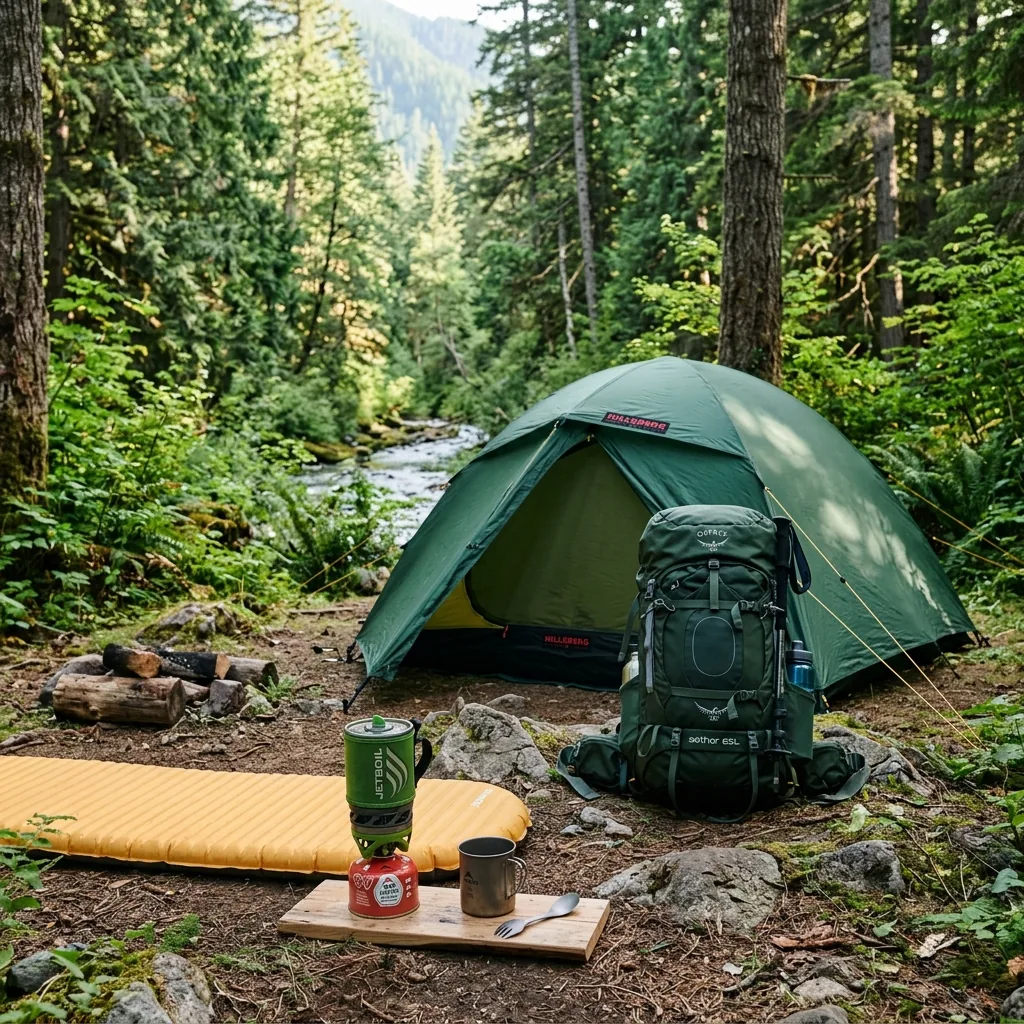
If you ride a light bike — a dual-sport, a small naked, anything under 500 cc — the Big Agnes Copper Spur HV UL2 is the easy answer. It’s the tent I bought after the 4 kg disaster I described in the intro, and three seasons later I’m still using it.
The number that sells it: 1.4 kg packed. Including poles, fly, footprint-skipping floor, and stakes. It compresses down to roughly 50 by 15 centimeters — a fat loaf of bread. If you strap the poles separately along your bike frame, the tent body alone packs even smaller. On my CFMOTO 250NK with a 30-liter tail bag, the Copper Spur takes up maybe a third of the bag and leaves room for a sleeping pad, sleeping bag, stove, food, and tools.
That’s the whole point of buying ultralight gear. It’s not about saving 2 kg for its own sake. It’s about what those 2 kg let you bring instead.
Liveability
A 1.4 kg tent that sleeps two adults sounds impossible, and it isn’t quite — it’s tight if both people are over 180 cm. Solo with all my riding gear inside (helmet, jacket, boots), there’s space to spare. The wall geometry is steeper than a typical dome, so headroom is generous even at the foot end. I can sit up and read without bending my neck.
Both doors zip independently and both have their own vestibules. The vestibules are where your boots and helmet sleep — out of the rain, off the floor, and not wet against your sleeping bag. Two doors also means whoever’s sleeping on the inside doesn’t have to climb over you at 3 a.m. to pee.
Pitching
Single hub-and-spoke pole architecture. The pole snaps together in about ten seconds, you slide it through two fabric channels along the top of the inner, clip eight plastic clips, and the tent is up. Pitching solo in the dark with a headlamp takes me under five minutes once I’ve done it a few times. In wind, I stake the four corners first and then raise the poles, which keeps the inner from sailing away.
The Catch
The fabric is light because it’s thin. The floor is 15D nylon — about the same weight as a strong supermarket plastic bag. Use a footprint. Big Agnes sells a custom one for around $40 that adds 230 grams. Worth it. Without one, a pine cone or a sharp grass clump will punch a hole in the floor within the first season. The zippers are also delicate compared to a heavier tent — keep grit out of the teeth, zip slowly, and they’ll last.
- 1.4 kg packed — actually fits a small bike's luggage
- Two doors and two vestibules — no climbing over your partner
- Steep walls give real headroom for a tent this light
- Mesh body breathes well and prevents condensation
- Pitches solo in under five minutes once you know it
- Around $550 retail — not casual money
- 15D floor needs a footprint or it will tear within a season
- Zippers are delicate; keep them clean
2. MSR Hubba Hubba NX 2 — The All-Weather Workhorse
If most of your riding takes you into real mountain weather — Alps, Pyrenees, Scottish Highlands, Kaçkar passes — the MSR Hubba Hubba NX 2 is the tent I’d put my money on. It costs about $480, weighs 1.72 kg, and is built like the people who designed it expected to use it in a storm.
The fabric is a step up from ultralight. The fly is 20D ripstop nylon coated with MSR’s Durashield (polyurethane plus silicone), which means the waterproofing doesn’t degrade after a couple of seasons the way cheaper PU coatings do. The floor is 30D — twice the thickness of the Copper Spur — so you can actually pitch on rocky ground without a footprint if you’re careful.
The thing that earns this tent its reputation is the Easton Syclone composite poles. They bend instead of breaking. Aluminum poles, even the good ones, can snap under heavy wind loads. Composite poles flex past that breaking point and recover. I pitched the Hubba Hubba on an exposed cliff above the Aegean in maybe 50 km/h gusts and woke up surprised that it was still standing.
The Ventilation Detail Nobody Mentions
Condensation in a tent is what makes the inside drip on your face at 4 a.m. The Hubba Hubba has a smart vent design — angled fly vents on both ends that pull air through the tent while keeping rain out. After a wet night in the Kaçkars, the inside of the fly was damp but the inner mesh was bone dry. On a cheaper tent in the same conditions, I’d have woken up with water on my sleeping bag.
The color-coded pole and clip system means you can pitch this thing half-asleep. Pull the red corner to the red stake-out point. Done. No thinking required.
- Composite poles that flex in wind instead of snapping
- Thicker 30D floor handles rocky ground without a footprint
- Real ventilation design — beats condensation
- Color-coded pitching, idiot-proof in the dark
- MSR's Durashield coating lasts longer than cheap PU
- ~300 grams heavier than the Copper Spur
- Around $480 — premium money
- Slightly larger pack size (46 × 15 cm)
3. Naturehike Cloud Up 2 — The Best $110 You’ll Spend
If you’ve never moto-camped before, or you’re not ready to drop $500 on something you might use four times this summer, the Naturehike Cloud Up 2 is where you start. The 20D silicone-nylon version sells for around $110, weighs 1.7 kg, and is genuinely one of the best motorcycle camping tents for new riders.
Naturehike is a Chinese brand that figured out how to clone the Big Agnes Fly Creek and sell it for a quarter of the price. The fabric is 20D silicone-coated nylon with a 3000 mm waterproof rating — same spec as tents that cost three times as much. The seams are taped. The poles are 7001 aluminum. It comes with a free footprint and a set of aluminum stakes.
I ran the Cloud Up 2 for a full season. Pitched it on coastal grass, hard-pack dirt, pine forest floor. It kept me dry through three solid rainstorms and held up in maybe 30 km/h sustained wind. For $110, that is genuinely shocking.
The Honest Limits
It’s a semi-freestanding tent. The two front corners have to be staked out for the tent to hold its shape — the back stands on its own, but the front collapses without ground anchors. On hard rocky bays where stakes don’t drive, you have to get creative with rocks. I learned this the hard way at a beach near Akbük where the ground was solid limestone for ten meters in every direction. Pitched the Cloud Up against a driftwood log and weighted the front corners with stones the size of my head.
The other thing: the stock stakes that come in the bag are soft aluminum that bend on first contact with anything firmer than soft grass. Throw them in a drawer at home and buy a pack of MSR Groundhogs for $20. That single swap turns the Cloud Up into a tent you can actually rely on in real conditions.
Single-door front entry is the last limit. It works fine solo. For two people, climbing over your partner gets old.
- Around $110 — best price-to-performance ratio on the market
- 1.7 kg packed, fits a tail bag easily
- 20D silicone-nylon fly with a 3000 mm waterproof rating
- Footprint and stakes included in the box
- Semi-freestanding — needs stakes to fully pitch
- Stock stakes are soft; replace them with MSR Groundhogs
- Single front door; awkward for two people
- Plastic clips and zippers feel cheaper than name brands
4. Lone Rider Mototent — The Garage You Sleep Next To
Here’s where the list splits in half. The first three tents are backpacking tents you carry on a motorcycle. The next three are motorcycle tents — built specifically for riders, with a covered “garage” big enough to park the bike inside.
The Lone Rider Mototent is the original idea, and still the cleanest execution. The footprint is roughly a 3-meter-long oval. One half is a normal sleeping area for two people. The other half is a 2.4 m × 1.9 m garage with a side entry big enough to wheel a fully loaded Yamaha Ténéré 700 straight through. The garage has a clear plastic window so you can look at your bike from your sleeping bag, which is either reassuring or sad depending on your relationship with the machine.
Why Park the Bike Inside
Three reasons.
- Security. In a remote wild-camp spot, an adventure bike with panniers is an obvious target. Inside the Mototent it’s invisible. Out of sight is out of mind.
- Weather. Dew at altitude is brutal on electronics, instruments, and seat foam. A morning where the rider is dry and the bike isn’t is a morning where you start the ride wiping condensation off the gauge cluster. Inside the tent, the bike stays dry.
- Workshop space. The garage half is 1.9 meters tall — full standing height. When it’s pouring rain at camp, you can cook, change clothes, tinker with the chain, or just sit on a stool and read without leaving shelter. On bad-weather days this changes the whole trip.
What You’re Trading
Weight and pack size. 5.44 kg packed, 60 × 20 cm in the bag. That’s roughly four times the weight of the Copper Spur and twice the volume. On a 250 cc bike with a single tail rack, this tent eats the entire luggage budget. On a 1200 cc adventure bike with hard panniers, it’s a non-issue — strap it across the top of the panniers and forget about it.
This is overlander gear. If you’re riding the TET or the Pan-American on a 1290 Super Adventure, the Mototent is the right answer. If you’re doing weekend trips on a CFMOTO 250NK like me, it’s the wrong tent for the wrong bike.
Choose the Lone Rider Mototent if...
- You ride a heavy adventure bike with hard panniers that can absorb a 5.4 kg tent pack.
- You want to hide your bike from sight when wild camping in remote areas.
- You want standing-height shelter for bad-weather cooking and gear changes.
- You're doing month-plus overland trips where camp setup time matters less than camp comfort.
- Hide and protect your bike inside a real garage
- Standing-height vestibule for cooking and gear work
- Built with overlander-grade materials and stitching
- Side entry big enough for a fully loaded ADV bike
- 5.44 kg packed — heavy enough to feel on a small bike
- Large pack size (60 × 20 cm) eats luggage volume
- Takes 10-15 minutes to pitch — longer than a backpacking tent
- Around $700
5. Redverz Atacama Expedition — The Two-Up Touring Palace
The Redverz Atacama Expedition is what happens when you take the Lone Rider concept and stretch it longer, taller, and more luxurious. The bike garage is the same idea but bigger — long enough to fit a BMW R 1300 GS with hard panniers and aluminum top box. The sleeping area accommodates two people plus serious gear.
It weighs 6 kg packed, costs around $750, and packs to 53 × 23 cm. If you ride two-up on a big tourer with your partner, and you want a real home-on-the-road for multi-week trips, this is the only realistic option in this category.
I borrowed one for a four-day test with a friend who rides a Ténéré 700. Two grown adults, two sets of riding gear, two bikes worth of tools and panniers, and a coffee setup — everything fit inside the tent with room left over. The standing-height main compartment meant we could cook indoors when an afternoon storm rolled through, sitting on stools, drinking instant coffee, completely dry.
The downside is the obvious one: weight and volume. On a small bike, this is not a viable tent. On a 1200 cc-plus touring machine, it’s a real option. Pitching takes 15-20 minutes the first time and around 10 once you’ve done it a few times. You need flat ground — the long footprint is unforgiving on slopes.
- Massive garage fits a fully loaded big ADV bike
- Comfortable two-person sleep area with gear room
- Standing height in both compartments
- Built for long-haul overland use — durable everything
- 6 kg packed — only realistic on a big touring bike
- Around $750
- Long footprint requires flat, large pitches
- 10-20 minute pitch time
6. Decathlon Forclaz MT900 2P — The Quiet Budget Workhorse
If the Naturehike Cloud Up sits at the entry budget tier and the MSR Hubba Hubba is the premium dome, the Decathlon Forclaz MT900 2P lives in between. Around $200, 1.95 kg packed, with a thicker 30D floor and a more bombproof feel than the Cloud Up. Decathlon is a French sporting-goods chain that quietly makes some of the best price-to-quality outdoor gear in Europe.
The MT900 2P is a durable dome shape with two doors, two vestibules, and a full taped fly. It’s not as light as the Big Agnes or as fortress-like as the MSR, but it’s roughly $300 cheaper than either and arguably more durable than the Cloud Up. For riders who want a real all-weather lightweight tent for riders without the $500 price tag, this is the underrated answer.
The pole structure is freestanding, so you don’t have to fight rocky ground like you do with the Cloud Up. The fabric is heavier and feels less precious — you can pitch it on a gravel patch without worrying about every sharp edge. The fly’s water column rating is 2000 mm, which is below the Cloud Up’s 3000 mm number but real-world performance in three rainstorms was fine.
The catch: pack size is 39 × 12 cm, which sounds small until you realize it’s stuffed into a stiff cylinder rather than a compressible sack. It doesn’t squish to fit weird-shaped luggage. If your tail bag is rectangular, fine. If it’s curved, this tent is harder to pack than its weight suggests.
- Around $200 — significantly cheaper than premium options
- Freestanding, two doors, two vestibules
- Thicker 30D floor — more durable than ultralight options
- Solid build quality for the price
- Stiff cylindrical pack shape — awkward in curved luggage
- 2000 mm fly rating is fine but lower than premium options
- 1.95 kg — heaviest of the backpacking-style tents here
- Mostly available in Europe; harder to find in the US
Which Tent for Which Trip?
The decision honestly comes down to your bike and your style of riding.
- Small or mid-size bike, weight-conscious solo trips: Big Agnes Copper Spur HV UL2. The best tent for a tail-bag-only setup on a CFMOTO 250NK, WR250R, CRF300L, or similar light dual-sport. 1.4 kg is real freedom.
- Mixed-weather adventure rider on a budget: Decathlon Forclaz MT900 2P. Roughly $200 buys you a durable, freestanding dome that handles real conditions. Best for European riders since US availability is limited.
- Mountain weather, premium budget: MSR Hubba Hubba NX 2. When the forecast is unpredictable and you want a tent that flexes in wind instead of snapping, this is the one. Worth the $480.
- First-time moto-camper, tight budget: Naturehike Cloud Up 2. $110 for a real best tent for moto camping experience. Just budget another $20 for proper stakes.
- Big ADV bike, multi-week overlanding solo: Lone Rider Mototent. Park the bike inside. Cook in a thunderstorm. Stand up to change clothes. Worth the weight on a big bike.
- Two-up touring on a big bike, long trips: Redverz Atacama Expedition. Two riders, two sets of gear, one bike inside, full standing height. The motel-suite of motorcycle tents.
One More Thing: Practice Pitching at Home
I’ll close with the advice I wish someone had given me before the 4 kg tent disaster: pitch every new tent at least twice in your backyard before the first trip. Read the instructions on a sunny afternoon, not in the dark in a downpour on the side of a gravel trail. Find out which pole goes which way when you have time and patience. Locate the rainfly vents so you don’t seal yourself in and wake up swimming in condensation.
Five minutes of preparation at home saves you an hour of misery on the road.
Whatever you end up choosing from this list of compact tents dual sport riders actually use, the right tent isn’t the lightest or the cheapest. It’s the one that matches your bike’s luggage capacity, your weather, and how many nights a year you’ll actually be in it. Pick honestly.
Disclosure: Some of the links in this article are affiliate links. If you buy gear through them, we may earn a small commission at no extra cost to you. It helps fund the road trips that make these independent reviews possible — every tent on this list got pitched on a real motorcycle trip before it made the cut.
Frequently Asked Questions
What's the difference between a backpacking tent and a motorcycle tent?
Backpacking tents focus on pure weight savings — usually under 2 kg, packed to the size of a loaf of bread. That's exactly what you want on a small dual-sport like my CFMOTO 250NK. Dedicated motorcycle tents (Redverz Atacama, Lone Rider Mototent) add a full-length 'garage' vestibule big enough to park the bike inside, plus a covered area for cooking and gear. They're brilliant for overlanding on a big ADV bike but they weigh 5-6 kg packed and they take up most of a pannier.
Should I get a 1-person or 2-person tent for motorcycle camping?
Always 2-person, even if you ride solo. Your helmet, jacket, boots, tank bag, and tire kit need somewhere to sleep too. A 1-person tent forces you to leave half your gear in the vestibule getting rained on. The extra 200 grams for a 2-person model is the best weight you'll ever carry.
Are Naturehike tents durable enough for real moto-camping?
For weekend trips and a dozen camps a year, yes. I ran the 20D silicone-nylon Cloud Up 2 for a full season and the fabric held up fine. The stakes that come in the bag are aluminum but soft — bend on first contact with rocky ground. Swap them for MSR Groundhogs and you've fixed the main weakness of the tent.
Do I need a footprint for my motorcycle camping tent?
For any tent with 15D-20D ultralight floor fabric (Big Agnes Copper Spur, Naturehike Cloud Up), yes. Wild camp sites have pine cones, rocks, sharp grass, and the occasional stray tent peg from the last guy. A $40 footprint adds 200 grams and saves you a $400 tent floor. For heavier dome tents (MSR Hubba Hubba, Decathlon MT900), the floor fabric is thick enough that a footprint is optional.