I’ve spent a long time on both sides of this argument, and not in a forum — on a loaded bike, over roughly 12,000 km of tarmac, gravel and the kind of technical climb that ends with the bike on its side and you working out how to lift it. That’s the only place the soft vs hard panniers question actually gets answered, because every trade-off that matters only shows up under load, in the wet, or in a fall.
So this isn’t a theoretical comparison. It’s what I’ve learned from living with both, and a framework to help you pick the right one for your trip — because there isn’t a universally correct answer, only a correct answer for how and where you ride.
Disclosure: Some of the links in this article are affiliate links. If you buy gear through them, we may earn a small commission at no extra cost to you. It helps fund the road trips that make these independent comparisons possible — every system referenced here is judged against real loaded miles and the wider rider feedback that defines its reputation.
Soft vs Hard Panniers: The Comparison That Matters
Here’s the head-to-head on the five things that actually decide it on the road.
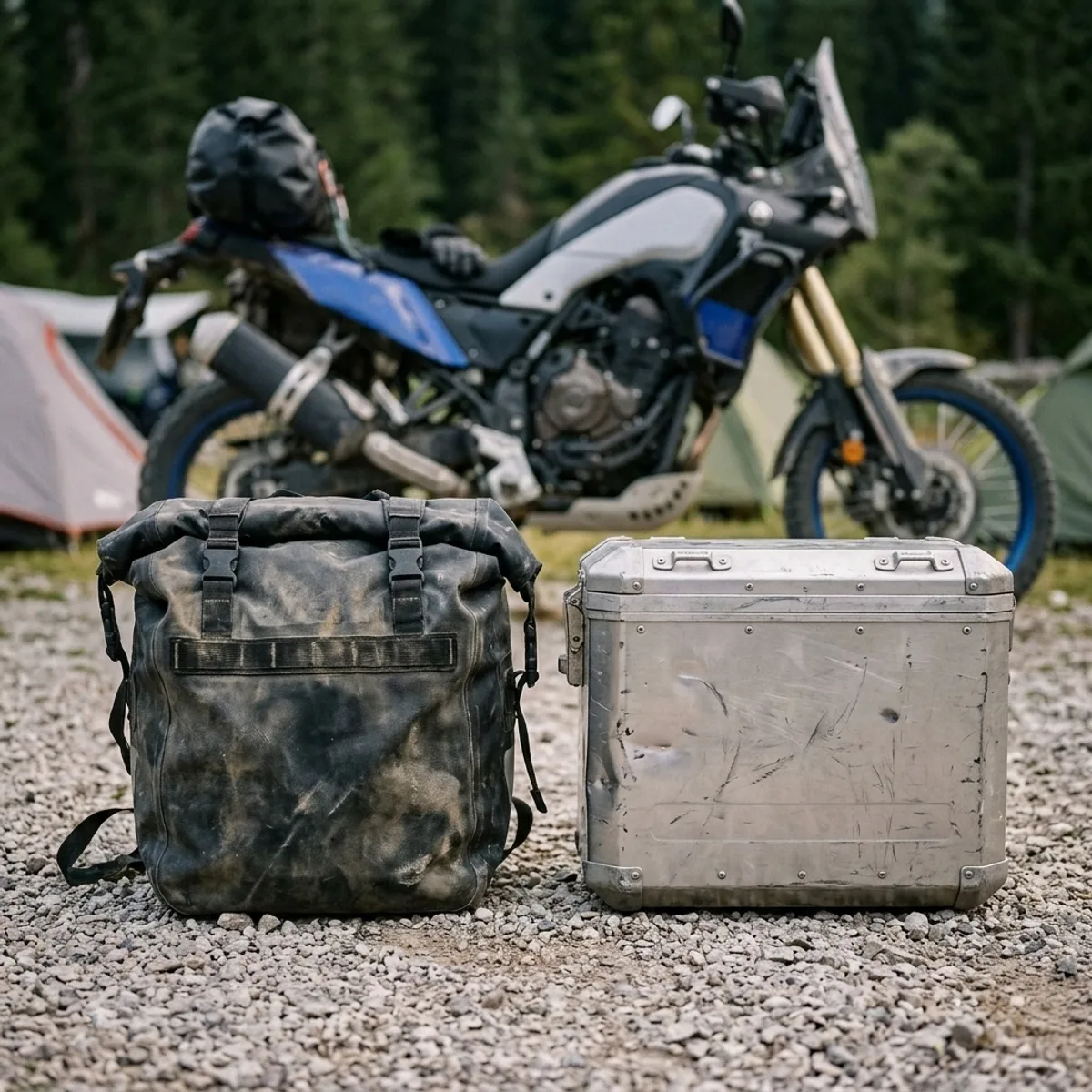
| Factor | Soft panniers | Hard panniers |
|---|---|---|
| Crash behaviour | Flex and absorb; kinder to rider and subframe | Rigid edge can trap a leg; protect contents |
| Off-road weight | Light, especially rackless | Heaviest option with racks |
| Security | Easy to remove and carry; not lockable | Lockable against casual theft |
| Waterproofing | Varies; dry-bag liner is the true seal | Good seal = effectively waterproof |
| Capacity & shape | Flexible, expandable, soft-packs | Fixed, rigid, stackable, predictable |
Each of those deserves more than a table cell.
Crash behaviour
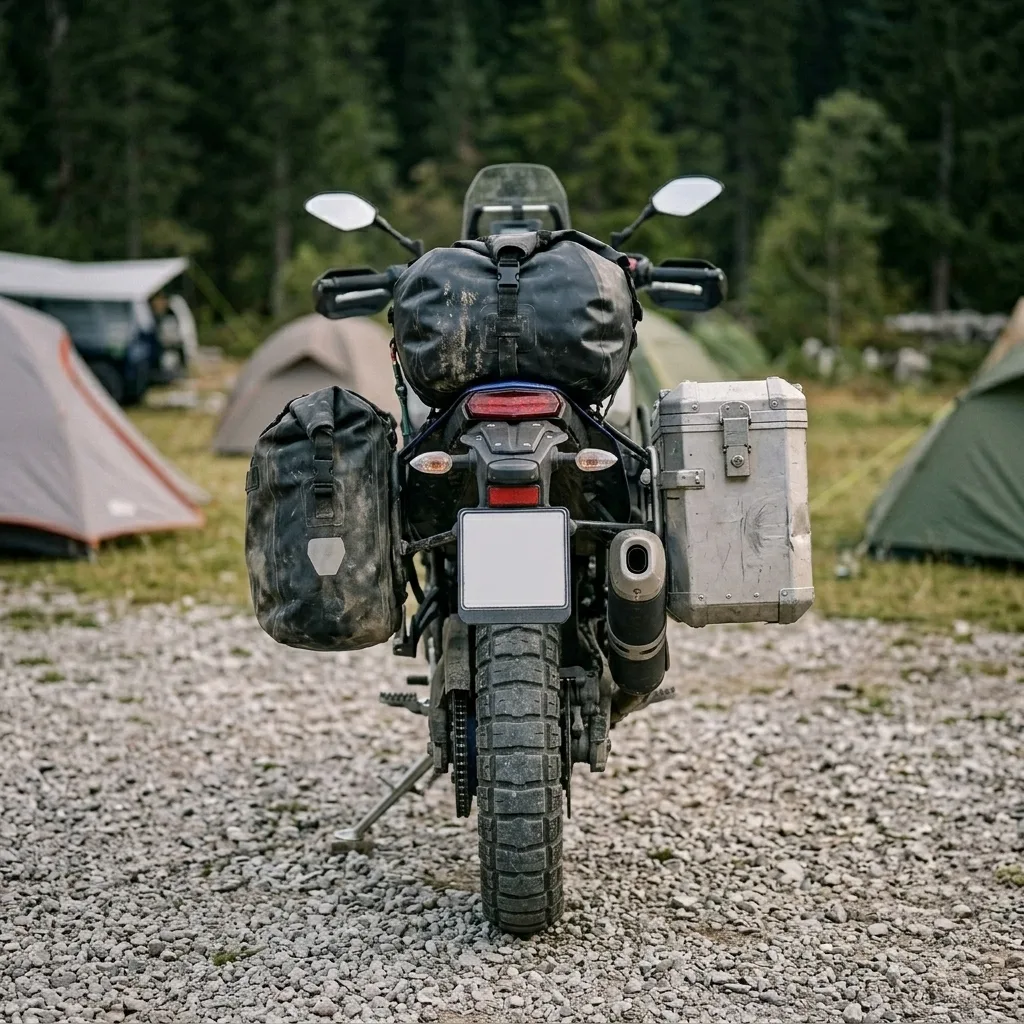
This is the one that changed my mind. In an off-road fall — and if you ride off-road enough, falls happen — a soft bag flexes and absorbs. A hard aluminium case presents a rigid edge and a fixed mounting point, and the documented risk is a leg trapped or struck against a solid box. Soft luggage is also kinder to the bike’s subframe in a low-speed tip-over. For riding where you expect to drop it, this alone pushes most experienced riders toward soft.
Hard cases earn their keep the other way: in a slide, they protect what’s inside, and they can shield parts of the bike from impact. But for rider safety specifically, soft is the more forgiving choice off-road.
Off-road weight
Weight on a loaded adventure bike sits high and wide, and it’s felt most where you least want it — slow technical balance, and lifting the bike after a fall. Hard panniers plus their steel racks are the heaviest setup; soft luggage, especially rackless, is dramatically lighter. After a long day, the difference between picking up a soft-loaded bike and a hard-loaded one is not subtle. This ties directly into bike choice, too — see how loaded weight plays out in the Ténéré 700 long-term review.
Security
Hard cases lock. That resists the opportunistic grab in a city car park far better than a zip or buckle. The honest counterpoints: a lockable box advertises that there’s something worth taking, and consumer locks don’t stop a determined thief with a tool. Soft luggage answers security differently — you unclip it and carry it into the room every night, which removes the target entirely. Pick based on your trip’s real theft risk, not worst-case anxiety.
Waterproofing
Good hard panniers with a proper seal are waterproof out of the box. Soft panniers vary enormously: premium systems use waterproof roll-top construction or include an internal dry-bag liner — and that liner is the real waterproof layer. My rule for any soft setup is simple and never fails me: pack anything that must stay dry inside a dry bag, and then rain is a non-issue either way.
Capacity and shape
Hard cases are fixed-volume, rigid and stackable — predictable to pack, easy to organise, and they don’t squash. Soft bags flex, expand, swallow awkward shapes and compress down when half-empty. If you like everything in its place, hard suits you. If you over-pack and improvise, soft forgives you.
The Part Most Guides Skip: Load Balancing
Here’s the thing that matters more than the soft-versus-hard decision itself: how you distribute the weight. A perfectly chosen pannier system packed badly handles worse than a mediocre system packed well.
Three rules I never break:
- Balance left to right. Uneven side-to-side weight makes the bike pull, tire you out, and behave unpredictably on loose surfaces. Weigh both sides if you can.
- Heavy and low, ideally forward. Mass high up raises the centre of gravity and makes the bike feel top-heavy exactly when you’re going slow on rough ground. Keep dense items (tools, water, fuel) low.
- Keep the back end from getting tail-heavy. Piling everything on a rear rack swings the weight behind the axle and the front goes light. Spread it.
Getting this right is fiddly to do by feel, which is exactly why we built a tool for it.
Get your load balanced with Pack My Bike
Drop your gear into each pannier, top box and tank bag, and check left-to-right balance and weight distribution in real time before you ride — soft or hard, it's the same physics.
Open Pack My Bike →A Quick Decision Framework
If you want this settled in thirty seconds, answer honestly:
Choose soft panniers if:
- You ride meaningful off-road / technical terrain and expect the occasional fall.
- You value low weight and an easy lift after a drop.
- You’d rather carry your bags into the room than lock them on the bike.
- You over-pack, improvise, and want flexible volume.
- It’s your first big loaded trip and you want the forgiving option.
Choose hard panniers if:
- Your trip is mostly tarmac, with little technical off-road.
- Car-park and hotel security is a real concern on your route.
- You want out-of-the-box waterproofing and rigid, organised packing.
- You value a fixed, stackable, predictable load you can leave on the bike.
- You’re touring two-up with a lot of kit and want maximum rigid volume.
Plenty of riders end up running a hybrid — soft saddle bags with a small lockable top box for documents and a laptop. There’s no rule against mixing.
For specific named systems across both camps, the best adventure motorcycle panniers guide goes deeper on individual models; a few I’d point first-time buyers at are the Mosko Moto Backcountry on the soft side and a solid aluminium pannier system on the hard side.
What 12,000 km Actually Taught Me
A few things I only learned by living with both, that no spec sheet will tell you:
The fall that converted me. On a loose, off-camber climb I dropped the bike at walking pace — the kind of tip-over that happens to everyone eventually. With soft luggage the bag squashed, the bike rolled onto it, and I lifted it solo in under a minute with nothing bent. I’d had the same kind of drop earlier on hard cases: a tweaked rack, a scuffed leg, and a lid that never sealed quite right again. Same speed, very different aftermath. That’s the safety argument made real.
The hotel routine matters more than you think. On a long trip you stop somewhere with a roof more often than you expect, and every night you’re deciding whether to strip the bike. With soft bags I unclip two saddle bags and walk in. With hard cases I’m either unlocking and carrying awkward boxes or leaving them on and hoping. Over weeks, the easy nightly routine of soft luggage is a quiet quality-of-life win.
Wind and width are real. Wide hard cases catch crosswinds on exposed roads and make filtering and tight gravel sections more nerve-wracking than the same load in slimmer soft bags. It’s a small thing on a calm day and a big thing on a windy mountain pass.
Neither survives bad packing. The single biggest handling improvement I ever made wasn’t switching luggage type — it was balancing the load properly and getting the heavy stuff low. A well-packed “lesser” system beats a badly-packed “better” one every time, which is the whole reason the load-balancing section above matters more than the brand on the bag.
Don’t Forget What Goes Inside
Panniers are a means, not an end — the point is getting a comfortable camp to where you’re going. A balanced load is wasted if the kit inside is heavier than it needs to be, so this decision goes hand in hand with choosing a compact tent (see the best motorcycle camping tents) and a sensible first kit list. If you’re new to all of this, start with the motorcycle camping for beginners guide before you spend big on luggage — what you carry decides how much luggage you actually need.
FAQ
The questions I get most — crash safety, waterproofing, security, weight, racks, and the best first-trip choice — are answered in the box above. The short version: there’s no universal winner. Soft panniers are the safer, lighter, more forgiving choice for off-road travel; hard panniers are the more secure, weather-sealed choice for road touring. Decide by your terrain and your theft risk, then balance the load with Pack My Bike and pack heavy-low-and-even regardless of which you chose.
This comparison is based on personal loaded riding on both systems. Some links above are affiliate links; if you buy through them, we may earn a small commission at no extra cost to you.
Frequently Asked Questions
Are soft or hard panniers safer in a crash?
Soft panniers are generally safer for the rider in an off-road fall. They flex and absorb impact rather than presenting a rigid edge that can trap or break a leg, and they rarely damage the bike's subframe in a low-speed tip-over. Hard aluminium cases protect their contents better and shield the bike from some impacts, but a rigid box pinning a leg in a fall is a real and documented injury risk. For technical off-road riding where falls are expected, most experienced riders favour soft luggage on safety grounds.
Which is more waterproof, soft or hard panniers?
Quality hard panniers with a good seal are effectively waterproof out of the box. Soft panniers vary — premium ones use waterproof roll-top construction or include an internal dry-bag liner, which is the true waterproof layer. The reliable rule for any soft system is to pack critical items inside a dry bag regardless of the marketing claims, and then both types keep your kit dry through heavy rain.
Are hard panniers better for security?
Yes, for lockable security against opportunistic theft. A hard case with a lock resists a casual grab in a car park far better than a zip or buckle on a soft bag. The counterpoint is that hard cases advertise that there's something worth stealing and a determined thief defeats consumer locks anyway. Soft luggage is easier to simply remove and carry into a room each night, which is its own form of security. Match the choice to your trip's theft risk.
Do soft panniers need a rack?
It depends on the system. Some soft panniers are rackless and use a harness or saddle-strap over the rear of the bike; others use a frame or wedge plate that bolts to a pannier rack. Rackless systems are lighter and cheaper but can shift under hard off-road loads; rack-mounted soft systems are more stable and faster to remove. Decide based on how much technical riding you'll do.
How much do hard panniers weigh compared to soft?
Hard aluminium panniers and their mounting frames are typically the heaviest option — a pair with racks can run well into double-digit kilograms before you pack anything. Soft luggage, especially rackless, is markedly lighter. On a loaded adventure bike that weight sits high and wide, so the difference is felt most exactly where you don't want it: off-road balance and picking the bike up after a fall.
What's the best pannier choice for a first adventure trip?
For most first loaded trips, lighter soft luggage is the more forgiving choice — cheaper, kinder in the inevitable tip-over, and easier to live with while you learn how you actually pack. If your trip is mostly tarmac and you're worried about hotel-car-park security, lockable hard cases make more sense. Either way, balance the load left-to-right and keep heavy items low and forward.