
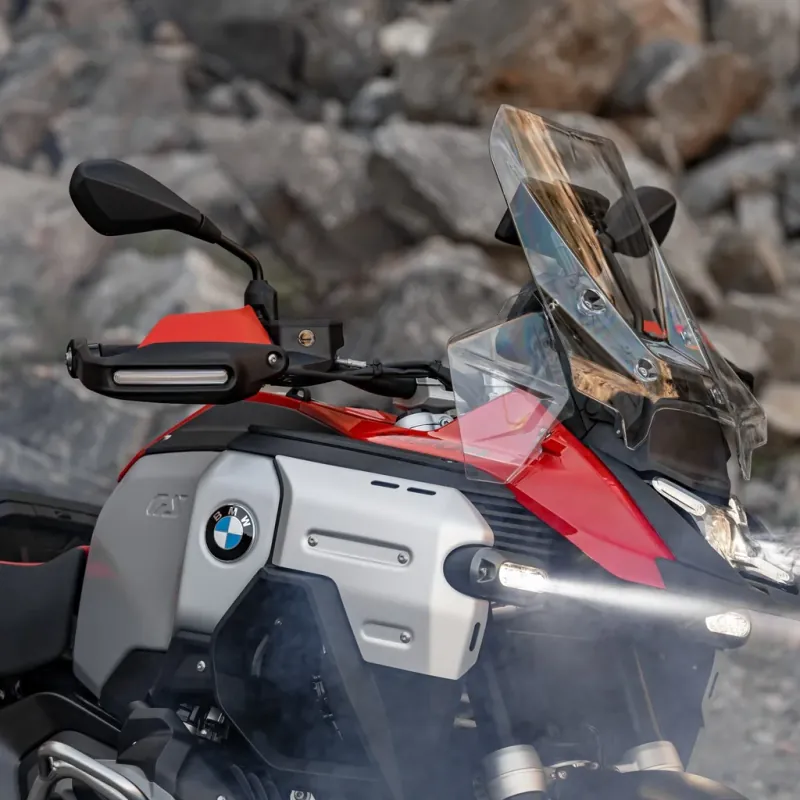
The BMW GS has been the default answer to “what’s the best adventure bike?” for so long that the question now is rarely whether it’s good. It’s whether it’s too much bike. The 2026 R 1300 GS Adventure is the biggest, most powerful, most technology-laden version BMW has ever built: 145 horsepower, a 30-litre tank, adaptive cruise control, and a base price of $23,795. It is, by most measures, the benchmark big-bore adventure tourer on the planet.
It’s also heavy, expensive, and, on early bikes, not without faults. So this BMW R 1300 GS Adventure review does the thing the marketing won’t: it tells you what the GSA does better than anything else, and it lays out the long-term problems owners are reporting, so you can decide whether the benchmark is the right bike for you or just the most impressive one in the showroom.
Introduction: The Benchmark, and the Question It Raises
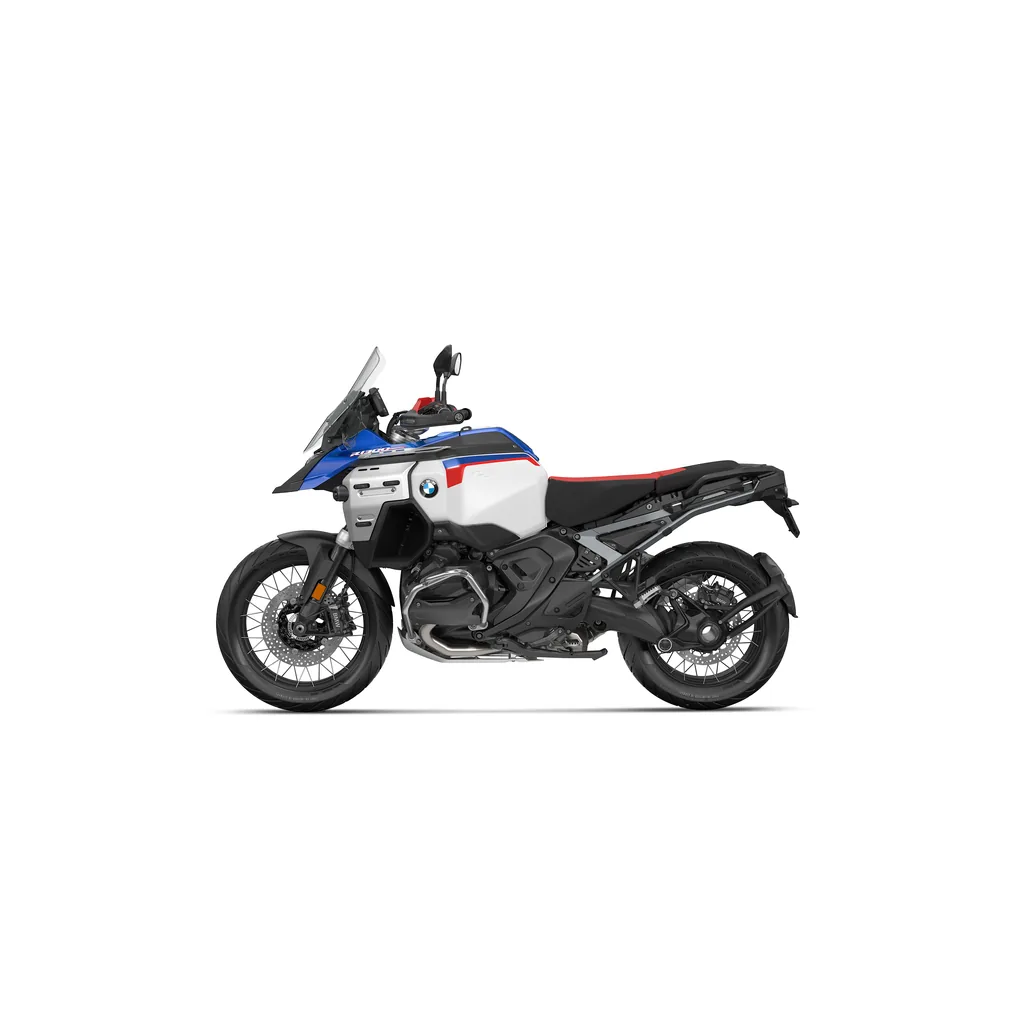
Every adventure bike gets measured against the GS. That’s been true for two decades, and the R 1300 GS Adventure is BMW pressing its advantage: take the already-excellent R 1300 GS platform and load it with everything a long-haul, go-anywhere rider could want, from the bigger tank and the better wind protection to the touring ergonomics and the full electronics suite.
The result is a motorcycle that does almost everything brilliantly. The catch is that “almost everything” now comes wrapped in 269 kg and a five-figure price, at a moment when lighter, cheaper middleweights have got good. The GSA’s job is to prove that more is still worth it. For the right rider, it does. The rest of this review is about who that rider is.
The Engine: 145 hp of Effortless Boxer Torque
At the heart is BMW’s 1,300cc air/liquid-cooled boxer twin with ShiftCam variable valve timing, making 145 hp and 110 lb-ft of torque at 6,500 rpm. The character is the GS’s great trick: enormous, accessible mid-range that delivers effortless thrust whether you’re overtaking a truck on a motorway or lugging up a rocky climb two-up and loaded.
It’s not peaky or demanding. The power is predictable and the delivery is smooth, and combined with the wide handlebar and composed suspension it produces that signature GS sensation: the bike quietly convincing you that you’re capable of going further than you probably should. For covering big distance with luggage, this engine is about as good as adventure-touring powerplants get.
For 2026 the GSA also offers BMW’s Automated Shift Assistant (ASA), an automated clutch and gearshift system. On long touring days and in slow technical going it reduces fatigue noticeably, one of those features that sounds gimmicky and turns out to be quietly excellent.
Range: The 30-Litre Advantage
This is where the Adventure earns its name. The 30-litre tank, paired with fuel economy averaging around 46 mpg, gives a theoretical range of roughly 340 miles (about 550 km) between fill-ups.
That number is the whole point of the GSA. It means you can ride through remote country without planning your day around fuel stations, carry less anxiety about range, and link up the kind of empty, far-flung roads that are the reason to own a bike like this in the first place. No middleweight comes close, and few big-bore rivals match it. If your riding takes you somewhere a fuel stop is a real question, this tank changes the trip.
Comfort, Weather Protection and Touring Tech
The GSA is built to cover serious distance in serious comfort. The wind and weather protection is among the best in the class, the riding position is roomy and upright, and the electronics package is deep: adaptive cruise control (DCC) with a brake function, blind-spot detection, heated grips, Keyless Ride, a revised 10.25-inch TFT display with improved glare resistance, Matrix LED lighting, and BMW Motorrad Full Integral ABS Pro.
For 2026 it moves to four riding modes (up from three), adding a dedicated Enduro mode tuned specifically for off-road. The cumulative effect of all this kit is a bike that shrinks long days (the adaptive cruise alone transforms motorway slogs) and makes the GSA feel like a true continent-crusher rather than just a capable motorcycle. This is the area where the price starts to make sense.
Off-Road: Heavy, But More Capable Than It Looks
There’s no getting around the weight: this is a 269 kg motorcycle, and physics doesn’t care how clever the electronics are. On tight, technical, loose terrain, the GSA’s mass is always present, and dropping it is a two-person job you’ll remember.
And yet, within its weight class, it’s remarkably able. The low centre of gravity, the wide bars, the composed suspension and the new Enduro mode let an experienced rider take it places that look implausible for a bike this size. It’s not a Ténéré, and you wouldn’t want to ride a tricky single-track on it. But for fire roads, gravel, and the kind of mixed-surface adventure touring most GSA owners actually do, it’s hugely capable. Manage the weight and it goes a long way — our off-road riding tips for loaded adventure bikes are doubly worth reading before you point one at the dirt.
The Honest Part: Known Problems
A balanced review has to cover this, because early R 1300 GS and GSA bikes have generated a notable list of owner-reported issues. None of these are universal, and many look like early-production teething trouble. But you should know them before you buy:
- 145 hp with effortless, accessible boxer torque
- ~550 km range from the 30-litre tank
- Class-leading touring tech — adaptive cruise, blind-spot, ASA
- Best-in-class weather protection and long-haul comfort
- Astonishingly capable for its size on mixed terrain
- Electrical gremlins — battery connection faults, dash glitches
- Firmer brake feel than the R 1250; needs more lever pressure
- Early adaptive-ride-height fault needing a rear suspension part swap
- Clutch failures reported under hard off-road use
- Hot air reaching the thighs; 269 kg mass; premium pricing
If you’re buying new, ask the dealer directly about recall and service-action status. If you’re buying used, check the service history for the suspension and clutch items, and take an early bike for a proper test ride paying attention to the brakes and any electrical warning behaviour. These are manageable known quantities, not dealbreakers. But they’re real, and a $23k bike should be held to a high standard.
R 1300 GS Adventure Spec Sheet
| Spec | BMW R 1300 GS Adventure (2026) |
|---|---|
| Engine | 1,300cc air/liquid-cooled boxer twin, ShiftCam |
| Power | 145 hp |
| Torque | 110 lb-ft @ 6,500 rpm |
| Wet weight | 269 kg (593 lb) |
| Seat height | 870/890 mm adjustable (options ~790–915 mm) |
| Fuel tank | 30 litres |
| Range (approx.) | ~340 miles / ~550 km |
| Riding modes | 4 (incl. Enduro) |
| Display | 10.25” TFT, anti-glare |
| Key tech | Adaptive cruise, ABS Pro, optional ASA, Keyless Ride |
| MSRP (US, base) | $23,795 (BMW US, 22 Sep 2026) |
Who Should Buy It?
The experienced rider whose year actually involves the things this bike is built for: long-distance touring with luggage, often two-up, across mixed terrain and remote country where range and comfort matter. If you ride big miles and you’ll genuinely use the tank, the tech and the all-terrain ability, the GSA is the most complete tool for the job and the price is defensible. It’s also the natural pick for someone stepping up from a smaller GS who wants the full flagship experience.
Who Should Look Elsewhere?
Riders who mostly commute, do light or local touring, or spend real time on technical trails. For them the GSA’s weight, height and cost are paying for capability they won’t use. A middleweight is lighter, cheaper, easier and often more fun in those roles — start with our Honda Transalp vs V-Strom 800DE vs Ténéré 700 comparison and our best long-distance touring motorcycles guide. Newer riders, in particular, are usually better served learning on something they can pick up alone.
Verdict
The R 1300 GS Adventure is the benchmark big-bore adventure tourer, and it earns the title: 145 hp, a 550 km range, the best touring tech in the class, and an uncanny ability to cover ground in comfort while still handling serious terrain. As a complete, do-everything package, nothing currently matches it.
But “best” and “right for you” aren’t the same thing. It’s heavy, it’s expensive, and early bikes carry a list of faults worth your due diligence. Buy it because you’ll use what makes it special. The range, the comfort, the all-terrain reach — not just because it wears the badge everything else gets compared to. For the rider who does, it’s superb. For everyone else, the smart money is further down the range. Plan the trip that justifies it with our long-distance motorcycle trip guide.
A note on the prices: US MSRP for the 2026 base model, read on BMW’s own US site on 22 September 2026, excluding destination, taxes and dealer charges. On a GSA the options list moves the real number a long way — price your own configuration before you budget.
Frequently Asked Questions
Is the BMW R 1300 GS Adventure worth the money?
If you want one bike to cross continents in comfort while still being seriously capable when the tarmac ends, nothing else on the market quite matches it — and for that rider, the $23,795 base MSRP is justified. The 30-litre tank, 145 hp, adaptive cruise control, weather protection and luggage capacity make it the benchmark big-bore adventure tourer. But it's expensive, heavy at 269 kg, and overkill for riders who mostly commute or do light touring. The value question depends entirely on whether you'll actually use its long-distance, all-terrain capability.
How much does the 2026 BMW R 1300 GS Adventure cost?
The 2026 R 1300 GS Adventure carries a base MSRP of $23,795 in the US before options (BMW’s own US site, read 22 September 2026) — and the options list is long and expensive. Realistically, a well-specced GSA with the packages most owners want (Enduro Pro, comfort and touring kit, luggage) pushes well past that. It's a premium-priced motorcycle, comfortably above the middleweight class and most of its big-bore rivals.
What is the range of the R 1300 GS Adventure?
The Adventure ships with a 30-litre fuel tank, and with fuel economy averaging around 46 mpg it gives a theoretical range of roughly 340 miles (around 550 km) between fill-ups. Real-world range depends heavily on how hard you ride and whether you're loaded and two-up, but the big tank is one of the GSA's defining advantages — it's built specifically so you don't have to plan around fuel stops in remote country.
What are the known problems with the BMW R 1300 GS?
Early R 1300 GS and GSA bikes have attracted a number of owner-reported issues. The most cited: electrical gremlins (faulty battery connections causing starting problems and dashboard glitches), a firmer brake feel that some riders dislike (needing more lever pressure than the old R 1250), a fault on early adaptive-ride-height bikes requiring a rear suspension part to be swapped, reports of clutch failures under hard off-road use, and hot air reaching the rider's thighs. Many are early-production teething issues — check service history and recall status on any bike you're considering.
Is the R 1300 GS Adventure too heavy or too tall for most riders?
It's a big machine — 269 kg (593 lb) wet, with a standard adjustable seat at 870/890 mm, though seat options span roughly 790–915 mm. Once rolling, the low centre of gravity and wide bars make it feel far more manageable than the numbers suggest, and experienced riders cover serious ground on it confidently. But at a standstill, on loose surfaces, or for shorter and less experienced riders, the mass and height are real considerations. It rewards experience; it's not a natural first big bike.
R 1300 GS Adventure vs a middleweight like the Ténéré 700 — which should I buy?
Completely different tools. The GSA is the do-everything continent-crusher: more power, more comfort, more tech, more range — and more weight, height and cost. A middleweight like the Ténéré 700 or Honda Transalp is lighter, cheaper, easier off-road and simpler to own, but asks more of you on long highway days two-up. If your riding is big-mileage touring with luggage and a passenger, the GSA earns it. If it's trails, budget and back-road fun, a middleweight is the smarter buy — see our middleweight comparison.
What's new on the 2026 R 1300 GS Adventure?
The Adventure builds on the R 1300 GS platform with the bigger 30-litre tank, more wind and weather protection, and adventure-focused ergonomics and luggage. Notable for 2026 is a move to four riding modes (up from three) including a dedicated Enduro mode, a revised 10.25-inch TFT display with better glare resistance, and availability of BMW's Automated Shift Assistant (ASA) — an automated clutch/gearshift system that makes long touring days less work. Full Integral ABS Pro and adaptive cruise with brake function remain.