
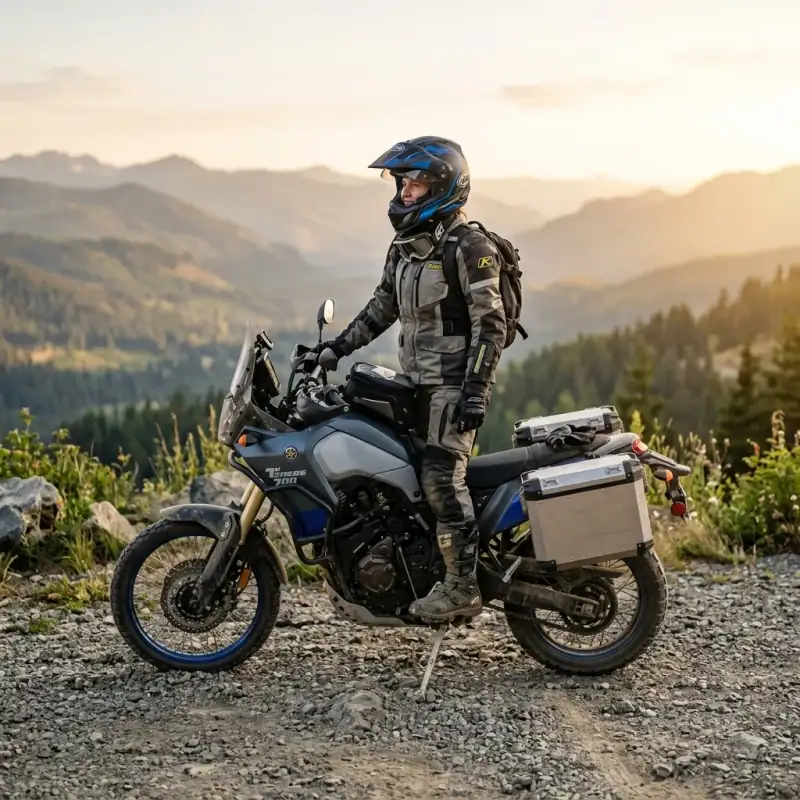
Here’s the thing almost every seat-height list gets wrong: it treats the lowest number as the winner. But the spec-sheet seat height is only half of what decides whether an adventure bike actually fits you — the other half is weight, how wide the seat is where your legs drape over it, and how far the bike sinks when you sit on it. A light 175 kg bike you can only tiptoe is usually safer than a heavy 235 kg one you can flat-foot, because weight is what catches you out at a standstill: on a camber, backing out of a parking spot, or the moment a boot slips on gravel.
So this is a straight, sortable adventure bike seat height chart for 2026 — sixteen current models lined up lowest to tallest — but with the weight column sitting right next to the seat height, because that’s the comparison that actually keeps you upright. Read them together, never the seat number alone. Below the table, the rest of what the spec sheet leaves out.
16 Adventure Bikes by Seat Height (2026)
Click any column to sort ↕| Bike | Seat Height | Weight | US Price* |
|---|---|---|---|
| LowestCFMOTO Ibex 450 | 800–820 mm | ~175 kg | $6,499 |
| Kawasaki Versys-X 300 | 815 mm | 173 kg | $5,799 |
| Triumph Tiger 900 GT Pro | 820–840 mm | ~222 kg | $17,095 |
| Low seat: 805 mmRoyal Enfield Himalayan 450 | 825 mm | 196 kg | $5,999 |
| KTM 390 Adventure X | 825 mm | 176 kg | $6,499 |
| Honda NX500 | 830 mm | 196 kg | $6,899 |
| Moto Guzzi V85 TT | 830 mm | 209 kg | $12,790 |
| BMW G 310 GS | 835 mm | 175 kg | ~$6,300 † |
| Benelli TRK 502 X | 840 mm | 235 kg | $7,190 |
| BMW R 1300 GS | 848 mm | 237 kg | $20,395 |
| Honda Africa Twin CRF1100L | 850–870 mm | 231 kg | $15,199 |
| Suzuki V-Strom 800DE | 855 mm | 230 kg | $11,799 |
| Aprilia Tuareg 660 | 860 mm | 204 kg | $12,499 |
| KTM 390 Adventure R | 870 mm | 176 kg | $7,699 |
| Yamaha Ténéré 700 | 875 mm | 208 kg | $10,999 |
| LightestHonda CRF300L Rally | 894 mm | 151 kg | ~$6,499 |
*Prices are US MSRP as of July 2026 and exclude destination, taxes and dealer fees. Dealer and market pricing varies, sometimes a lot — treat these as a ballpark, not a quote. Seat heights are the standard figure from each manufacturer; for adjustable seats the range is shown and the chart sorts by the lower setting. Weights are as published by each maker and mix "wet/kerb" and "dry" measures, so compare within a few kg, not to the gram (the CFMOTO figure in particular is a dry-ish number, so the ready-to-ride weight is a little higher).
† The BMW G 310 GS is a run-out model — its 313 cc platform is being retired, and US pricing we found ranged from roughly $5,600 to $6,700 depending on dealer and model year. Confirm the actual price locally before you count on it.
Why the Seat-Height Number Lies to You (a Little)
What the chart can’t show is this: two riders of identical height sit on the same bike, and one flat-foots it while the other is on tiptoe. Both numbers on the spec sheet are correct. The difference is everything the number leaves out.
Standover, not seat height, is what your feet feel. Seat height is measured straight down from the top of the seat. But your legs don’t drop straight down. They drape over the sides of the seat and tank. A bike with a narrow seat and slim tank where your thighs sit lets your feet fall closer to vertical, so an 850 mm narrow seat can put more boot on the ground than an 830 mm wide one. This is exactly why the Ténéré 700, at a tall-sounding 875 mm, surprises people: it’s slim where it counts.
Suspension sag steals 20–40 mm the moment you sit down. The published seat height is measured with nobody on the bike. Climb on and a well-set-up adventure bike sinks into its stroke — often 25–35 mm on the road-biased ones, more on the soft, long-travel ones. So the number you fit against isn’t the spec figure; it’s the spec figure minus sag. A softer bike effectively “shrinks” more when you sit on it.
And there’s a second weight number the spec sheet doesn’t headline either — the maximum load the manufacturer says the bike may carry, rider and passenger and luggage combined. It’s usually far lower than riders expect, it varies enormously between models that look alike, and it decides whether the bike can do the trip you’re picturing. We pulled the published figures for nine adventure bikes straight from the manuals in our companion chart: how much weight your adventure bike can actually carry.
Weight is the safety number nobody puts in the headline. Look across the chart at the 800–840 mm group and notice how far apart the weights are: the CFMOTO Ibex 450 and BMW G 310 GS are around 175 kg, while the Benelli TRK 502 X at the same seat height is 235 kg — sixty kilos more. At a stop, on a camber, that sixty kilos is the difference between catching a lean and watching the bike go over. A rider who can tiptoe a light bike is usually safer than one flat-footing a heavy one. Read the seat and weight columns together, always.
The Genuinely Low Ones
If the whole point is getting both feet down, four bikes on this chart are the honest starting point.
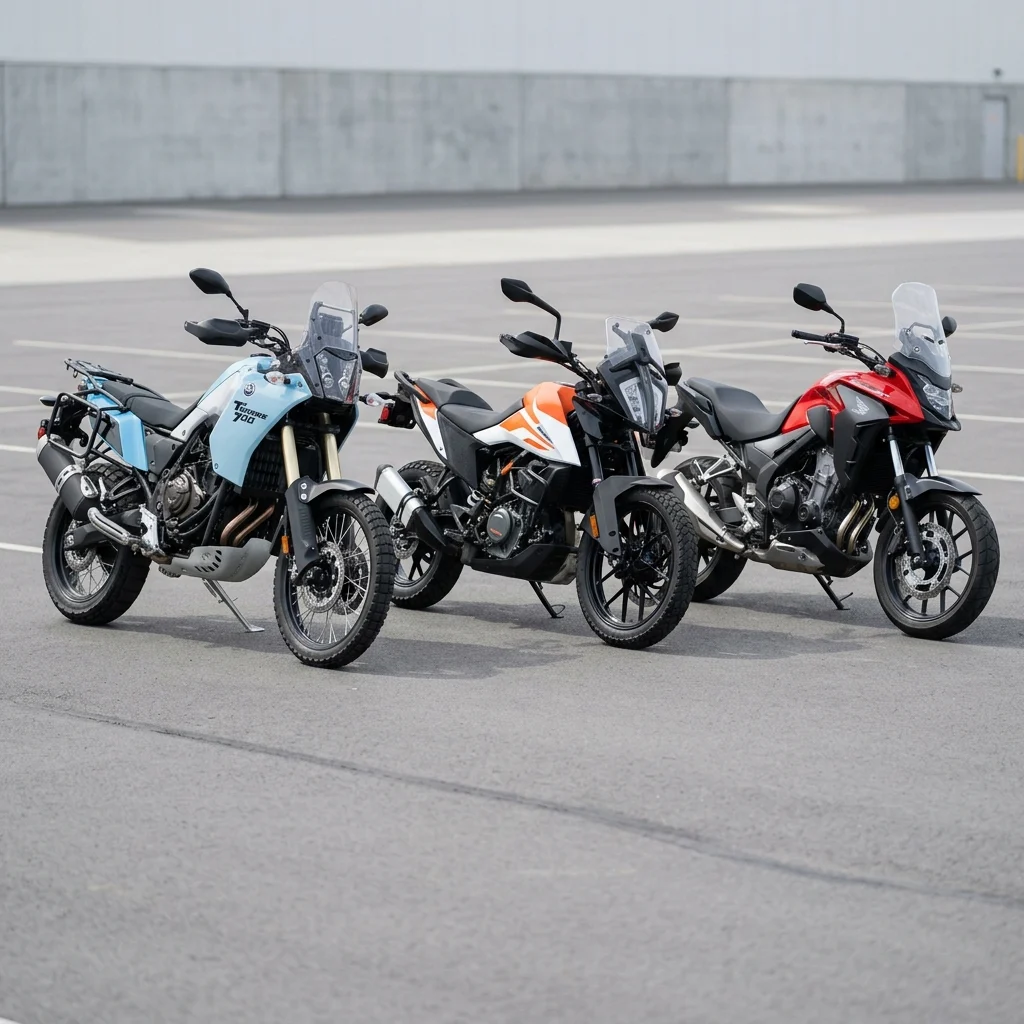
The Kawasaki Versys-X 300 (815 mm, 173 kg) is the lowest fixed seat here and one of the lightest — a very forgiving combination for a nervous or shorter rider, though it’s the mildest off-road of the group. The CFMOTO Ibex 450 (adjustable from 800 mm, around 175 kg) goes lower still and is far more capable off-road, a lot of bike for the money. The Royal Enfield Himalayan 450 starts at 825 mm but has a factory low seat that drops it to 805 mm with no handling penalty, and at 196 kg it’s manageable rather than featherweight. And the KTM 390 Adventure X (825 mm, 176 kg) is the new-for-2026 low-seat sibling to the taller 390 Adventure R; same engine, much friendlier ergonomics.
If you want a big-bike engine but a shorter reach, the Triumph Tiger 900 GT Pro is the outlier worth knowing: its standard seat adjusts down to 820 mm, lower than bikes half its size, though at ~222 kg you’re firmly back in “mind the weight” territory.
How to Actually Make a Bike Fit
Sitting on the bike beats every chart, including this one. But when the bike you want is a touch too tall, you have options, roughly in the order worth trying them:
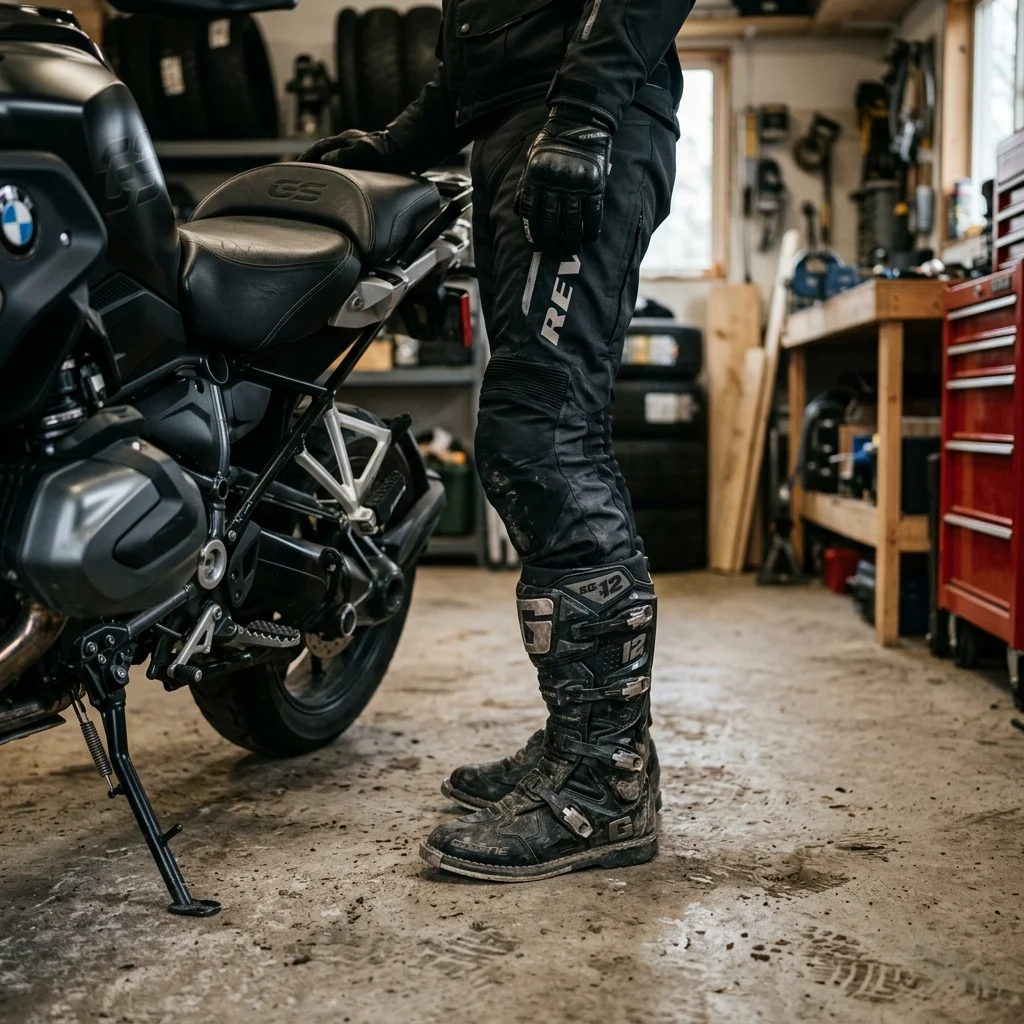
- Thicker-soled boots — the cheapest 15–25 mm you’ll ever find, and they help everywhere.
- A factory or aftermarket low seat — 15–30 mm lower, often narrower too, which helps standover more than the number suggests. Most manufacturers list a factory low-seat option; in the aftermarket, Seat Concepts is the ADV go-to (they reshape the foam narrower as well as lower it), with Sargent and Corbin the other established names. Check the maker’s fitment list for your exact model and year. The firmer perch is a real cost rather than a footnote, and Seat Concepts says so itself: low seats “have less foam and may be firmer … as material must be removed to achieve the lower height.” Less material carrying the same load, in the spot where load is already concentrated — what that does to a long day, and what fixes it, is worth reading before you lower anything.
- Lowering links / shorter shock — drops more, but costs you ground clearance and can dull the handling, so it’s a road-rider’s fix more than an off-roader’s. Soupy’s Performance and Kouba Link are the usual link brands; a suspension shop can also shorten the shock properly.
- Suspension re-spring for your weight — a lighter rider on softer springs sags more into the stroke, lowering the effective seat without any of the above.
The order matters because each step trades away a little capability. Start with the one that costs you nothing.
For the bikes themselves — which of these is actually worth buying rather than just easy to reach — the best ADV bikes for short riders guide goes deeper on everyday fit, and if you’re new to two wheels entirely, the best motorcycles for beginners and best motorcycles for women lists cover the same fit question from other angles. Whatever you land on, the best adventure motorcycle boots guide can help you claw back those first crucial millimetres.
One last thing worth saying: not every bike here is sold in every market. The CFMOTO Ibex 450, the smaller KTM 390s, the Benelli and a few others come and go by region, model names differ (the Ibex 450 is CFMOTO’s US name for the 450MT), and US, UK and EU line-ups don’t always match — so check what’s actually on sale where you are before you get attached to one.
A note on the numbers: seat heights are manufacturer figures and prices are US MSRP as of July 2026, with the Ténéré 700, Africa Twin, V-Strom 800DE and 890 Adventure R re-checked against the manufacturers’ own US sites on 1 September 2026 — both can change with model-year updates and dealer pricing, and the run-out BMW G 310 GS is especially variable. This chart is built from published specifications and manufacturer pricing to help you build a shortlist to go and sit on; it’s not a substitute for throwing a leg over the real thing.
Frequently Asked Questions
Which adventure bike has the lowest seat height in 2026?
Among mainstream 2026 adventure bikes, the Kawasaki Versys-X 300 sits lowest at a fixed 815 mm, and the CFMOTO Ibex 450 goes lower still with an adjustable seat from 800 mm. The Royal Enfield Himalayan 450 starts at 825 mm but drops to 805 mm with the factory low seat accessory. But 'lowest' isn't the whole answer — a light 175 kg bike you can tiptoe beats a heavy 235 kg bike you can flat-foot, because the weight is what catches you out at walking pace and on side stands.
What's the difference between seat height and standover height?
Seat height is measured straight down from the top of the seat, unladen. Standover — how far your feet actually reach — depends on how wide the seat and tank are where your legs drape over them, and on how much the suspension sags when you sit on it. A narrow 850 mm seat can let you touch the ground better than a wide 830 mm one. That's why two riders of the same height get on the same bike and one flat-foots it while the other is on tiptoe. Always sit on the bike before you trust the number.
Is seat height or weight more important for a short rider?
Both, but weight is the one people underestimate. Seat height decides whether you can get a foot down at a stop; weight decides whether you can hold the bike up once that foot is down, paddle it backwards out of a parking spot, or pick it up after a slow tip-over. A rider who can only tiptoe a light bike is usually safer than one flat-footing a heavy one. Read this chart with both columns in view, not just the seat-height one.
Can you lower an adventure bike, and what does it cost you?
Yes, several ways, each with a trade-off. A factory low seat (offered on bikes like the Himalayan 450 and R 1300 GS) drops 15–30 mm with no downside beyond a firmer perch. Lowering links and shorter shock settings drop more but reduce ground clearance and can upset the handling off-road. A shaved or re-profiled seat narrows the front so your legs drop straighter. Boots with thicker soles are the cheapest fix of all. The honest order to try them in is: sit on everything first, then boots, then seat, then suspension.
How much inseam do I need for an 850 mm seat height?
There's no exact formula because standover and suspension sag vary by bike, but as a rough guide many riders around 5'8" (173 cm) can flat-foot or near-flat-foot a bike in the low-to-mid 800s mm once it settles under their weight, while riders around 5'4" (163 cm) tend to be comfortable on the sub-830 mm bikes in this chart or on the taller ones with a low seat fitted. Treat that as a starting point for which bikes to go and sit on, not a rule.