
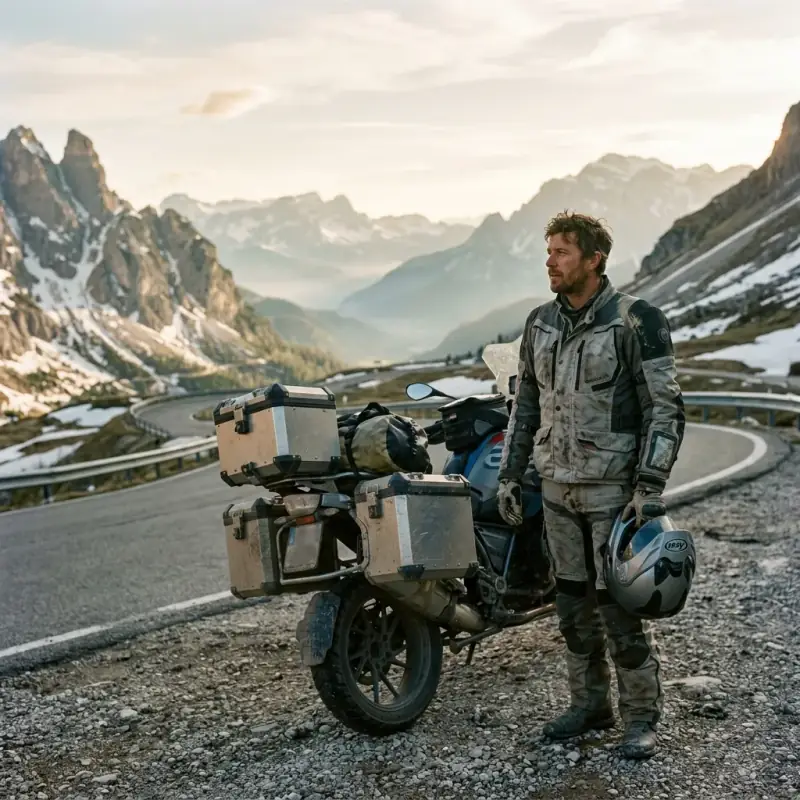
A jacket is the piece of kit riders get most wrong in both directions. Some people spend a grand on a four-season laminate to commute ten minutes to work in July. Others buy the cheapest armoured shell they can find for a two-week trip across three climates and spend the whole time either boiling or soaked.
The good news is that picking the right one isn’t really about the brand on the chest. It comes down to two things almost nobody explains: how the waterproofing is built into the jacket, and what’s actually in the box when it arrives. Get those right and the rest — fit, vents, pockets — sorts itself out. So before the picks, two minutes on the stuff that matters.
Klim Carlsbad jacket
The all-rounder most riders should buy — GORE-TEX, huge vents, CE Level 2 armour front to back.
Check Klim Carlsbad on Amazon →Laminate vs Drop-Liner: The Choice That Decides Everything
Every waterproof jacket puts a breathable membrane between you and the rain. The difference is where that membrane sits, and it changes how the jacket behaves more than any other single thing.
- Drop-liner (sometimes called a Z-liner): the membrane hangs loosely inside the outer shell. Rain soaks the outer fabric and stops at the membrane, so you stay dry. But the jacket gets heavy, feels clammy, and takes ages to dry out. These are cheaper, and warmer in winter because the trapped air insulates.
- Laminate: the membrane is bonded straight to the outer fabric, so water never gets into the shell at all. It never “wets out”, dries fast, and. The bit people miss — vents far better, because air from the chest vents reaches your body without fighting through an inner liner first.
In plain terms: a drop-liner keeps you dry in the rain and costs less; a laminate keeps you dry and comfortable on a long wet day, and breathes properly in heat. For the riding most of us do around the Med and Turkey — hot most of the time, occasionally biblical. That hot-weather venting is the deciding factor. It’s why the laminated jackets sit at the top of this list.
What “CE Rated” Actually Buys You
Two separate ratings hide behind that little CE label, and shops love to blur them.
The garment is rated for abrasion under EN 17092: AAA (track and sustained high speed), AA (touring and daily riding — where you want to be), A (urban only), then B and C, which barely count. Almost every jacket here is AA, and AA is the right answer for adventure touring.
The armour is rated separately for impact: Level 1 or Level 2, with Level 2 absorbing more and sitting about 50% thicker. Here’s the trap — a jacket can be AA-rated and come with Level 2 shoulder and elbow armour, and still arrive with nothing real protecting your back. Most do. Of everything below, only the two Klims include a proper CE Level 2 back protector out of the box. On the others, factor in a back insert before you ride. This guide notes which-comes-with-what in every entry, because it’s the detail that quietly leaves people unprotected. For the back inserts, knee braces and chest protectors that fill those gaps, see our adventure motorcycle protection guide.
Adventure Jackets Compared — Side by Side
7 Jackets — Side by Side
| Jacket | Membrane | Back protector | Price | Rating |
|---|---|---|---|---|
| Best All-RoundKlim Carlsbad jacket | GORE-TEX (laminate) | Included (CE L2) | $$$ | |
| No CompromiseKlim Badlands Pro jacket | GORE-TEX Pro (laminate) | Included (CE L2) | $$$$ | |
| Rev'It Tornado 4 H2O jacket | Hydratex (mesh + liners) | Separate | $$$ | |
| Alpinestars Bogota Pro Drystar jacket | Drystar (drop-liner) | Separate | $$ | |
| Tourmaster Trek jacket | Reissa (drop-liner) | Foam placeholder | $$ | |
| HWK Adventure Touring jacket | Reissa (water-resistant) | Foam | $ |
1. Klim Carlsbad — Best All-Round
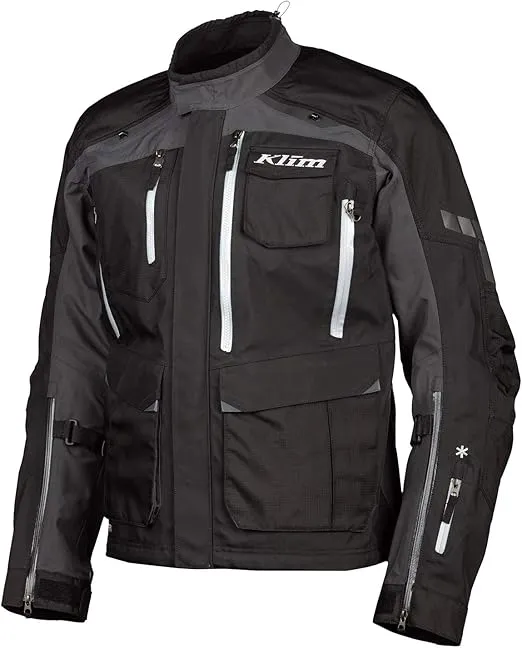
If someone asked me to pick one jacket and stop talking, it’d be the Klim Carlsbad jacket. It does the thing a great ADV jacket is supposed to do: disappear. GORE-TEX keeps it waterproof without a flappy inner liner, the 500-denier Karbonite ripstop takes a beating, and the vents are big enough that you can actually feel the air move on a hot day rather than just believing the marketing.
The part that pushes it to the top, though, is what’s in the box. It comes with Klim’s Rogue armour at CE Level 2 in the shoulders, elbows and back. You’re not paying extra to be protected where it counts, which can’t be said for most of this list. It’s rated Class AA, the cut suits riding rather than standing around, and it works as a true three-to-four-season jacket if you layer underneath in winter.
It isn’t cheap, and the Carlsbad’s looser ADV cut won’t suit someone who wants a tailored road jacket. But pound for pound it’s the one I’d hand a friend buying their first serious adventure jacket and tell them they’re done.
Disclosure: some links below are affiliate links. If you buy through them we may earn a small commission at no extra cost to you.
Check Klim Carlsbad on Amazon →
- GORE-TEX laminate — vents well, dries fast
- CE Level 2 armour front, sides AND back included
- Tough 500D Karbonite ripstop, Class AA
- Pairs with Carlsbad pants for a connected suit
- Premium price
- Relaxed ADV cut, not a tailored road fit
2. Klim Badlands Pro — The No-Compromise Shell
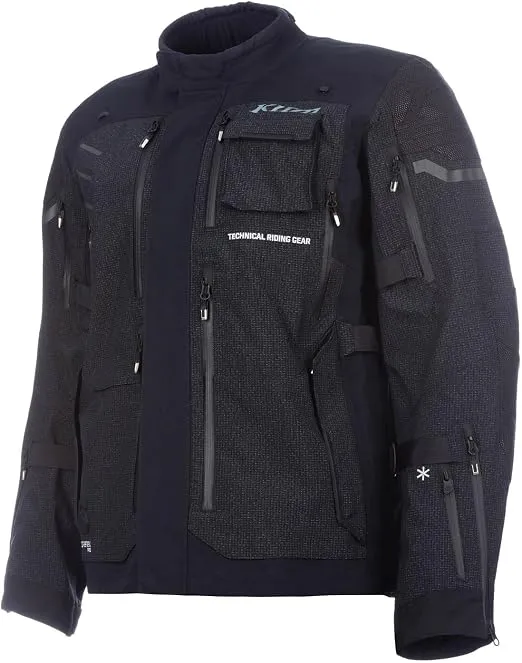
The Klim Badlands Pro jacket is what you buy when the jacket is the last thing you ever want to think about again. It runs GORE-TEX Pro. The most durable, most breathable version Gore makes — backed with Superfabric in the high-wear zones, and like the Carlsbad it includes CE Level 2 armour all the way round, back protector included.
We’ve got a full Klim Badlands Pro deep-dive if you want the long version, so I’ll keep this short: it’s overkill for a sunny weekend and absolutely the right tool for crossing a continent in every weather a continent can throw at you. The only real downside is the price, which is a lot of money.
If you ride year-round, in everything, and you keep your gear for a decade, the maths works. If you don’t, the Carlsbad gives you most of it for meaningfully less.
Check Klim Badlands Pro on Amazon →
- GORE-TEX Pro + Superfabric — top-tier everything
- CE Level 2 armour included, back protector too
- Built to outlast the bike
- Seriously expensive
- More jacket than most riders need
3. Rev’It Tornado 4 H2O — Best for Hot Climates
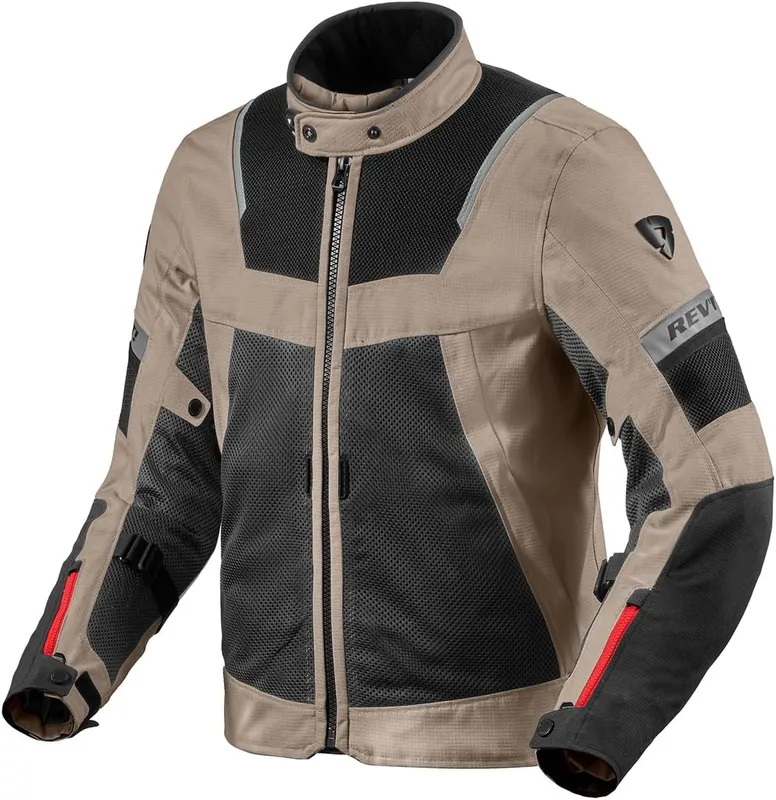
For riding somewhere that’s hot far more often than it’s cold — which, if you’re reading a site called Bikes & Bays, is probably you. The Rev’It Tornado 4 H2O jacket is the smart pick. It’s built mesh-first, with big 3D air panels that flow real air, then layers back to all-weather with a detachable thermal liner and a separate waterproof liner you can run inside or outside the shell.
That liner-swap system is the clever part: pull everything out and it’s a summer mesh jacket; clip the waterproof layer in when the sky turns and you’re covered. The shell carries Rev’It’s SeeFlex CE Level 2 armour in the shoulders and elbows and the jacket is CE AA rated. One honest catch — the back protector is sold separately. It’s prepped for a SeeSoft Level 2 insert, so buy that at the same time and fit it before you ride.
If you mostly bake and occasionally drown, this beats a heavy four-season laminate you’d spend half the trip unzipping.
Check Rev’It Tornado 4 H2O on Amazon →
- Genuine hot-weather airflow (mesh-first)
- Detachable thermal + waterproof liners
- SeeFlex CE Level 2 shoulder/elbow armour, AA rated
- Back protector costs extra
- Mesh shell is less abrasion-tough than a laminate
4. Alpinestars Bogota Pro Drystar — Best Value Four-Season
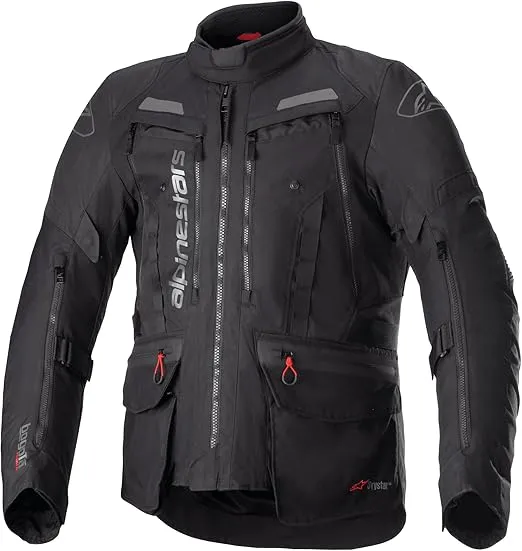
The Alpinestars Bogota Pro Drystar jacket is where the price drops without the jacket falling apart. It uses Alpinestars’ own Drystar membrane in a three-layer “liner-to-drop” setup. You can wear the waterproof layer over or under the shell, and it comes with Nucleon Flex Pro armour at CE Level 2 in the shoulders and elbows, plus hip protection. It’s even Tech-Air ready if you ever run an airbag.
As a drop-liner it won’t vent quite like the laminates above, and like most of the field the back protector is an extra purchase (the pocket takes a Nucleon or D3O insert). But for a four-season jacket from a major brand at this money, it’s hard to argue with. This is the one I’d point a sensible rider toward who wants real all-weather coverage without Klim money.
Check Alpinestars Bogota Pro on Amazon →
- Four-season Drystar at a fair price
- CE Level 2 shoulder/elbow + hip armour, Tech-Air ready
- Flexible liner-to-drop layering
- Drop-liner vents less than a laminate
- Back protector sold separately
5. Tourmaster Trek — Best Budget Complete
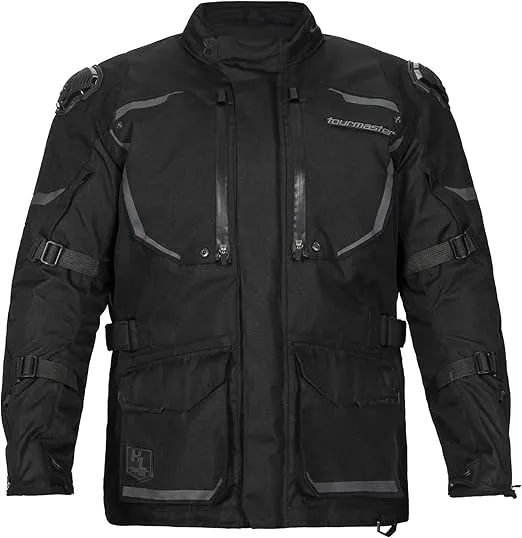
The Tourmaster Trek jacket is the value workhorse. The jacket that gives a new rider almost everything for a fraction of the spend. You get a 600D shell with 1000D honeycomb ripstop at the impact zones, a zip-out Reissa waterproof liner, a zip-out thermal liner, an under-helmet Aqua-Barrier hood for downpours, and CE Level 2 armour in the shoulders and elbows.
The catch is the back: it ships with a thin foam placeholder, not a CE protector. That’s normal at this price, and the fix is cheap — a proper SafeTech CE back insert is around $20. But please don’t skip it. With that one upgrade, the Trek punches well above its tag and covers a beginner’s first big trip comfortably.
Check Tourmaster Trek on Amazon →
- Huge spec for the money — both liners included
- CE Level 2 shoulder/elbow armour
- Under-helmet hood, loads of pockets
- Back pad is foam — buy the CE insert
- Drop-liner, so middling hot-weather airflow
6. HWK Adventure Touring — Cheapest Armoured Option
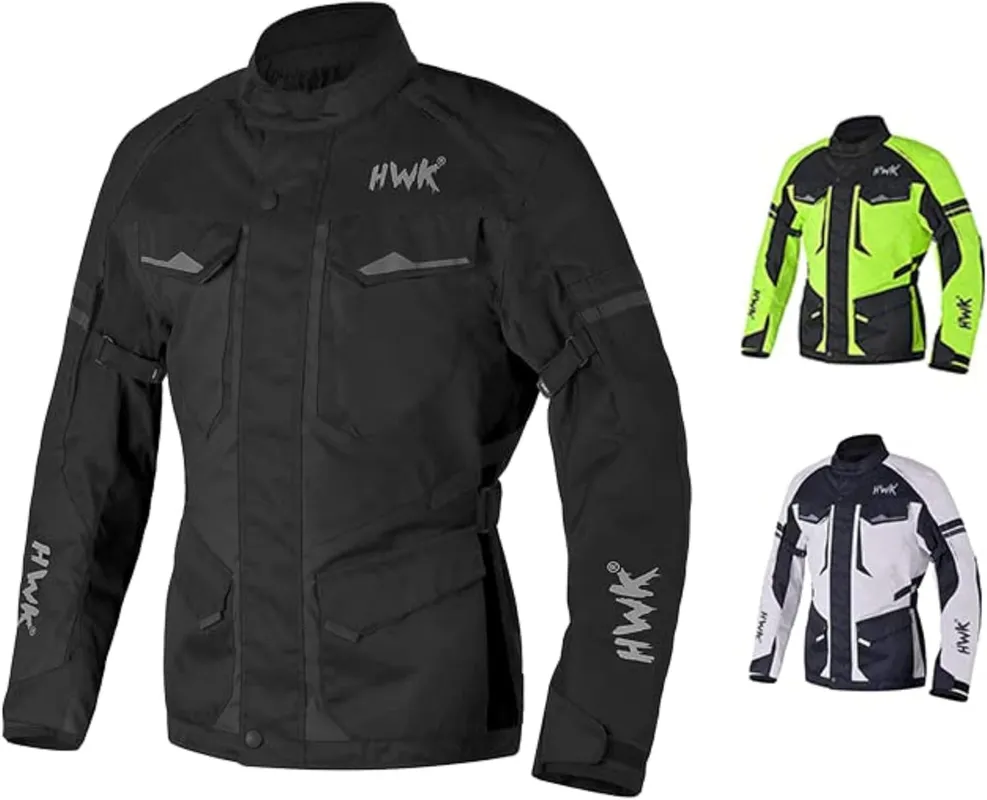
If the budget is tight, the HWK Adventure Touring jacket gets armour on your body for the price of a tank of fuel and a couple of dinners. It’s a 600D Cordura shell with a Reissa membrane, a removable thermal liner, five vents and removable CE armour in the shoulders and elbows. There’s a men’s and a women’s cut.
Be clear-eyed about what it is: the Reissa here is water-resistant rather than properly waterproof, the back is foam, and the finish is budget. But for a learner doing short rides, or as a knock-about second jacket, it’s remarkable value and miles better than riding in a hoodie. Treat it as a starting point, not a forever jacket.
Check HWK Adventure on Amazon →
- Armour on your body for very little money
- Removable thermal liner + vents
- Men's and women's cuts
- Water-resistant, not fully waterproof
- Budget materials, foam back pad
7. Klim Artemis — Best for Women
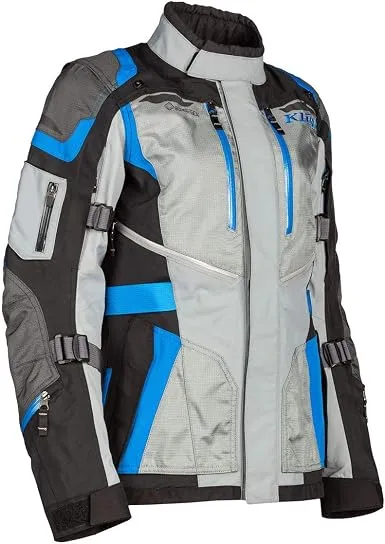
Women’s adventure gear that’s actually cut for women, rather than a small men’s jacket with different graphics, is still thin on the ground — which is why the Klim Artemis jacket keeps coming up. It’s a GORE-TEX shell with Superfabric reinforcement and women-specific touches that matter on a long day: a collar adjuster that doesn’t snag your hair, a genuinely tailored fit, and a sensible vent layout.
It’s a long-running model that Klim has revised over the years, so check the listing for the current armour spec before you buy — and, as with the men’s Klims, it’s the kind of jacket you keep for a decade. If you want more women-specific options than one pick, our dedicated women’s adventure jackets guide compares five of them, and for head-to-toe ideas there’s our women’s ADV outfit guide.
Check Klim Artemis on Amazon →
- Properly women-specific cut and features
- GORE-TEX shell with Superfabric
- Built to last
- Premium price
- Check current-gen armour spec on the listing
How to Choose: A Quick Buying Guide
- Start with your climate, not the brand. Hot most of the year? Go mesh-first (Tornado 4 H2O) or laminate for the venting. four-season? A laminate shell (Carlsbad / Badlands Pro) or a value drop-liner (Bogota Pro).
- Laminate vents and dries better; drop-liner is cheaper and warmer. That single trade-off explains most of this list.
- Check the back protector before you check out. Only the Klims include a real CE Level 2 back insert here. On the others, add one. It’s the cheapest safety upgrade you’ll ever make.
- Aim for Class AA on the garment and CE Level 2 on the armour for adventure touring.
- Think head-to-toe. A jacket is one part of the kit — match it with pants, boots, gloves and a helmet, and use a connection zip if you can.
FAQ
The questions riders ask most — whether GORE-TEX is worth it, which jackets actually include a back protector, laminate vs drop-liner in the heat, what CE class you need, and mixing brands; are answered in full at the top of this page.
The short version: buy for your climate, get to Class AA / CE Level 2, and check what’s in the box. For most people the Klim Carlsbad is the one; hot-climate riders should look at the Tornado 4 H2O, value hunters at the Bogota Pro or Trek, and women at the Artemis.
One thing worth reading before the first time you wash whichever one you buy: the care instructions for a laminate jacket and a standard textile jacket are opposites, and the manufacturers publish both. How to wash motorcycle riding gear has the two sets side by side — most jackets that “start leaking” have simply been washed or dried the wrong way.
Prices and availability change constantly. The figures here are approximate guides, not live quotes. Check the current price through any link before buying.
Disclosure: Some links in this article are affiliate links. If you buy gear through them, we may earn a small commission at no extra cost to you.
Frequently Asked Questions
Is GORE-TEX actually worth it over Drystar or Hydratex?
For a do-everything jacket you'll ride in for years, yes — but not for the reason most people think. GORE-TEX (especially the laminated GORE-TEX Pro on a Klim) earns its money on a long wet day: a laminate never 'wets out', so it stays lighter and dries far faster than a soaked drop-liner shell. Drystar (Alpinestars) and Hydratex (Rev'It) are genuinely good membranes and will keep you just as dry in a downpour for a lot less cash — the difference is how the jacket feels after three hours of rain, and how well it vents in heat. If you mostly ride dry with occasional showers, you do not need to pay the GORE-TEX premium. If you tour in all weather, it's worth it.
Does an adventure jacket come with a back protector?
Usually not — and this is the single most common thing buyers get wrong. Almost every jacket here ships with CE Level 2 armour in the shoulders and elbows, but the back 'protector' is often just a foam placeholder or an empty pocket. Of this list, only the Klim Carlsbad and Klim Badlands Pro include a real CE Level 2 back protector. On the Rev'It Tornado 4 H2O, the Alpinestars Bogota Pro and the Tourmaster Trek you'll need to buy the back insert separately — budget €20–€60 for it and fit it before your first ride.
Laminate or drop-liner for a hot climate?
Laminate, if you can stretch to it. In a laminated jacket the vents pull air straight onto your body, because the waterproof membrane is bonded to the outer shell — there's nothing between the mesh and your skin. In a drop-liner jacket the air has to fight through an inner membrane, so it always vents worse. For riding the Mediterranean or Turkey in summer, a laminate shell (or a dedicated mesh jacket like the Tornado 4 H2O with the liners pulled out) will be noticeably cooler. Drop-liner jackets win on price and winter warmth, not hot-weather airflow.
What CE rating do I actually need for adventure touring?
Class AA is the sweet spot. Under the EN 17092 standard, garments are rated AAA, AA, A, B or C for abrasion resistance. AAA is built for track and sustained high-speed crashes and tends to be heavy and stiff; A is rated for urban riding only. AA covers the way most of us actually tour — real abrasion protection with enough flex to wear all day. Almost every quality ADV jacket lands at AA. Just remember the garment's AA rating is about sliding; the armour (Level 1 vs Level 2) is a separate rating for impact.
Do I need the matching pants, or can I mix brands?
You can mix brands and most riders do. The one thing worth matching is the jacket-to-pant connection zip: a full-circumference zip that joins your jacket to your trousers stops the jacket riding up in a slide and seals out wind and rain at the waist. Those zips are usually brand-specific, so a Klim jacket pairs cleanly with Klim pants, Rev'It with Rev'It, and so on. If you mix, look for a jacket with a universal short zip or just accept you'll run them unconnected — plenty of people do.