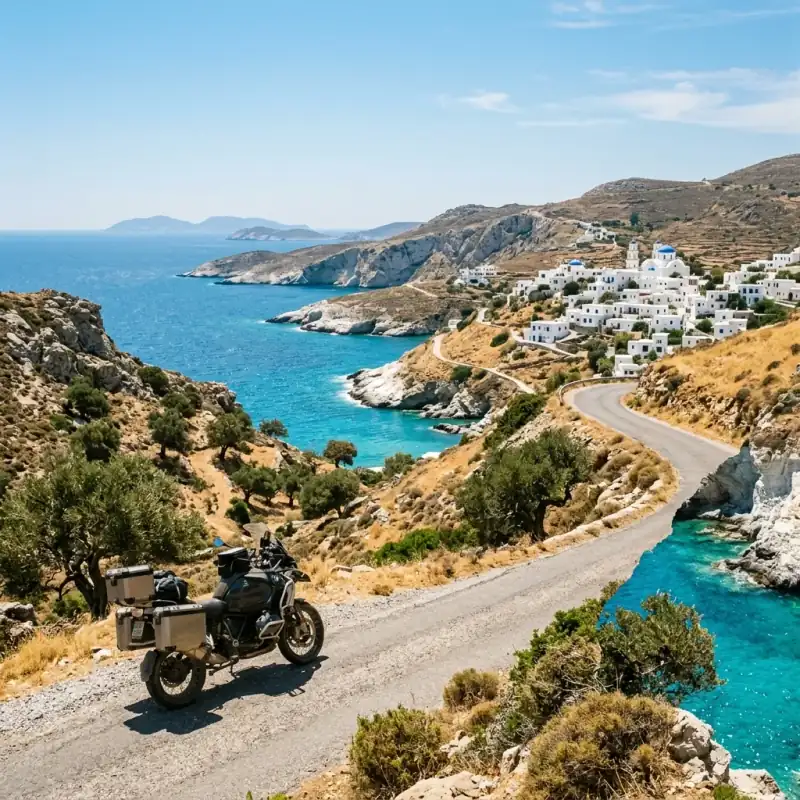
From the Turkish Aegean coast the Greek islands sit on the horizon, close enough to feel like neighbours, and the Cyclades are only a little further west. Most people think of them the way you’d expect — somewhere you fly to, rent a scooter for an afternoon, and lie on a beach. Take your own bike across on the ferry, though, and the Greek islands turn into something else entirely: a proper riding trip, with the sea in between the roads instead of beside them.
This is the practical guide: how to actually ride the Greek islands on your own motorcycle — which ferries take a bike and which leave you on the dock, the real and slightly disappointing truth about wild camping in the Cyclades, and which islands are worth the trouble of bringing two wheels across the water.
Two Things to Know First
Before the islands themselves, two realities that shape the whole trip.
The fast ferries often won’t take your bike. Greece has two kinds of ferry: the big, slow, conventional car ferries (Blue Star is the workhorse of the Cyclades), and the sleek high-speed catamarans (Seajets and the like). The fast boats are tempting — half the crossing time. But they carry few vehicles or none, and a motorcycle is the first thing turned away when the deck is full. The conventional ferries take bikes easily and cost less. Plan your whole route around the slow boats, book vehicle space ahead in summer, and treat the crossing as part of the holiday rather than a chore.
Wild camping is illegal, and 2026 is not the year to chance it. I know “wild camping Greek islands” is what half of you typed to get here, and I’d love to tell you about a secret cove where you can pitch up for free. But free camping in Greece is against the law — longstanding legislation, tightened again with new rules in 2025, and over the 2026 summer the authorities have visibly stepped up enforcement. Get caught pitched on a beach and you’re looking at a fine of around €300 per person or tent, with worse possible in serious cases. It is not quietly tolerated the way it once half was. The good news is the islands are well stocked with cheap, friendly, beachfront campsites, and that’s how riders camp here: the island sections below say where they are, and the wider European wild camping legal guide puts Greece’s hard line in context.
With that out of the way. The islands.
The Route at a Glance
| Leg | Island | Nights | Why |
|---|---|---|---|
| Ferry from Piraeus | Paros | 2 | Gentle warm-up, Naoussa, Kolymbithres |
| Short hop | Naxos | 4 | The real riding — Mount Zas, mountain villages, dune beaches |
| Small-boat hop | Lesser Cyclades (optional) | 1-2 | Turquoise bays, no riding, pure swimming |
| Ferry west | Milos | 3 | Volcanic coast, Sarakiniko, the best bays in the Cyclades |
| Ferry back | Piraeus / onward | — | Close the loop |
Roughly 10-12 days for the full version, three or four islands, with the bike doing real work only on Naxos and Milos. Fewer islands and longer stays is the move — every extra hop is another ferry fee and another half-day of logistics. This isn’t a distance trip; it’s a stop-and-swim trip with brilliant roads in between.
Paros: The Gentle Introduction
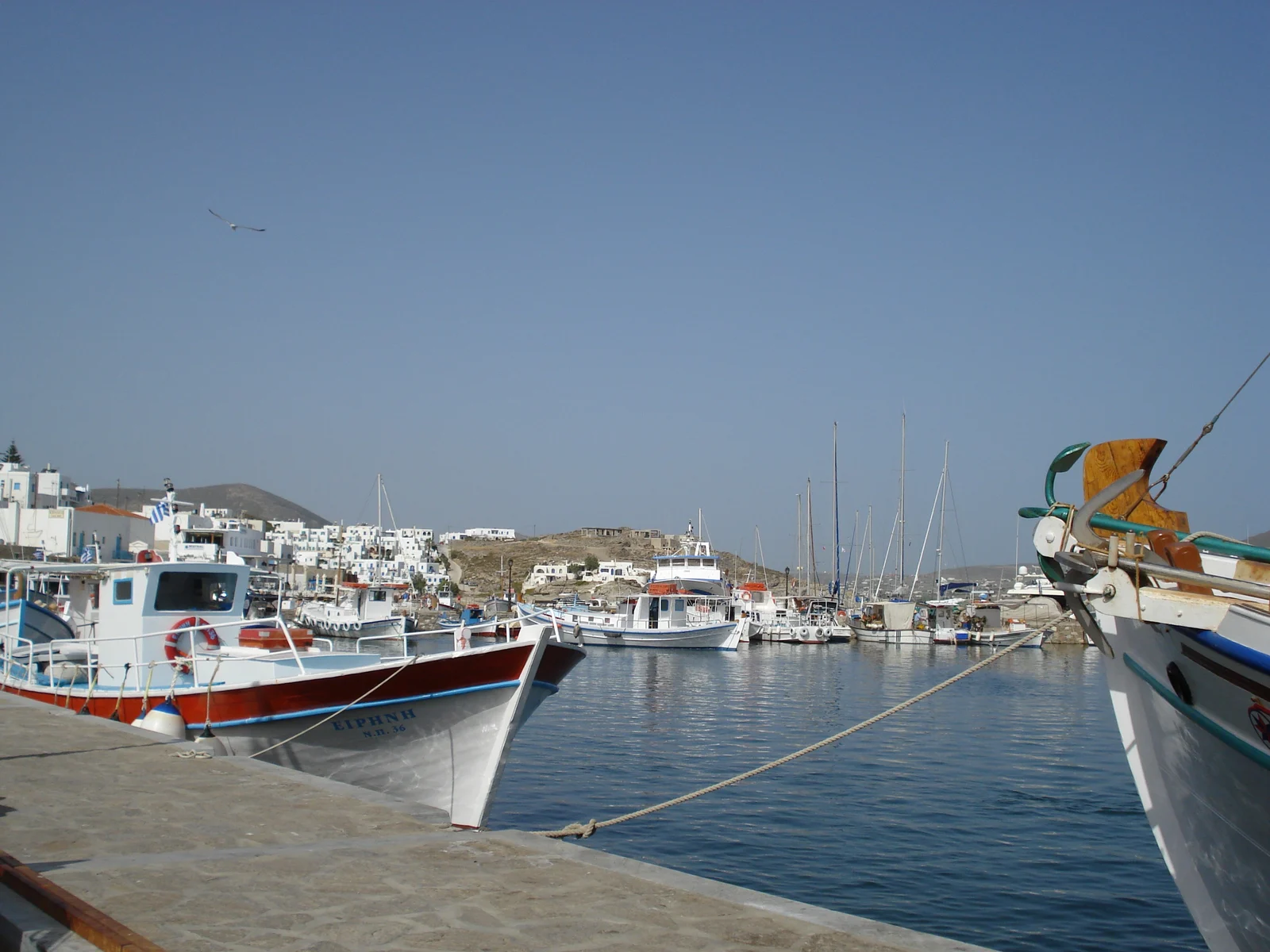
Ride off the ferry at Parikia and Paros does the gentle thing — rolling hills, easy roads, and just enough riding to shake off the crossing. The island is small and quickly learned, which makes it the right first stop. Loop up to Naoussa, a working fishing harbour turned pretty without losing its boats, and out to Kolymbithres, a bay of smooth, wind-sculpted granite that you can swim between like a natural sculpture park. Inland, the marble village of Lefkes sits up in the hills with a proper old church and a view back down to the sea.
It’s not a hard island to ride, that’s the point. Spend two nights, get your ferry rhythm, eat well in Naoussa in the evening, and set up for the island that earns its keep.
Road notes: Easy, well-surfaced roads and short distances. The wind can pick up on the exposed northern side near Naoussa. The first taste of the meltemi. Organised campsites near Parikia and on the beaches.
Naxos: The One Island You Ride For
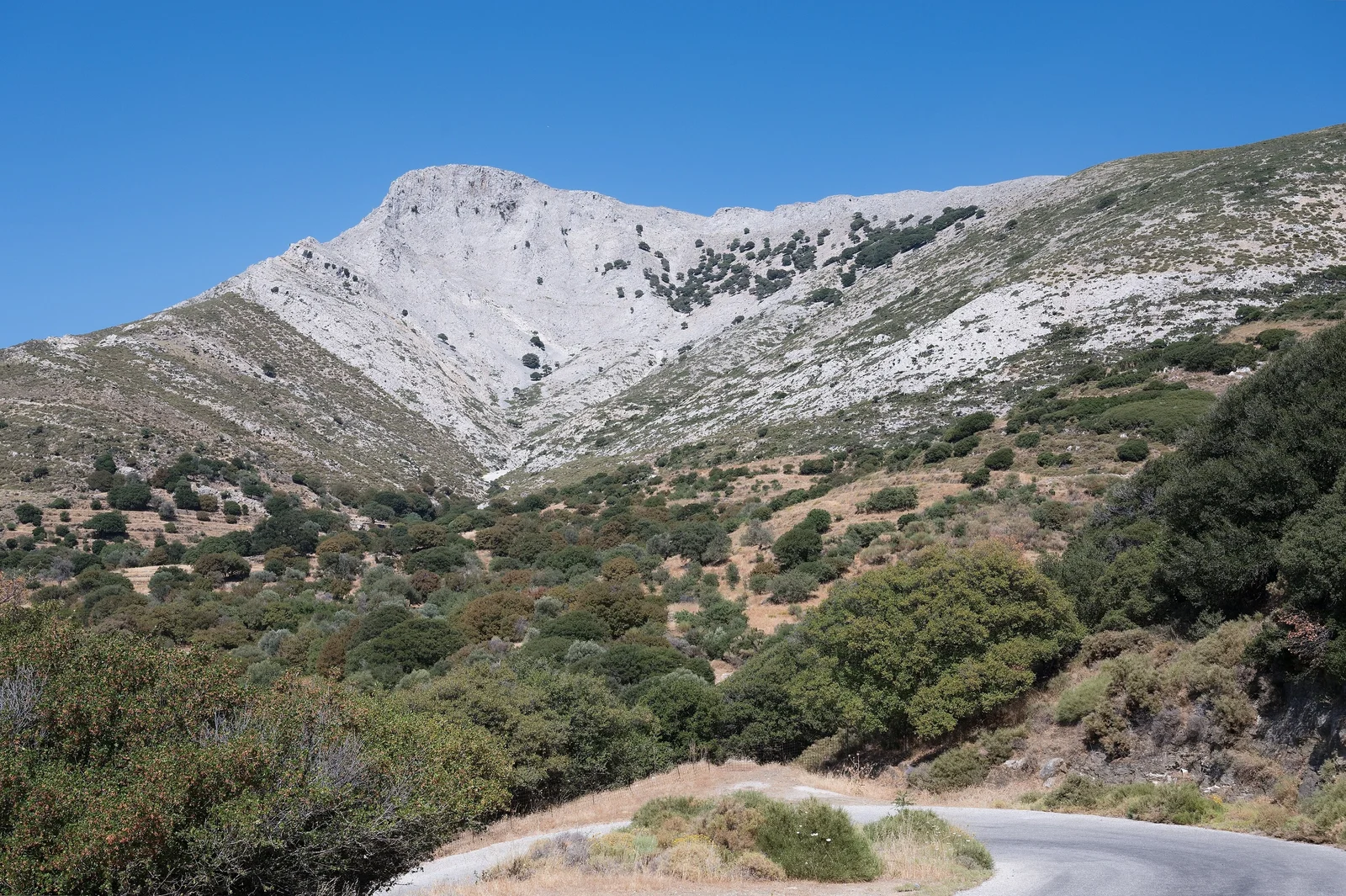
A short hop east and everything changes. Naxos is the giant of the Cyclades. The biggest island, and the one with the most interior to ride. While the others are afternoon scooter islands, Naxos has genuine mountain roads climbing the slopes of Mount Zas (Zeus’s mountain, the highest point in the Cyclades at over 1,000 metres), and the riding up there is the best in the islands: tight, curling, well-surfaced roads through olive groves and bare rock with the Aegean dropping away below.
Ride the interior loop through the marble mountain villages — Chalki with its old Venetian tower and a distillery turning out the local kitron liqueur, Filoti clinging to the side of Zas, and Apeiranthos, a steep stone village of marble streets that feels carved out of the mountain itself. Drop down past Sangri and the lonely Temple of Demeter standing in a field. This is a full day of riding and it’s the reason you brought the bike.
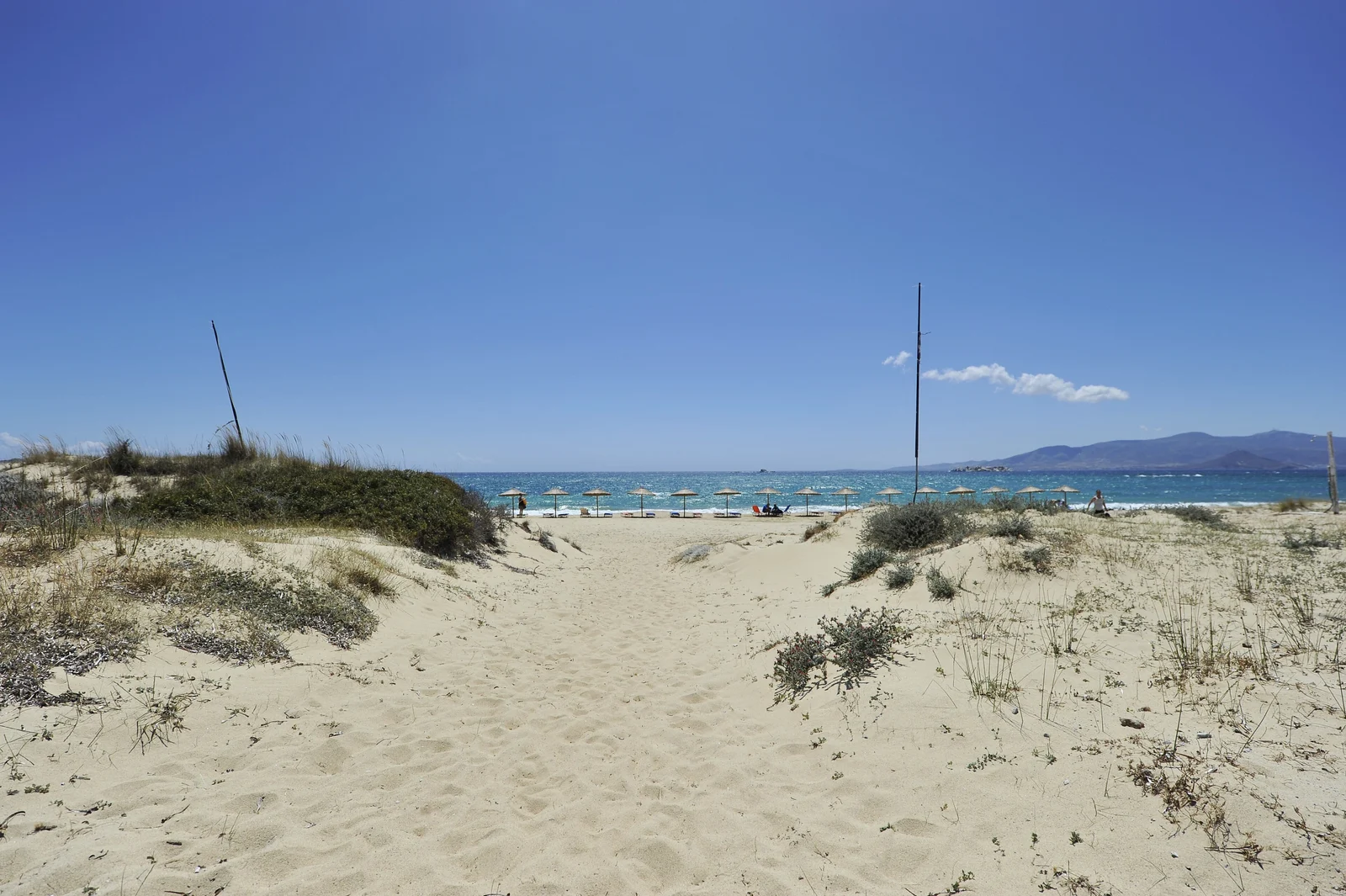
And then the coast, because Naxos has the beaches to match the roads. The whole southwest is one long ribbon of sand — Agios Prokopios, Agia Anna, and the endless dune-backed sweep of Plaka, running into the wilder Mikri Vigla (a kitesurf magnet when the meltemi’s up) and the quiet, cedar-fringed coves at Alyko in the far southwest. Base yourself at one of the beach campsites down here, ride the mountains by day, and swim off the bike in the late afternoon. Four nights is right.
Road notes: The mountain loop is the highlight of the whole trip — narrow, twisty, superb, but watch for gravel, goats and the odd blind bend. Fuel up in Chora before heading inland; the interior is thin on stations. The west-coast beach road is easy and gorgeous.
The Lesser Cyclades: Where You Stop Riding and Start Swimming
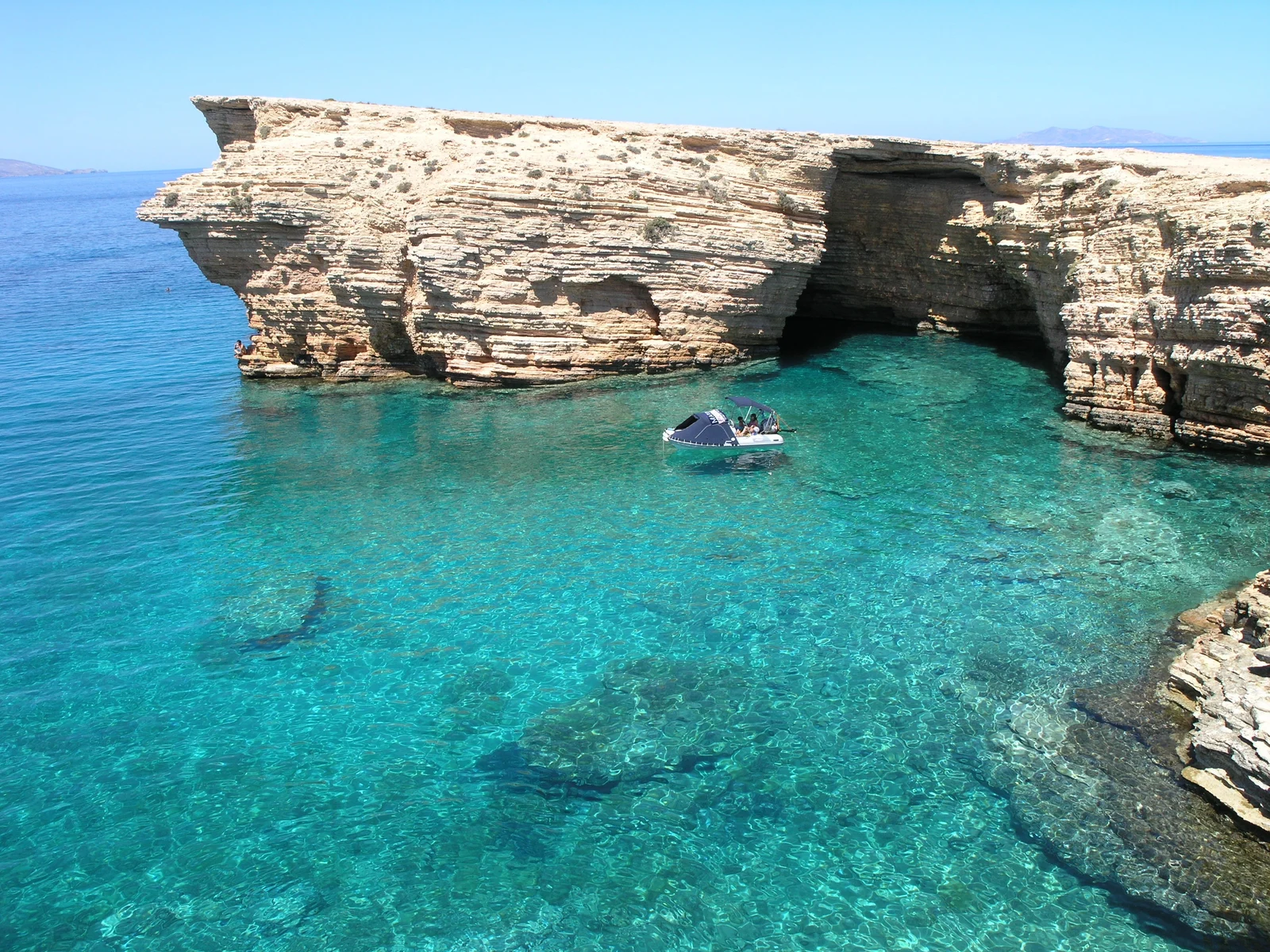
If you want the part of the trip that’s pure Bikes and Bays — minus the bikes, honestly — hop on a small ferry from Naxos to the Lesser Cyclades, the cluster of tiny islands just south. Koufonisia is the one to pick: a flat, low, sun-bleached island ringed by some of the most ridiculous turquoise bays in Greece, a string of them connected by a coastal footpath you walk between with your towel.
I’ll be straight with you: you don’t ride here. The island is too small to bother bringing the bike across, and you can leave it parked on Naxos and come over as a foot passenger for a night or two. It’s the one stop on this trip that’s about the water and nothing else, and after the mountain roads of Naxos, a day of doing nothing but swimming between coves is exactly what you want.
Road notes: None worth the name, that’s the point. Leave the bike on Naxos. Organised camping exists on Koufonisia; the island fills up in August, so it’s another argument for June or September.
Milos: The Volcanic Coast and the Best Bays in the Cyclades
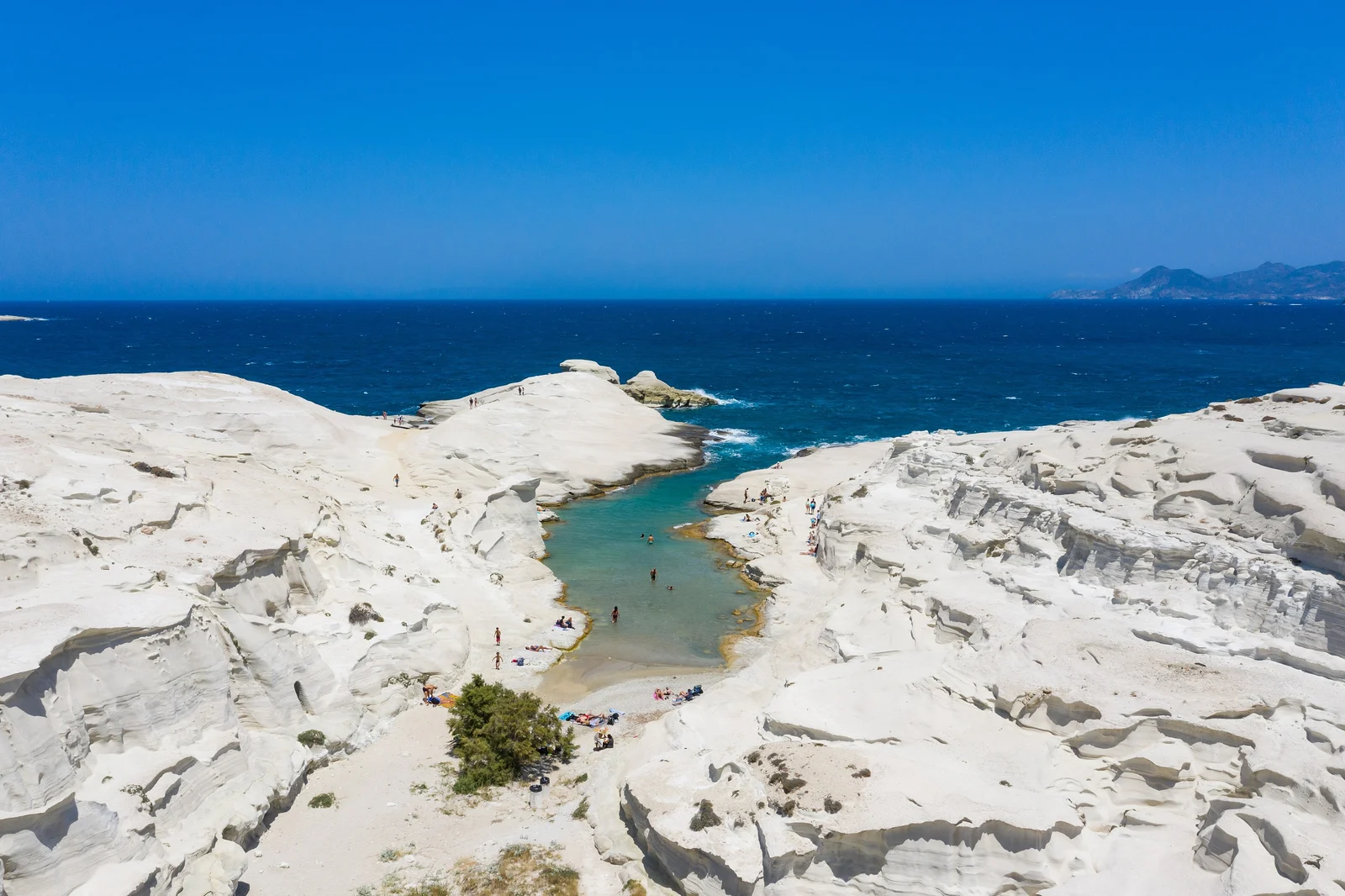
Ferry west and finish on Milos, the volcanic island that saves the most spectacular coast for last. Milos is one giant flooded crater, and its shoreline is unlike anywhere else in the Cyclades — over seventy beaches and bays, many in colours that don’t look real: rust-red, sulphur-yellow, and the blinding white of Sarakiniko, a moonscape of wind-smoothed volcanic rock dropping into water so clear it glows. It’s the single best stretch of coast in the islands, and the reason Milos belongs at the end of this trip rather than the start.
The island is small enough to ride out in a day or two but rich enough to fill three. Loop the road network out to the fishing village of Klima, with its boat-garage houses painted in a row along the water, and to the inland villages above the bay. The most famous spot of all, Kleftiko — sea caves and rock arches at the southwest tip — is reachable only by boat, so book a trip from Adamas for a day off the bike. Three nights, a campsite near the main bay, and you close the trip on the best bays Greece has.
Road notes: Compact, easy island roads — quickly learned. Some of the best beaches sit at the end of rough unsealed tracks; a nimble bike gets you closer than a car, but mind the surface and don’t take a heavy tourer down them. Fuel and supplies in Adamas.
What Island Hopping Costs with a Bike (2026)
The ferries are the line item that makes or breaks the budget. A conventional crossing from Piraeus to Paros or Naxos starts around €40-45 as a foot passenger, plus a separate vehicle fee for the motorcycle, and every inter-island hop adds another fare for you and the bike. That’s the single best argument for the “fewer islands, longer stays” approach — three islands well beats six in a rush, and it’s a lot cheaper.
Once you’re on the islands, fuel is the next pinch: Greece has some of the priciest petrol in Europe, around €2 a litre, so fill up in the bigger towns. Against that, organised campsites are cheap, tavernas off the tourist strip are excellent value, and most of the swimming is free. If you didn’t bring your own bike, renting a motorcycle or scooter on the islands runs roughly €30-80 a day depending on the machine — fine for a single island, but bringing your own makes far more sense if you’re chaining several together.
Budget the boats and the fuel carefully and the rest of a Cyclades trip is gentle on the wallet — especially camping and self-catering, which is the way to do it here anyway.
Cyclades Packing Notes
What island hopping specifically asks for, beyond standard touring kit:
- A proper seaside-camping setup — a tent, sleeping pad and small stove. Since organised campsites, not wild spots, are where you’ll sleep
- Swimming gear permanently within reach; you’ll stop to swim more than you stop for fuel
- A light layer and a proper visor/goggles for the meltemi. The summer wind is no joke on an exposed island road
- High-factor sunscreen and water; the Cyclades sun is relentless and shade is scarce
- Ferry tickets and vehicle bookings sorted in advance for July-August, with the bike’s details to hand
- Cash in euros for campsites, small tavernas and the smaller ferry hops
- Offline maps — signal drops in the Naxos interior and on the smaller islands
Best Season and the Meltemi
June: the sweet spot. Warm sea, long light, manageable heat, and the crowds not yet at full pitch. The meltemi is usually lighter than later in summer. The best all-round month to ride the islands.
September: the other great window — summer-warm water, the August rush gone, prices easing, and stable weather. Arguably the nicest time of all on the islands.
July-August: peak everything — heat in the high 30s, the busiest and dearest ferries and beaches of the year, and the meltemi at its strongest, a hard northerly wind that shoves a bike around on exposed roads and can cancel ferries for a day or more. Rideable if you start at dawn and swim through the afternoons, but not the islands at their easiest.
Winter: most campsites and many tavernas close, ferry schedules thin right out, and the islands go quiet and shuttered. Not a riding season.
Related Guides
- For how Greece ranks among the region’s coast roads, see the best coastal routes in the Mediterranean.
This guide is compiled from published ferry operator timetables, campsite information and rider reports. Some links in this article are affiliate links — if you buy gear through them, we may earn a small commission at no extra cost to you.
A note on the costs: these are ballpark planning figures as of June 2026, not quotes. Ferry fares, campsite rates, fuel and tolls all move with the season and the operator — check current prices before you build a budget on them.
Frequently Asked Questions
Can you take your own motorcycle to the Greek islands?
Yes, but you have to pick the right boat. The big conventional car ferries — Blue Star is the main one in the Cyclades — take motorcycles without any fuss, and that's what you want. The fast catamarans and Seajets high-speed boats are quicker but often take very few vehicles or none at all, and bikes are the first thing bumped when space is tight. Book vehicle space ahead in July and August, turn up early, and ride on with the cars. From Piraeus (the port of Athens) a conventional ferry to Paros or Naxos is a few hours and the bike rides on the car deck.
Is wild camping legal on the Greek islands?
No — and this is the part the dreamy blog posts skip. Free camping in Greece is illegal under longstanding law, reinforced by new 2025 rules, and in 2026 the authorities have stepped up checks over the summer. Pitching a tent on a beach or in the open can mean a fine of around €300 per person or tent, and in serious cases far worse. It's tolerated nowhere reliably and enforced hard in the popular spots. So the honest answer is: don't plan on wild camping. The islands have a good network of organised, cheap, beachfront campsites — that's how you camp here, and it's covered in the seaside campgrounds guide.
Which Cyclades islands are best for riding a motorcycle?
Naxos, by a distance. It's the biggest of the Cyclades and has the most interior to ride — mountain roads climbing to over 1,000 metres around Mount Zas, stone villages like Apeiranthos and Filoti, and real distances between things. Milos is the one for scenery and the best bays in the group, though it's smaller. Paros is gentle and pretty, a good warm-up. The tiny islands — Koufonisia and the rest of the Lesser Cyclades — are barely worth bringing a bike to; you go there to stop riding and swim. Plan around Naxos as the centrepiece.
When is the best time to ride the Greek islands?
June or September. The water's warm, the light is gorgeous, prices and crowds are well down from the peak, and the riding temperature is bearable. July and August bring three problems: brutal heat that makes midday riding miserable, the busiest and priciest beaches and ferries of the year, and the meltemi — the strong northerly summer wind that buffets a bike on exposed roads and can cancel ferries for a day or two at a stretch. If you can only go in high summer, ride early in the morning and swim through the afternoons.
How much does island hopping with a motorcycle cost?
The ferries are the variable. A conventional ferry from Piraeus to Paros or Naxos starts around €40-45 for a foot passenger, plus a vehicle fee for the bike, and the inter-island hops add up the more islands you chain together — so fewer islands, longer stays is both cheaper and better. Beyond that: Greek petrol is among the most expensive in Europe, organised campsites are cheap, and tavernas off the tourist strip are good value. If you don't bring your own bike, renting a motorcycle or scooter on the islands runs roughly €30-80 a day. Budget for the boats and the fuel; the rest is gentle.