The riding in Greece. The Peloponnese, Epirus, the islands you can reach with a bike in the panniers — is some of the best in the Mediterranean. The thing standing between you and it is a stretch of the Adriatic, and how you cross it makes a surprising difference to both your wallet and your sanity.
You can ride the long way round through the Balkans (and that’s a brilliant trip in its own right). But the classic move is to load the bike onto a ferry in Italy and step off in Greece rested and ready. Do it right and it’s cheap and easy. Do it wrong and you’re paying cabin prices for a crossing you slept through, having nearly dropped the bike on the car deck because nobody told you how to tie it down. Here’s the version that travel sites skip.
The Crossings at a Glance
| Route | Operator(s) | Crossing time | From (rider + bike, deck) |
|---|---|---|---|
| Bari → Igoumenitsa | Superfast, Ventouris | ~8.5–13 h (overnight) | ~€70 |
| Ancona → Igoumenitsa | Superfast | ~16.5–21.5 h | ~€70 |
| Ancona → Patras | Superfast, Minoan | ~21–25 h | ~€113 |
| Venice / Brindisi → Corfu / Patras | seasonal | longest / varies | varies |
Igoumenitsa drops you in the northwest, perfect for Epirus, Meteora and the mountains. Patras puts you straight at the gateway to the Peloponnese. Pick your port by where you want to start riding, not just by price.
A little more on each so you can choose with your eyes open:
- Bari → Igoumenitsa is the workhorse short crossing. Two operators run it (Superfast and Ventouris), most departures leave early evening and arrive next morning, and it’s the cheapest fast way onto Greek soil. The catch is geography — Bari is right down in Italy’s heel, so you’ve ridden most of the country before you even board.
- Ancona → Igoumenitsa / Patras is the central-Italy option and, for most riders coming from the north or west of Europe, the sweet spot. Frequent daily sailings, a long enough crossing to actually sleep, and you can pick Igoumenitsa (shorter, northwest Greece) or stay on to Patras (longer, straight to the Peloponnese).
- Venice → Patras is the scenic, slowest leg — beautiful to leave from, but a long time at sea and usually pricier. Brindisi → Igoumenitsa/Corfu is a short southern hop that mostly runs in the summer season only; handy if you’re already deep in Puglia.
One thing the table can’t show: the same route can cost very different amounts depending on the boat. Operators run a mix of older and newer ferries on these lines, and a daytime “economy” sailing on an older vessel is often noticeably cheaper than the flagship overnight boat. If budget matters more than comfort, check every departure on your date, not just the convenient one.
Camping on Board: The Hack That Halves the Cost
This is the part worth understanding before you book anything. You don’t need a cabin to cross comfortably.
“Camping on board” means you book a deck passage per person plus an open-deck or camper space for the bike, and you sleep on the open deck near your vehicle, often with a 220 V supply to charge things. You pay only for the deck ticket and the bike fare. No cabin, a fraction of the cost, and on a warm summer night it’s genuinely pleasant.
A few honest caveats. It’s offered mainly by Anek–Superfast on the Ancona and Bari lines, roughly 1 April to 31 October — not every operator runs it every season, and electricity isn’t guaranteed, so confirm when you book. No cooking, gas or open flames are allowed on deck. And camping-on-board vehicles board first, so you need to be at the port for check-in about four hours before departure. If the open deck doesn’t appeal, the next cheapest option is an airline-style reclining deck seat. Still far less than a cabin.
For everything you’ll want dry overnight on deck, a waterproof dry bag earns its place here, and if you’re a poor sailor, pack the sea-sickness tablets. The Adriatic is usually calm, but “usually” isn’t “always”.
Which Port: Sea Time vs Riding Time
The whole port decision comes down to one trade-off: how much of Italy do you want to ride?
- Bari (south): the shortest crossing — an overnight hop of 8.5–13 hours. But you’ve got to ride the length of Italy to get there. Great if you’re already heading down the Adriatic coast or want maximum riding.
- Ancona (central): the most frequent sailings and the best balance. A 16–21 hour overnight means you board in the evening, sleep, and wake up in Greece, having traded a hard riding day for a restful boat.
- Venice / Brindisi: Venice is scenic but the longest sea leg; Brindisi is a seasonal southern alternative.
There’s no single right answer — riders who love Italy go south and ride to Bari; riders who just want to get there take the Ancona overnight and call the crossing a rest day.
What You Need to Bring (Documents)
Both Italy and Greece are in the EU and the Schengen area, so this is an internal crossing rather than a border post. But a ferry is still a controlled boarding, and they do check. Have these ready and reachable, not buried in a pannier:
- Passport or national ID card. EU/EEA riders can travel on an ID card; everyone else needs a passport. Names on the ticket must match the document.
- The bike’s registration document (V5C / logbook / carta di circolazione). If the bike isn’t registered in your name, carry a signed letter of authority from the owner.
- Valid insurance covering both countries. Within the EU your normal policy travels with you, but check it actually covers Greece; bikes registered in the UK, Switzerland or the other Multilateral Agreement countries need nothing extra, and bikes from outside that area should carry a Green Card.
- Your driving licence. The physical card, plus an International Driving Permit if you’re from outside the EU and yours isn’t in the Latin alphabet.
- Your booking reference, printed or screenshotted offline. Port wifi is not something to rely on at 6 a.m.
A waterproof document holder in the tank bag keeps all of it in one grab-and-go place, which matters when you’re filtering to the check-in booth in bike gear. For the full picture on riding paperwork across the region, our border-crossing documentation guide goes deeper.
How the Bike Is Tied Down (Do It Yourself)
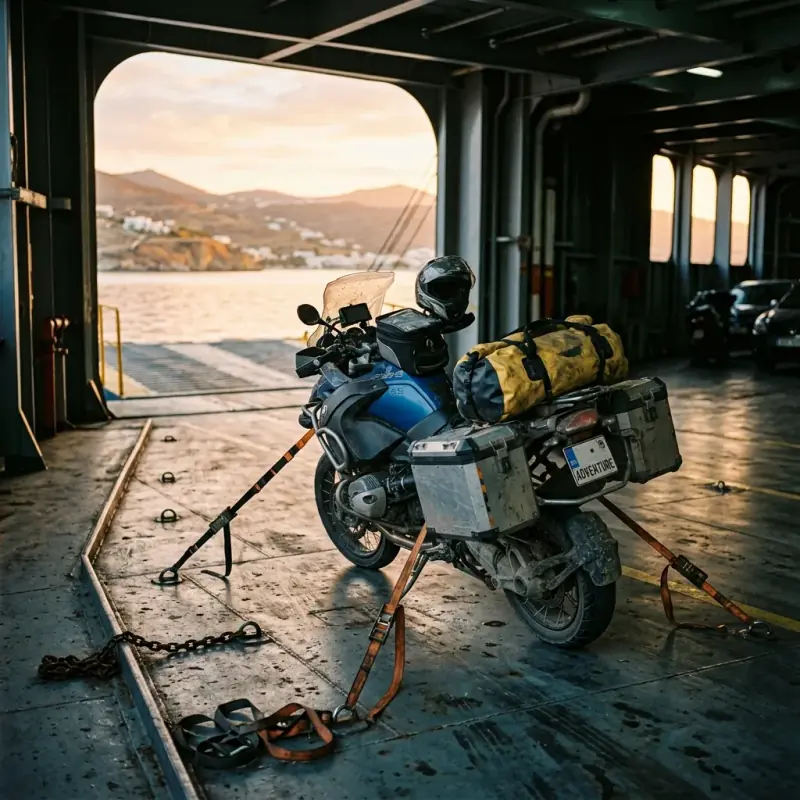
Nobody tells first-timers this, and it’s where the near-disasters happen: you strap your own bike. The crew might hand you a rope, but securing it is on you, so bring your own straps. It’s not hard once you know the method.
- Park on the side stand, leave it in first gear.
- Run a strap over the seat and ratchet it down snug — firm enough that the bike can’t walk, not so tight you compress the suspension solid.
- Anchor to the frame or lower forks, never the handlebars; bar pressure can bend bars or pull the bike over.
- Use soft ties against any painted or finished surface, and carry two to four ratchet straps.
A set of Rok Straps. The kind most riders already carry for luggage — doubles perfectly for this. Crossings are calm, so a couple of good straps and the right anchor points are all it takes. But turning up with nothing and hoping the crew sorts it is how people watch their bike topple on the car deck.
One practical tip: take everything you’ll need for the crossing off the bike before you strap it down. Once the deck fills, vehicles are parked tight and the lights often go off — going back down mid-voyage for your wash bag or charger is awkward at best and not always allowed. Pull your overnight bag, valuables and documents off in one go.
Boarding Day and Life On Board
Knowing the rhythm of the day removes most of the stress.
Check-in. Arrive early — about four hours before departure if you’ve booked camping on board (those vehicles load first), and at least two hours otherwise. You’ll collect or validate boarding cards at the operator’s port booth, then queue in a marshalling lane. Bikes are usually waved to the front and loaded first, which is a genuine perk: you ride straight on rather than waiting behind a hundred cars.
Loading. Follow the crew’s hand signals up the ramp, park where you’re pointed, kill the engine and strap up immediately while there’s still room to move around the bike. Then take your bag and head up to the decks — note your deck level and stairwell, because all car decks look identical on the way back.
The crossing itself. Even the “no cabin” classes are comfortable: reclining seats, bars and a self-service restaurant, hot showers, and on the longer overnight boats, plenty of quiet corners to stretch out. Bring a few euros in cash for coffee, a light layer for air-conditioned lounges or the breezy open deck, and a charged phone with your music and offline maps. Food on board is fine but pricey; a packed sandwich saves money on the long Ancona runs.
Arrival. Announcements come well before docking. Head down to your bike in good time, unstrap, and wait for the crew to wave your row off. Don’t start the engine until you’re about to move — diesel fumes build fast on a sealed deck. Five minutes later you’re rolling off into Greece.
Booking, Costs and Timing
Fares start around €70 for rider and bike on a Bari deck ticket, more for the longer Ancona–Patras run, and climb steeply once you add cabins and travel on peak dates. A rough picture of how the money stacks up:
- Deck / camping-on-board is the cheap floor; just the per-person deck fare plus the motorcycle fare.
- Air-seat (reclining seat) adds a little for a reserved spot indoors.
- Cabins roughly double or triple the per-person cost; an inside 4-berth is the value option, an outside cabin with a window the comfortable one.
- The motorcycle fare itself is charged separately from your passenger ticket, and on some operators a bike with bulky luggage or a sidecar is measured and priced up a band; worth checking if you’re running wide panniers.
Two money-savers worth knowing: many operators offer a return-ticket discount over booking two singles, and some give camping-card or loyalty discounts — ask, or tick the box, when booking. Then the single most important rule: book as soon as schedules open, especially for July and August. These routes fill with holiday traffic and the cheap deck spaces, and the limited motorcycle spaces — sell out by spring. Booking early also locks in the lowest fares.
Finally, factor in the ride to the port. Italy’s autostrada tolls add up over a long transit, fuel isn’t cheap, and if you’re coming from northern Europe the run down to Ancona or Bari is a serious chunk of the trip in its own right; budget the time and the money for it, not just the ferry.
Where to Go Once You Land
The ferry is just the doorway. From Igoumenitsa or Patras you’re a short ride from some of the best coastal camping and roads in the region:
- Our top seaside campgrounds in Greece for riders for where to pitch once you’re off the boat.
- The Peloponnese motorcycle route for the 7-day loop that starts right where the Patras ferry lands.
- The best coastal motorcycle routes in the Mediterranean and the best wild-camping bays for planning the riding.
- If you’d rather ride one way and ferry back, the Balkans riding guide makes the overland leg, and the border-crossing documentation guide keeps the paperwork painless.
For the sister crossing on the other side of the continent, we’ve also covered the UK-to-Spain ferry; same logic, different sea.
FAQ
The questions riders ask most. The cheapest way across, sleeping without a cabin, who ties the bike down, which Italian port to use, and when to book; are answered in full at the top of this page.
The short version: book camping on board or a deck seat to keep it cheap, pick Bari for the shortest crossing or Ancona for the easiest overnight, bring your own straps and tie the bike to the frame, and book before spring if you’re going in summer. Then go ride Greece — and if the plan continues out to sea, our Greek island hopping by motorcycle guide covers the domestic ferries, the Cyclades and where to camp once you’re there.
Schedules, fares and the camping-on-board service change every season — treat the figures here as a planning guide and confirm the details with the operator when you book.
Frequently Asked Questions
What's the cheapest way to take a motorcycle to Greece by ferry?
Book a deck passage and the open-deck/camping option for the bike, rather than a cabin. 'Camping on board' lets you sleep in a reclining seat or — on the lines that still allow it — on the open deck near your vehicle, for just the price of a deck ticket plus the bike fare. That's a fraction of a cabin. The shortest crossing, Bari to Igoumenitsa, starts around €70 for the rider and bike on a deck ticket. Skip the cabin, book early, and the Italy–Greece ferry is genuinely affordable.
Can I sleep on the ferry without paying for a cabin?
Yes. The two cheap options are an airline-style reclining seat (deck/air-seat class) or 'camping on board', where you sleep on the open deck near your bike. Camping on board is offered mainly by Anek–Superfast on the Ancona and Bari lines, roughly between 1 April and 31 October, and some sailings even have a 220 V supply on the camping deck. Note that not every line runs it every season and electricity isn't always provided, so confirm at booking. One rule everywhere: no cooking, gas or open flames on deck.
How is the motorcycle secured on the ferry — do they do it for me?
You do it, in almost every case. The crew may hand you a rope or point you at straps, but tying the bike down is the rider's responsibility, so bring your own straps. The standard method: park on the side stand, leave it in first gear, run a strap over the seat and ratchet it down snug — firm, not crushing the suspension solid. Attach to the frame or the lower forks, never the handlebars, because bar pressure can bend the bars or drop the bike. Use soft ties to protect the paint, and carry two to four ratchet straps. Boards are calm seas, so a couple of good straps is usually enough.
Which Italian port is best for a motorcycle to Greece?
It's a trade-off between sea time and riding time. Bari, in the south, has the shortest crossing (about 8.5–13 hours, usually overnight) but means a long ride down the length of Italy first. Ancona, in the centre, has the most frequent sailings and balances the ride down with a 16–21 hour crossing. Venice and Brindisi are options too — Venice is the longest sea leg, Brindisi seasonal. If you want to ride more of Italy, go south to Bari; if you'd rather trade road for a restful overnight boat, Ancona is the sweet spot.
When should I book the Italy–Greece ferry?
As soon as the schedules open, especially for summer. These routes are popular with holiday traffic and the cheap deck and camping-on-board spaces — and motorcycle spaces — sell out by spring for peak dates. Booking early also locks in the lower fares. If you're travelling in July or August, treat 'I'll sort it nearer the time' as a mistake; book the moment you know your dates.