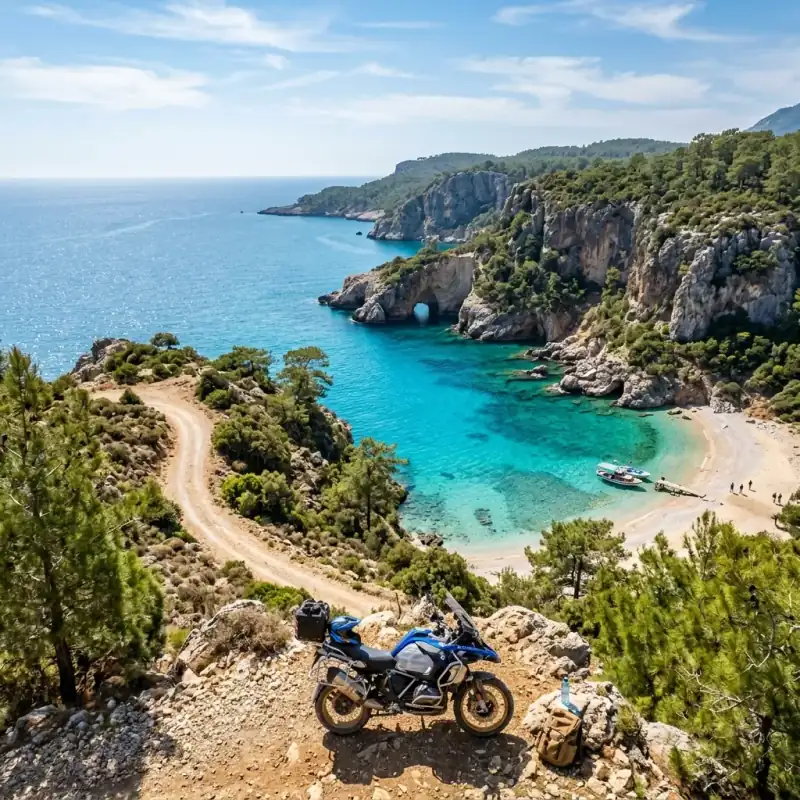
Ask ten riders for the most beautiful bay in Turkey and you’ll get ten different answers, and all of them will be right. This coast has more turquoise coves per kilometer than almost anywhere on two wheels, and the best of them aren’t the ones on the postcards. They’re the ones you have to work a little to reach.
Finding them means working both the Aegean and Mediterranean coasts road by road. Some are five meters off the D400, where you park at a layby and walk down a staircase to water so clear it looks fake. Others are at the end of a peninsula road most people never bother with, or down a forgotten dirt track where the asphalt gives up at a wire gate. This is an honest list of the most beautiful bays in Turkey you can reach by motorcycle — ranked not by Instagram appeal but by what it’s actually like to ride there, what you’ll find when you arrive, and whether you can sleep the night.
It pulls together the bays from our Lycian Way and Aegean coast route guides into one ranked map of where the water is bluest and the riding is best.
What this guide rests on: maps and satellite imagery, published access and camping information, the provincial fire-season orders, and rider reports. We haven’t ridden every track here, and gates, fees, track surfaces and local rules change from one season to the next, so treat each entry as a lead to check, not a promise.
Before Any of Them: Fire Season
Each summer, provincial governors issue orders under Turkey’s Forest Law (No. 6831) banning entry to forest areas outside designated picnic and camp sites. In 2026, Muğla’s order (Genel Emir 2026/1) runs from 1 June to 31 October and lists forests across the province, including the Faralya and Butterfly Valley area above Kabak. Forest tracks and fire-breaks are exactly the kind of “road” these orders close, and a fire anywhere near forest in that season can bring criminal charges, not a fine. Our wild camping in Turkey guide has the detail and the sources.
In practice: ride the public roads in summer, use the organised camps, and save the forest tracks for spring and late autumn.
The Bays at a Glance
| Bay | Coast | Access | Camp? |
|---|---|---|---|
| Kabak | Mediterranean (Fethiye) | Steep, narrow road | Yes — camps at the bottom |
| Kaputaş | Mediterranean (Kalkan–Kaş) | D400 roadside + 187 steps | Day only |
| Patara | Mediterranean (Lycia) | Paved, protected | No (protected dunes) |
| Butterfly Valley | Mediterranean (Faralya) | Ride to clifftop; boat/hike down | At valley floor |
| Çıralı & Olympos | Mediterranean (Antalya) | Paved switchback | Yes — campgrounds |
| Kargı & Datça coves | Aegean (Datça pen.) | Quiet peninsula roads | Mostly yes |
| Delikli Koy | Aegean (Çeşme) | Mostly paved + sandy track | Check local rules |
| Akbük coves | Aegean (Gökova gulf) | Paved to Akbük; rough tracks beyond | Outside fire season |
| Akyaka / Gökova | Aegean (Gökova gulf) | Paved, gulf road | Nearby campsites |
| Gideros | Black Sea (Cide) | Paved side road | Yes — sheltered |
1. Kabak (Fethiye) — The Best All-Rounder
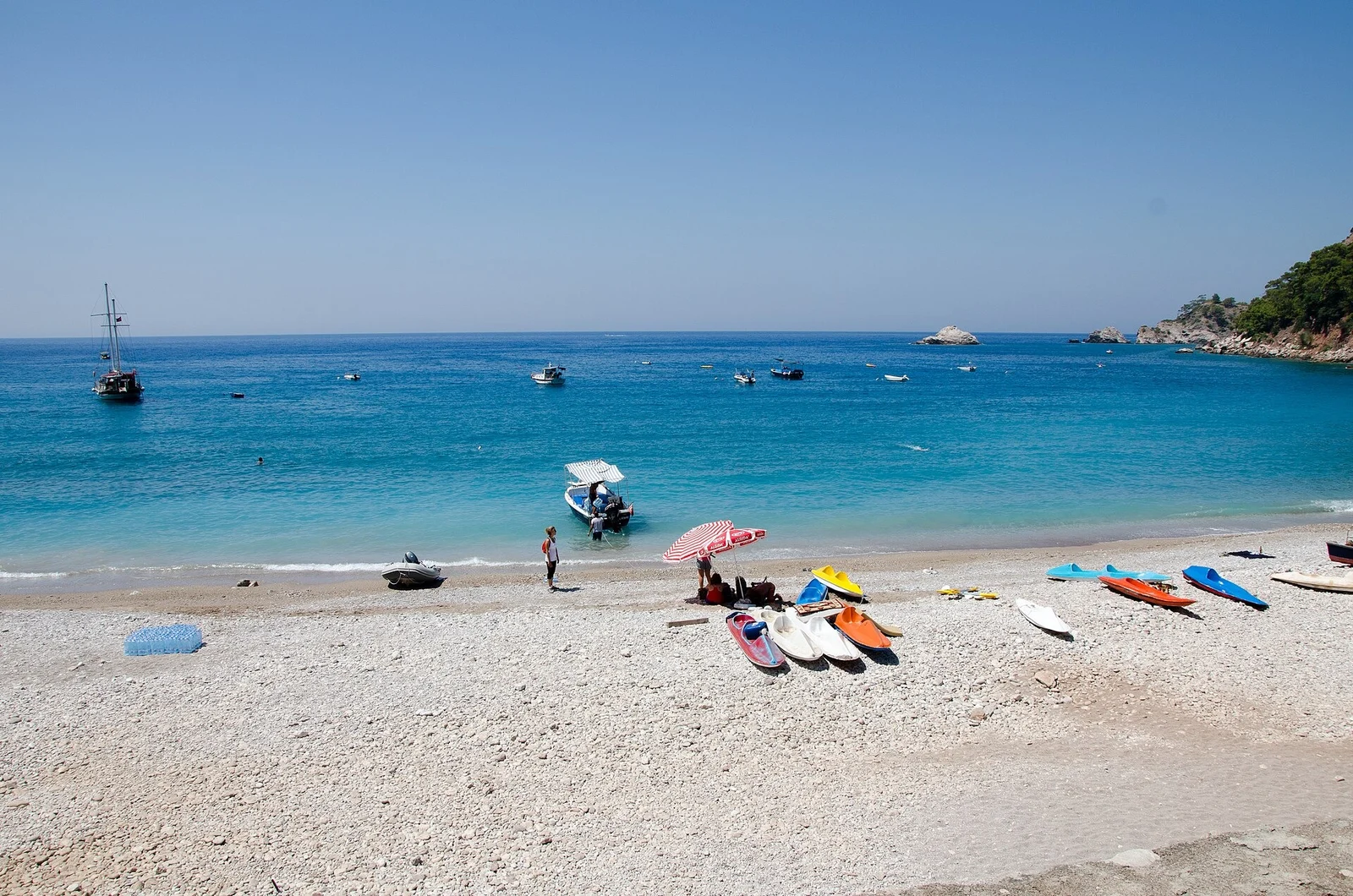
If you only reach one bay on this list, make it Kabak. A deep green valley drops 300 meters from the cliffs of Faralya to a curve of beach backed by olive groves and pine, with a small community of eco-camps and a few restaurants at the bottom. The water is clean and calm, and there’s shade under the olive trees.
Getting down. Most visitors arrive by the steep road from Faralya, the village shuttle or the walking trail. The road is narrow, steep and partly rough, which is where a light, easy-to-handle bike earns its keep; on a big, heavily loaded bike, consider leaving it at the top. Unpaved tracks also wind through the forest, but they fall inside the fire-season ban in summer, and their condition changes with every winter’s rain, so ask locally before you try one.
Sleeping. The honest way to sleep at Kabak is in one of the camps at the bottom, which rent pitches and have water, toilets and food. They cook on gas: in summer this is fire-ban country. It’s busy in July and August.
Either way, it’s the best bay-to-effort ratio on the coast. It’s also a natural overnight on the Lycian Way route.
Best for: the complete package; riding, swimming, camping and a hot meal at the bottom.
2. Kaputaş (Kalkan–Kaş) — The Roadside Stunner
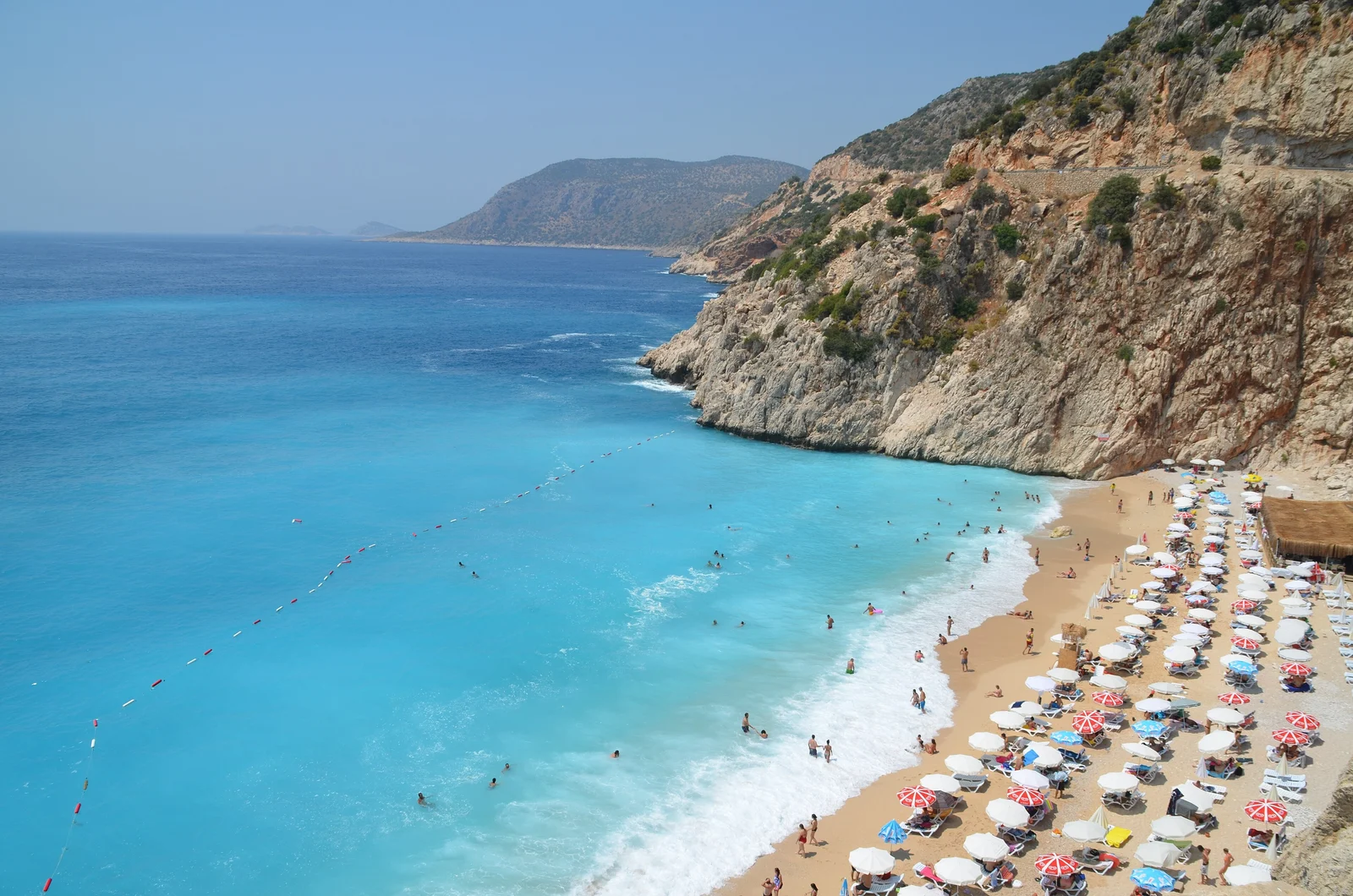
If Kabak is the bay you earn, Kaputaş is the one handed to you. It sits in a gorge directly below the D400 between Kalkan and Kaş, on what is the single best stretch of coastal motorcycle road in Turkey. You round a corner, the gorge opens, and a perfect turquoise beach appears just below the road. Park at the layby, descend the 187 stone steps, swim, and climb back up to the bike.
It’s a day stop, not a camp — small, popular, and right under the road. But no list of Turkey’s bays is honest without it. Come early in the morning or late afternoon and skip July-August entirely, when the layby turns into a traffic jam. The riding on either side, covered in the Lycian Way guide, is reason enough to be here.
Best for: the easiest five-star view on the coast, and the road that gets you to it.
3. Patara (Lycia) — The Endless Beach
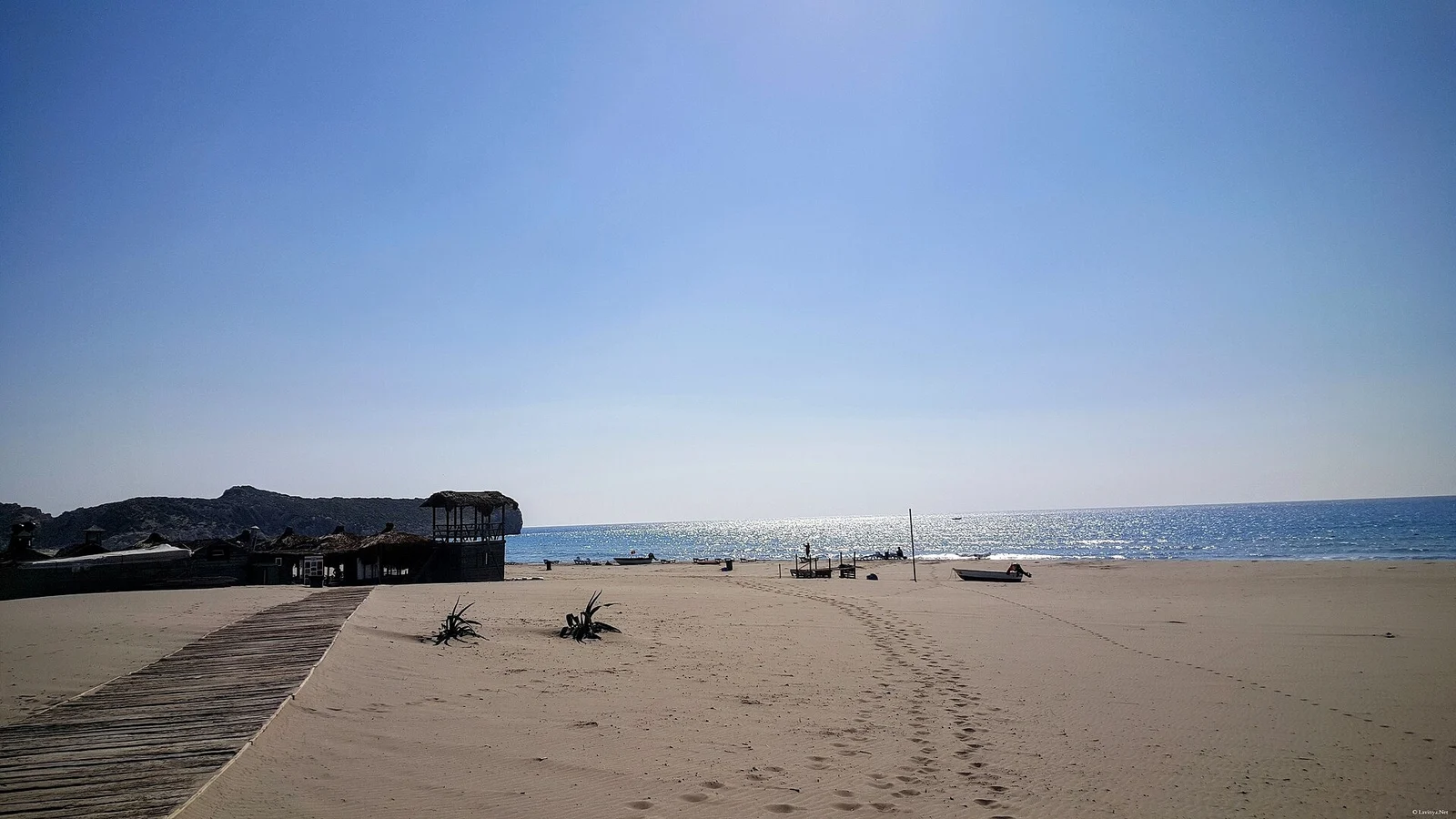
Turn off the D400 west of Kalkan and ride through pine forest and the ruins of ancient Patara to reach an 18 km wall of empty sand. One of the longest beaches in Turkey, and a protected sea-turtle nesting ground. There’s no camping (the dunes are protected and the beach closes at night in nesting season), but the scale of the place is unlike anywhere else on the coast: wide, sand-floored, and almost completely undeveloped behind a major archaeological site.
Ride in, walk the sand, climb the ruins, and ride out to camp elsewhere. Patara is about space, not seclusion.
Best for: scale and solitude in daylight; pair it with a roadside ruin wander.
4. Butterfly Valley (Faralya) — The One You Look Down Into
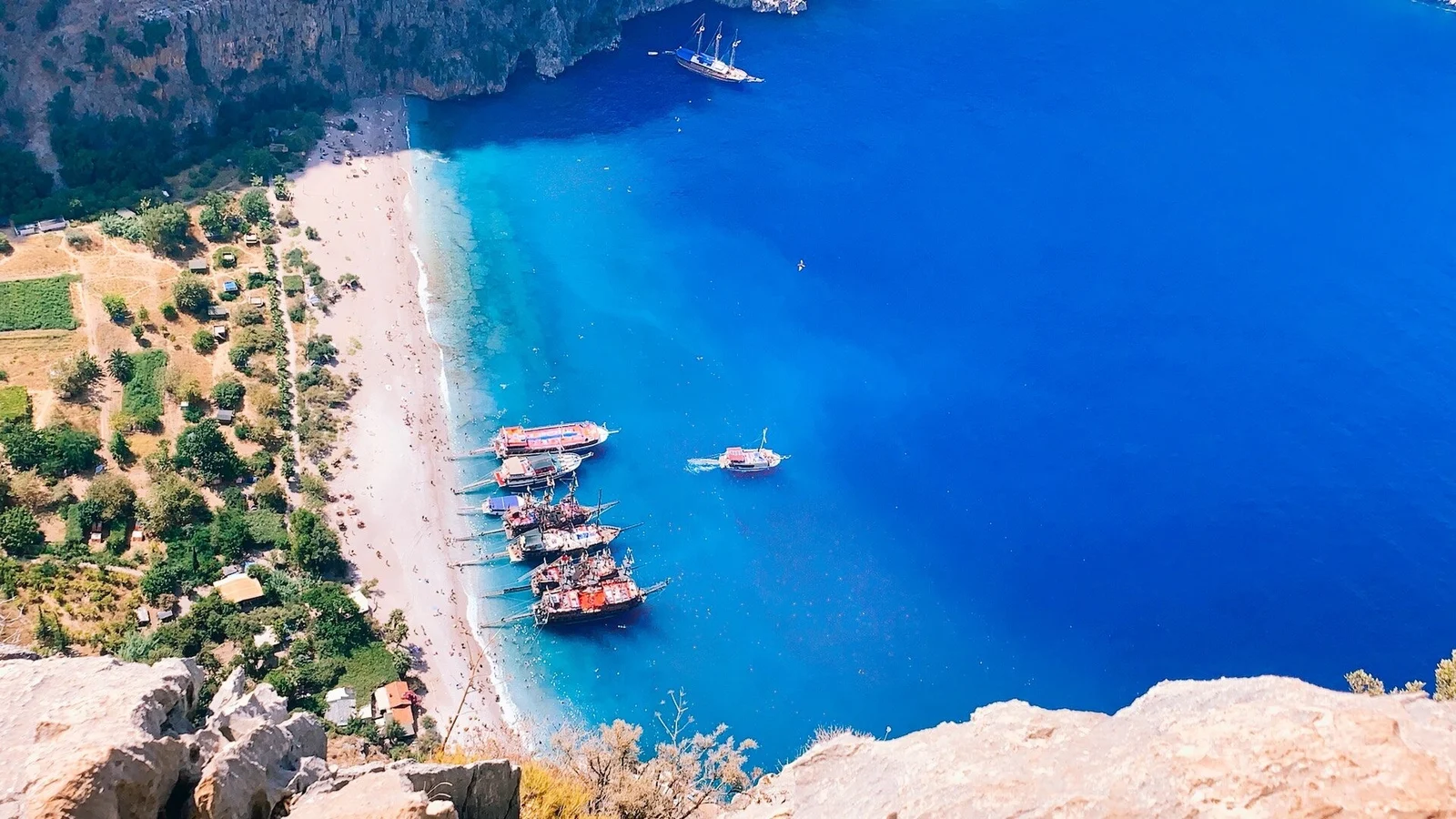
A few kilometers along the cliff from Kabak, the road at Faralya delivers you to a viewpoint above one of the most dramatic bays in Turkey: Kelebekler Vadisi, the Butterfly Valley, a sheer-walled canyon meeting a tiny beach far below. The old footpath down the cliff has been closed as too dangerous, so the valley floor itself is reached by boat from Ölüdeniz or a tough hike. But the ride is to the clifftop, and the view from up there, with the bike parked at the edge of the world, is one of the great photo stops on the coast.
There’s a basic camp and a couple of pensions down at the valley floor if you take the boat; up top, you ride on to Kabak to sleep.
Best for: the view, and the cliff-edge ride between Faralya and Kabak.
5. Çıralı & Olympos (Antalya) — Ruins, Flames and a Wild Beach
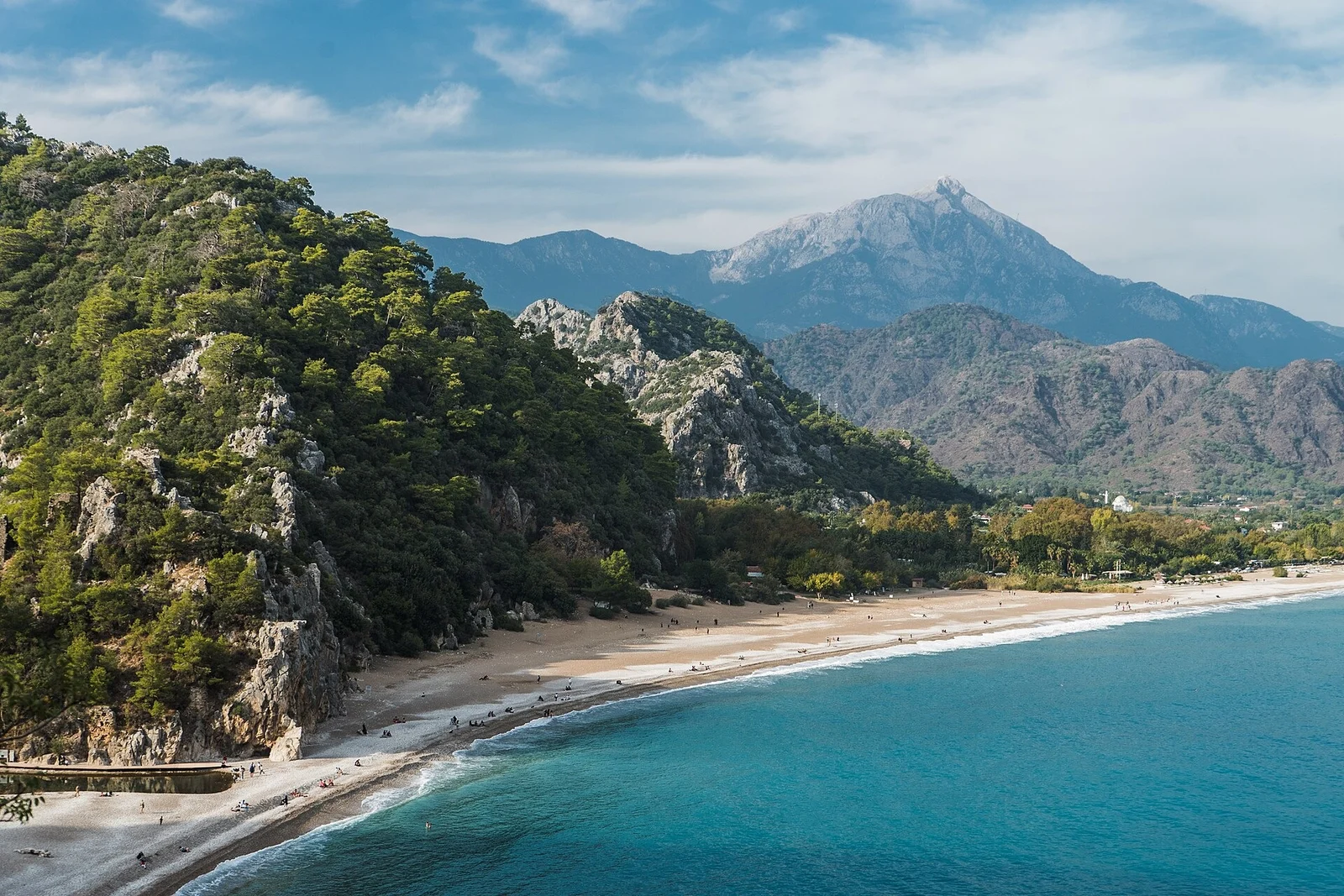
Drop off the D400 down a 6 km pine switchback and you reach the twin bays of Olympos and Çıralı — a 4 km national-park beach backed by mountains, with the overgrown ruins of ancient Olympos buried in riverside forest at one end and the eternal Chimaera flames burning on the mountainside above. Çıralı has family pensions and beachfront restaurants; Olympos has its famous tree-house camps. Because it’s a national park, you camp at the established sites rather than wild, and you should, they’re part of the charm.
It’s one of the highlights of the Lycian Way, and the coves around Adrasan, to the south and outside the protected area, are where riders look for a wild pitch.
Best for: atmosphere — ancient ruins, a wild beach, and fire coming out of a mountain at dusk.
6. Kargı & the Datça Peninsula Coves (Aegean)
Out on the Datça peninsula — reached by the lovely Bodrum–Datça ferry on the Aegean route. The coast breaks into a string of quiet pebble-and-sand coves backed by pine and almond groves. Kargı Koyu is the easy one: flat sand, pine shade, a short ride from Datça town. Beyond it, the peninsula road toward Palamutbükü and out to Knidos at land’s end passes cove after cove with barely another vehicle in sight.
This is the Aegean at its most relaxed — no resort sprawl, almond trees instead of hotels, and the peninsula ridge road in between, which is worth riding for its own sake. The peninsula is in Muğla, so the summer forest-entry ban applies to the pine behind the coves; check before you plan a night.
Best for: unhurried solitude and the best peninsula riding in the Aegean.
7. Delikli Koy (Çeşme) — The Lunar One
Near Alaçatı on the Çeşme peninsula, Delikli Koy is a surreal break in the Aegean coast — bone-white limestone shelves sloping into water so clear you can count stones on the bottom, with a natural rock arch dividing two small coves. A paved road gets you most of the way, then a dirt track with sandy sections runs toward the water. The sand is what stops cars, and a light bike ridden steadily in a low gear gets through; if the sand is deep or your bike is heavy, park and walk the last stretch.
There’s no shade at all. In summer, bring a tarp and plenty of water, and treat midday as time in the sea rather than on the rock. It’s well known and busy at sunset and on summer weekends, so come early or out of season for quiet. If you’re thinking of staying the night, check the current local rules first and leave no trace: a stove only, never a fire. It’s the obvious first swim on the Aegean coast route.
Best for: a landscape that looks like another planet, close to İzmir.
8. Akbük Coves (Gökova Gulf) — The Offroad Reward
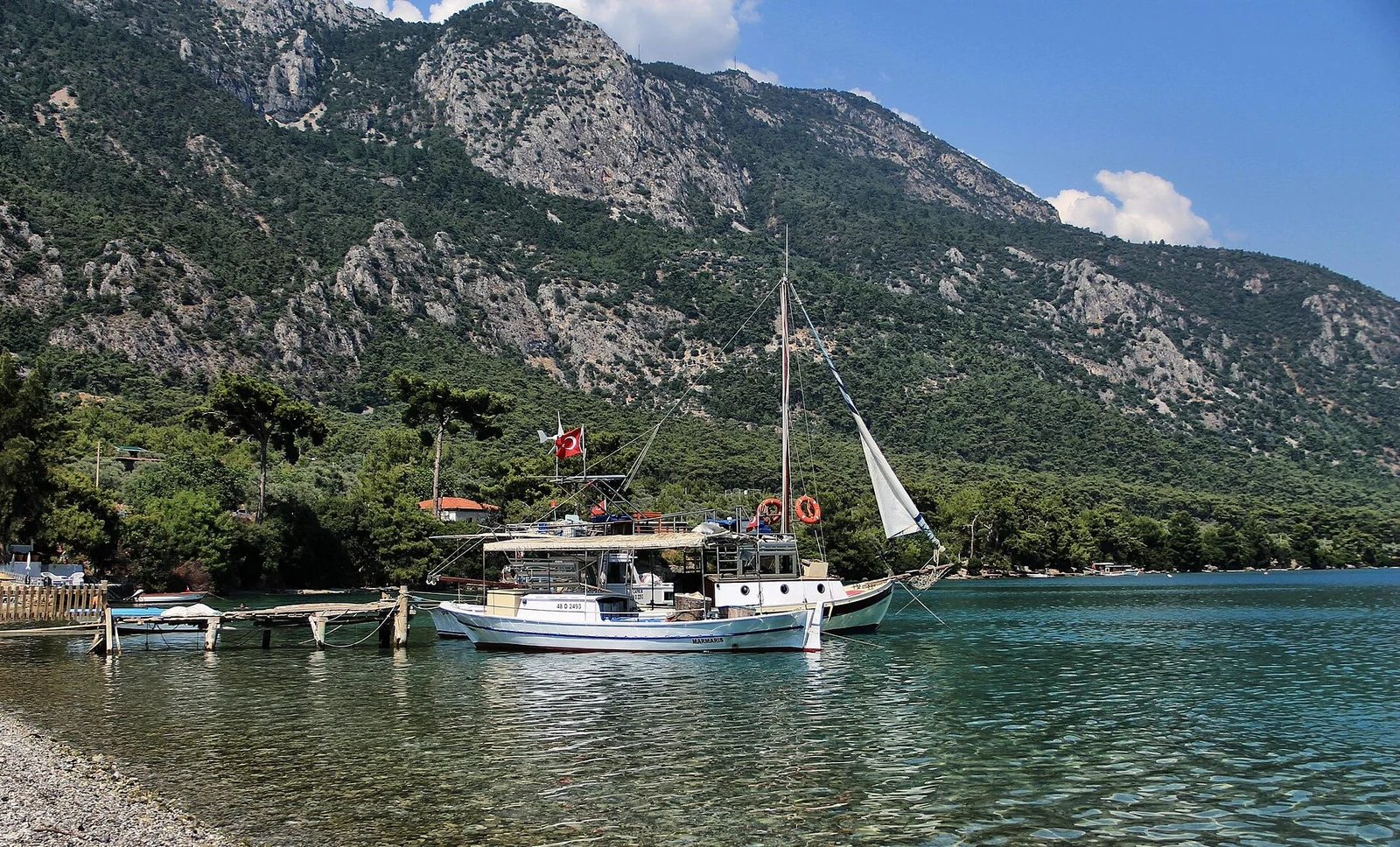
On the north shore of the Gökova gulf, Akbük has a beach with paved access and a few restaurants, and the coast either side breaks into smaller coves, some reached only by rough tracks. The gulf is sheltered, so the water in them is usually calm and clear.
Where the tracks leave the asphalt, the surfaces can be rocky and sharp, the kind that punish road-biased tyres at road pressures. Drop pressures a little for the rough sections, carry a plug kit and a compressor, and turn round if a track gets beyond you or your bike. These are forest tracks in Muğla, so they fall under the fire-season order from June to October. Expect mosquitoes at dusk.
Check Tubeless tire plug kit on Amazon →
Best for: calm, quiet water, for a day ride or a night outside fire season where it’s allowed.
9. Akyaka & the Gökova Gulf (Aegean)
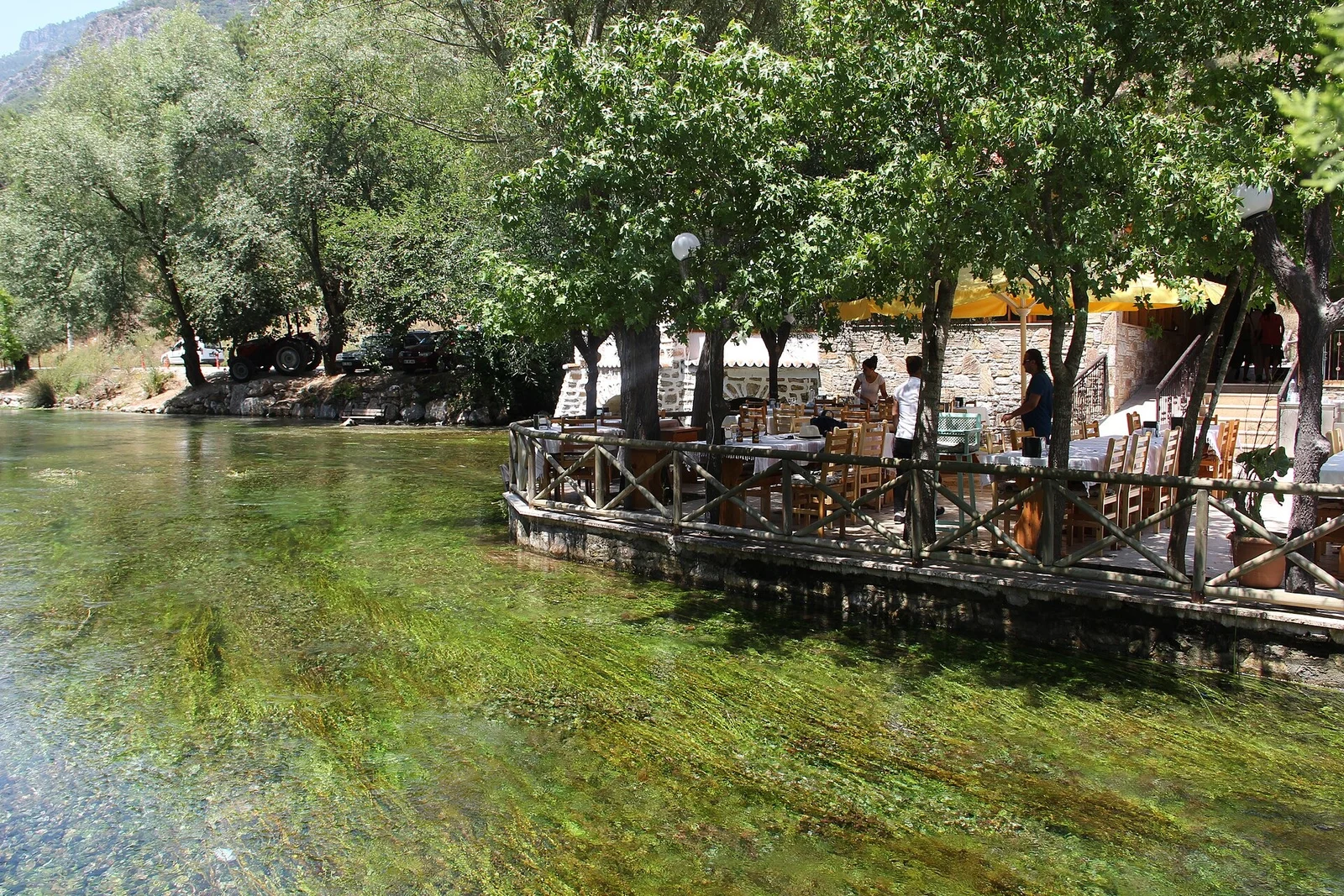
At the head of the gulf, Akyaka is a pretty, protected village of traditional timber houses where a cold river meets the sea, and the forest road along the gulf toward Marmaris is one of the cleanest, most enjoyable coastal rides in the country — tight enough to be fun, the gulf glittering beside you for much of the way. There are proper campsites around Akyaka and the swimming is gentle and warm. It’s the natural link between the Aegean route and the road south.
Best for: easy, scenic riding and a relaxed family-friendly base on the gulf.
10. Gideros (Black Sea) — The Northern Outlier
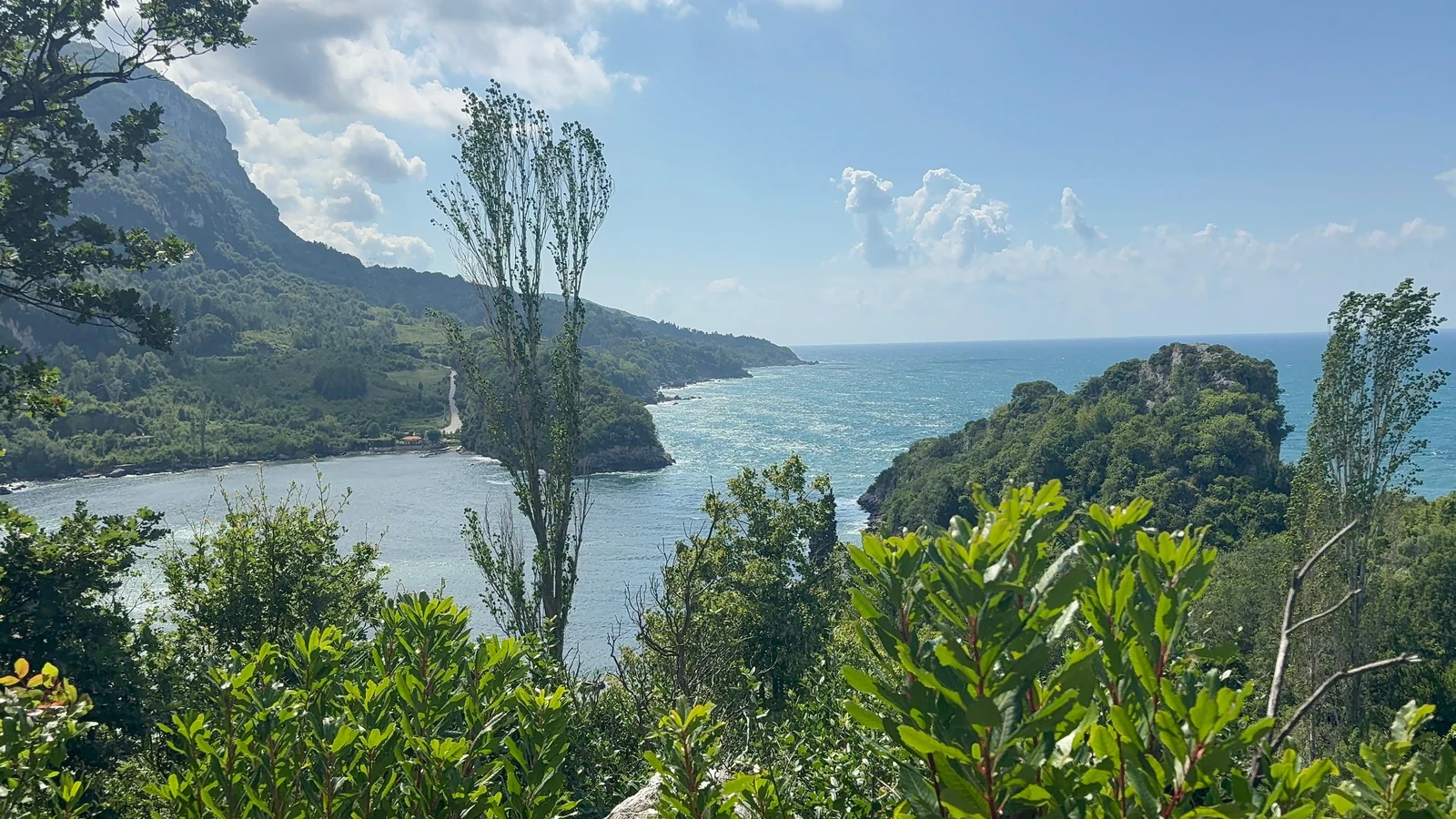
For something completely different, the Black Sea coast hides one near-perfect bay: Gideros, a near-enclosed natural harbor west of Cide, ringed by green forest with a couple of fish restaurants and calm, sheltered water — a rarity on a coast better known for its rollers. It’s reached by a short paved side road off the slow coast highway, and it’s the best first overnight on the Black Sea & Kaçkar route. The Black Sea is wetter, greener and cooler than the south; a different Turkey entirely, and worth the ride to see it.
Best for: riders who’ve done the south and want the wild, green, empty alternative.
How to Ride Turkey’s Bays Well
A few things worth knowing before you commit a loaded bike to one of these descents:
- Match the bike to the bay. The roadside Mediterranean bays suit anything. For the offroad coves, you need ground clearance, dual-sport tyres and the willingness to walk a section you don’t trust.
- Carry your own water. The best bays have nothing. Four litres per person per day, minimum, plus a buffer.
- Respect the fire season. In Muğla, entry to listed forests is banned from June to October, and a fire near forest can bring criminal charges. Stay on public roads and use the organised camps in summer.
- Tell someone your route. On the rough tracks you may have little or no signal and nobody passing. Ride within your skill; walking a section is not a defeat.
- Leave it cleaner than you found it. The only reason riders are still tolerated at these places is that most of us pack out our trash. Carry a spare bag for what others left.
- Camp light. A compact tent, a packable sleeping pad and a small stove are all you need for a night on the sand.
Related Guides
- For the trip these bays hang off — which regions to string together, and when each coast is at its best — see our ultimate Turkey motorcycle tour guide.
- For the full southern coastal route through Kaputaş, Patara, Kabak and Çıralı, see the Lycian Way motorcycle route.
- For the Aegean bays from Çeşme to Datça, ride the Turkish Aegean coast route.
- For the legal and seasonal detail behind camping at any of them, read wild camping in Turkey on a motorcycle.
This guide is compiled from published maps and access information, local authority sources and rider reports. Some links in this article are affiliate links — if you buy gear through them, we may earn a small commission at no extra cost to you.
Frequently Asked Questions
Which of these bays can I reach on a normal road bike?
Most of them. Kaputaş, Patara, Çıralı/Olympos, Akyaka and the Datça peninsula coves are all reachable on paved roads — a standard road or touring bike handles them fine. Kabak is reached by a steep, narrow road from Faralya that a light bike handles well; on a heavy, loaded bike you may prefer to park at the top. Only the rough tracks to the smaller Gökova coves and the forest tracks around Faralya want real ground clearance and dual-purpose tyres, and in Muğla those forest tracks are closed to entry from June to October. Everything else on this list is open to any motorcycle.
Is wild camping allowed at these bays?
There's no clear-cut national rule, and travellers describe it as tolerated in many places outside national parks, archaeological sites, military zones and private land, as long as you leave no trace. The big exception is summer: provincial fire-season orders ban entry to listed forests, and in 2026 Muğla's runs from 1 June to 31 October. National-park bays like Olympos and Çıralı have established campgrounds you should use instead of pitching wild. The full breakdown of rules, regions and seasons is in the wild camping in Turkey guide.
When is the best time to visit Turkey's bays by bike?
Late April to mid-June and mid-September to October. The water is swimmable, the coast roads are quiet, and the heat is manageable. July and August are hot and crowded — the famous roadside bays like Kaputaş become car parks, and prices peak. Spring and autumn are when these places look the way the photos promise.
Do any of these bays have facilities, or do I carry everything?
It varies a lot. Çıralı, Akyaka, Patara and Kabak have villages or cafés nearby with food, water and toilets. The offroad coves — Akbük, the hidden Datça beaches, anything you reach down a dirt track — have nothing at all: no water, no shade, no help. For those, carry a minimum of four litres of water per person per day plus a buffer, pack out all your trash, and treat any tap water you find. Assume self-sufficiency the moment the tarmac ends.
Do I need a big adventure bike to reach these bays?
No. People assume you need a big GS to reach the good bays in Turkey, and you don't: every paved approach on this list suits an ordinary road bike, and a light, easy-to-pick-up bike is an advantage on the steep, loose dirt descents rather than a handicap. Each bay above says whether its last stretch is paved or dirt. The bays reward the rider who shows up, not the one with the most expensive bike.