Best Motorcycles for Long Distance Touring in 2026: What Actually Matters After 500 km
The first thing that breaks down on a long-distance motorcycle trip isn’t your tyres or your chain. It’s your confidence in the bike you chose.
I learned this on day three of a Black Sea loop. 480 km that day, mostly over the Kaçkar passes, the bike loaded heavier than I’d packed it before. The fatigue I felt at the hotel wasn’t in my legs. It was in my shoulders, from eight hours of buffeting because the windscreen was 5 cm too short. It was in my left thumb from a fuel light that had been on for the last 60 km of a stretch I didn’t know. It was in the way I kept second-guessing the bike under me.
That trip is the lens for this list. These are the best motorcycles for long distance touring in 2026 — judged not on horsepower charts or dirt capability, but on the four things that actually decide whether you finish a 500 km day still wanting to ride tomorrow. And because the bike is only half the equation, every pick comes paired with the luggage system I’d actually bolt to it.
What Long Distance Actually Demands
Four criteria. No others.
Range. 300 miles minimum between fuel stops. Anything less and the trip starts to revolve around petrol stations. You stop thinking about the road and start thinking about the next pump.
Wind protection. Eight hours behind a bad screen is what teaches you that “adjustable” doesn’t always mean “useful.” The neck muscles know within the first 200 km whether the bike’s working with you or against you.
Seat comfort. Most factory seats are honest for three hours. After that, the touring bike you bought becomes the bike you’re enduring. Bikes that ship with multi-position seats are admitting something the rest of the industry won’t.
Load carrying. A great touring chassis paired with bad luggage is a bike that doesn’t tour. Pannier mount quality, weight distribution, water sealing — these decide whether the bike feels balanced loaded or floppy and nervous.
BMW R 1300 GS — The Benchmark
$17,400. That’s before options. Spec it the way most touring riders actually want it and you’re closer to $25,000. That number is the elephant in the room and we’ll come back to it.
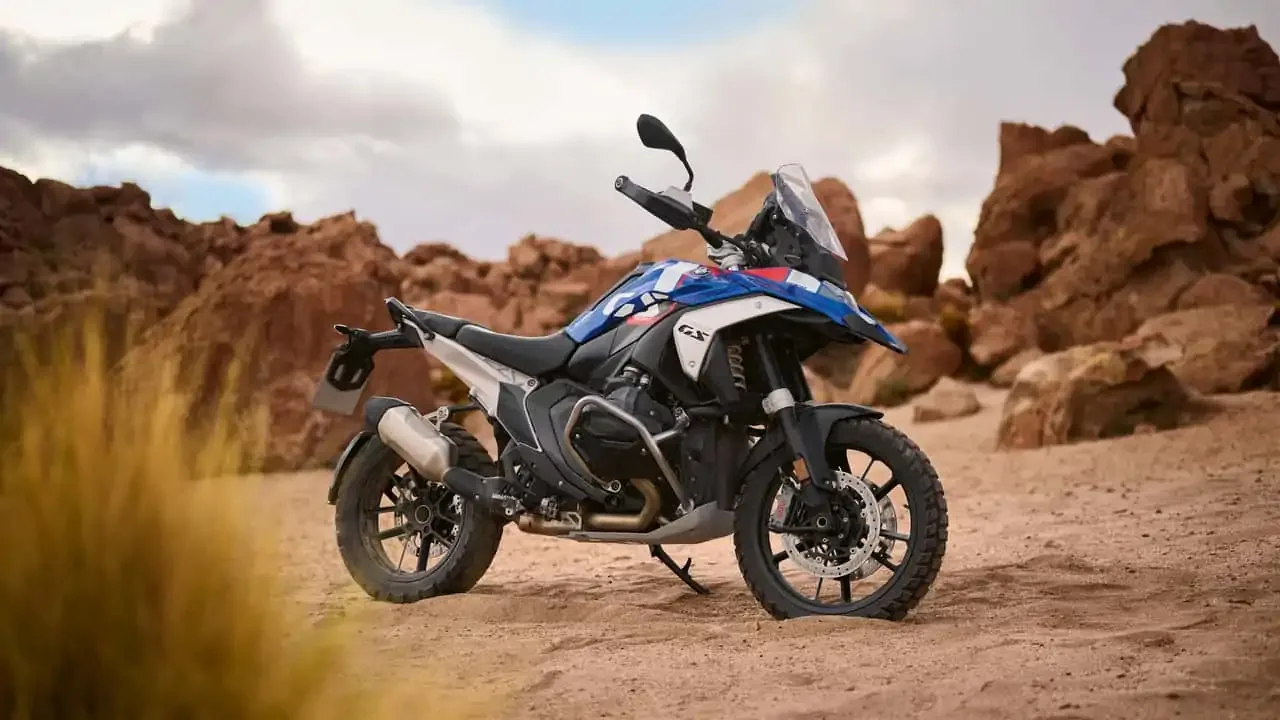
The 1,300cc boxer makes 145 HP and 110 lb-ft. The number that matters more is where the torque arrives — peak at 6,500 rpm, but ShiftCam reshapes the lower half of the rev range. In sixth gear at 100 km/h, you can roll the throttle from 3,000 rpm and the bike just leaves. No downshift, no drama. After eight hours, that’s the difference between a bike you ride and a bike you wrestle.
Range works out to roughly 400 miles on highway runs. 55 mpg over steady stretches, 19L tank. BMW shaved a litre off the previous generation and you’ll feel it on the longest legs — still inside the 300-mile threshold, but only just.
The seat is what sets the GS apart for tall and short riders alike. Variable height from 31.5” to 35” depending on the option you tick. On a long day this isn’t just an ergonomic spec — it’s the ability to shift your hip position between hour four and hour seven. On-board smart systems like keyless ride, DCC with braking, Full Integral ABS Pro, and even a reverse assist for paddling out of sloped parking spots with heavy luggage, stop being gimmicks at the end of a long week.
The honest weakness: servicing. A BMW dealer isn’t always 50 km away, and even when one is, the bill won’t be small. If you’re touring eastern Turkey or the western Balkans, your dealer might be 600 km from the road you broke down on. That’s a different kind of math than the spec sheet suggests.
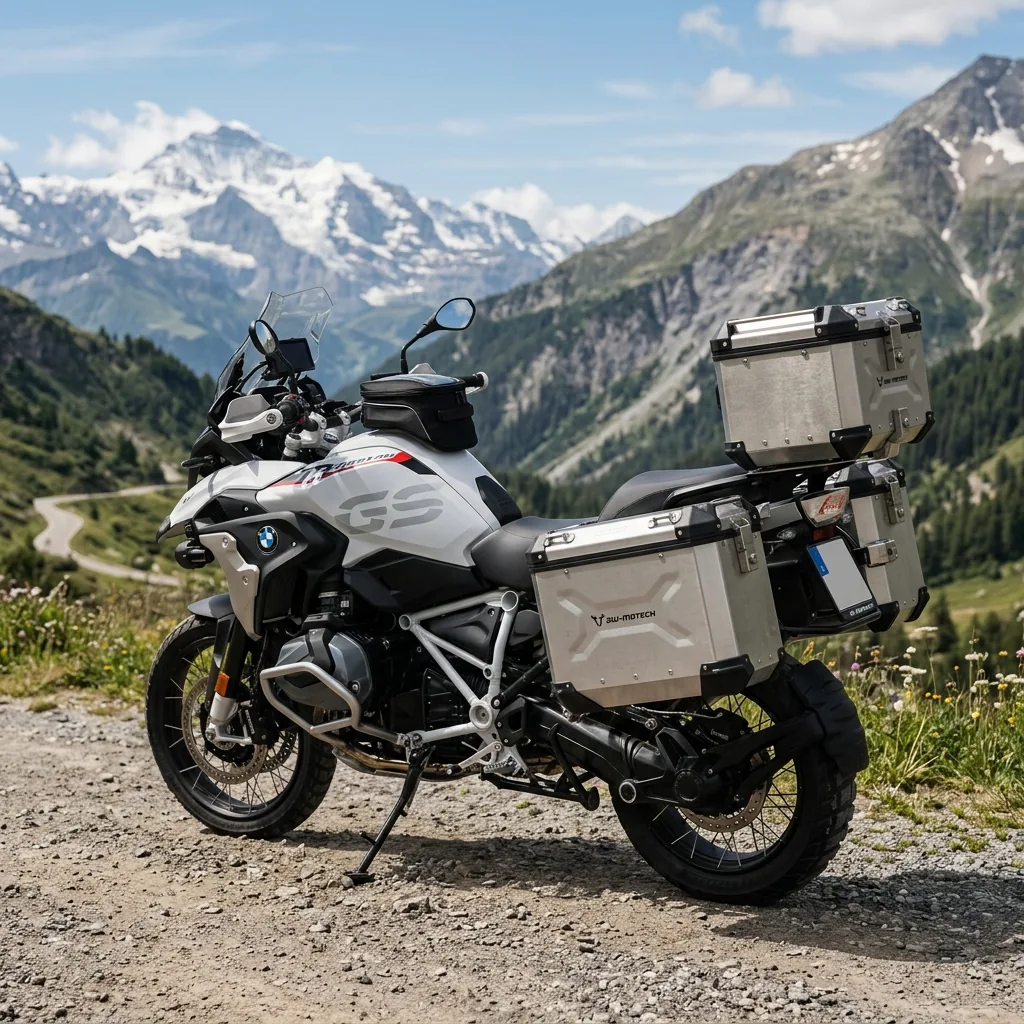
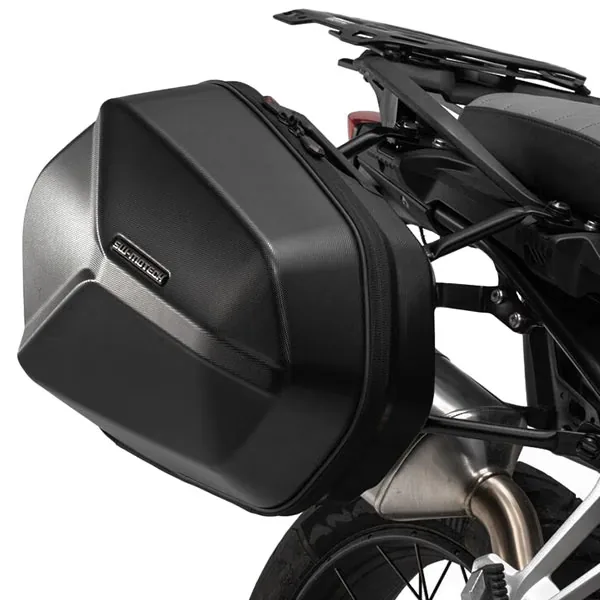
Luggage pick: SW-Motech TRAX ADV (BMW R 1300 GS fit) ~$900 full set with carrier | SW-Motech TRAX ADV panniers Tool-free quick-release pulls each case off in about four seconds. The TRAX ADV is the benchmark in hard luggage for a reason — better sealing, better mounting, and a stronger case than the BMW factory Vario panniers at a similar full-set price.
Honda Africa Twin Adventure Sports ES — The Safe Bet
Start with the one feature that quietly wins long-distance days: DCT.
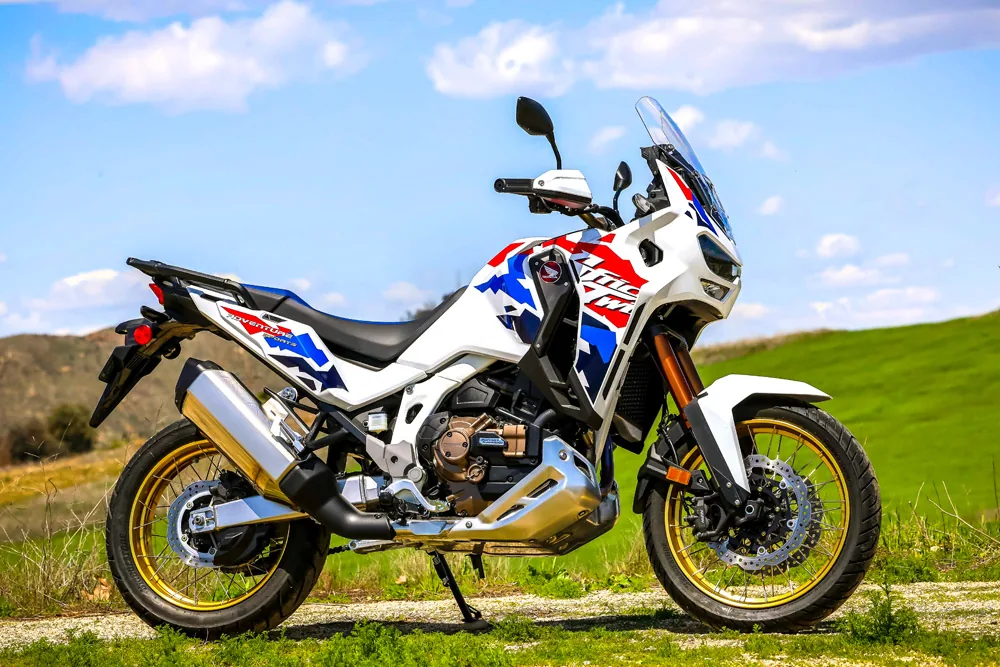
The 2026 Africa Twin Adventure Sports ES is $17,799 manual, $18,599 with DCT. That $800 premium is the best money you’ll spend on the bike. Eight hours of stop-go through city traffic, mountain switchbacks, border queues — DCT removes one hand from the equation. The left hand goes to rest on the tank. The clutch fatigue I used to feel at 6pm doesn’t show up until 8pm. On a tour, that’s an extra leg before you need a hotel.
The 1,084cc parallel twin makes 101 HP. 44 HP less than the GS, and on paper that gap looks big. On a real touring day it isn’t — the Africa Twin’s torque curve is broad and flat, and at touring speeds you’re never asking for the top end. Where it matters is hard overtakes loaded on a single-carriageway. The GS feels effortless; the Africa Twin asks for a downshift. DCT handles that for you anyway.
Range is where this bike pulls ahead. 6.6 gallons / 24.8L is the largest fuel tank on this list. 315 miles to the next stop is real. On routes through eastern Anatolia or northern Albania, where fuel stations get sparse, that’s the difference between a planned route and a careful one.
The 6.5” TFT with Apple CarPlay and Android Auto is the second feature that quietly wins. Navigation lives on the dash, the phone stays in the tank bag, and you stop fighting Bluetooth handshakes every time you helmet up. Showa Electronic Suspension reads the road and adjusts faster than I can think about it. Five-position adjustable windscreen — I keep mine one slot down from max and the buffeting disappears.
The AS ES runs a 19” front wheel, not the 21” of the standard Africa Twin. If you want serious off-road capability, that’s a trade-off. For long-distance touring with occasional gravel detours, it’s the right call.
Luggage pick (asphalt-heavy touring): SW-Motech TRAX ADV (Honda fit) ~$900 full set | SW-Motech TRAX ADV panniers
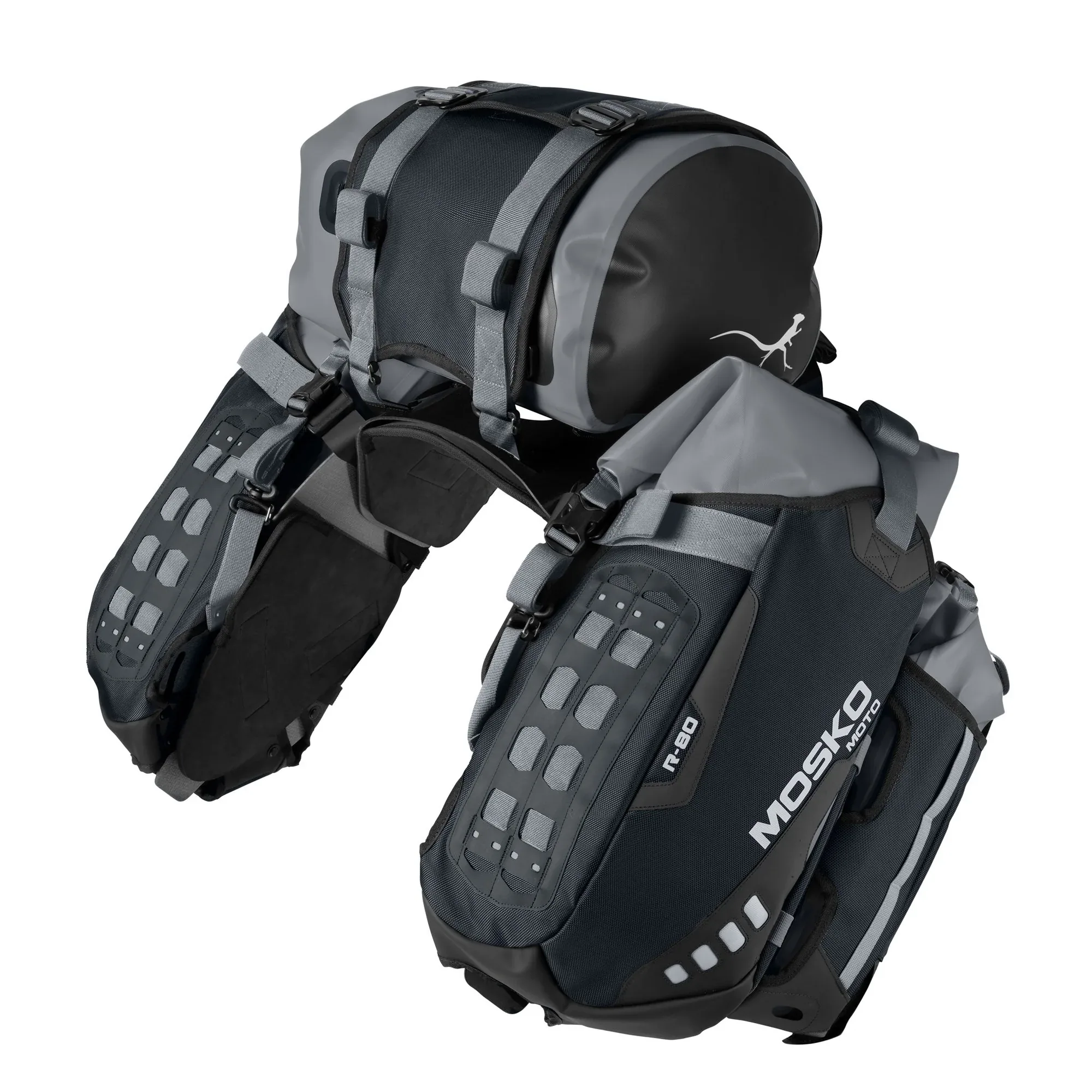
Luggage pick (mixed or off-road touring): Mosko Moto Reckless 80L ~$700 | Mosko Moto Reckless 80L Rackless mounting, the bag the Africa Twin crowd talks about for a reason. If you’re spending nights off-piste, this is what you want bolted on.
Suzuki V-Strom 1050DE — The Reliable One
Here’s the argument that wins this section in one line: when you read accounts of riders crossing continents — Vladivostok to Lisbon, Cape Town to Cairo — you keep seeing the same bike. There’s a reason.
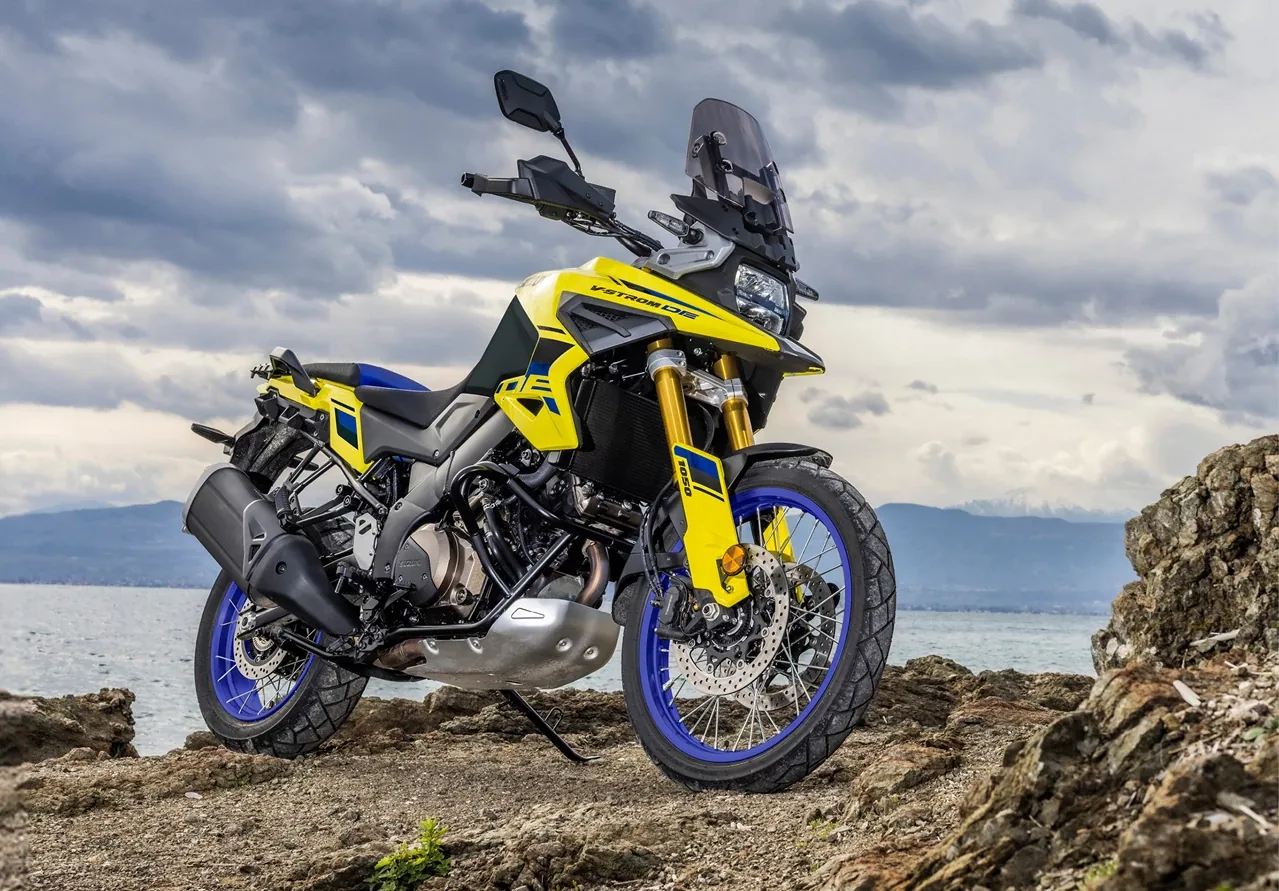
Suzuki has been refining this 1,037cc V-twin for over twenty years. The internals are known, the failure modes are known, and parts are everywhere. A mechanic in Tbilisi who has never touched a BMW R 1300 GS has probably worked on a V-Strom. That changes the calculus of a long trip in ways the spec sheet can’t capture.
$16,449 MSRP — meaningfully under the Africa Twin and well under a properly specced GS. 106 HP, 100 Nm, and the 20L tank that does what you need. The DE variant runs a 21” front wheel with spoked rims, Dunlop Adventure tyres as standard, and a Gravel mode for traction control that genuinely changes the bike’s behaviour on loose surfaces. Switchable rear ABS, lean-sensitive front. Cruise control. Quickshifter up and down.
Three seat options: standard at 33.9”, low at 33.9” minus 30mm, high at plus 30mm. Suzuki publishes these as factory accessories rather than marketing them on the spec sheet, but they exist and your dealer can swap them.
The honest weakness is electronics. The 5” TFT works, but it isn’t the 6.5” CarPlay screen on the Africa Twin or the connected ecosystem on the GS. The styling is plain. If those things matter, the V-Strom won’t win you over. If they don’t, it might be the most rational pick on the list.
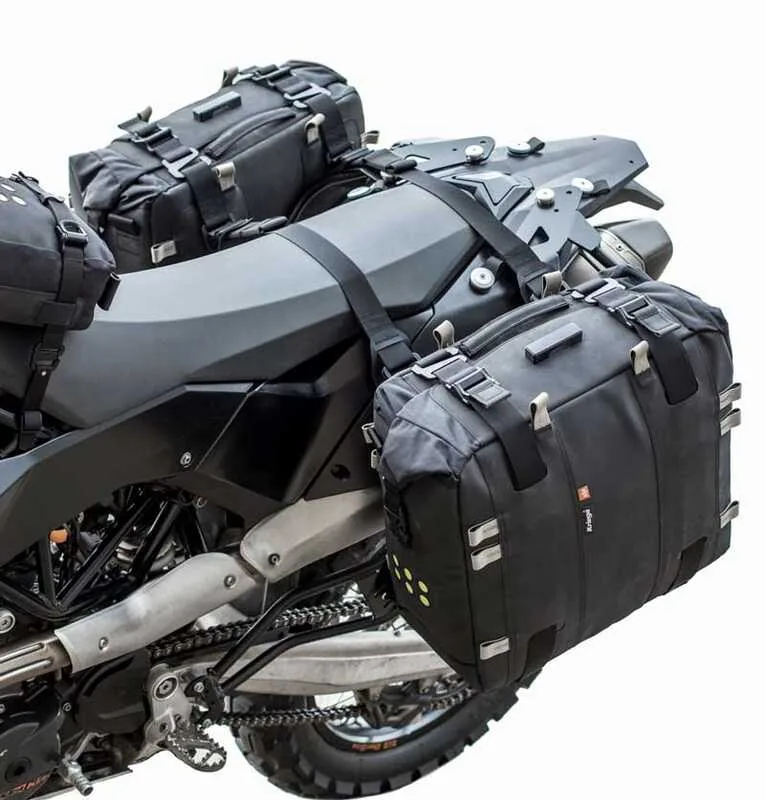
Luggage pick: Kriega OS-32 soft panniers $349.99 each,
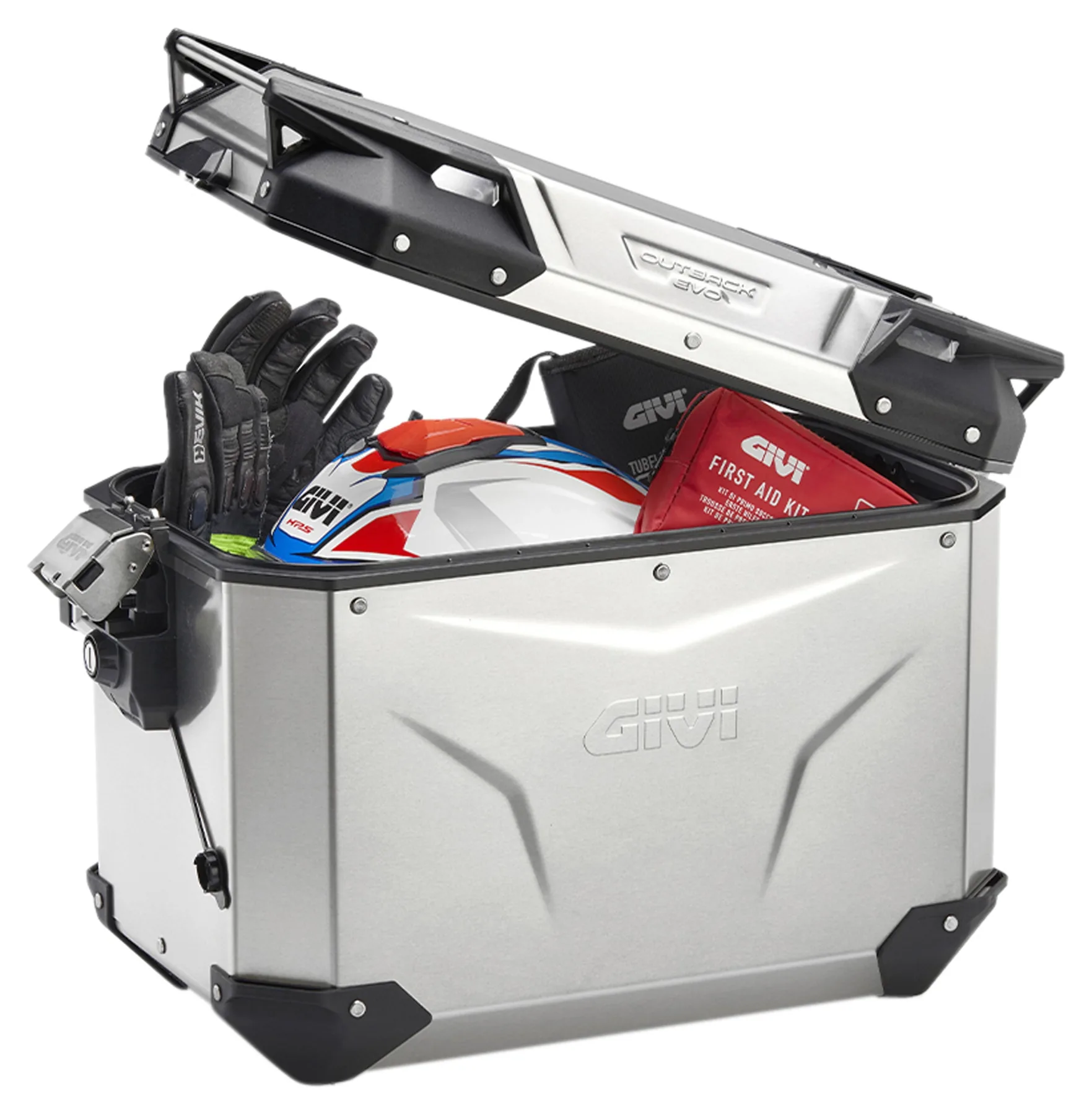
$700 for a pair plus the OS-Platform mount | Kriega OS-32 soft panniers The V-Strom 1050DE is the bike most likely to see real off-road on this list. Hard panniers on a downed bike crush your shin or break a mount; OS-32s absorb the hit and protect the bike. 100% waterproof, ten-year guarantee, and you can use them as carry-on luggage off the bike. Givi Outback hard panniers ($350–$550 set) are the alternative if you stay on asphalt.
Kawasaki Versys 1000 SE LT+ — The Value Pick
The 2026 Versys 1000 SE LT+ lands at around $15,999, and on spec-for-spec it’s the best value on this list. Electronic suspension, cruise control, adjustable windscreen, heated grips, full TFT. Equipped the way it ships, this is a bike that costs $20,000+ in equivalent BMW or Triumph trim.
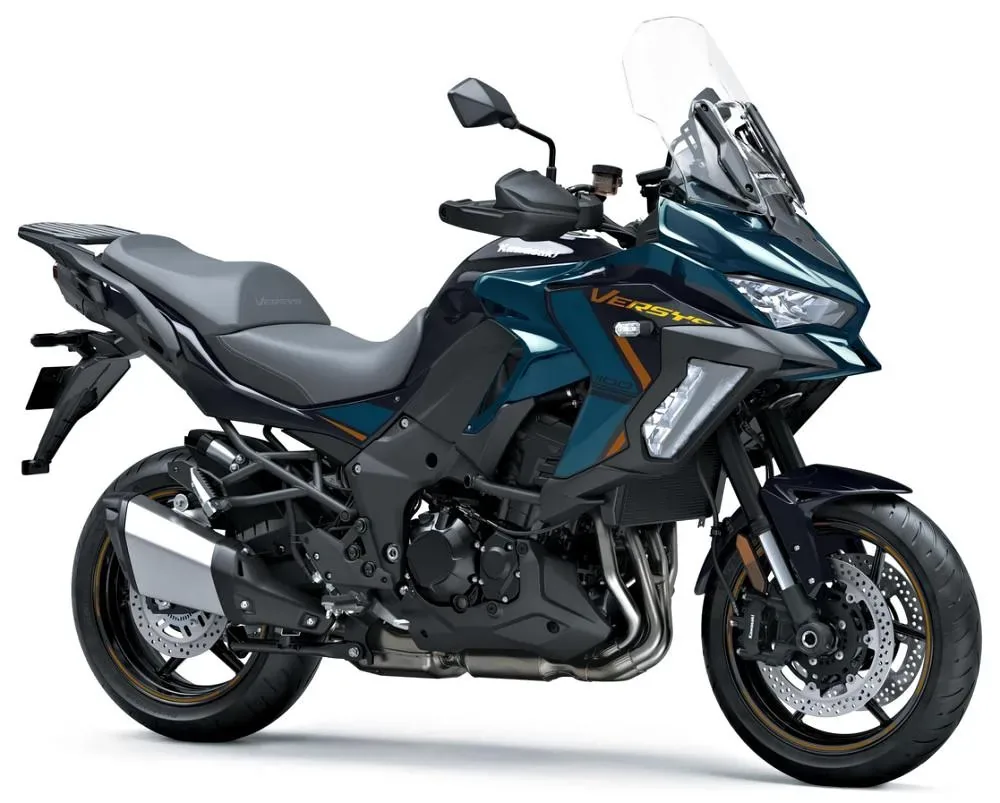
The catch is honest: at 799cc parallel twin making 94 HP, the Versys feels different at sustained 130 km/h motorway speeds than the litre-plus bikes above it. Some riders won’t notice. Some riders — particularly those who tour heavy or two-up — will want more. The torque is there for normal cruising; what’s missing is the reserve when you want to overtake a truck on a gradient without thinking about it.
For solo riders doing mixed motorway and twisties, the Versys is a quiet outperformer. The wind protection from the adjustable screen is among the best on this list. The seat is genuinely good out of the box — Kawasaki has been refining this chassis since 2015 and the touring ergonomics show it.
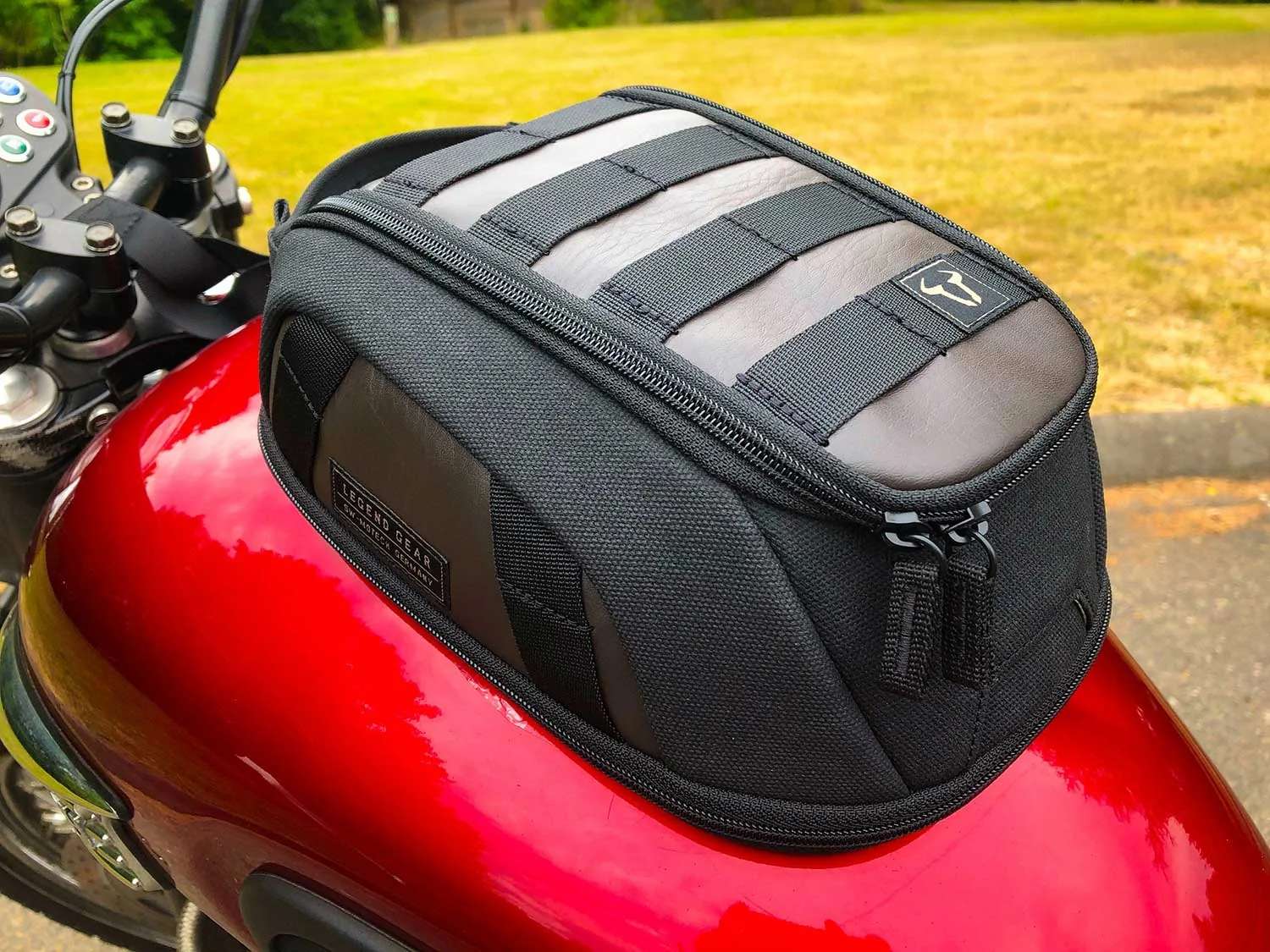
Luggage pick: Kriega OS-32 panniers + SW-Motech Legend Gear tank bag OS-32: $349.99 each | Kriega OS-32 soft panniers Legend Gear LT1: ~$129 | SW-Motech Legend Gear tank bag The Versys doesn’t need the weight or visual bulk of full aluminium panniers — softer luggage suits the bike’s character. The Legend Gear tank bag has the best phone/map window in this price bracket and strap-mounts onto the Kawasaki tank without issue.
Triumph Tiger 1200 Explorer — The Wild Card
The Tiger 1200 Explorer is here because it does something the other four don’t: it sounds like a Triumph triple. 1,160cc inline-three, 148 HP, and a character that doesn’t translate to a spec sheet. If you’ve ridden a Speed Triple, you know what I mean. If you haven’t, the closest analogy is that twins thump and the triple sings.
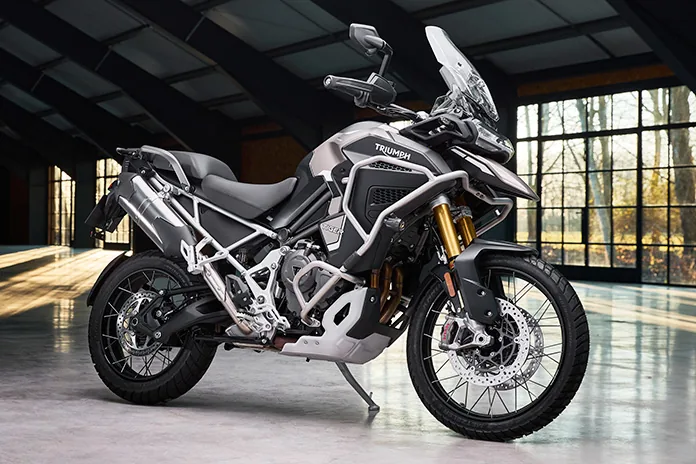
Semi-active Showa suspension, 6-axis IMU, electronically adjustable preload that learns your load. On switchback days the Tiger genuinely feels lighter than it is. Touring ergonomics are well-judged — Triumph took the Explorer trim seriously.
Now the warning that has to come early. The tank is 5.3 gallons. Real-world range works out to around 220 miles. That’s the shortest range on this list by a meaningful margin and it’s below the 300-mile threshold I set out at the top. On a Western European tour with petrol stations every 30 km, no issue. On the kind of routes I plan in eastern Turkey or southern Albania — where fuel can be 120 km apart — you will plan the day around the tank rather than around the riding.
If range is your priority, this isn’t your bike. If character is — and you can build your route around fuel stops — there’s nothing else that feels like it.
Luggage pick: SW-Motech TRAX ADV + Kriega US-10 TRAX ADV set: ~$900 | SW-Motech TRAX ADV panniers Kriega US-10: $139.99 | Kriega US-10 drypack The Tiger 1200 deserves matched aluminium luggage — the bike’s presence calls for it. Add a US-10 as a tank-top drypack for documents, snacks, and the gear you actually need at a fuel stop without unzipping panniers.
The Luggage Question
Hard or soft. Riders argue this online for thousands of posts. The answer is simpler than the debate suggests.
Hard panniers win on: water sealing (almost everything stays dry, almost always), security (a padlock works), and packing discipline (the case is the case, you fit what fits). For pure asphalt touring with hotel nights, hard is the right answer.
Soft panniers win on: weight, flexibility, and crash behaviour. Drop an aluminium pannier on a slow-speed off-road tip-over and you’ll bend a mount, possibly bruise a shin against the case, and sometimes damage the subframe. Drop a Kriega OS-32 and the bag absorbs the hit, the bike rotates further onto the bag rather than dead-stopping, and you pick everything up.
Tank bag: non-negotiable. Map, passport, phone, snacks, the small wallet for tolls. Without one, every fuel stop becomes a pannier-opening operation.
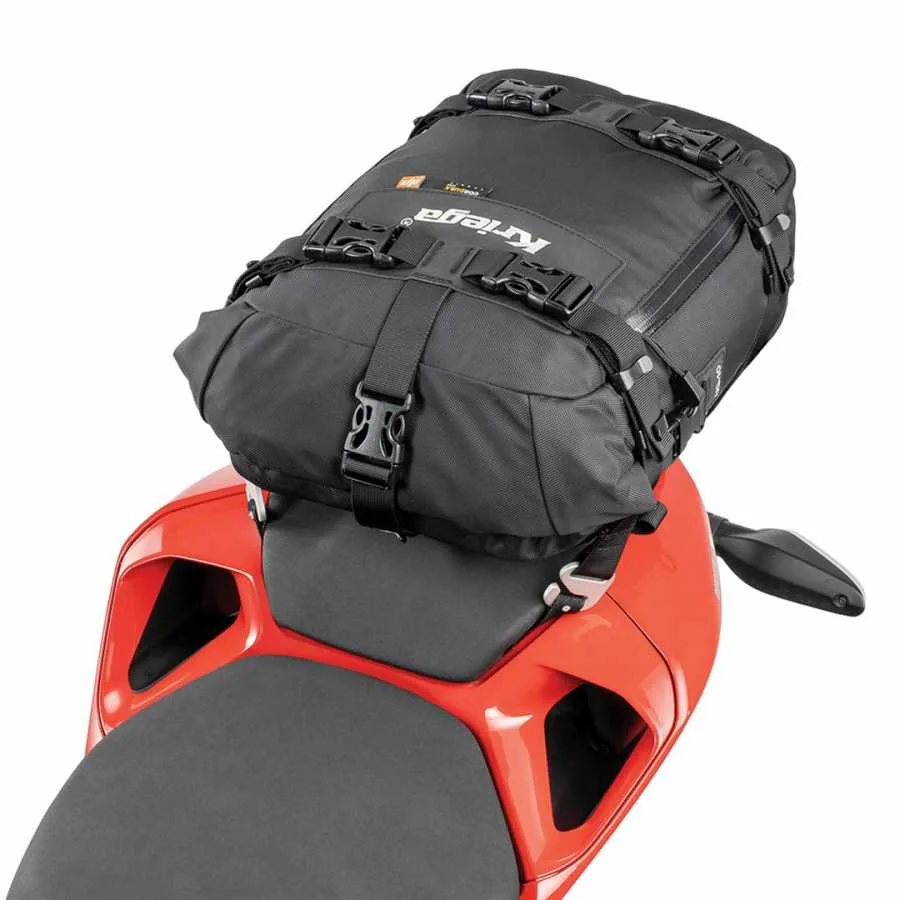
Tail bag: for the camping or overflow case. If you tour with a tent and sleeping bag, you need it. If you hotel-hop, you probably don’t.
The honest answer: most long-distance riders I know end up with one hard pannier set and a soft overflow bag on top. The hard cases live on the bike, the soft bag comes off at the hotel, and the tank bag does the daily-access work. That combination handles 90% of touring scenarios.
What to Buy First
If the budget is open, here’s the order:
| Priority | Item | Price |
|---|---|---|
| #1 Bike (rational pick) | Suzuki V-Strom 1050DE | $16,449 |
| #1 Bike (electronics & DCT) | Africa Twin AS ES DCT | $18,599 |
| #1 Bike (no-compromise) | BMW R 1300 GS | $17,400+ |
| #2 Luggage (hard) | SW-Motech TRAX ADV set | ~$900 |
| #2 Luggage (soft) | Kriega OS-32 pair | ~$700 |
| #3 Tank bag | SW-Motech Legend Gear LT1 | ~$129 |
| #4 Tail bag | SW-Motech Aero ABS or Kriega US-10 | $130–$200 |
Pick the bike, then the pannier set, then the tank bag. Don’t reverse the order. The bike decides everything else; the luggage decides whether the bike actually tours.
FAQ
What is the best motorcycle for long distance touring in 2026? The Honda Africa Twin Adventure Sports ES is the most well-rounded pick — 315 miles of range, DCT option, full electronics suite, and a touring-tuned 1,084cc twin. If money is no object, the BMW R 1300 GS edges it on engine character and tech. If reliability and global parts availability matter most, the Suzuki V-Strom 1050DE wins.
Is the BMW R 1300 GS worth the price for touring? For riders who tour in regions with BMW dealer support, yes. The ShiftCam engine, variable seat height, and integrated electronics genuinely shift what a long day on the bike feels like. For riders touring outside the BMW service network, the case is weaker — a V-Strom will get you home with a 60-year-old mechanic and a generic parts catalogue. The GS won’t always.
Hard or soft panniers for long distance? Hard for pure asphalt touring with security and water sealing as priorities. Soft for any tour that includes off-road, where crash protection and weight matter more. Most long-distance riders end up running one hard set and one soft overflow bag, which is why the Kriega OS-32 sells as well as it does.
How much range do I need for long distance motorcycle touring? 300 miles minimum between fuel stops is the threshold where range stops dictating the day. The Africa Twin AS ES (315 miles), R 1300 GS (~400 miles), and V-Strom 1050DE clear this comfortably. The Tiger 1200 Explorer at 220 miles falls below it and changes how you plan routes.
Is the Africa Twin DCT worth the extra cost? $800 over the manual. For long-distance touring, yes — DCT meaningfully reduces left-hand and left-foot fatigue across an eight-hour day, particularly in stop-go traffic, mountain switchbacks, and border crossings. For pure off-road or weekend sport riding, the manual gives more control.
Where to Read Next
- Best adventure motorcycle panniers 2026 — deeper dive on the luggage systems mentioned above
- Garmin Zumo XT2 review — the GPS that handles the routes these bikes are built for
- Best motorcycles for beginners 2026 — smaller ADV bikes if you’re earlier in the journey
- Wild camping Turkey on a motorcycle — what these bikes actually do on the kind of routes I plan
Affiliate disclosure: Some links on this page are affiliate links. If you buy through them, Bikes & Bays earns a small commission at no extra cost to you. I only link to products I’d put on my own bike. Prices verified at time of writing and may change.
Frequently Asked Questions
What is the best motorcycle for long distance touring in 2026?
The Honda Africa Twin Adventure Sports ES is the most well-rounded pick: 315 miles of range, optional DCT, full electronics including Apple CarPlay, and a touring-tuned 1,084cc parallel twin. The BMW R 1300 GS edges it on engine character and integrated tech if budget allows, while the Suzuki V-Strom 1050DE wins on reliability and global parts availability.
Is the BMW R 1300 GS worth the price for touring?
For riders touring in regions with BMW dealer support, yes. The ShiftCam engine, variable seat height from 31.5" to 35", and integrated electronics shift what a long touring day feels like. Outside the BMW service network the case is weaker, since servicing and parts become harder to source.
Hard or soft panniers for long distance touring?
Hard panniers like the SW-Motech TRAX ADV win on water sealing, security, and packing discipline for pure asphalt touring. Soft panniers like the Kriega OS-32 win on weight, flexibility, and crash protection for any tour with off-road sections. Most long-distance riders run one hard set with a soft overflow bag.
How much range do I need for long distance motorcycle touring?
300 miles minimum between fuel stops is the threshold where range stops dictating the day. The BMW R 1300 GS (~400 miles), Honda Africa Twin AS ES (315 miles), and Suzuki V-Strom 1050DE clear this comfortably. The Triumph Tiger 1200 Explorer at 220 miles falls below it and forces fuel-stop-driven route planning.
Is the Africa Twin DCT worth the extra cost?
Yes for long-distance touring. The $800 premium over the manual buys meaningfully reduced left-hand and left-foot fatigue across an eight-hour day, particularly in stop-go traffic, mountain switchbacks, and border crossings. For pure off-road or weekend sport riding the manual gives more direct control.