Best Motorcycles for Beginners in 2026: The ADV Edition
The most common beginner mistake isn’t buying the wrong bike. It’s buying the right one for where you want to be in two years, instead of where you are today.
My first bike was a 125cc naked that I outgrew in four months. I sold it and bought a 650 twin. The 650 was the bike I’d been picturing when I imagined myself riding — long trips, gravel roads, loaded bags. It was also too much, too fast. I dropped it twice in the first week. Not because I was reckless, but because I didn’t have the muscle memory yet to manage 210 kg at a standstill in a parking lot.
What I should have bought was something in the middle. Something I could drop without crying about it, learn on without hating it, and sell at 80% of what I paid for it.
These are the best motorcycles for beginners in 2026 if ADV riding is where you’re headed. Six bikes, six different answers. Which one is right depends on what you’re actually planning to do in the next twelve months — not the next five years.
What Makes a Beginner ADV Bike
Four things matter and most spec sheets bury all of them.
Weight. Under 400 lbs / 181 kg fueled is the target. Once you’re over that, dropping the bike on an unpaved road isn’t a minor inconvenience — it’s a back injury and a half-hour recovery operation. Learning off-road on a 400+ lb bike is exponentially more difficult than on something lighter. That’s not an opinion. It’s physics and experience in roughly equal measure.
Seat height you can actually reach. Not “manage on tiptoes.” Reach. One foot flat, or close enough that a slow-speed tip doesn’t turn into a fall. Note that this matters differently depending on your inseam — a 35” seat on a 178 cm rider feels different than a 35” seat on a 165 cm rider.
Low-rpm torque. New riders stall. A bike that’s punchy at 2,500 rpm is much less likely to leave you stranded at a junction than one that needs 5,000 rpm to get moving. This is why singles and 270° twins dominate this list.
Price under $8,000. Because you will drop it, and you will probably sell it in 18 months. Resale matters.
One more thing: “beginner bike” and “small bike” aren’t synonyms. Three bikes on this list are 450cc. A 452cc single making 40 HP is not hard to ride. A 300cc with sharp throttle response and stiff suspension can be. Displacement is less important than ergonomics, weight, and power delivery.
2026 Beginner ADV Quick Comparison
| Bike | Price (USD) | Engine | Seat Height | Wet Weight | Ground Clearance |
|---|---|---|---|---|---|
| Honda CRF300L Rally | $6,499 | 286cc single | 35.2” (894mm) | 333 lbs / 151 kg | ~11” |
| CFMoto Ibex 450 | $6,499 | 449cc parallel twin | 31.5”–32.3” adj. | ~432 lbs / 196 kg wet | 8.7” |
| Royal Enfield Himalayan 450 | $5,999 | 452cc single | 31.7”–32.5” adj. | 432 lbs / 196 kg | 9.1” |
| KTM 390 Adventure X | ~$6,499 | 399cc single | 32.4” (825mm) | 388 lbs / 176 kg fueled | 7.9” |
| KTM 390 Adventure R | ~$7,799 | 399cc single | 34.3” (870mm) | 388 lbs / 176 kg fueled | 10.7” |
| Honda NX500 | $6,899 | 471cc parallel twin | 32.8” (835mm) | 432 lbs / 196 kg | 7.1” |
Honda CRF300L Rally — The Off-Road Teacher
Here’s the paradox: the lightest bike on this list also has the tallest seat.
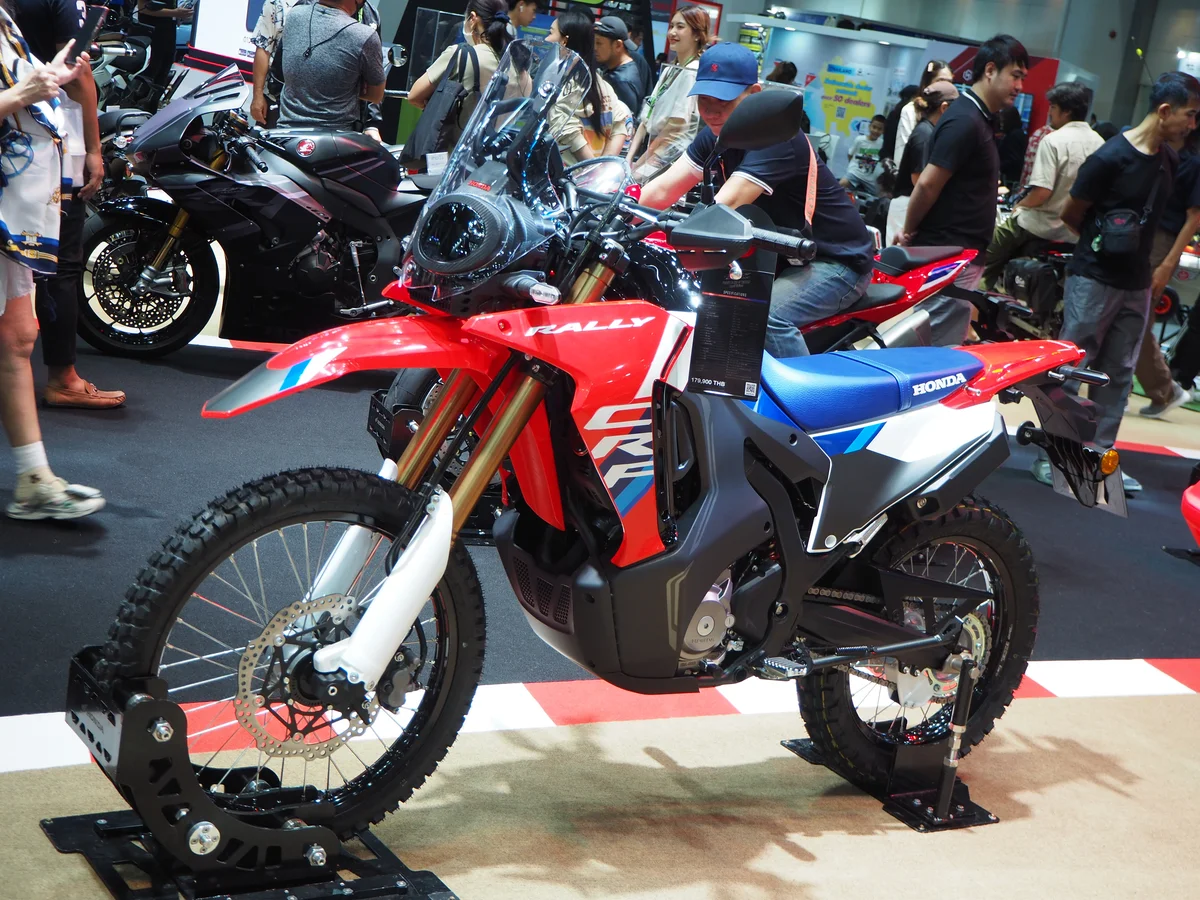
151 kg. 35.2” seat height. Those two numbers define everything about the CRF300L Rally. If you’re 175 cm or taller and want to spend your first year actually learning to ride off-road — not just crossing gravel driveways — this is the answer. If you’re shorter, it’s a harder conversation.
The weight is the main event. 333 lbs fueled puts the CRF300L Rally in a category by itself here. Every other bike on this list is 43 to 82 lbs heavier. That gap is enormous when you tip over on a forest track and need to pick it up by yourself. It’s also enormous when you’re doing tight U-turns on a mountain switchback and the bike starts to lean the wrong way. Less mass is more forgiving. It’s a simple equation.
The 286cc single makes about 27 HP, which isn’t a lot. It’s also not why you’re buying this bike. You’re buying it because it handles unpaved roads the way a purpose-built machine should — Dakar-inspired fairing, 11 inches of ground clearance, and a 12.9L tank that’ll push you past 250 miles before you need to stop. On pavement it cruises comfortably at motorway speeds, but it doesn’t love triple-digit km/h for extended stretches. That’s fine. This bike isn’t for motorways.
ABS is switchable (important for off-road), and the slipper clutch makes downshifts smoother than a new rider has any right to expect. At $6,499, the price hasn’t changed in three years. Honda doesn’t move prices on things that are already selling.
Best for: anyone who wants to prioritize off-road learning, doesn’t mind tiptoeing at stops, and wants to drop the bike without a crane to pick it up.
Skip it if: you’re under 175 cm, or you’re spending most of your time on pavement.
CFMoto Ibex 450 — The Unicorn Bike
Some reviewers started calling it “the unicorn bike” before it launched. The idea was simple: a parallel twin with a low seat, tubeless spoked wheels, real suspension, and a price under $7,000 had never existed. If it actually worked, it would be everything this category had been asking for.
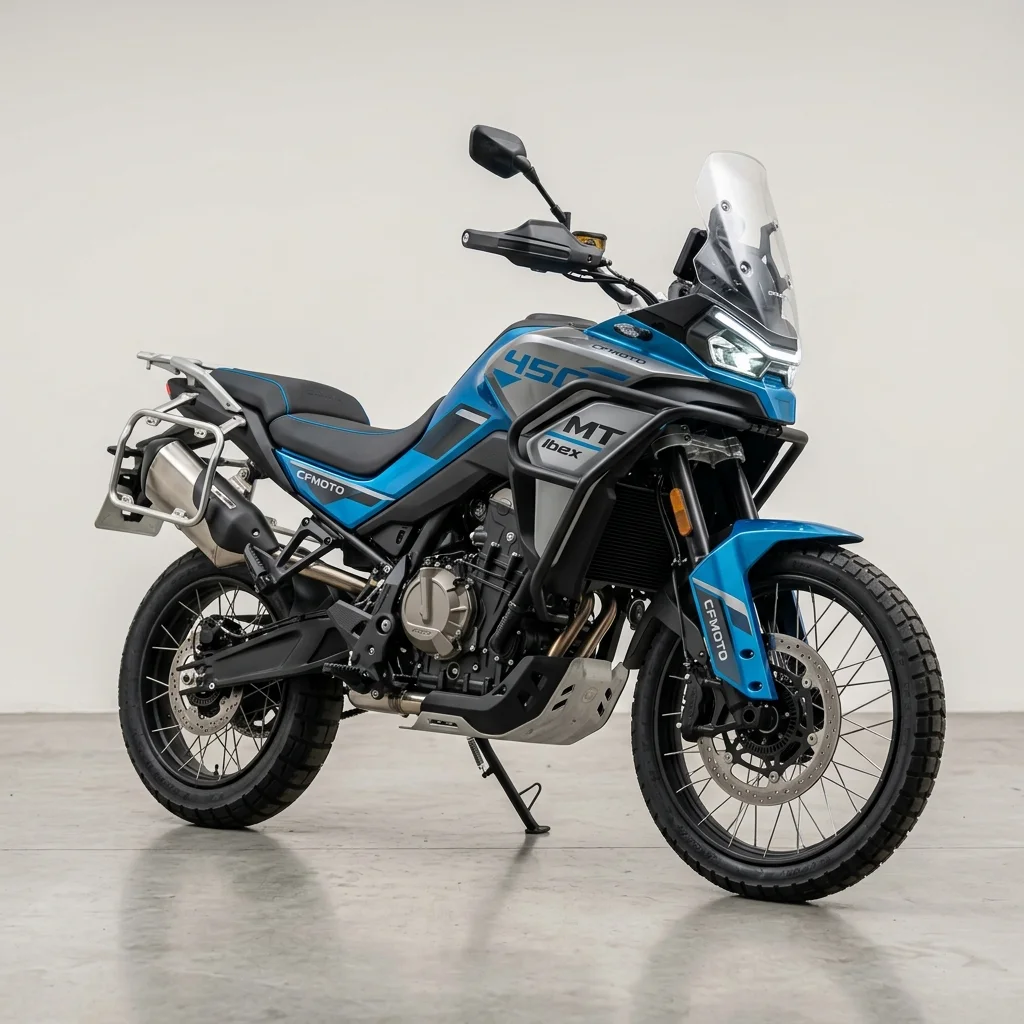
It works.
449cc parallel twin with a 270° crank. That firing order is what gives V-twins their lumpy, characterful feel — CFMoto has replicated it in a smaller, lighter package. 43.6 HP and 32.5 ft-lbs of torque on a 196 kg bike means it pulls from low in the rev range without drama. The seat goes down to 31.5”, and with the optional high seat ($199.99) up to 34.3”. That range is unusual. Most bikes give you one height.
For $6,499, you also get: a 5-inch TFT display with OTA updates and built-in navigation via MotoPlay, KYB suspension with 8 inches of travel, switchable traction control, rear ABS disable, tubeless spoked wheels (21”/18”), and an adjustable windscreen you can raise or lower without tools. These features don’t appear on mid-range bikes — they appear on bikes that cost twice as much.
I know the obvious objection: CFMoto isn’t Honda. Service networks in some regions are still limited, and for a first bike, that matters. If you’re in a city with multiple CFMoto dealers, this is an easy choice. If you’re in a rural area with the nearest dealer three hours away, do that research before you buy. It’s not a dealbreaker, but it’s a real consideration that doesn’t go away.
ADVMoto compared it to a BMW R 80 G/S in weight-to-power ratio. That’s a bold comparison. It’s also not wrong.
What’s missing: some longer-term reliability data, and dealer coverage in areas outside major cities. Both will improve. That’s the early-adopter tax on a bike that otherwise has no business being this good at this price.
Royal Enfield Himalayan 450
$5,999. That’s the first thing to say.
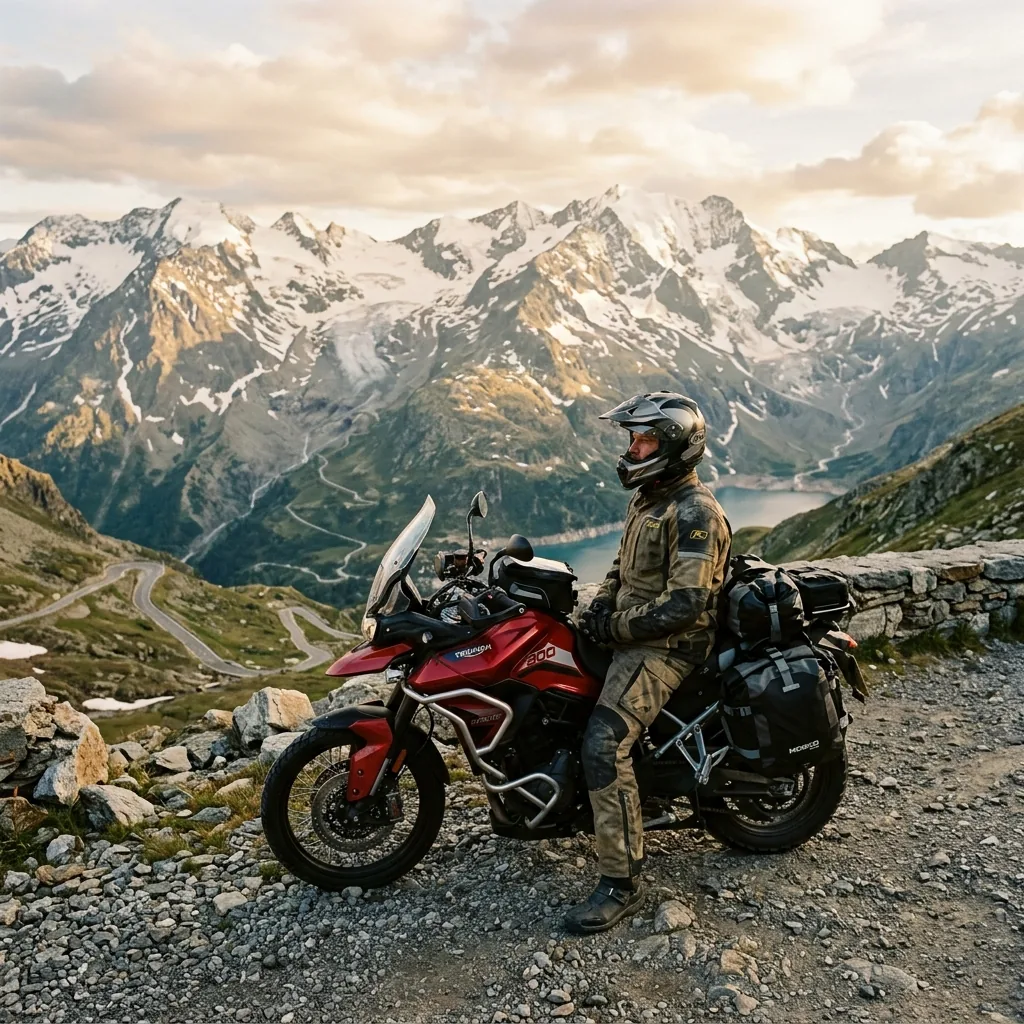
Everything else flows from it. This is the least expensive bike on the list by $500, and it comes from the factory with two seat height options at no extra charge: 810mm and 825mm (31.7” and 32.5”). Most manufacturers charge extra for a lowering kit. Royal Enfield just made the seat adjustable in both fore-aft position and height, and included both configurations in the base price.
I’ve put 8,500 km on a Himalayan 450 — across Turkey and into Bulgaria, loaded with camping gear. The word I keep coming back to is composed. It doesn’t try to impress you in any particular direction. The 452cc liquid-cooled single makes 40 HP and pulls cleanly from low revs. The Showa suspension handles loaded touring, light gravel, and broken Turkish secondary roads without you needing to adjust anything. Four riding modes (Rain, Road, Off-Road, Retro) cover the actual situations you’ll encounter.
BikeBound described it as a bike that “feels honest the moment you ride it.” That’s right. It doesn’t have the most power, the fanciest tech, or the lowest weight. What it has is balance — not the marketing word, the actual engineering kind, where nothing is overdeveloped relative to everything else. For a first ADV bike, that’s more valuable than a spec sheet win in one category.
One thing nobody tells you: the Retro mode removes the tachometer from the dash and changes the color scheme. It sounds gimmicky. After 200 km on an empty road at dusk, you’ll use it every day.
The seat is wider than the competition at this price. That matters on long days. The 17L tank gets you 350-400 km between stops depending on how you ride.
If I were starting over and had no brand loyalty, this is probably what I’d buy for year one. Not because it’s the most exciting option. Because it’s the one I’d still respect at 20,000 km.
KTM 390 Adventure X — The City Starter
32.4” seat. 176 kg fueled. LCD screen. Cast wheels. 7.9” suspension travel.
The 390 Adventure X is what happens when KTM builds a 390 for people who live in cities and want adventure on the weekends — emphasis on want, not necessarily do. It’s lighter than anything on this list except the CRF300L Rally, and at 32.4”, the seat height is accessible for most riders.
The 399cc single makes 44 HP and 44 ft-lbs, which is generous for this class. Low-rpm behavior is manageable. WP APEX suspension is tuned softer than the R, which makes it more comfortable on pavement and slightly less capable on loose surfaces. The cast wheels and 19”/17” setup mean you’re buying standard road tires, not specialized adventure rubber — this is intentional. It’s priced at ~$6,499 and positioned as the approachable version of a more capable machine.
No lean-angle traction control. No rain mode. No TFT. These are the cuts KTM made to hit the price point, and they’re honest about it.
If your daily reality is urban commuting with occasional weekend escapes onto light gravel, the X is a sensible choice. If you’re regularly putting the bike on dirt tracks or planning multi-day tours on unpaved roads, look at the R instead.
“If you smile when the road turns to dirt, buy the R. If you smile when the traffic thins out, the X is fine.”
KTM 390 Adventure R — For The Rider Who Knows What They’re Getting Into
This isn’t a beginner bike. It’s the bike beginners buy when they’re confident they’ll grow into it fast.
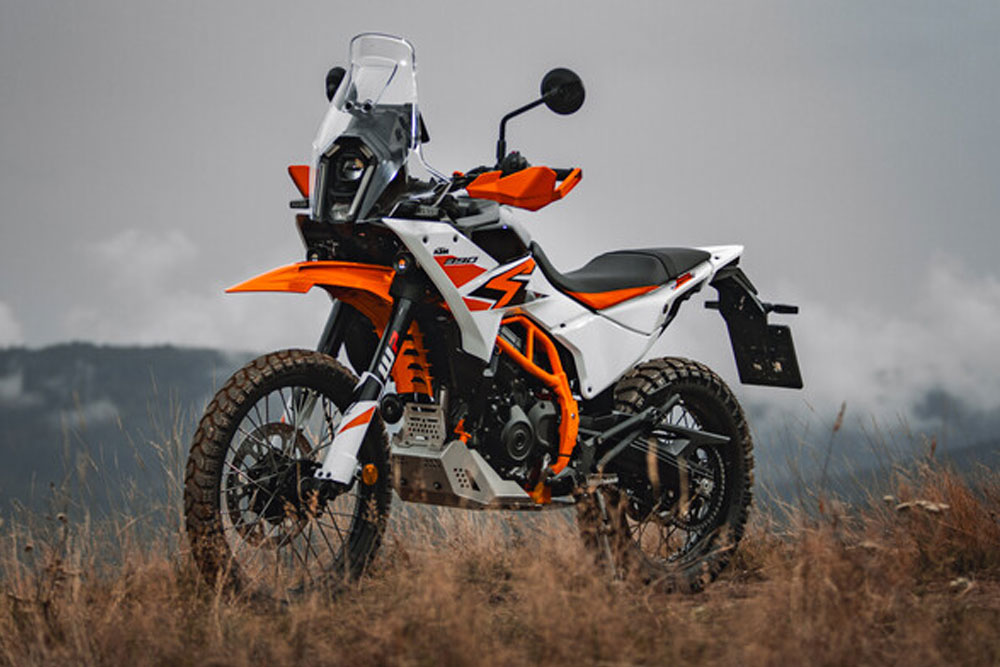
The 390 Adventure R shares its engine with the X — same 399cc single, same 44 HP, same 14L tank. Everything else is different. TFT screen, 21”/18” spoked wheels, 9 inches of suspension travel, lean-angle traction control, and a full suite of riding modes. At 34.3” it’s the tallest seat on this list. At 176 kg fueled, it’s the second-lightest.
That seat height is the conversation. 34.3” means most average-height riders are on one tiptoe at stops. It’s manageable, but it’s not forgiving of lapses in concentration. The riders who buy this bike and struggle are almost always people who bought it because of what it’s capable of, and found out later that managing it at parking lot speeds requires more skill than they’d developed yet.
I know someone who bought a 390R as his first bike. He dropped it four times in the first month. He still loves it, and now at 15,000 km he’s a better off-road rider than most people I know who started on smaller bikes. I’m not sure what to do with that information.
The off-road capability is real. 10.7” of ground clearance, long-travel suspension, and proper adventure tires from the factory. If you’re buying this because you want to ride in the mountains and eventually get into more technical terrain — and you’re willing to put in the work during the learning curve — it delivers on what it promises.
~$7,799. The most expensive bike here by a margin. Worth it for the right rider. The wrong rider will sell it in eight months.
Honda NX500 — The Confidence Machine
The E-Clutch deserves an explanation, because Honda doesn’t explain it well in the marketing materials.
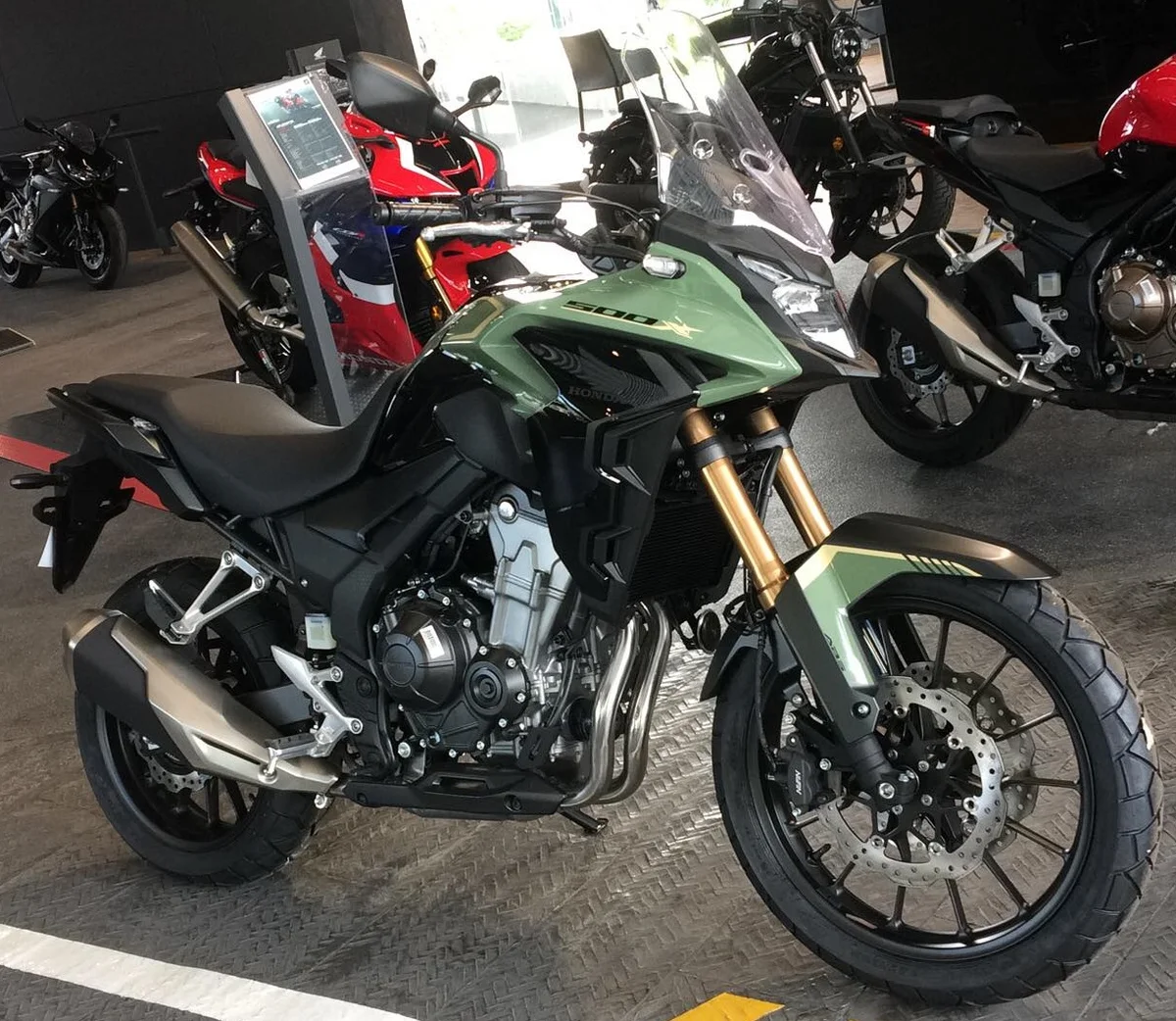
It’s clutch-by-wire. There’s a lever, but you don’t have to use it. The system handles clutch engagement automatically at low speeds — which means you cannot stall. Not “it’s hard to stall.” Cannot stall. For a new rider, the psychological weight of that is significant. Stalling at a busy junction, on a hill, in a parking garage — these are the moments that undermine confidence in the first months of riding. Remove them from the equation and the learning process changes.
The NX500 is the 2024 successor to a platform that Honda has been refining since the CB500X launched in 2013. Thirteen years of incremental improvements are visible in the small details: fuel injection mapping that’s smooth at any throttle opening, ergonomics that work for long hours in the saddle without modification, a power delivery that’s linear and predictable. 471cc parallel twin, 46 HP, HSTC traction control.
The tradeoffs are real. 7.1” of ground clearance is the lowest on this list — the NX500 is a road bike that tolerates light gravel, not an off-road machine that tolerates pavement. At 196 kg, it’s not light. The seat at 32.8” is mid-range, accessible for most riders.
Price dropped to $6,899 for 2026, down $500 from last year.
One honest wish: there’s no factory low seat option. Shorter riders will need to look at aftermarket solutions, and that’s a gap in an otherwise polished package.
Best for: new riders who want maximum confidence-building features, prioritize road and light touring, and plan to keep the bike for several years. The platform rewards patience.
The Mistake Most Beginners Make
Buying for the rider you’ll be, not the rider you are.
It sounds obvious until you’re standing in a dealership and the 650 twin is $800 more and looks twice as capable. The problem is that capability you can’t access yet isn’t capability — it’s weight, seat height, and cost you’re managing instead of enjoying the ride.
The bikes on this list are not compromises. Some of them are genuinely excellent machines that experienced riders choose deliberately. The CRF300L Rally and the Himalayan 450 have owners with 50,000 km on them. The CFMoto Ibex 450 is attracting riders who sold their Ténérés for it.
Start where you are. Upgrade when the bike is the limiting factor — not before.
When to Upgrade
One reliable signal: you’re regularly hitting the rev limiter on roads that should be comfortable cruising. Another: you’ve got a trip planned that the bike’s range, suspension, or weight genuinely can’t handle.
Neither of those signals appears in the first year for most riders.
If you’re dropping the bike more than twice in a month, that’s not a signal to upgrade — that’s a signal to slow down and practice. A bigger bike won’t fix technique gaps, it’ll amplify them.
The realistic upgrade window for most riders is 18–24 months. By then you’ll know what kind of riding you actually do (not what you imagined), what features matter to you (not what the spec sheets say), and what you’ll spend money on without hesitating. That knowledge is worth more than starting on the right bike.
FAQ
What cc is good for a beginner motorcycle?
Displacement matters less than weight and power delivery. A 286cc Honda CRF300L Rally at 151 kg is easier to manage than some 400cc bikes at 200 kg. For ADV riding, anything from 300cc to 500cc with manageable weight and low-rpm torque works well for beginners. Don’t pick by displacement — pick by weight and seat height first.
Is a 450cc too much for a beginner?
No. The Royal Enfield Himalayan 450 and CFMoto Ibex 450 are both on this beginner list. 450cc singles and twins typically make their power in a usable, linear way. “Too much” is usually about weight and ergonomics, not displacement. A 450cc single at 196 kg is more manageable than a 650cc twin at 220 kg.
Should I buy new or used for my first ADV bike?
Used, if you can find something in good condition. Your first year will include at least one tip-over. That’s not pessimism — it’s statistical reality. A used Himalayan 450 or a CRF300L with 10,000 km on it will ride the same and hurt your bank account less when you scratch the fairing. If you want the warranty and peace of mind of new, pick the cheapest option on this list and don’t feel bad about it.
What’s the best cheap beginner ADV bike in 2026?
The Royal Enfield Himalayan 450 starting at $5,999. Factory seat adjustment, 40 HP, proven engine, and a price that makes the first-year learning curve financially survivable. Nothing else on this list is close at that price.
Final Thoughts
There’s no wrong choice here, only wrong matches.
The CRF300L Rally is for off-road learners who can manage the seat height. The Ibex 450 is for riders who want the most features per dollar and have a nearby dealer. The Himalayan 450 is for anyone who wants a bike they can trust on a long trip from day one. The 390X is for urban riders who want weekend adventure without heavy commitment. The 390R is for confident beginners who learn fast and ride hard. The NX500 is for anyone who wants to focus entirely on developing riding skills, not managing the machine.
All six will take you further than you expect in year one.
More from Bikes & Bays:
- Royal Enfield Himalayan 450 long-term review — 8,500 km across Turkey and Bulgaria
- Best motorcycles for women in 2026 — the ADV edition
- Garmin Zumo XT2 review — navigation for long-distance ADV riders
This post contains affiliate links. If you buy through these links, Bikes & Bays earns a small commission at no extra cost to you. It doesn’t change what I recommend — I only link to gear I’d actually buy.
Frequently Asked Questions
What cc is good for a beginner motorcycle?
Displacement matters less than weight and power delivery. For ADV riding, anything from 300cc to 500cc with manageable weight and low-rpm torque works well for beginners. Don't pick by displacement — pick by weight and seat height first.
Is a 450cc too much for a beginner?
No. The Royal Enfield Himalayan 450 and CFMoto Ibex 450 are both recommended beginner bikes. 450cc singles and twins typically make their power in a usable, linear way. 'Too much' is usually about weight and ergonomics, not displacement.
Should I buy new or used for my first ADV bike?
Used, if you can find something in good condition. Your first year will include at least one tip-over. A used bike with 10,000 km hurts your wallet less when you scratch the fairing. If you want new, pick the cheapest option and don't feel bad about it.
What's the best cheap beginner ADV bike in 2026?
The Royal Enfield Himalayan 450 starting at $5,999. Factory seat adjustment, 40 HP, proven engine, and a price that makes the first-year learning curve financially survivable.