

Sena’s shop page is the problem. It lists well over a dozen motorcycle headsets at once, from a $99 SMH5 that has been on sale for years to a $599 unit with a 4K camera in it, sorted by price, with model names that are numbers. Nothing on that page tells you that two headsets $60 apart share the same core technology, or that a newer, more expensive unit does less than an older, cheaper one.
So this is the best Sena intercom guide written the other way round — not a ranking, but the two questions that actually settle it, and then the shortest route to the right model.
The Two Questions That Settle It

Everything in Sena’s range comes down to two decisions. Answer these and the model picks itself.
1. Do you need mesh, or just a two-way link? Mesh is a self-healing web: every rider talks to every rider, and when someone drops out or rejoins, the network sorts itself out without anyone pairing anything. It matters from about three riders upward. If you only ever talk to a pillion or one regular partner, you are paying a large premium for nothing. Sena’s cheapest mesh units are $239, but price doesn’t mark the line — the APEX and 10S cost more and are Bluetooth-only.
2. Do you need Wave, and how do you want to control it? Wave Intercom is Sena’s cellular channel — it carries the conversation over your phone’s data instead of radio, which removes the range limit altogether. It is less of a dividing line than it was: firmware added Wave to the 50S in January 2025 and to the 50R in March 2025, and Sena lists it on the Spider ST1 and RT1 too. On those you start it by double-tapping the Mesh button with the Wave app running in the background; the 60S gets its own Wave button interface. The 30K doesn’t list Wave at all.
One thing that can override both: if the people you actually ride with are on Cardo, mesh is worth much less than it looks. Sena mesh and Cardo DMC do not interoperate — cross-brand groups fall back to plain Bluetooth, which caps at a short chain and reconnects manually. Ask what your regular group runs before you pay for a 24-rider ceiling you can never fill. Our Cardo vs Sena roundup covers how that fallback actually behaves.
Everything past those three points — battery hours, speaker branding, how thin the unit is — is a preference, not a decision.
The Thing Sena Doesn’t Advertise: Mesh 3.0 Is Probably Already Yours
Here is the detail that reshapes the whole range, and that most 2026 buying guides get wrong.
Mesh 3.0 is not exclusive to the new hardware. Sena’s firmware v1.5 for the original 50S and 50R (part numbers 50S-01 and 50R-01), released on 27 March 2025, brought Mesh 3.0 to both, and the later 50S-10 already had it by then. The 30K and the Spider ST1 run Mesh 3.0 as well. Wave followed the same route: 50S firmware v2.7 added Wave Intercom support in January 2025, and 50R v2.7 did the same that March. So a headset that has been on shelves for years now speaks the same protocols as the 60 series.
Two things follow from that.
The first is practical: update before you buy. If you already own a 50-series or 30K headset, open the Sena app, run the firmware update, and you may find you have just bought the upgrade you were shopping for. It costs nothing.
The second is that “Mesh 3.0” on a product page is close to useless as a way to compare Sena models, because most of the mesh range shares it. Credit where it is due — backporting a protocol to hardware you already sold is good behaviour, and not every brand does it. It just means the upsell to the 60 series rests on waterproofing, battery, noise cancellation and speakers — not on Mesh 3.0 or Wave.
Sena’s 2026 Range at a Glance
Sena Motorcycle Headsets — Sorted by What Differs
Click any column to sort ↕| Model | Price (list) | Mesh | Wave | Battery (mesh / BT) | Group |
|---|---|---|---|---|---|
| 60X | $459 | Mesh 3.0 | Yes | — | 24 |
| 60S EVO | $459 | Mesh 3.0 & 2.0 | Yes | 19 h / 27 h | 24 |
| IPX7 pick60S | $439 | Mesh 3.0 & 2.0 | Yes | 17 h / 24 h | 24 |
| Best Value50S | $379 | Mesh 3.0 (firmware) | Via app | 13 h / 16 h | 24 |
| 50R | $375 | Mesh 3.0 (firmware) | Via app | 11 h / 13 h | 24 |
| 30K | $319 | Mesh 3.0 | No | 14 h / 17 h | 24 |
| Spider X Slim | $299 | Mesh 3.0 & 2.0 | Yes | 11 h | 24 |
| Cheapest meshSpider ST1 | $239 | Mesh 3.0 | Via app | 18 h | 24 |
| Spider RT1 | $239 | Mesh 3.0 | Via app | — | 24 |
| APEX / APEX Plus | $265 / $325 | None | No | 20 h | 2 / 4 |
| Vortex | $189 | None | No | 27 h | 2 |
| 5S | $169 | None | No | 18 h | 2 |
| 5R | $139 | None | No | — | 2 |
Prices are Sena’s own US store figures, checked on 19 September 2026, for single packs; street prices run lower. “Via app” means Sena lists Wave for the unit and you run it through the free Wave app rather than a dedicated button. The Spider RT1’s talk time is left blank because Sena’s own page gives two different figures. The 50C ($599, headset with a built-in 4K camera) and the older 20S EVO, 10S, SMH5 and SF-series units are left off — they are still on sale, but nobody shopping in 2026 should start there. If filming is why the 50C caught your eye, a separate camera that records your headset is usually the better route; our motorcycle action camera guide lists which ones pair with Sena units.
1. Sena 50S — The One Most Riders Should Buy
$379 · Mesh 3.0 · Wave via app · 13 h mesh / 16 h Bluetooth · 24 riders · 64 g · Harman Kardon 40 mm · no published IP rating
The 50S spent years as Sena’s answer to the Cardo Packtalk, and the firmware update described above quietly made it the value pick of Sena’s own range. Same mesh protocol as the $439 60S, same 24 riders, same 2 km rider-to-rider range in open terrain, same Harman Kardon tuning.
What you give up against the 60S: IPX7, four hours of mesh battery, AI noise cancellation, the second-generation speakers and a dedicated Wave button. Wave itself runs on the 50S through the app. What you keep, and this matters more than the spec gap suggests, is separate volume control for music and intercom — the single most complained-about change on the newer unit.
The one real caveat: weather. Sena publishes no IP rating for the 50S, describing it only as water resistant, and reviewers report it can stop working in heavy rain at speed. The 60S, 60S EVO, 60X and Spider X Slim are IPX7; the 50R, like the 50S, has no published rating. If your riding season is wet, that is the argument for spending more, and it is a better argument than any of the audio differences.
At $60 less than the 60S and discounting harder because it is the older model, this is the headset to buy for most riders — with that weather caveat understood.
Disclosure: some links below are affiliate links. If you buy through them we may earn a small commission at no extra cost to you.
2. Sena 60S — Buy It for Weather and Battery, and Know the Launch History
$439 · Mesh 3.0 & 2.0 · Wave · 17 h mesh / 24 h Bluetooth · 24 riders · 68 g · IPX7 · 2nd-gen Harman Kardon 40 mm
Sena sells the 60S on Wave Intercom, and it has Wave controls the cheaper units lack: a dedicated button interface and what Sena calls Intelligent Wave-to-Mesh conversion. But Wave is no longer the reason to pay the extra. The 50S, 50R and both Spiders run it through the free app, so a group that spreads out over a pass can stay connected on a $239 headset too. (Sena’s own flagship label now belongs to the $459 60X.)
What the extra $60 over the 50S actually buys is physical: IPX7 where the 50S has no published rating, four more hours of mesh talk time, AI-based noise cancellation and second-generation speakers. Note it is 68 g against the 50S’s 64 g — slightly heavier, despite launch coverage suggesting the opposite. Bose-tuned audio is reserved for the dearer 60S EVO and 60X; the standard 60S stays with Harman Kardon.
The honest part. The 60S had a difficult first year. Sena ran no-cost swap programmes for an early bricking fault, then a second programme for a voice-clipping fault — so if you buy used, ask which revision you are getting. Beyond the recalls, owners on long-distance touring forums report noise cancellation trailing Cardo, mic and VOX sensitivity needing manual tuning where rivals work out of the box, and mesh audio that can break up at close range as well as long. We have not seen a reliable measured figure for that last one, so treat it as a reported pattern rather than a number.
The complaint that comes up most is not a bug at all: the 60S has a single volume control where the 50S and 20S had separate music and intercom volume. Several owners call it a deal-breaker and say their older headset suited them better. If you habitually ride with music low and voices loud, go and work out whether you can live with one control before you spend $439.
Firmware has improved matters, and Sena handled the hardware faults properly rather than denying them. But if you want the thing to work perfectly on next weekend’s ride, that is an argument for the 50S.
3. Sena Spider ST1 — The Cheapest Real Mesh
$239 · Mesh 3.0 · 18 h · 24 riders · HD 40 mm
The price floor for mesh, and an unglamorous bargain. No Bluetooth intercom, no premium speaker branding — a dedicated mesh headset with a glove-friendly jog dial, 18 hours of talk time, the same 24-rider group ceiling as the $439 60S, and Wave through the app. The Spider RT1 is the same price with a three-button control instead of the jog dial.
If what you want is to ride with a group of friends and not think about it, this does the actual job for $200 less than the 60S. The compromises are audio (HD speakers rather than Harman Kardon or Bose) and the missing Bluetooth intercom, which only matters if you need to link up with someone on a non-mesh headset.
Check Sena Spider ST1 on Amazon →
4. Sena 5S — If You Only Ever Talk to One Person
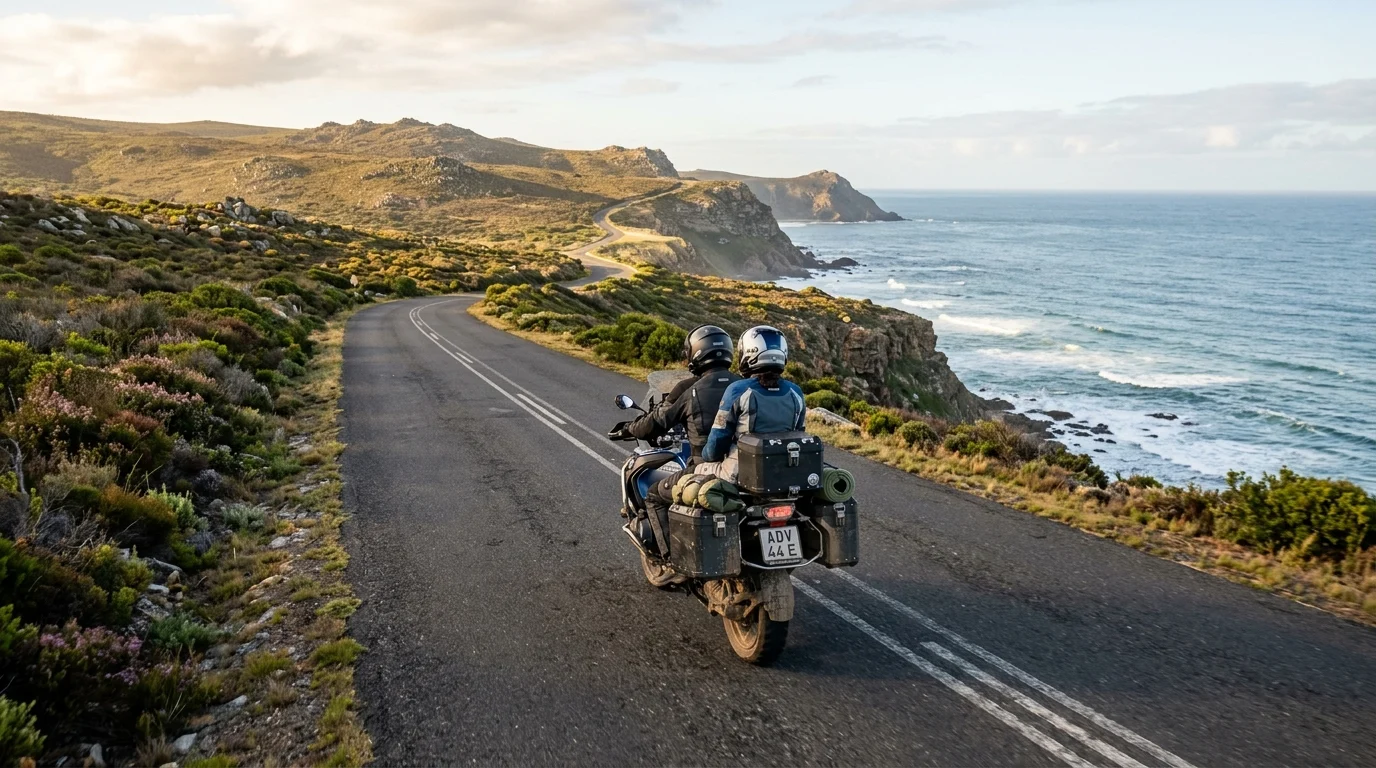
$169 · No mesh · 18 h · 2 riders · 40 mm
Rider and pillion, or you and the same friend every Sunday. That is the whole use case, and for it the 5S is right and everything above is waste. Bluetooth 5.1, 18 hours of talk time, jog dial, music and GPS prompts from your phone.
Be clear about what you are not getting: this is a two-participant headset. Add a third rider and you are back to hand signals.
The Two Models Most Likely to Catch You Out
The Vortex ($189) is not a mesh unit. It is new, it has a striking 27-hour battery, a 37 g magnetic-mount body and wireless charging, and it costs more than the 5S — all of which reads like an upgrade. It connects two riders over Bluetooth. If you buy it expecting to join a group ride, you have bought the wrong thing. For a couple who tour two-up and want the longest battery in the range, it is genuinely good.
The APEX ($265) and APEX Plus ($325) aren’t mesh units either. They’re new in 2026 and cost more than the $239 mesh Spiders, but they are Bluetooth-only: two riders on the APEX, four on the Plus. What they do bring is Bluetooth 6, a replaceable battery with a dual charger, wireless charging, IPX7 and a rated 20 hours of talk time. For a pair or a small fixed group that wants long battery and doesn’t need mesh, they make sense; for a club ride, they’re the wrong shape.
The 30K ($319) is not the bargain the price implies. It runs Mesh 3.0 and holds 24 riders, so it is a real mesh headset — but unlike the 50S and the Spiders, Sena doesn’t list Wave for it. But at $319 it sits $80 above the Spider ST1, which has the same group ceiling and more talk time, and only $60 below the 50S, which has Harman Kardon speakers. It is squeezed from both sides.
What About the Spider X Slim?
$299 · Mesh 3.0 & 2.0 · Wave · 11 h · 23.2 g · IPX7 · Sound by Bose
Launched in June 2026 and the interesting outlier: it is the cheapest Sena with Bose-tuned audio, $140 below the 60S (which stays with Harman Kardon), and it is IPX7.
The trade is physical. The main module weighs 23.2 g because the battery is external, which is the whole design idea — a nearly invisible unit on the helmet shell. Talk time drops to 11 hours as a result, the lowest of any mesh unit here, and the remote battery is another thing to route and another thing to fail.
If a slim helmet profile matters to you and 11 hours covers your days, it is a clever piece of kit. If you ride 12-hour days, it is the wrong end of the range.
Sena vs Cardo, Briefly
If you have not settled on Sena yet, the short version has changed since August: Cardo’s free Mesh Boost update (17 August 2026) took the Packtalk Edge, Pro and Neo to 31 riders in a DMC group, against Sena’s 24, so group size no longer favours Sena. Both brands now push big features to hardware already sold. Sena’s edge is price — mesh from $239 and a $379 50S with Wave — while Cardo’s Packtalk Edge ($439.95 list) has the better speakers and IP67, and the Packtalk Pro ($499.95) is the only unit in either range with automatic crash detection.
Our full best motorcycle intercom systems comparison ranks both brands together and goes deeper on the two units most people cross-shop.
One thing worth knowing whichever brand you choose: intercom volume is not the way to beat wind noise. Measurements of the riding environment put wind noise around 90 dB(A) by 40 mph and climbing steeply from there, so turning the headset up to compete is a bad trade for your hearing. Filtered earplugs let you run it quieter — our motorcycle earplugs guide covers the types that work under a headset.
A Note on These Numbers
Every price and specification above was checked against Sena’s own US store and product pages, and Cardo’s own product pages, on 19 September 2026. Two things follow.
Prices move, and Sena discounts the older models hard — treat the list figures as the ceiling and check the street price before you buy. That discounting is worth planning around rather than stumbling into: helmet and intercom deals covers why a superseded intercom is usually the smart buy while a superseded helmet is a decision you have to make deliberately. And the makers publish some things and not others. Sena now gives an estimate for Wave’s data use (about 9 MB an hour), but still no IP rating for the 50S or 50R, and its Spider RT1 page contradicts itself on talk time. Where a number is missing here, it is missing because we could not source it, not because it was left out for space.
A note on the prices: these are indicative US retail figures as of September 2026, not live quotes. Gear pricing moves constantly and varies by region and retailer — the figure on the linked product page is always the one that counts.
Frequently Asked Questions
What is the best Sena intercom in 2026?
For most riders it is the Sena 50S at $379. Free firmware updates have given it both of the 60 series' headline features: Mesh 3.0, and Wave Intercom through Sena's free Wave app since firmware 2.7 in January 2025. It holds the same 24-rider group mesh and keeps the separate volume controls for music and intercom that 60S owners complain about losing. Pay $439 for the 60S for IPX7 waterproofing, four more hours of mesh battery, AI noise cancellation and a dedicated Wave button — not for Wave itself. If you only ever talk to one other rider, none of the mesh units are worth it and the $169 5S does the job.
Is Mesh 3.0 worth upgrading for?
Not on its own, because you may already have it. Sena has pushed Mesh 3.0 to the 50S and 50R by free firmware — the last of them, the original 50S-01 and 50R-01 part numbers, got it with version 1.5 in March 2025 — and the 30K and Spider ST1 run it too. Most of Sena's mesh range is now on the current protocol, so 'Mesh 3.0' on a product page is a poor way to choose between Sena models. Update your existing headset through the Sena app before you spend anything.
What is the cheapest Sena with mesh?
The Spider ST1 and Spider RT1, both $239. Below that everything is Bluetooth — the $189 Vortex, the $169 5S — but price alone won't tell you, because the older 10S ($269) and the new APEX ($265, or $325 for the four-rider APEX Plus) cost more and are Bluetooth-only too. The Vortex is the one that catches people out — it launched recently, it has a 27-hour battery, and it is not a mesh device.
What is Wave Intercom and does it cost extra?
Wave routes the conversation over your phone's cellular data instead of radio, so range stops being a limit and Sena describes it as supporting a virtually unlimited number of participants. Sena lists it on the 60 series and Spider X Slim and also on the 50S, 50R, Spider ST1 and RT1, where you start it by double-tapping the Mesh button with the Wave app running; you can even join from the app without a Sena headset. The app is a free download and as of September 2026 Sena lists no subscription fee. Sena estimates the data use at about 9 MB an hour (90 MB over ten hours). The catch is signal: in the empty country where range matters most, Wave drops and Sena moves the group back onto a mesh channel.
Should I buy the 60S or wait for problems to be fixed?
The 60S had a rough launch. Sena ran no-cost swap programmes for an early bricking fault and again for a voice-clipping fault, and owners on long-distance forums still report that noise cancellation trails Cardo and that mic sensitivity needs manual tuning. The most common complaint is a design choice rather than a bug: the 60S has one volume control where the 50S and 20S had separate volume for music and intercom, and several owners call that a deal-breaker. Firmware has improved things. If you want a headset that simply works, the 50S is the safer money.