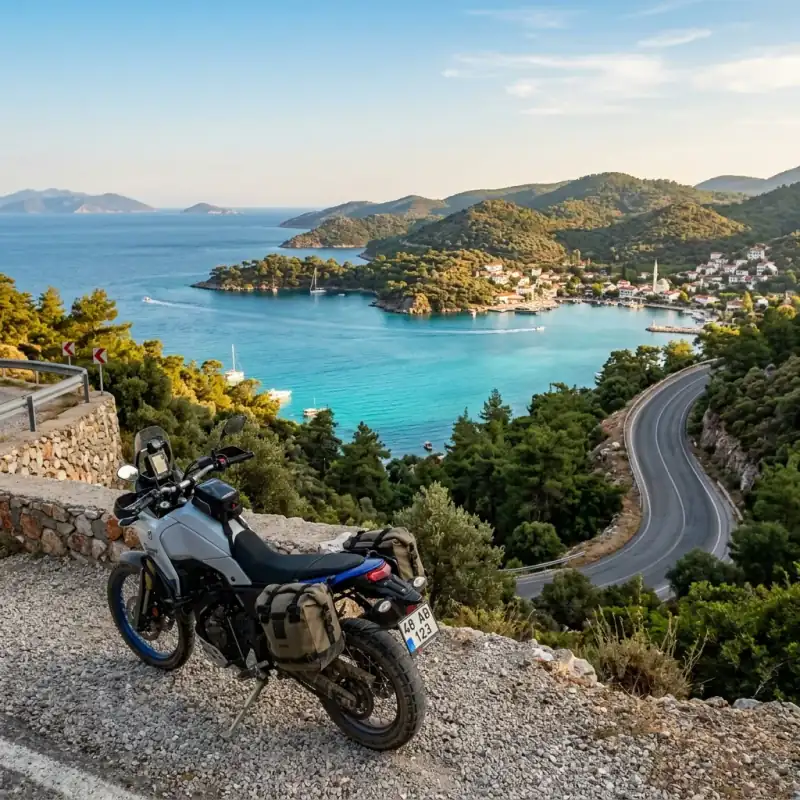
Most riders treat the Aegean as the boring bit you get out of the way before the Lycian coast. They land in İzmir, point the bike south on the inland highway, and don’t really look up until Fethiye. Do exactly that and you’ll spend a long time regretting how much you rode straight past.
Give the Aegean its own week instead. İzmir to Marmaris, the slow way, hugging the coast through the Çeşme and Bodrum peninsulas, across the water on the little car ferry to Datça, and out along a peninsula spine road that stands up against any coastal road in Turkey. Six days, somewhere north of 600 kilometers, ancient cities most riders have only ever seen in textbooks, and water clear enough that the stopping becomes the point.
This is that trip — a route that treats the Aegean as a destination instead of a corridor. It threads İzmir down to Marmaris through the towns and ruins worth your time, and it ends exactly where the Lycian Way route begins, so the two stitch together into a fortnight of the best coastal riding in the country.
Why Ride the Aegean Instead of Blasting Past It
Turkey’s two great southern coasts have completely different characters. The Mediterranean — the Lycian coast — is dramatic and vertical, the road carved into cliffs hundreds of meters above the sea. The Aegean is gentler and older. The hills roll instead of plunge, the bays are wider and softer, and the whole coast is studded with the ruins of the Ionian Greek world: Ephesus, Priene, Miletus, Didyma, Teos, Knidos. You ride between them on back roads through olive groves and pine, and every second headland hides a cove.
The riding itself is varied in a way the Lycian coast isn’t. You get fast sweeping coastal sections around the Çeşme peninsula, tight technical back roads through the hills behind Seferihisar, flat fertile valleys around the Büyük Menderes delta, and then the brilliant Datça peninsula ridge road to finish. It’s not one road repeated for 500 km. It’s a dozen different roads strung together.
And it’s quiet. Outside the resort cores of Çeşme and Bodrum, the Aegean back roads carry almost no traffic in shoulder season. Whole afternoons on the Datça peninsula pass with more goats on the road than cars.
The Route at a Glance
| Day | Stage | Distance | Highlight |
|---|---|---|---|
| 1 | İzmir → Çeşme / Alaçatı | 85 km | Cobbled Alaçatı, windmills, Delikli Koy |
| 2 | Çeşme → Sığacık (via Urla) | 90 km | Teos ruins, Sığacık marina |
| 3 | Sığacık → Selçuk / Kuşadası | 95 km | Ephesus, Şirince village |
| 4 | Kuşadası → Bodrum (via Didim) | 150 km | Priene, Miletus, Didyma; Bodrum castle |
| 5 | Bodrum → ferry → Datça | 55 km + ferry | Körmen ferry, Knidos at land’s end |
| 6 | Datça → Marmaris (Akyaka detour optional) | 75–135 km | Peninsula ridge road, Gökova gulf |
Total: roughly 550–610 km of riding across six days, plus the ferry, depending on the Akyaka detour. Most days are short — two to three hours in the saddle, the rest of the day yours for ruins and swimming. Day 4 is the only genuinely long one.
Day 1: İzmir to Çeşme and Alaçatı (85 km)
Start in İzmir. It’s the natural western anchor — a big, easygoing port city with bike shops, every grade of hotel, and the best seafront promenade in the country to walk off your jet lag the evening before you ride. Fuel up here; İzmir’s stations are slightly pricier than the national average but it’s the last big city before the peninsula.
Leave the city westbound. You’ve got two choices: the fast Çeşme otoyolu (toll motorway, dull but quick) or the older coastal road through the seaside suburbs. The efficient version takes the motorway as far as Urla to clear the city sprawl, then drops onto the back roads. Within an hour the land opens into the Çeşme peninsula — low scrubby hills, vineyards, wind turbines spinning on the ridges, because this is one of the windiest corners of the Turkish coast.
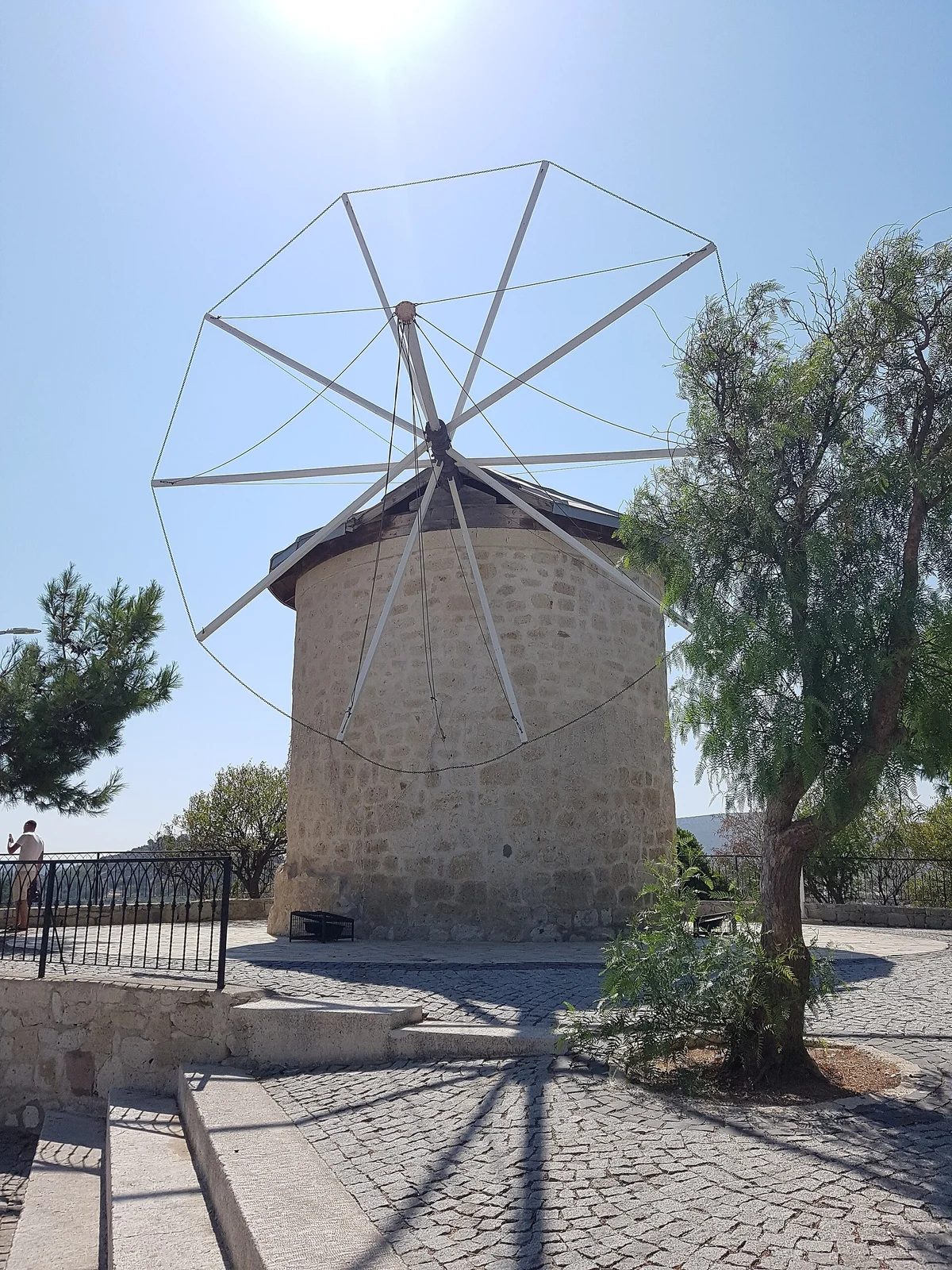
Çeşme itself is a tidy resort town under a well-preserved Genoese castle. Worth a coffee on the harbor, but the real prize is 10 km east: Alaçatı. Cobbled streets, restored stone Greek houses draped in bougainvillea, old stone windmills on the hill above town, and a windsurf bay that’s world-famous in the sport. It’s touristy, but earned-touristy. Stay the night here.
If you want a swim before dinner, Delikli Koy is a short ride out toward the windsurf zones — a surreal white-limestone cove covered in our Turkish bays guide. Easy to reach, clear water, the kind of place that resets your idea of what the Aegean looks like.
Road notes: Motorway then good back-road tarmac. Crosswinds on the peninsula are real. The same wind that powers the turbines will nudge a light bike around. Keep a relaxed grip and expect it.
Day 2: Çeşme to Sığacık via Urla (90 km)
Backtrack east toward Urla, then drop south onto the Seferihisar road. This is the day the route gets quiet. The back roads behind Seferihisar wind through tangerine groves and low pine hills, and the traffic basically disappears.
Stop at Teos, the ruins of an Ionian city scattered across olive terraces near the coast — a temple of Dionysus, a half-buried theater, and almost no other visitors. It’s the kind of ruin you wander alone, which Ephesus most definitely is not.
Push on to Sığacık, a small fishing town wrapped inside a restored Ottoman fortress with a modern marina tucked alongside. Seferihisar is officially Turkey’s first “Cittaslow” (slow city), and you feel it. The pace here is half a gear slower than anywhere else on the coast. Eat at the harbor, where the day’s catch is grilled in front of you. Stay the night inside or just outside the old walls.
Road notes: Quiet, twisty hill roads. The most fun back-road riding of the first half. Surface is mostly good with the odd patched section. No fuel anxiety; Seferihisar town has stations.
Day 3: Sığacık to Selçuk and Kuşadası (95 km)
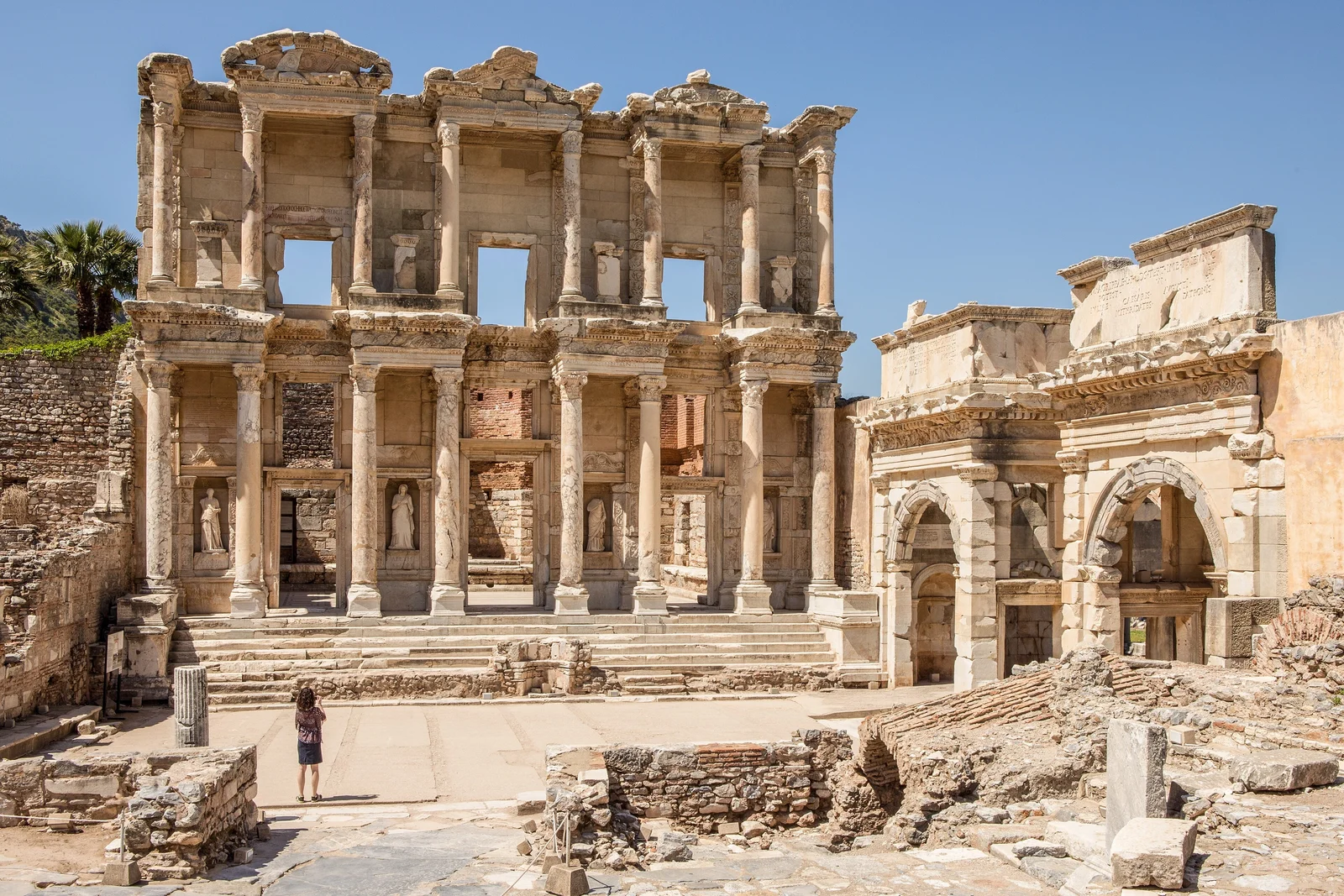
Ride inland and south toward Selçuk, the small town that sits beside the greatest ruin in the country: Ephesus. Park the bike and give it three or four hours. The Library of Celsus, the great theater, the marble main street. It deserves the hype, and going early before the cruise-ship buses arrive from Kuşadası makes all the difference. Get there at opening.
A few kilometers up into the hills above Selçuk is Şirince, a former Greek village of stone-and-plaster houses famous for its fruit wines. The road up is a short, sweet climb and the village makes a perfect long lunch.
Drop down to the coast at Kuşadası for the night. It’s a busy cruise port and not the prettiest town on the route, but it’s a practical, cheap overnight with everything you need. If you’d rather stay quieter, base in Selçuk itself.
Road notes: Easy roads, more traffic near Selçuk and Kuşadası. Watch for tour buses on the Ephesus approach.
Day 4: Kuşadası to Bodrum via the Ancient Cities (150 km)
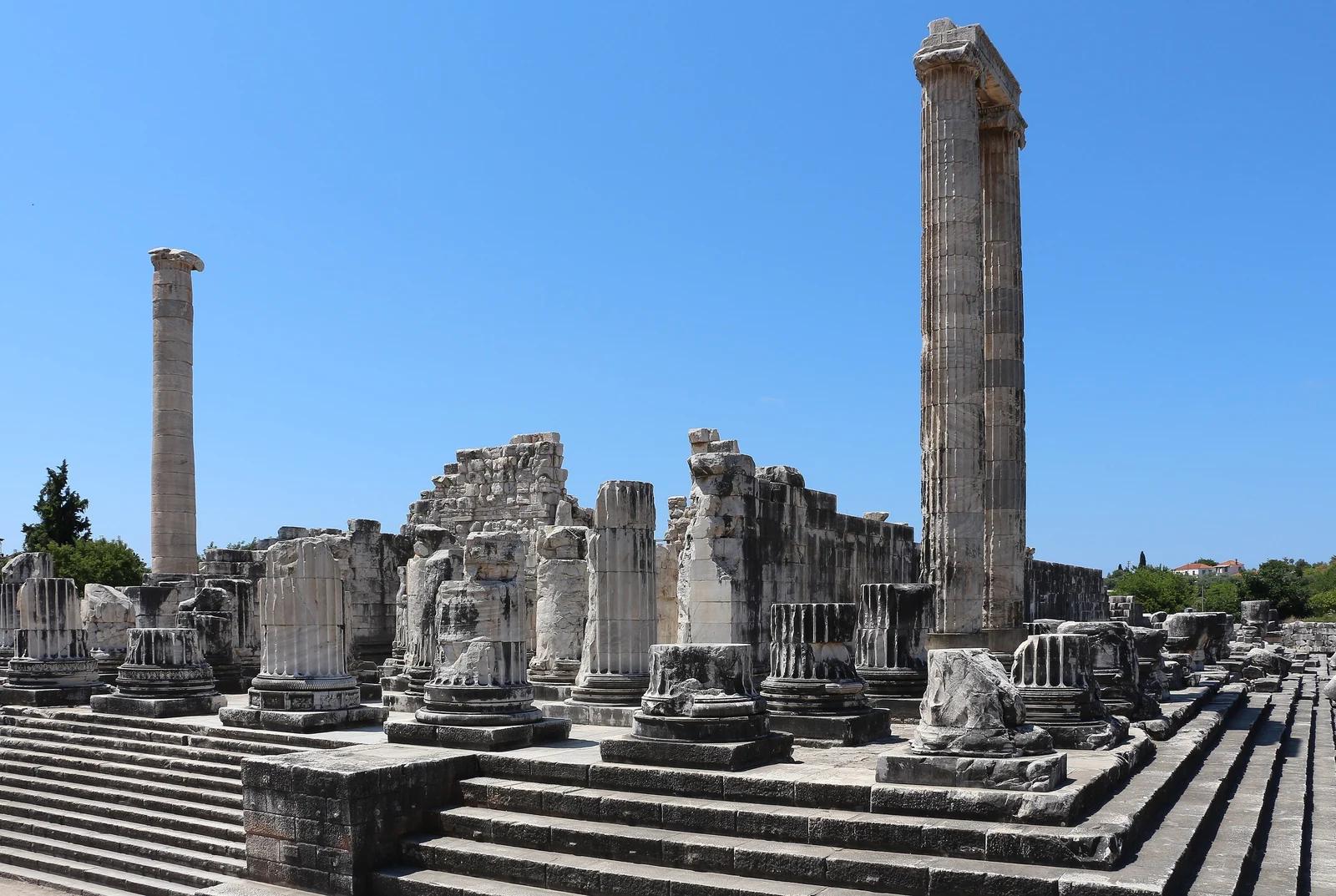
The long day, and the most history-dense stretch of the whole route. From Kuşadası, ride south across the Büyük Menderes (ancient Maeander) delta — flat, fertile, fast — with three of the Ionian world’s great cities strung along the way.
Priene sits on a terrace against a cliff, the best-preserved Greek city plan in Anatolia, with a temple of Athena framed against the valley. Miletus spreads across the plain below, its enormous theater still dominating the flat farmland that was once a harbor. And Didyma (modern Didim) holds the colossal Temple of Apollo — columns so big the scale doesn’t register until you’re standing under them. You can’t do all three in real depth in one day; pick two, ride past the third.
From Didim, the road runs down to the Bodrum peninsula. Bodrum town is the glossiest place on the route — a whitewashed resort under the Castle of St Peter, a Crusader fortress that houses the superb Museum of Underwater Archaeology. It’s expensive and busy, but the castle and the marina at sunset are worth one night.
Road notes: Fast delta roads in the middle, busier dual carriageway approaching Bodrum. This is the day to start with a full tank and not dawdle at the first ruin. Fuel widely available.
Day 5: Bodrum to Datça by Ferry (55 km + the crossing)
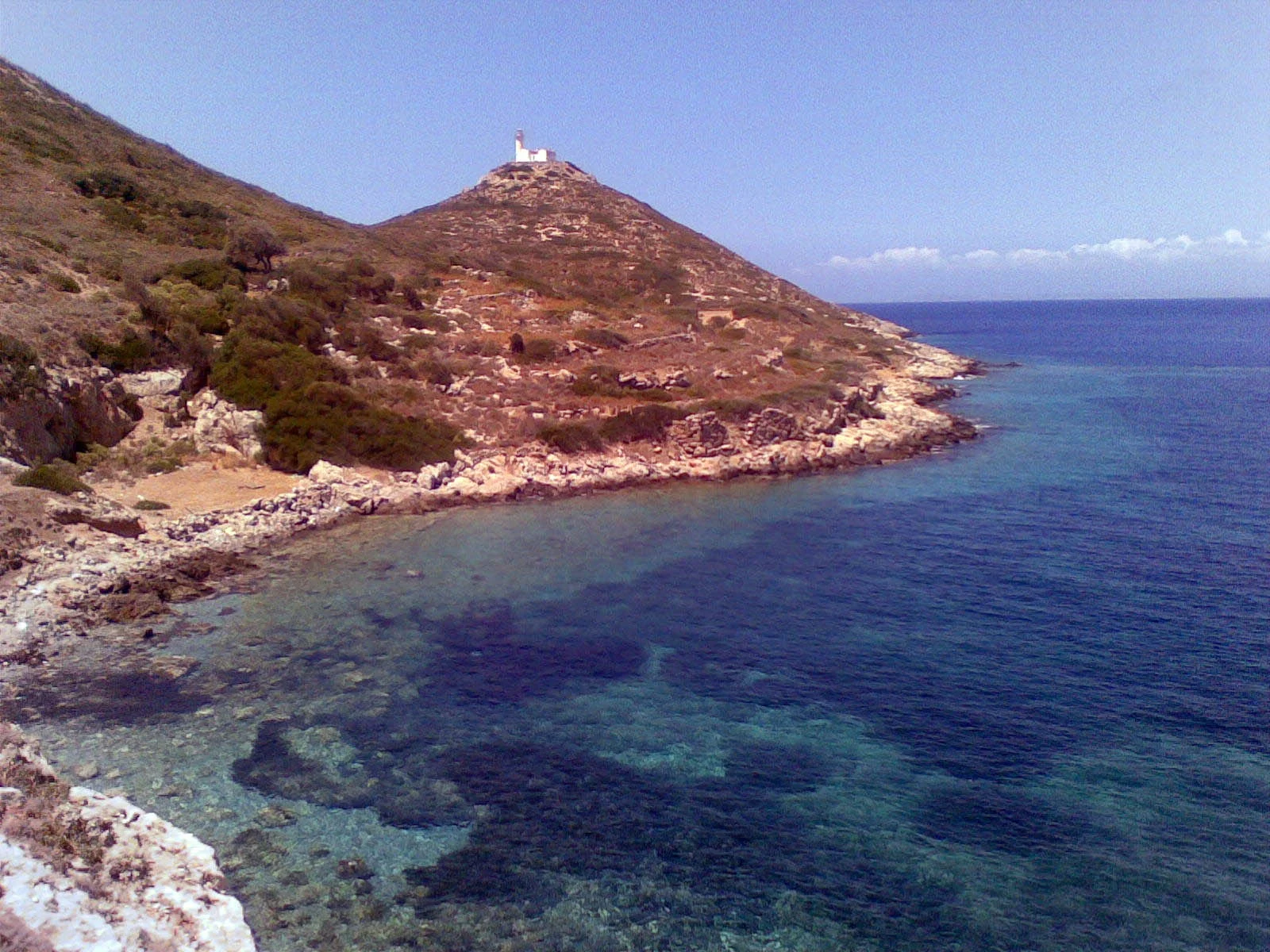
This is the day the trip changes gear. Rather than ride 250 km of inland highway around the head of the Gökova gulf, you put the bike on a boat.
The Bodrum–Datça car ferry runs from Bodrum across to Körmen, a small harbor 9 km northwest of Datça town. The crossing takes around an hour and a half to two hours, sailings are most frequent in summer and thinner in spring and autumn (check the timetable the night before), and it takes motorcycles for a modest vehicle fee on top of your ticket. Roll on, strap down or just leave it on the sidestand if the crew says so, and spend the crossing on deck watching the Datça peninsula rise out of the haze. It’s the most relaxing stretch of the whole route.
From Körmen it’s a short ride into Datça town — a low-key harbor town that feels a world away from Bodrum’s gloss. This is your base. If you’ve got the afternoon and the appetite for a little gravel, ride out to Knidos at the very tip of the peninsula, about 35 km west, where the Aegean meets the Mediterranean. The road narrows and slows towards the end, so check its condition before you set off, and the ruins sit on a windswept double-harbor headland that was one of the great cities of the ancient world. Sunset out there is something you don’t forget.
Road notes: Book the ferry in advance in summer; it sells out for vehicles. Carry water for the Knidos run. The tip of the peninsula has little out there.
Day 6: Datça to Marmaris via the Peninsula Ridge
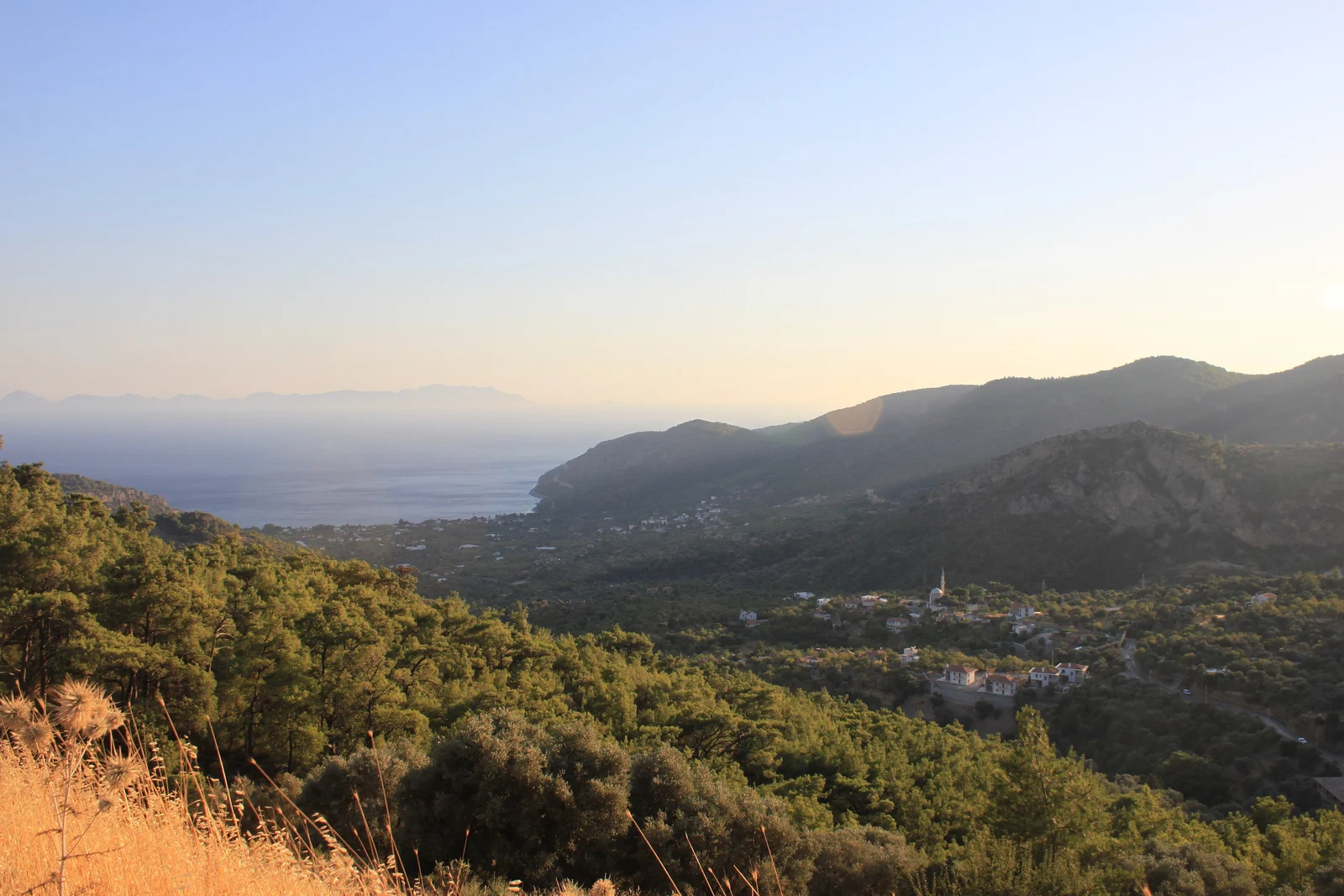
Save the best riding for last. The road from Datça back toward the mainland runs along the spine of the peninsula — a quiet, rolling ridge road through almond and olive country with the sea flashing on both sides. There’s barely any traffic, the corners come in long relaxed sequences, and the scent of the maquis on a warm afternoon is half the reason to ride a motorcycle in the first place. It’s about 75 km to Marmaris direct, and it’s worth a trip on its own.
As you near the mainland the road drops to the Gökova gulf. If you’ve got time, detour to Akyaka, a pretty timber-housed village at the head of the gulf, and ride a little of the brilliant forest road along the water. It’s the same gulf road that leads to the coves around Akbük in our Turkish bays guide. Then it’s a short run into Marmaris, a big, brash resort town that makes a logical end point — or, better, a refuel stop before you carry straight on east into the Lycian coast.
Road notes: The peninsula ridge is the riding highlight — sweepers, light traffic, good surface. The Gökova gulf road is twistier and forested. Marmaris traffic builds in the last 10 km.
What Riding the Aegean Costs in Fuel (2026)
This is where the small bike earns its keep. As of mid-2026, unleaded 95 in Turkey runs around ₺63 per litre nationally, with İzmir and the coast a touch higher at roughly ₺66. Turkish fuel prices move with the lira, so treat these as a snapshot and check at the pump. But the upshot doesn’t change: this is one of the cheapest coasts in Europe to ride.
On a small single like a CFMOTO 250NK, sipping around 3.5 litres per 100 km, the entire İzmir-to-Marmaris run of roughly 600 km works out at around 21 litres — call it ₺1,300-1,400 of fuel for the whole trip. Even on a thirsty 1200cc adventure bike doing three times that, you’re looking at a fraction of what the same distance would cost you anywhere in Western Europe. Diesel sits a hair above petrol at around ₺65. There are no fuel deserts on this route; the longest gap is the Datça peninsula, where you should top up in Datça town before the Knidos run.
Aegean Route Packing Notes
Beyond your standard touring kit, what the Aegean specifically asks for:
- Swimming gear within easy reach. You’ll stop for water two or three times a day (200 g)
- SPF50+ sunscreen; the Aegean sun is deceptive in shoulder season (100 g)
- Offline maps for İzmir, Aydın and Muğla provinces
- Turkish lira in cash for rural fuel, the ferry, and village lunches
- A light dry bag for wet swim gear between stops (50 g)
- Earplugs and a relaxed grip for the Çeşme peninsula crosswinds
If you’re planning to wild camp the bays along the way rather than hotel-hop, layer in a lightweight tent, a compact sleeping pad, and a small camp stove. The linked guides cover the specific picks worth running.
Best Season and Weather
May to mid-June: the best overall window. Green hills, wildflowers, daytime 22-28°C, sea warming to swimmable, light traffic everywhere.
Mid-September to mid-October: the other sweet spot. Warm sea left over from summer, stable settled weather, and the resort towns empty out as the domestic holiday season ends.
July-August: avoid if you can. The Çeşme and Bodrum peninsulas fill with domestic tourists, traffic snarls on the resort approaches, prices double, and the heat makes the inland delta day genuinely unpleasant.
November-March: rideable but a different trip. Mild and quiet, occasional rain, many coastal restaurants shut, no swimming. The Datça peninsula stays beautiful and almost empty.
Related Guides
- For how the Aegean fits alongside the rest of the country — and how long a full Turkey trip really wants to be — see our ultimate Turkey motorcycle tour guide.
- It ends where the Lycian Way motorcycle route begins; ride the two back to back for a two-week southern Turkey loop.
- For the best bays on this coast and across the country, see the most beautiful bays in Turkey you can reach by motorcycle.
- For the rules, seasons and best regions, read wild camping in Turkey on a motorcycle.
- To see how this coast ranks against the rest of the region, see the best coastal motorcycle routes in the Mediterranean.
This guide is compiled from published route information, local authority sources and rider reports. Some links in this article are affiliate links — if you buy gear through them, we may earn a small commission at no extra cost to you.
Frequently Asked Questions
How many days do you need for the İzmir to Marmaris Aegean route?
Six riding days is the sweet spot, plus a day either side for arrival and departure. You can blast İzmir to Marmaris in two long days if you stay on the inland highways, but you'd skip everything that makes the Aegean worth riding — Alaçatı, Sığacık, Ephesus, the Datça peninsula. The actual saddle time across six days is only about 16-18 hours; the rest is ruins, swimming, and the kind of long Aegean lunches you don't rush.
Do I have to take the Bodrum–Datça ferry, or can I ride around?
You can ride around the head of the Gökova gulf via Milas, Yatağan and Muğla, but it's roughly 250 km of mostly inland road versus a 1h45 ferry hop across the water. Take the ferry. It lands at Körmen, 9 km northwest of Datça town, runs up to three or four times a day in summer (fewer in spring), and takes motorcycles for a small vehicle fee. It's the most relaxing 105 minutes of the whole trip and it drops you straight onto the best peninsula in the Aegean.
Is this route OK on a small bike like a CFMOTO 250 or a scooter?
Yes. Riders do the whole thing on bikes as small as a 250 and never wish for more. The route is paved highway and back-road tarmac the entire way — the only gravel is the optional last 8 km out to Knidos at the tip of the Datça peninsula, which you can skip or walk. A 250-400cc bike is honestly the ideal tool here: light enough to enjoy the twisty peninsula roads, cheap to fuel, and easy to thread through Bodrum's summer traffic. A maxi-tourer works fine too, it's just less fun on the tight stuff.
When is the best time to ride the Aegean coast?
May, June, September and early October. Spring brings green hills, wildflowers and cool mornings; autumn gives you warm sea, stable weather and quiet towns once the August crowds clear out. Avoid July and August — the Çeşme and Bodrum peninsulas fill with domestic holidaymakers, traffic clogs, accommodation doubles in price, and the heat sits at 35°C-plus. The Aegean is a shoulder-season coast.
How much does the trip cost per day in 2026?
On a small bike, fuel for the whole İzmir–Marmaris run is almost trivial — see the fuel section below. Budget around €45-70 per person per day for moderate comfort: a pension or small hotel, local meals, the ferry, and a museum or boat trip here and there. Wild camping and self-cooking drops it to €20-30. The Çeşme and Bodrum peninsulas are the expensive stretches; the Datça side and the inland towns around Selçuk are noticeably cheaper.