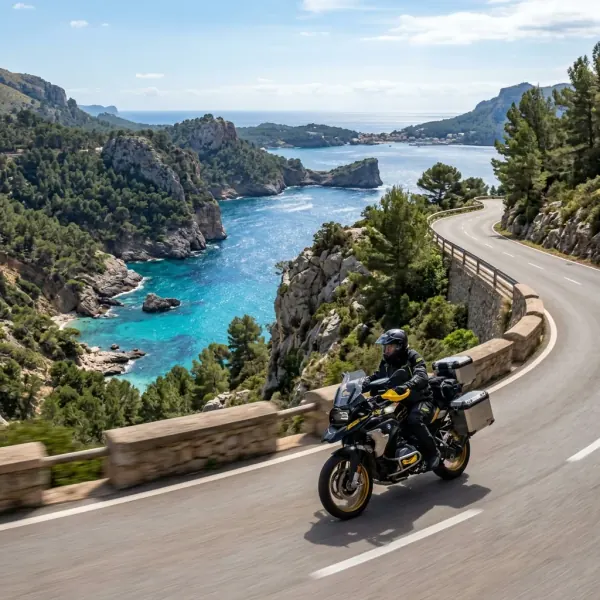
The first time I rode in Greece I’d planned to spend the whole trip on the islands. Ferry to Naxos, ferry to Crete, ferry back. By day five I was exhausted from constant logistical management — ferry schedules, vehicle deck loading, finding accommodation when each new island had different rules. I took a chance on the mainland for the last week. Rode the Peloponnese south through the Mani Peninsula and ended up sleeping at a campground in Gythio under olive trees with a beach 30 meters away.
That last week was the best week of the trip. The mainland Greece I’d skipped on the way to the islands turned out to be the Greece I’d actually come for — empty roads, dramatic coastline, small fishing harbors, and a genuine wild camping culture that doesn’t exist on the popular islands.
This guide is the working version. Top seaside campgrounds in Greece for motorcycle travelers — the eight sites that have earned a place on my repeated-trip list, with the access, prices, and the realistic version of what camping in each is like.
Greece Beyond the Islands — Camping the Mainland Coast
The Greek islands dominate the tourist imagination of Greece. Santorini, Mykonos, Crete, Rhodes — all real and beautiful, all easier to visit by plane than by motorcycle. The mainland coast — particularly the Peloponnese, Mani, and Pelion regions — is where motorcycle riders find the Greece that suits the form of travel.
The Peloponnese is a large peninsula in southern Greece, connected to the mainland by the Corinth Canal. It’s the size of Wales, has 1,800 km of coastline, and contains some of the most significant archaeological sites in Europe (Olympia, Mycenae, Sparta) alongside dramatic mountain roads and quiet coastal villages. The Mani Peninsula is the southernmost finger of the Peloponnese, historically remote and culturally distinct.
The Pelion peninsula in central Greece (between Volos and the Aegean) is a forested mountain range that drops directly to the sea — Greek mainland’s answer to the Italian Amalfi but with a fraction of the tourists.
All three regions have established campgrounds, tolerant wild camping, excellent roads, and prices significantly below Western European equivalents.
What Motorcycle Travelers Need to Know About Camping in Greece
A few practical points before the site list:
Established vs wild. Greek campgrounds (camping in Greek: κάμπινγκ) are family-run businesses, typically open April-October. Prices €15-30/night for a small tent plus rider. Facilities range from basic to good. Wild camping is technically illegal but tolerated in remote rural areas.
Cash. Many Greek campgrounds and rural shops are cash-only or prefer cash. Carry €200-400 in euros for a 1-2 week trip. ATMs widely available in towns; rare in rural areas.
Ferries. Reaching Greek islands with a motorcycle is straightforward but requires planning. Book vehicle slots ahead in summer. Bring tie-down straps for the ferry deck if you have specific bike-securing preferences.
Mosquitoes. A real consideration in coastal Greek camping. DEET-based repellent, mosquito coils, and a tent with good mesh are the right preparation.
Language. Tourist coastal areas have good English. Inland and rural areas don’t. Learn a few basic Greek words (kalimera = good morning, efharisto = thank you, parakalo = please) and use Google Translate offline for serious conversations.
The Peloponnese: The Mainland’s Best Camping Coast
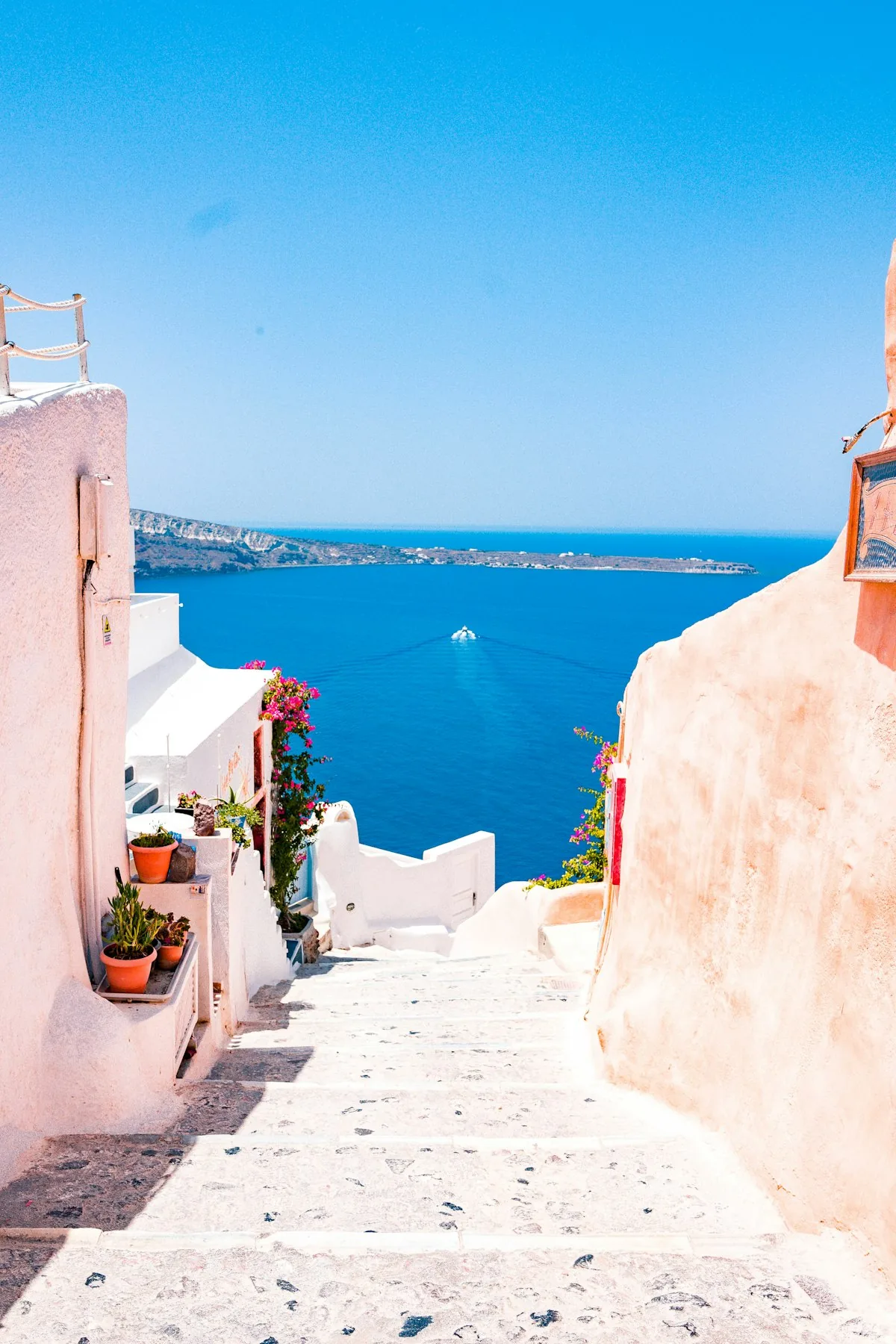
The Peloponnese is the right place to start a Greek mainland camping trip. Three established sites and an entire coastline of wild camping options.
1. Gythio Bay Camping, Laconia
Location: 6 km north of Gythio town on the eastern Mani coast.
What it’s like: Family-run campground under mature olive trees, 50 meters from a small pebble beach. Covered motorcycle parking available. Hot showers, restaurant on-site, small shop for basics. The owner speaks excellent English and motorcycle-friendly from years of touring rider customers.
Price 2026: €18-22 per night for tent plus one rider.
Why it works: Positioned at the gateway to the Mani Peninsula — one of the best mainland motorcycle riding regions in Greece. Two nights here lets you do a full Mani loop ride during the day and return to a comfortable base.
2. Camping Kalogria, Patras Area
Location: 35 km west of Patras on the northwestern Peloponnese coast.
What it’s like: Larger campground with grass pitches, hot showers, swimming pool, and direct beach access. Good restaurant on-site. Popular with European families in summer but quiet enough in shoulder season.
Price 2026: €22-28 per night for tent plus one rider.
Why it works: Good first-night stop after the ferry from Italy (Brindisi-Patras, Ancona-Patras). Lets you rest before launching into Peloponnese touring. Decent base for ancient Olympia (60 km inland).
3. Nafplio Area Campsites, Argolic Gulf
Location: Several campsites along the Argolic Gulf near Nafplio.
What it’s like: Varies by specific site. The town of Nafplio itself is the first capital of modern Greece, walkable, with excellent restaurants and historic architecture (Palamidi fortress). Campsites range from beach-focused to family-resort-style.
Price 2026: €18-25 per night.
Why it works: Central Peloponnese position, easy day rides to Mycenae (UNESCO ancient site), Epidaurus theater, and the Argolic Gulf coast.
The Mani Peninsula: Wild Camping at Europe’s Southern Tip
The Mani is the southernmost finger of mainland Europe (excluding the very southernmost Greek islands). Wild camping is widely tolerated, the landscape is stark and dramatic, and the cultural distinctiveness (tower houses, Maniot dialect, blood feud history) makes the region feel like a separate country.
4. Stoupa Wild Camping Area
Location: Stoupa village on the western Mani coast.
What it’s like: Stoupa itself has a small organized campground in summer (Camping Kalogria, separate from the Patras-area site), but the better option is wild camping at the headlands north and south of the village. Multiple small pull-offs accessible by motorcycle, with flat ground for tents and sea views.
Price: Free for wild camping; €15-20 at the organized site.
Why it works: Stoupa is a quiet fishing village turned modest tourist town. Good seafood restaurants in the village, excellent swimming, and the wild camping spots stay quiet outside peak August.
5. Gerolimenas Village — Remote Bay Camping
Location: Gerolimenas, far southwestern tip of the Mani Peninsula.
What it’s like: Gerolimenas is one of the most remote villages in mainland Greece. Tower houses, a small harbor, and a famously good seafood restaurant (Akrotiri). Wild camping is widely tolerated in the rocky headlands around the village.
Price: Free for wild camping.
Why it works: This is what people imagine when they hear “remote Greek coastal camping.” Almost no infrastructure, almost no tourism, almost no traffic. Bring everything you need — water, food, fuel. Two nights here is the highlight of a Peloponnese trip.
The Islands: Accessible by Ferry with Your Motorcycle
For riders who want to combine mainland and island camping:
6. Maragas Beach Camping, Naxos
Location: Maragas Beach, 15 km south of Naxos town.
What it’s like: Beachfront campground on one of the longest sandy beaches in the Cyclades. Bamboo-shaded pitches, hot showers, beach bar on-site. Easy 4 km ride to the next beach (Plaka) for variety.
Price 2026: €20-26 per night.
Why it works: Naxos is the largest and most agriculturally rich Cycladic island. Easier to ride a motorcycle than Santorini or Mykonos. Maragas is the right base for a 3-4 night Naxos visit with day rides to Filoti, the Tragea Valley, and the mountain village of Apeiranthos.
7. Lefkada Beach Camping (Off-Season)
Location: Various sites on the western coast of Lefkada Island.
What it’s like: Lefkada is unique among major Greek islands in being accessible by a bridge from the mainland — no ferry required. The western coast has dramatic cliff beaches (Egremni, Porto Katsiki, Kathisma). Camping is tolerated on smaller beaches off-season; the main beaches have organized campgrounds in summer.
Price 2026: €18-25 in established sites.
Why it works: Bridge access from the mainland, dramatic western beaches, and a tolerant wild camping environment in shoulder season. Best in May-June or September.
8. Pelion Peninsula Coastal Sites
Location: Various sites on the Aegean coast of the Pelion peninsula, central Greece.
What it’s like: The Pelion is a forested mountain peninsula that drops directly to the Aegean Sea. The coast has small pebble bays, traditional villages, and a green hinterland of chestnut and beech forests. Established campgrounds (Camping Sikia, Hiliadou Beach) plus tolerated wild camping.
Price 2026: €18-24 in established sites.
Why it works: Pelion is mainland Greece’s most underrated motorcycle destination. The road network includes some excellent mountain switchbacks (the road from Tsagarada to Kissos) and coastal corniches. Less crowded than any island. Year-round services in major villages (Tsagarada, Zagora).
Greece Camping Rider Checklist
What you actually carry beyond standard touring gear:
- Ferry booking if crossing to islands with motorcycle (0 g)
- Cash in euros — many Greek campsites cash only (minimal)
- Arrive before 20:00 — reception closes early at most sites (0 g)
- Mosquito repellent — coastal evening essential (80 g)
- Water filter — wild camping water sources variable quality (85 g)
- Lightweight tarp as shade supplement to tent (400 g)
The lightweight tarp point is more useful than people expect. A 2x3 meter ultralight tarp strung between trees adds 5-10 degrees of shade to a hot tent. In Greek summer, an unshaded tent becomes uninhabitable from 11:00 to 17:00. A tarp lets you actually use the campground during the day.
Check DEET Mosquito Repellent on Amazon →
Check Ultralight Camping Tarps on Amazon →
Wild Camping Laws in Greece
The legal framework: a 1969 decree banning camping outside designated areas remains technically in force. Enforcement is selective. Tourist beaches and national parks are actively policed. Remote rural areas are not.
In practice for motorcycle riders:
- Remote Peloponnese coastline: tolerated, almost no enforcement
- Mani Peninsula: tolerated, widely practiced
- Lefkada off-season: tolerated on smaller beaches
- Pelion mountain coast: tolerated in remote spots
- Famous islands’ tourist beaches: actively policed, fines real
- National parks: restricted, enforcement variable
The principle: one night, remote location not visible from roads, no fires, no music, leave no trace, arrive late and leave early. Get all of these right and your wild camping in Greece will go unnoticed and unchallenged. Get any of them wrong and you might draw attention.
For the broader Mediterranean wild camping framework, see best wild camping bays in the Mediterranean.
Internal Connections
This guide pairs with related content:
- Best wild camping bays Mediterranean — Greek bays in regional context
- Solo motorcycle camping safety for remote tenting — applies directly to Mani Peninsula wild camping
- Naturehike Cloud Up 2 review — the budget tent that handles Greek summer camping
FAQ
Five common questions are answered at the top of this page. The short version: mainland Greece beats the islands for motorcycle camping, the Peloponnese and Mani are the best regions, wild camping is tolerated in remote areas, and mosquito repellent is non-negotiable.
Whatever your version of a Greek camping trip looks like, the top seaside campgrounds in Greece for motorcycle travelers principle is consistent — base yourself at established campgrounds for the comfort nights, use wild spots for the experience nights, and ride the empty mainland roads that don’t show up in tourist marketing. The Greece that suits motorcycles isn’t the one that ends up on Instagram.
Disclosure: Some links in this article are affiliate links. If you buy gear through them, we may earn a small commission at no extra cost to you.
Frequently Asked Questions
Is wild camping really legal in Greece?
Technically illegal under a 1969 decree, but enforcement varies sharply. On the popular islands (Mykonos, Santorini, Crete near tourist beaches) enforcement is active and fines are real. On the Peloponnese mainland, the Mani Peninsula, and the Pelion coast, tolerance is high in remote areas — discreet one-night camping rarely draws attention. The rule: away from villages, away from established beaches, no fires, leave no trace, one night, arrive late and leave early. Greek police are generally relaxed about respectful campers.
Can I take my motorcycle on Greek ferries to the islands?
Yes, all major Greek ferry routes accept motorcycles. Pricing is typically €25-60 for the motorcycle plus passenger fares. Bikes load first or last depending on the ferry. You'll be directed to a vehicle deck and the crew will help with tie-down straps. Book ahead in summer — popular routes (Piraeus to Santorini, Igoumenitsa to Corfu) sell out vehicle slots 2-4 weeks ahead in peak season. Smaller routes typically have space until 1-2 days before.
What's camping in Greece actually like?
Variable. Established campgrounds range from basic (gravel pitches, cold-water showers, basic toilet block) to comfortable (grass pitches under shade trees, hot showers, beachfront bar). Most coastal campgrounds are family-run, accept motorcycles enthusiastically, and charge €15-25 per night for a small tent plus rider. Cash is preferred. Reception staff often speak good English in tourist areas. Greek campgrounds close from October-March; only year-round sites operate off-season.
Are mosquitoes really that bad in Greece?
In coastal areas in summer — yes. Evening and early morning are the worst hours. Mosquito repellent containing DEET (30%+) is essential for any coastal camping. Citronella candles help in calm conditions. A mosquito coil burned upwind of your tent at sunset reduces evening attacks significantly. The mosquitoes don't carry serious disease in Greece, but the bites are annoying enough to ruin sleep without protection.
What's the best Greek campground for motorcycle riders specifically?
Gythio Bay Camping on the Peloponnese gets my vote. Family-run, motorcycle-friendly (covered parking available), beachfront pitches under olive trees, and positioned at the gateway to the Mani Peninsula — one of the best mainland motorcycle areas in Greece. Cash only, around €18-22/night, English-speaking owners. Spend two nights, use it as a base to ride the Mani.