The Naturehike Cloud Up 2 occupies an unusual position in the lightweight tent market. It is built and priced as a budget tent — typically $90-110 on Amazon — but its construction, weight, and waterproofing specifications place it firmly in territory where premium brands charge $400-500 for the same numbers.
This naturehike cloud up 2 review examines whether the spec-sheet match-up holds up under real-world use. The Thrash-Meter on this site logs 34 nights of testing on the Cloud Up 2 across mixed conditions, returning a 70% life-remaining estimate. That informs the long-term assessment that follows.
Introduction: A Premium Tent Spec at a Budget Price
The motorcycle camping tent market is bimodal. At the low end, $40-80 tents from generic Amazon brands offer 1.5-2.5 kg weights with thin polyester fabrics and PU coatings that fail after a few rainstorms. At the high end, $400-600 tents from Big Agnes, MSR, Nemo, and Hilleberg deliver 1.0-1.6 kg weights with 20D silicone-nylon fabrics and DAC aluminium poles.
The Cloud Up 2 sits oddly in the middle. The fabric is 20D silicone-coated nylon — the same specification as the Big Agnes Copper Spur. The poles are 7001 aluminium alloy. The packed weight is 1.8 kg. The price is roughly one-quarter of the premium competition.
The skeptical reader assumes there must be a catch. After 34 nights of testing the answer is: yes, there are catches, but they are smaller than the price difference suggests.
Weight and Packed Size: The Numbers That Matter
For motorcycle camping, weight matters less than packed volume. A bike with a 30L tail bag and two 15L panniers cannot afford a tent that occupies more than 8L of luggage volume.
The Cloud Up 2’s packed dimensions are 40 x 13 cm in the included compression stuff sack. That equates to roughly 5.3 L of volume — well under the 8 L threshold for motorcycle luggage. Comparable premium ultralight tents pack to 4-6 L; the Cloud Up 2 is within the same envelope.
Minimum trail weight (fly + inner + poles) is 1.38 kg. Full packed weight including footprint, stakes, guylines, and stuff sack is 1.8 kg. The footprint alone weighs 120 g and adds full rain protection at the floor — premium competitors charge $40-50 for a footprint at a similar weight.
For comparison, the MSR Hubba Hubba NX 2 weighs 1.7 kg trail weight and $480. The Big Agnes Copper Spur HV UL2 weighs 1.4 kg trail weight and $450. The Cloud Up 2 sits between these two on weight and pays roughly 75% less.
Setup and Pitch Speed
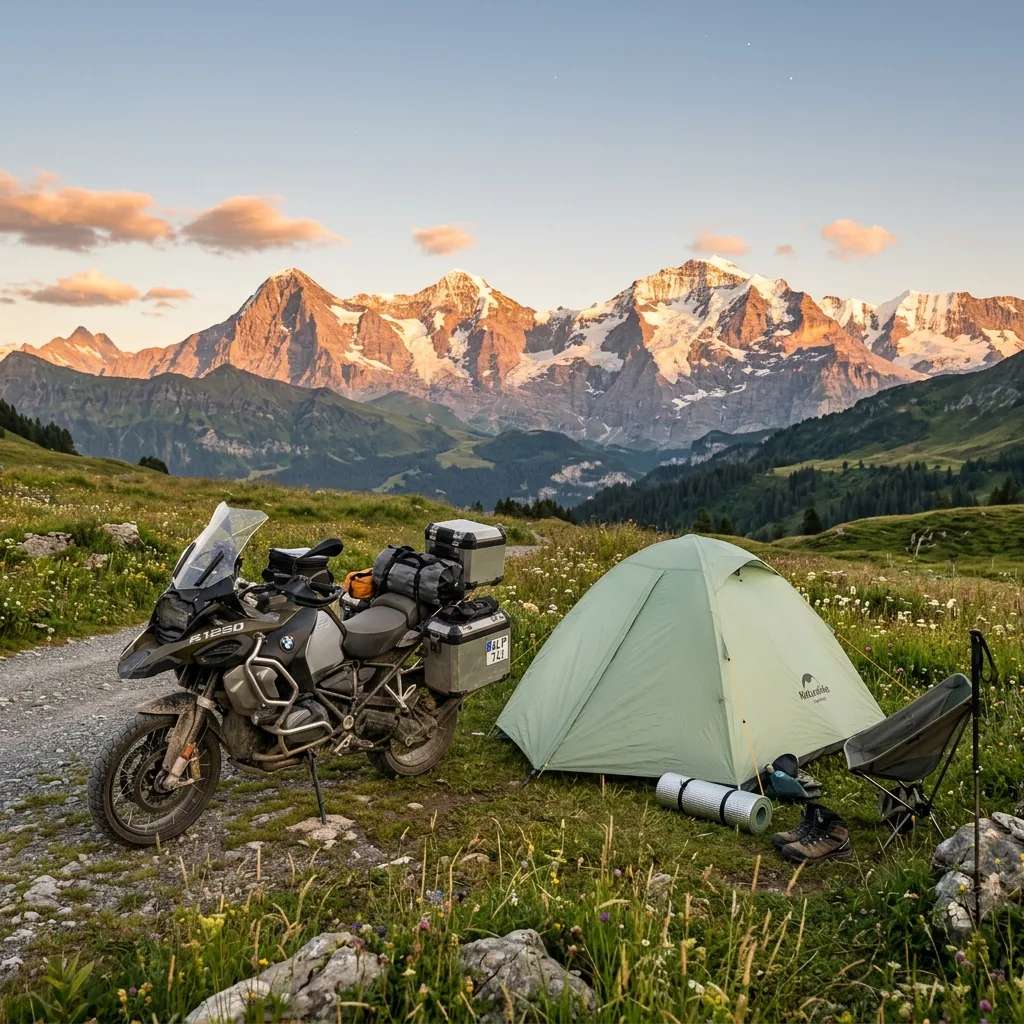
The Cloud Up 2 uses a single-pole hub design — two aluminium poles connect at a central hub, the inner tent clips to the poles via colour-coded plastic clips, and the fly drapes over the top secured by four corner stake-outs and an optional storm guy at each end.
Setup from packed to fully pitched takes roughly 4-5 minutes for an experienced user, 7-8 minutes for a first-timer. The pole hub eliminates the most common ultralight tent pitching error — getting poles in the wrong sleeves. Stake-out points are colour-coded to the fly corners.
The semi-freestanding design means the inner tent stands without stakes, but the fly requires at least two corner stakes (head and foot) to maintain proper geometry. On rocky ground where stakes will not drive, the fly can be tied off to bike, panniers, or large stones at the corners — the geometry tolerates the workaround.
Take-down is faster. Roll the inner and fly together damp-side-out, slide the poles into the long pole bag, compress the whole bundle into the stuff sack. Total time: 3-4 minutes.
Waterproofing in Real Conditions
The fly’s 3000mm hydrostatic head rating is well above the 1500mm threshold that defines “fully waterproof” in industry terminology. The floor’s 4000mm rating handles the higher pressure that occurs when body weight presses against the floor on saturated ground.
Real-world performance across the 34-night test period included three multi-hour sustained rainstorms (totalling roughly 12 hours of heavy rain) and several lighter overnight showers. In every case the interior remained fully dry. No seam leakage. No zipper leakage. No floor seepage.
The seams are factory-taped from the inside — visible silver tape across all fly seams and floor seams. The zipper has a storm flap that overlaps the zipper teeth and prevents direct rain ingress.
The honest waterproofing limit: extreme wind-driven rain at the door zipper. In one storm with 50 km/h wind directly hitting the door side, fine spray entered through the zipper area despite the storm flap. Orient the tent door away from prevailing wind and this failure mode disappears.
Ventilation and Condensation
Ultralight silicone-nylon tents face a recurring condensation challenge. The fabric does not breathe — moisture from the occupant’s breath and body heat condenses on the inside of the fly overnight and drips onto the inner mesh.
The Cloud Up 2 manages this with two fly vents — one above each door — that pull air through the gap between the inner mesh and the outer fly. On nights when the door is open even partially, condensation is minimal. On fully sealed humid nights, the inside of the fly will have visible moisture by morning, though the inner mesh stays dry.
Mitigation strategies include unzipping the inner door before sleep to encourage airflow, choosing campsites with some natural ventilation, and waking up early enough to dry the fly in morning sun before packing. The fly dries fully in 15-20 minutes of direct sunlight.
This is not a Cloud Up 2 specific limitation — every silicone-nylon ultralight tent faces the same condensation physics. The Cloud Up 2’s ventilation design is equivalent to premium competitors in this respect.
Motorcycle Camping Tent Packing Checklist
The Cloud Up 2 ships with a complete kit that does not require additional purchases. Total packed weight is 1.8 kg.
- Naturehike Cloud Up 2 tent body (1.38 kg)
- Tent poles carbon/aluminum (280 g)
- Footprint groundsheet included (120 g)
- 14 tent stakes provided (180 g)
- 5 wind ropes included (50 g)
- Compression stuff sack (40 g)
The 14 stakes are sufficient for full storm-rated pitching including all guy-out points. The stakes are 7001 aluminium hooks, light but not bombproof — riders in rocky terrain typically replace them with MSR Groundhog stakes for $20-25 extra. The wind ropes accept the included or replacement stakes equally.
The compression stuff sack is a single-strap rectangular bag rather than a true compression sack with multiple cinch straps. For motorcycle packing this works fine, since the rectangular shape packs more easily into pannier corners than a more aggressively compressed cylinder.
Pros and Cons After 34 Nights
- 1.38 kg trail weight at $90-110 — class-leading price-to-weight ratio
- 20D silicone-coated nylon construction matches $400+ premium competitors
- 3000mm fly and 4000mm floor hydrostatic ratings handle real storms
- Footprint included — saves $40-50 over premium alternatives
- 40 x 13 cm packed size fits any 30L motorcycle tail bag
- Setup in 4-5 minutes once familiar with the pole hub
- Single door and single vestibule — cramped as a true 2-person tent
- Stock stakes are soft aluminium hooks; rocky ground bends them
- Door-side wind-driven rain can produce spray through the zipper
- Hardware feels less refined than premium tents — zippers slower, clips lighter
- QC variation across production batches — some units arrive with minor stitching defects
Cloud Up 2 vs Big Agnes Fly Creek: Is the Price Difference Worth It?
The Big Agnes Fly Creek HV UL2 is the most direct premium competitor to the Cloud Up 2 by weight class and intended use. Both tents weigh 1.3-1.4 kg trail weight. Both use 20D silicone-coated nylon. Both pack to roughly the same size.
The Fly Creek’s advantages are real but narrow. The hardware is more refined — DAC Featherlite poles versus the Cloud Up’s 7001 aluminium, smoother zippers, better-engineered clips. The geometry is slightly more livable for two adults. The brand’s lifetime warranty and US-based customer service add long-term value.
The Fly Creek’s price is roughly $450 versus the Cloud Up 2’s $90-110. For motorcycle camping use cases where the tent lives in a pannier and pitches 10-30 nights per year, the four-fold price difference is hard to justify. The Cloud Up 2’s failure modes are minor — slightly slower zippers, less refined clips — and do not affect the tent’s core shelter function.
For ultralight thru-hikers who pitch their tent 100+ nights per year and prioritise every gram, the Fly Creek is the better tent. For motorcycle riders pitching 10-30 nights per year inside a luggage system, the Cloud Up 2 is the rational economic choice.
Who Should Buy It
The Cloud Up 2 is the right tent for first-time motorcycle campers, riders on tight budgets, occasional riders not committed to multi-month trips, and experienced overlanders who want a backup tent for trips where the premium tent is a poor risk. The combination of low price, light weight, and genuinely waterproof construction covers more rider profiles than any other tent under $200.
The Cloud Up 2 is the wrong tent for two-up rides where two adults need real shelter space — the single door and tight floor will not work — and for thru-hiking or expedition use where premium hardware durability matters more than upfront cost.
Disclosure: Some of the links in this article are affiliate links. If you buy gear through them, we may earn a small commission at no extra cost to you. It helps fund the road trips that make these independent reviews possible — this tent was tested across 34 real camp nights before any of this guidance was written.
Frequently Asked Questions
Is the Naturehike Cloud Up 2 actually a 2-person tent?
Technically yes — the floor measures 210 x 125 cm, which fits two standard sleeping pads side-by-side with no gap. In practice it is comfortable for one person plus gear, and cramped for two adults plus riding kit. The single-door, single-vestibule design means one occupant has to climb over the other to enter or exit. For motorcycle camping it is best understood as a generous solo tent rather than a true two-person shelter.
How waterproof is the Naturehike Cloud Up 2?
The 20D silicone-coated nylon fly has a 3000mm hydrostatic head rating, which is more than adequate for sustained rain. The floor is 4000mm rated. In real-world testing across multiple multi-hour rainstorms, the tent kept the interior fully dry with no leakage at seams, zippers, or floor. The included footprint extends rain protection by preventing groundwater from soaking through the floor during overnight downpours.
Does the Cloud Up 2 come with a footprint?
Yes. Naturehike includes a fitted footprint with the Cloud Up 2 at no extra cost. This is significant because competitor ultralight tents from Big Agnes, MSR, and Nemo sell footprints separately for $40-60. The included footprint adds full ground-level rain protection and extends the floor's lifespan on rough surfaces. It clips to the tent's corner stake-out points for fast deployment.
How heavy is the Cloud Up 2 packed?
Minimum trail weight is 1.38 kg, which includes only the fly, inner tent, and poles. Packed weight including the footprint, stakes, guylines, and stuff sack is 1.8 kg. Packed dimensions in the included compression sack are 40 x 13 cm — small enough to fit inside most 30L tail bags with room to spare. For comparison, the Big Agnes Copper Spur HV UL2 weighs 1.4 kg trail weight at roughly four times the price.
Cloud Up 2 vs Big Agnes Copper Spur — which should I buy?
The Big Agnes Copper Spur HV UL2 is lighter (1.4 kg vs 1.38 kg trail weight), has two doors and two vestibules, and uses more refined hardware throughout. For ultra-frequent backcountry use where every gram matters, the Copper Spur is the better tent. For motorcycle camping where 200-500 g of difference is invisible inside a 30L pannier, the Cloud Up 2 offers 80-90% of the same shelter performance at roughly one-quarter the price. For most motorcycle riders, the Cloud Up 2 is the rational choice.