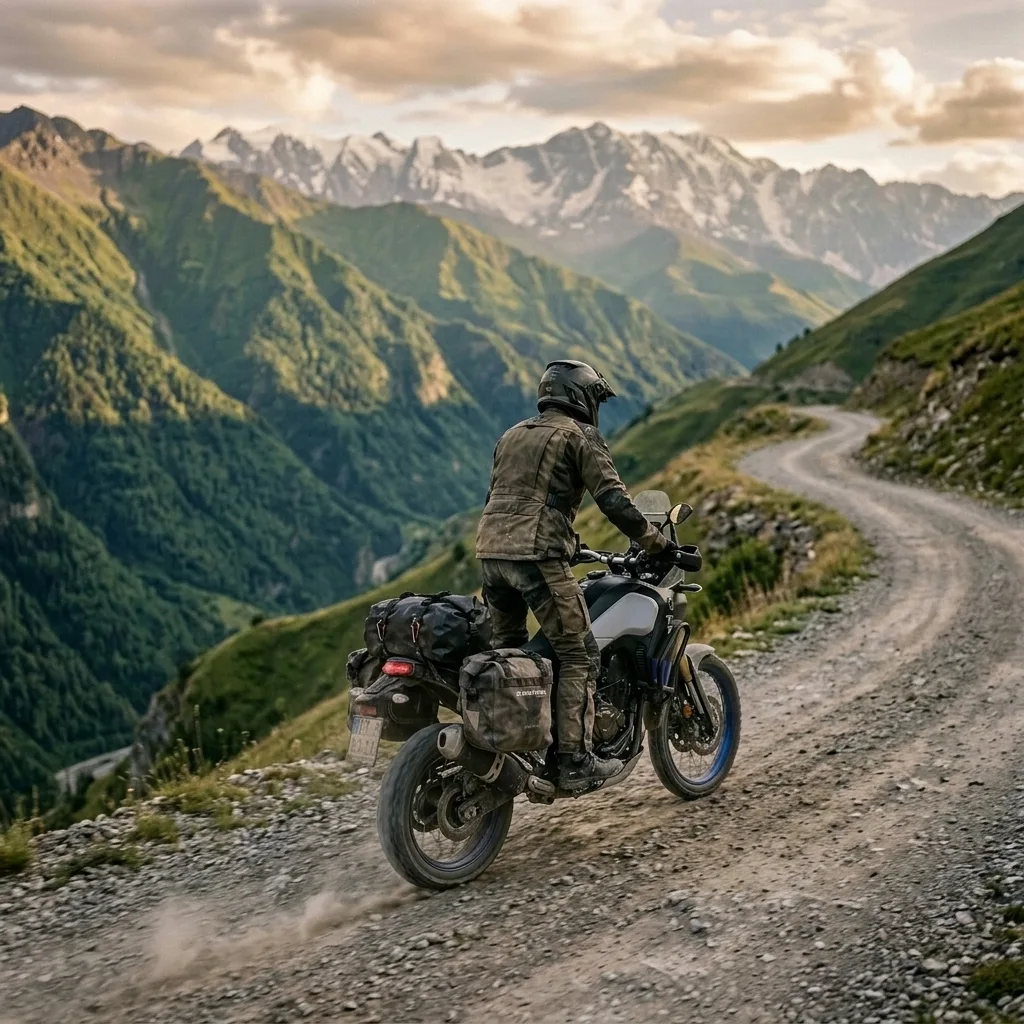
I crossed at Sarp on a hot July afternoon with the Black Sea on my left and a queue of Georgian-plated minibuses on my right, and twenty minutes later I was drinking the strongest coffee of my life in a Batumi side street under a building shaped like an upside-down boat. That’s the thing nobody warns you about this border: you don’t ease into Georgia. You go from the familiar green of the Turkish Black Sea coast to something that feels like a different decade and a different alphabet in the time it takes to get your passport stamped.
This is part two of the Black Sea & Caucasus run. Part one took us from Amasra, slowly, village by village, east along the coast and up over a 3,000-metre gravel pass to Yusufeli. This guide picks the bike up from the eastern end of that ride — Hopa, the last Turkish town on the coast — and crosses into Georgia. If you rode part one, you’re already pointed the right way. If you’re flying into this one cold, that’s fine too; you can join the route at Hopa from Trabzon in a morning.
Why Ride the Turkey to Georgia Motorcycle Route
Most foreign riders who reach far eastern Turkey turn around. They’ve done the Black Sea, they’ve done the Kaçkar, and Georgia stays an abstract idea on the far side of a border. That’s the gap this guide is for — because the moment you cross, you’re in the Caucasus proper, and the Caucasus is where this whole trip has been heading.
Georgia gives a rider three things Turkey doesn’t, in quick succession. First, density of contrast: subtropical Black Sea coast, then alpine pasture, then bare high passes, often inside a single day. Second, hospitality that becomes a logistical factor — you will be waved over, fed, and occasionally housed by strangers, and it genuinely changes how you plan a day. Third, roads that range from glassy new asphalt to the Abano Pass, which is regularly named among the most dangerous roads on earth. You can calibrate the trip to whatever you and your bike can handle.
If you’ve read the wild camping in Turkey guide, the same instincts carry over the border, with the local nuances I’ll flag below. And if cross-border riding is becoming your thing, the Balkans country-by-country legal guide is the western counterpart to this eastern run.
The Route at a Glance
| Stage | From → To | Distance | Character |
|---|---|---|---|
| 1 | Hopa → Sarp border → Batumi | ~30 km | Short hop, the border itself is the event |
| 2 | Batumi → Adjara highlands (Khulo / Goderdzi) | ~110 km | Climb off the humid coast into pasture |
| 3 | Highlands → Akhaltsikhe → Vardzia | ~180 km | Southern Georgia, the cave city |
| 4 | Vardzia → Gori / Kazbegi staging | ~250 km | Reposition north toward the high Caucasus |
| 5 | Telavi → Abano Pass → Omalo (Tusheti) | ~70 km | The pass. Seasonal, unpaved, serious |
Distances are deliberately loose — Georgia is not a country you measure in kilometres per hour. The Abano Pass alone is around 70 km that eats most of a day. Treat the table as a shape, not a schedule.
Stage 1: The Sarp Border Crossing
This is the part everyone asks about, so I’ll be precise about what I know and honest about what you must verify yourself.
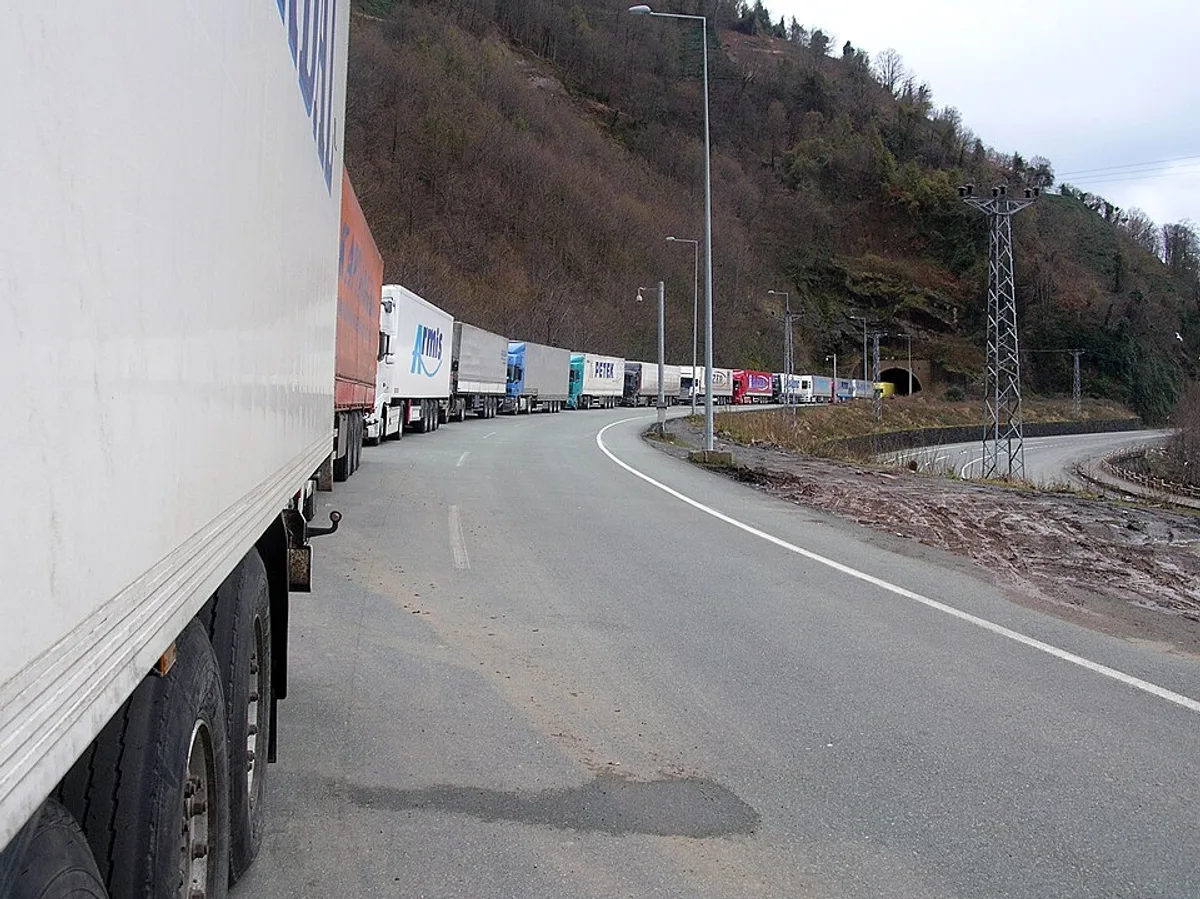
The Sarp/Sarpi crossing sits right on the Black Sea, a few minutes east of Hopa, reached on the D010. It’s the main artery between Turkey and Georgia, it’s open 24/7, and it’s busy — coaches, freight, minibuses, foot traffic. Summer queues are real and worst in the early-morning peak (around 7–8 AM); off-season you can be through in under twenty minutes. On a motorcycle you can usually filter toward the front of the vehicle lanes, but be polite about it and watch for officials directing flow. Have Georgian lari in cash ready before you cross — you’ll want it immediately, ATMs near the border are unreliable, and it’s easiest to change money on the spot.
The sequence, broadly, is: exit Turkey (passport and vehicle out), ride the neutral strip, enter Georgia (passport in, vehicle in).
Entry for people. Georgia is unusually generous here. Turkish citizens travel visa-free and can enter on a national ID card — which matters, because a lot of this site’s readers ride from Turkey. Beyond that, citizens of around 95 countries (the US, EU states, Canada and Australia among them) typically get visa-free entry for up to 365 days, and leaving and re-entering usually resets that clock; overstaying starts at a fine of around 360 GEL. None of this is universal, so check the rule for your own nationality before you ride — border police can also ask for proof of onward travel or funds.
Entry for the bike. A foreign-registered motorcycle can typically stay 90 days from the date you cross, with no customs procedure at the line. Overstaying that is commonly cited at around 50 GEL per day, capped near 1,000 GEL; a quick “border run” to a neighbour resets the 90 days, or you do a temporary-import procedure for a longer stay.
Three things I want to flag hard, because getting them wrong ruins the day:
- Vehicle insurance. Your Turkish or European policy does not cover Georgia — Georgia is not in the Green Card system at all. You buy local Georgian third-party cover for the bike, normally at a kiosk at or near the border once you’ve entered. It’s inexpensive, but riding without it risks a fine.- Traveller health insurance. Georgia now expects visitors to hold valid health/accident insurance for the stay, and officers may check. The reported penalty is around 300 GEL for a first offence, rising toward 900 GEL if left unpaid — so budget for your own cover as well as the bike’s, and confirm the current requirement with the Georgian Revenue Service and your consulate.
- Ownership documents. If the bike isn’t registered in your name, the standard overlanding practice is to carry a notarised letter of authorisation from the owner — often wanted at the Turkish exit and the Georgian entry. Treat this as recommended rather than a confirmed Georgia-specific statute, and check the exact document set with the consulate. For the wider logic of getting a bike across European-style borders — carnets, plates, what gets you waved through versus pulled aside — the Europe motorcycle border crossing documentation guide covers the principles, even though Georgia has its own quirks.
Heads up: Border rules, insurance arrangements and visa terms between Turkey and Georgia change from season to season and are enforced locally. Treat the specifics here as a starting point and re-confirm the current rules against the official sources linked before you ride. This is a riding guide, not legal or customs advice.
There are also two quieter inland crossings that dodge Sarp’s summer queues and are scenic in their own right: Türkgözü–Vale (near Posof/Ardahan, heading toward Akhaltsikhe) and Aktaş–Posof. Both are higher mountain crossings; Türkgözü in particular lands you much closer to Vardzia, so if the southern highlands are your priority you can skip the coast entirely and cross there. They keep shorter, more variable hours than Sarp, so check the current status before committing.
Stage 2: Batumi and the Climb into Adjara
Batumi is a shock in the best way — a Black Sea resort city with casinos, Soviet bones, Georgian Orthodox churches and a seafront of architectural fever-dreams. Spend a night. Eat khachapuri Adjaruli, the boat-shaped bread-and-cheese-and-egg thing that the region invented; it is exactly as heavy as it looks and exactly what you want after a border day. Sort your local SIM here, draw Georgian lari from an ATM, and confirm your insurance paperwork is in order before you climb away from services.
Then go up. The road from the coast toward Khulo and the Goderdzi Pass trades humidity for altitude fast. Within an hour you’re in green Adjaran highland — wooden houses, hay being cut by hand, switchbacks, and the cog-rail and cable-car oddities of Khulo. Goderdzi itself is a high pass that connects Adjara to the south; the surface varies and the weather turns, but it’s a gentler introduction to Georgian mountain riding than what’s coming later.

Stage 3: South to Vardzia
Work your way to Akhaltsikhe (this is also where a Türkgözü crossing drops you) and then out to Vardzia — a cave monastery city carved into a cliff face above the Mtkvari river in the twelfth century, honeycombed with hundreds of rooms, tunnels and a church with surviving frescoes. It’s the kind of place that justifies a long detour on its own.
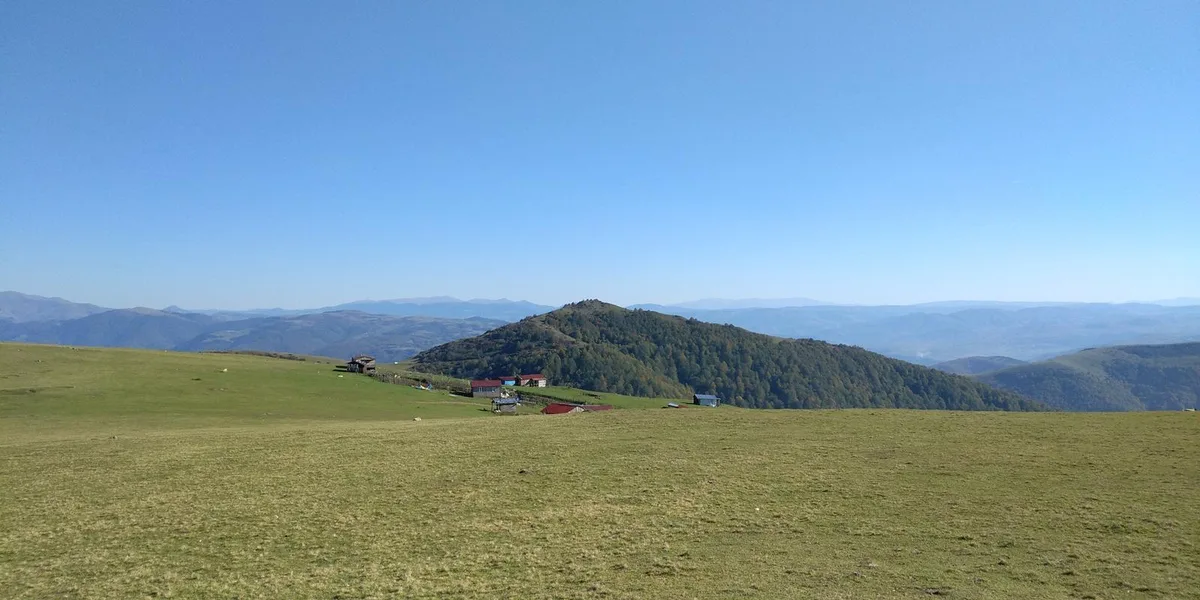
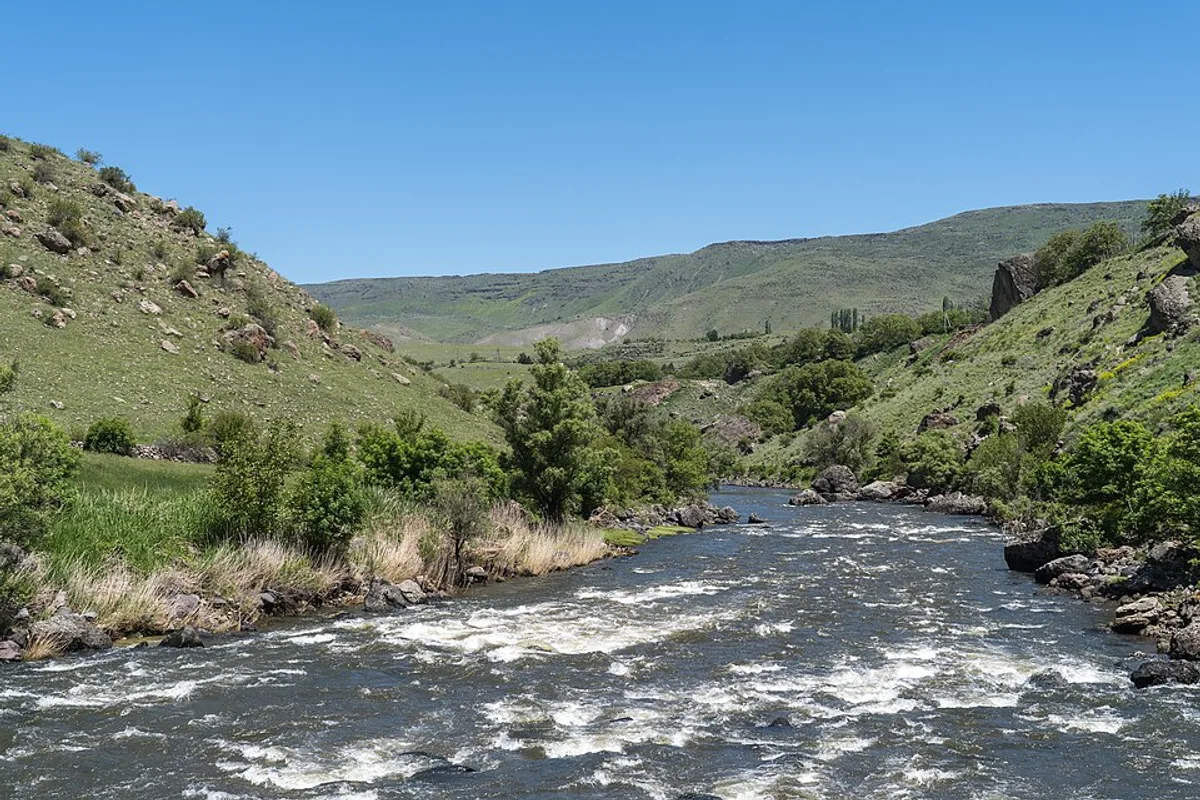
The riding down here is high, dry, open southern Georgia — a different country again from green Adjara. There’s good discreet camping along the river valleys, and the Vardzia area has small guesthouses if you want a roof and a hot meal. This is a natural place to slow down for a day before the long reposition north.

Stage 4: Repositioning North
Stage 4 is honest distance: you’re moving from the south of the country toward the high Caucasus in the northeast, and there’s no scenic shortcut. Run via the Gori area (Stalin’s hometown, for better or worse, with a museum that is a strange experience) and reposition toward Kakheti — Georgia’s wine region — and Telavi, the staging town for Tusheti.
I’d build in a rest day in Kakheti. Tusheti is the hardest thing on this route and you want to hit the Abano Pass rested, early, and with a dry forecast. Telavi has fuel, ATMs, mechanics and good food. Top up everything here, because the next stage has almost no services.
Stage 5: The Abano Pass to Tusheti
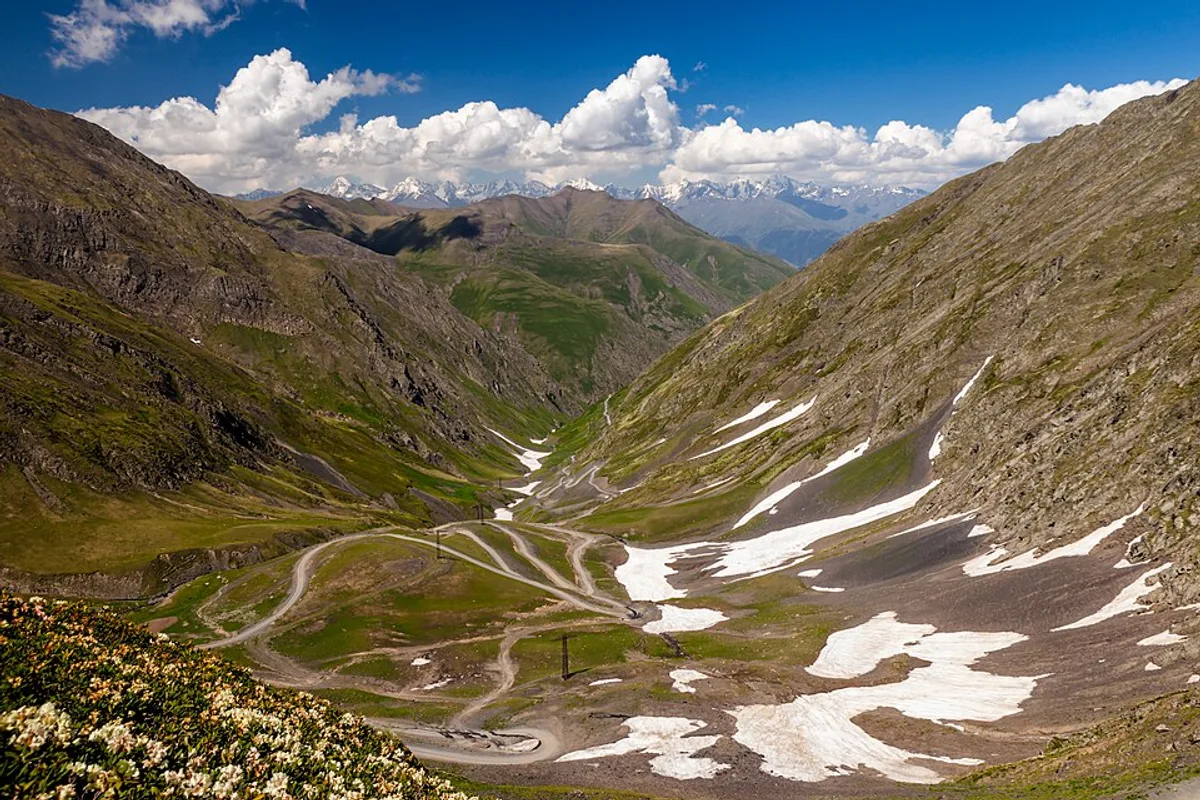
This is the one. The road from the Kakheti lowlands — it starts climbing in earnest around Pshaveli — up over the Abano Pass (around 2,850–2,950 m, the highest drivable pass in the Caucasus) to Omalo in Tusheti is roughly 67–72 km of narrow, unpaved, exposed mountain track on route M44, and it is regularly listed among the most dangerous roads on the planet — the BBC named it exactly that back in 2013. No barriers. Sheer drops. Water crossings. Rockfall and landslides that can close it for days. One-lane sections where meeting an oncoming 4x4 means somebody reverses on a cliff edge.
It is also, in good conditions, one of the greatest rides in the Caucasus. The trick is the qualifier.
Hard rules I’d give anyone before they commit:
- Season. The pass is snowbound most of the year and is typically open only from around late May / early June to late September / mid-October, clearing later or earlier depending on the year’s snow and landslides (the Tusheti Protected Areas Administration and the Roads Department of Georgia are the bodies that call it). If you’re riding in June, you’re hitting it right as it opens — early June can be marginal, and some Tusheti homestays don’t open until July. Treat the window as provisional and check this year’s actual status before you commit.2. Weather. Ride it dry, ride it early. Rain turns the surface and the drops lethal, and afternoons build cloud and storms.
- The bike. This is not the place for a fully loaded 1250 on road tyres. A manageable, well-tyred bike you can pick up alone is the right tool. This is exactly the kind of terrain I had in mind testing the bike in the Yamaha Ténéré 700 long-term review — capable, but only as good as the rider’s loose-surface confidence.
- Commitment. Once you’re on it, you’re on it. There’s no easy bail. Carry water, warm layers, a tyre repair kit and a charged phone you do not depend on for signal.
Omalo and the Tusheti villages at the top are the reward — medieval defensive towers, stone hamlets, and a high pastoral world that feels sealed off from the rest of the country, because for half the year it is. People ride all the way here specifically for this. Just respect what it asks of you on the way up.
Wild Camping, Fuel, Cash and Connectivity
Wild camping. Georgia is one of the friendlier countries in the region for it. There’s no strong tradition of moving riders on outside protected areas, and the bigger risk to your night’s sleep is being invited indoors and fed until you can’t move. Camp out of sight of the road; if there’s a house nearby, a quick ask goes a long way and usually ends well. Avoid border zones — especially anywhere near the administrative boundary lines with the breakaway regions of Abkhazia and South Ossetia, which are not places to wander into or camp near. Treat national parks by their posted rules.
Fuel. Good on main roads and in towns, sparse in the mountains. Fill before the Abano Pass, before long valley runs, and whenever you’re below half a tank in the highlands. A small fuel reserve is worth carrying for this route.
Cash. Cards work in Batumi and larger towns; mountain villages and small guesthouses want Georgian lari in hand. Carry cash, especially before heading into Tusheti.
Connectivity. A local SIM from Batumi gives solid coverage in populated areas and little to none on the high passes. Download offline maps for the whole route before you leave the coast, and do not plan around having signal on Abano.
What to Pack Differently Than Turkey
If you’ve come straight off part one, most of your kit carries over. What changes for Georgia:
- Border-and-money pouch. Passport, bike documents, the notarised authorisation letter if you need one, printed insurance confirmation, and a stash of lari. Keep it all in one accessible place for the crossing.
- Proper off-road tyres or at least a confident dual-sport tread. Abano and the Tusheti tracks are a real step up in difficulty from the Kaçkar gravel.
- Cold-and-wet layering for altitude. The same lesson as the Kaçkar, but the Tusheti weather is even less forgiving — a clear morning becomes cold rain by afternoon.
- A genuine tyre repair kit and small compressor. Rockfall debris on Abano is exactly where you’ll need it, and exactly where there’s no help.
- Spare cash buffer for insurance and unexpected guesthouse nights. Hospitality is free; getting weathered-in is not.
Where This Route Connects
- The first half of this trip is the Black Sea & Kaçkar route from Amasra to Yusufeli — ride them back to back as one long Black Sea & Caucasus journey.
- For wild-camp legality and regional logic on the Turkish side, see wild camping in Turkey on a motorcycle.
- For the bike I’d take across this border, the Yamaha Ténéré 700 long-term review covers how it actually handles loaded gravel and exposed passes.
- For more cross-border riding, the wild camping in the Balkans legal guide is the western-Europe counterpart to this eastern crossing.
FAQ
The questions I’m asked most about this crossing are answered in the box above — insurance, which border, wild camping, the Abano Pass, season, and fuel/cash/connectivity. The short version: cross at Sarp, buy local insurance at the line, confirm your paperwork before you ride, save Tusheti for a dry summer day on a bike you can handle, and carry lari. Georgia rewards riders who show up prepared and slow down once they’re in.
This guide is based on personal riding and is published as a planning starting point, not as legal or customs advice. Every border, insurance and visa detail here should be re-confirmed against the official Georgian sources — the Georgian e-visa portal and current customs guidance — before you ride. Some links in this article are affiliate links; if you buy gear through them, we may earn a small commission at no extra cost to you.
Frequently Asked Questions
Do I need a Green Card or extra insurance to ride into Georgia?
Your Turkish or EU motor insurance almost certainly does NOT cover Georgia — Georgia is not in the Green Card system at all. The standard fix is to buy local Georgian third-party cover for the bike, normally at a kiosk at or near the border once you've entered. Separately, Georgia now expects travellers to carry valid health/accident insurance for the stay, with a reported fine (around 300 GEL) if you don't — so budget for both the bike's local cover and your own health cover. Confirm current requirements and prices before you ride, as the rules change from year to year.
Which border crossing should I use, Sarp or Türkgözü?
Sarp/Sarpi on the Black Sea coast, just past Hopa, is the busiest and most straightforward — open 24/7 and minutes from Batumi, though it queues badly in the summer morning peak, and you'll want Georgian lari in cash for it. There are also two quieter, higher inland crossings: Türkgözü–Vale (near Posof toward Akhaltsikhe), which lands you closer to Vardzia, and Aktaş–Posof. Coast riders take Sarp; riders who want the southern highlands first, or who want to dodge the summer queues, take an inland crossing. The inland ones keep shorter, more variable hours, so check current status before committing.
Can I wild camp in Georgia on a motorcycle?
Georgia is one of the easier countries in the region for discreet wild camping. There is no strong tradition of moving riders on outside protected areas, and locals are famously hospitable — being invited in for food or a bed happens more than you'd expect. Camp out of sight of the road, ask if there's a house nearby, avoid border zones (especially near the South Ossetia and Abkhazia administrative boundary lines), and leave no trace. Treat protected areas and national parks by their posted rules.
Is the Abano Pass to Tusheti safe on a loaded adventure bike?
The Abano Pass is a high, narrow, unpaved mountain road with steep drops, no barriers, water crossings and frequent rockfall — it is regularly listed among the most dangerous roads anywhere. It is rideable by an experienced rider on a manageable bike in good weather in the dry season, and genuinely dangerous in rain or for an overloaded big bike. It is seasonal — typically open only from around late May/early June to late September/mid-October, with the exact dates shifting every year, so a June trip catches it right as it opens. If you are not confident on loose, exposed surfaces with a loaded bike, do not make Tusheti your first off-road test.
When is the best time to ride Turkey into Georgia?
Late June through September. The coast and lowlands are rideable from spring, but the high Caucasus passes — Abano to Tusheti above all — only clear of snow in early summer and start closing again in autumn. July and August give you the widest open window for the mountains, at the cost of more heat and humidity on the Black Sea coast and busier Batumi. Aim for the shoulder of that window if you can.
How is fuel, cash and connectivity in rural Georgia?
Fuel is fine on main roads and in towns, and thins fast once you climb into the mountains — fill up before the Abano Pass and before long valley runs, and carry a small reserve. Cash matters: card payment is normal in Batumi and bigger towns but unreliable in mountain villages, so carry Georgian lari. A local SIM (bought cheaply in Batumi) gives good coverage in populated areas and patchy-to-none on the high passes. Download offline maps before you climb.