
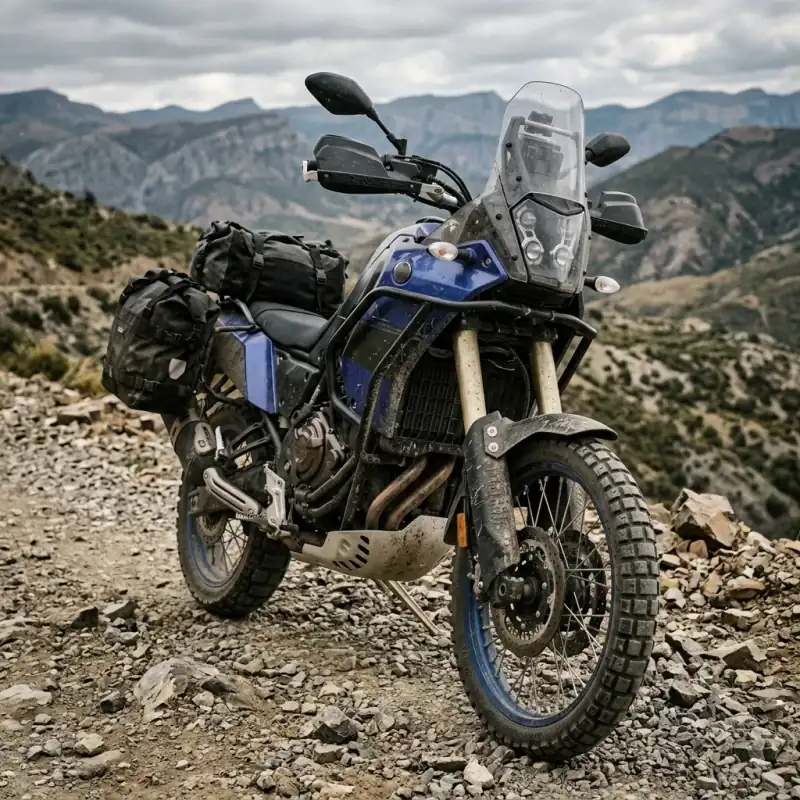
Here’s a pattern that plays out more than once: someone buys a new adventure bike, drops a small fortune on the biggest, shiniest crash bars they can find, and then snaps a clutch lever in a slow tip-over on a gravel car park. Because they never spent forty quid on handguards.
Protecting an adventure bike isn’t about buying the most expensive part. It’s about spending in the right order: cheap, high-probability damage first, expensive and rare last. Get that order right and you’ll prevent the failures that actually end trips for a fraction of what people waste on the wrong thing. So before the picks, the order, and a couple of myths to put down.
Barkbusters VPS handguards
The handguard everyone else copies — two-point wrap-around that actually saves your levers.
Check Barkbusters VPS on Amazon →Spend in This Order
The whole strategy fits in one idea: match how likely the damage is to how cheap it is to prevent.
- Handguards. Cheapest fix for the most common damage — snapped levers and knocked hands in tip-overs and from trail brush. Always first.
- Radiator guard. Next-cheapest insurance against a genuinely trip-ending failure: a stone through the radiator means a coolant leak and a dead bike, often somewhere with no phone signal.
- Crash bars and skid plate. More money, bike-specific, protecting bigger but rarer hits; engine cases in a real off, the sump on a hidden rock.
Most people do this backwards, starting with the dramatic expensive part. Start at the top of that list instead and your money does far more work.
Two Myths to Put Down
“Handguards are handguards.” They’re not. Wrap-around guards bolt at two points — bar end and clamp. So they protect your levers and hands when the bike goes down; that two-point mount is the whole point. Open “flag” guards mount once, weigh less, deflect wind and brush, but won’t take a real impact. For mixed road-and-trail riding you want wrap-arounds with a stiff alloy backbone; just check you’ve got open bar ends to bolt them into.
“A radiator guard makes your bike overheat.” Mostly wrong, occasionally a little true. A cheap flat mesh jammed against the core can cost you a few degrees; a well-designed guard with angled louvres channels air and changes almost nothing. Set that against the alternative — one rock through the radiator ends the trip, and the maths is obvious. Don’t skip the guard; just buy a good one.
Protection Compared — Side by Side
The Protection Stack — Side by Side
| Part | Protects | Fit | Price | Rating |
|---|---|---|---|---|
| Buy FirstBarkbusters VPS handguards | Levers + hands | Universal | $$ | |
| Kemimoto aluminium handguards | Levers + hands | Universal 7/8" | $ | |
| Trip-SaverMotorcycle radiator guard (by model or universal) | Radiator core | Model-specific / Universal | $$ | |
| Adventure motorcycle crash bars (by model) | Engine + tank | Model-specific | $$$ | |
| Motorcycle skid plate (adventure) | Engine cases / sump | Model-specific | $$$ |
1. Barkbusters VPS Handguards — Buy These First
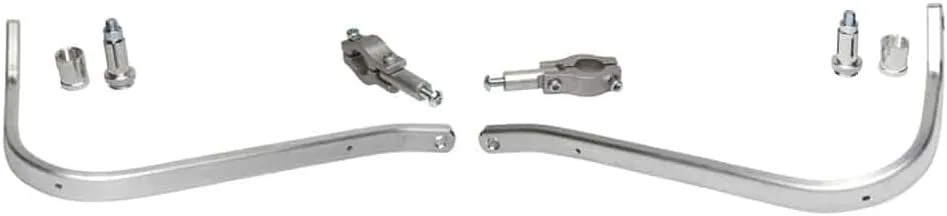
If you buy one thing off this page, make it the Barkbusters VPS handguards. They’re the wrap-around standard that everyone else is measured against: a stiff alloy backbone bolting at the bar end and the clamp, with a replaceable VPS plastic guard on top. That two-point mount is what lets them actually save a lever and shield your hands in a tip-over or off a tree branch. The damage that otherwise ends a riding day or a trip.
Barkbusters sell fitment-specific kits (a 7/8” version, a tapered-bar version, plus model mounts), so check your bar size and grab the matching one, and make sure you’ve got open bar ends to bolt the backbone into. They’re not the cheapest guards out there, but they’re the ones I’d trust on a loaded bike a long way from a parts shop. Pair them with heated grips and they double as a wind block that keeps your hands warm.
Disclosure: some links below are affiliate links. If you buy through them we may earn a small commission at no extra cost to you.
Check Barkbusters VPS on Amazon →
- Two-point wrap-around — really protects levers
- Stiff alloy backbone, replaceable guard
- The proven ADV standard
- Need open bar ends + the right fitment kit
- Can clash with some bar-end weights
2. Kemimoto Handguards — Best Budget Start
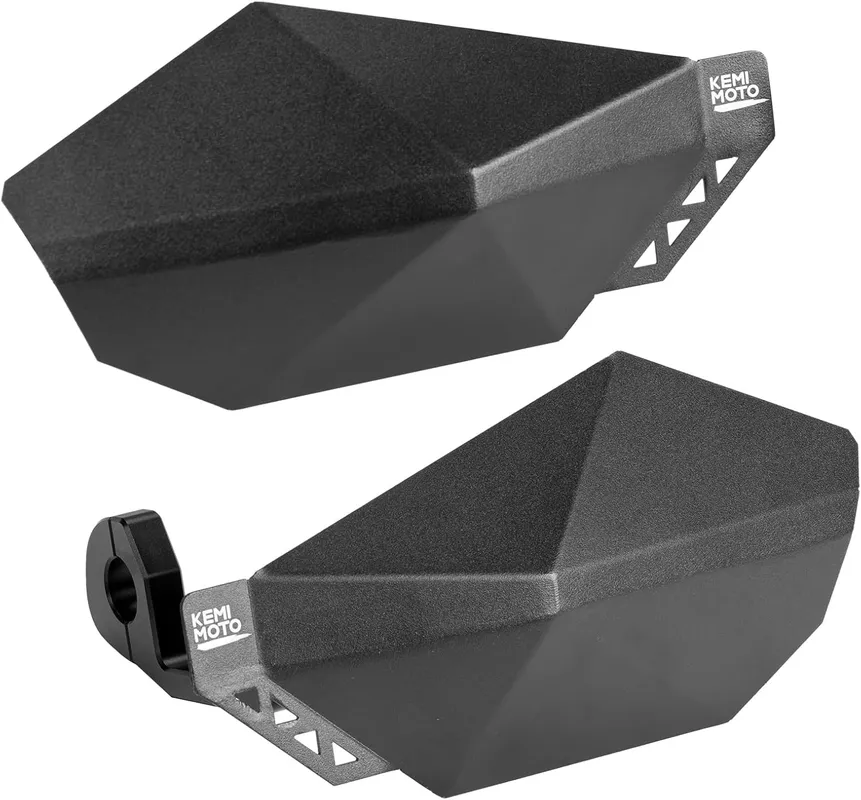
Not ready to spend Barkbusters money? The Kemimoto aluminium handguards get real protection on the bars for about the price of a lever they’ll save. They’re a universal 7/8” (22 mm) wrap-around with an aluminium backbone and stainless hardware — not as refined or as proven as the Barkbusters, but a genuine step up from bare bars or flimsy plastic flags.
For a commuter, a learner, or a second bike, they’re honestly enough. They block wind, deflect brush, and give your levers a fighting chance in a parking-lot drop. Spend the saving on a radiator guard instead, that’s a better use of the next forty quid than upgrading guards you’ll rarely test.
Check Kemimoto Handguards on Amazon →
- Real wrap-around protection, very cheap
- Aluminium backbone, stainless hardware
- Easy universal 7/8" fit
- Less refined and unproven vs Barkbusters
- Fit can need fettling on some bikes
3. Motorcycle Radiator Guard — The Cheap Trip-Saver
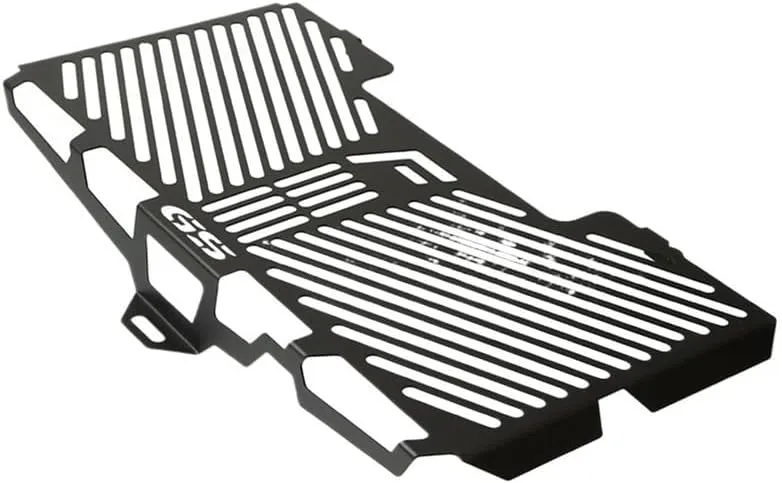
A radiator is the most fragile expensive thing on a modern bike, sitting right at the front waiting for a stone. The fix is a mesh guard over the core — trimmed to fit, zip-tied into place, no permanent modifications. Search for one made specifically for your model if one exists (Ténéré 700, GS, Himalayan and the bigger-selling bikes all have model-specific options) — those fit cleaner and look neater. If nothing model-specific is available, a universal mesh cut to size is fine.
Either way, the point is to own one. Remember the myth from earlier: a good guard barely affects cooling, while the rock it stops would have ended your trip. Of all the “might never need it” parts, this is the one I’d never skip on a bike that sees gravel.
Shop Motorcycle Radiator Guards on Amazon →
- Cheap insurance against a trip-ending leak
- Model-specific options available for popular ADV bikes
- No permanent modification required
- Universal mesh needs careful trimming for a clean fit
- Buy model-specific if available — better fit and finish
4. Crash Bars — Buy for Your Exact Model
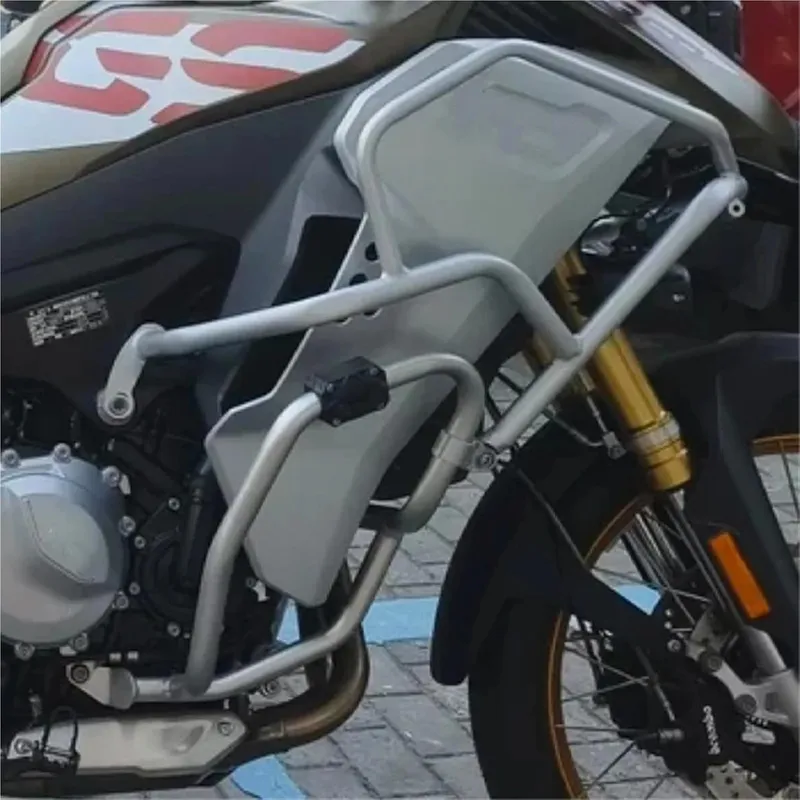
Crash bars are where the honest advice diverges from the marketing. They genuinely earn their keep in the crashes that happen most — slow tip-overs, parking drops, low-speed off-road get-offs — shielding the engine cases, tank and bodywork. Their benefit fades at high speed, and there’s a long-running debate that cheap or badly-fitted bars can transfer loads into the frame or tank, or even change how a crash unfolds.
The conclusion to take from that debate isn’t “don’t fit bars”. It’s that fitment quality matters more than having bars at all. There is no good universal crash bar; buy a properly engineered set made for your exact bike and year (Ténéré 700, GS, Himalayan, 890 and so on) and mount it correctly. Use the link to find the set that fits your model rather than forcing a generic hoop onto the wrong mounts.
Find crash bars for your model →
- Real protection in low-speed drops and tip-overs
- Shields engine cases, tank and bodywork
- Must be model-specific and well-fitted
- Less benefit at high speed; cheap bars can do harm
5. Skid Plate — For Anything That Sees Rocks
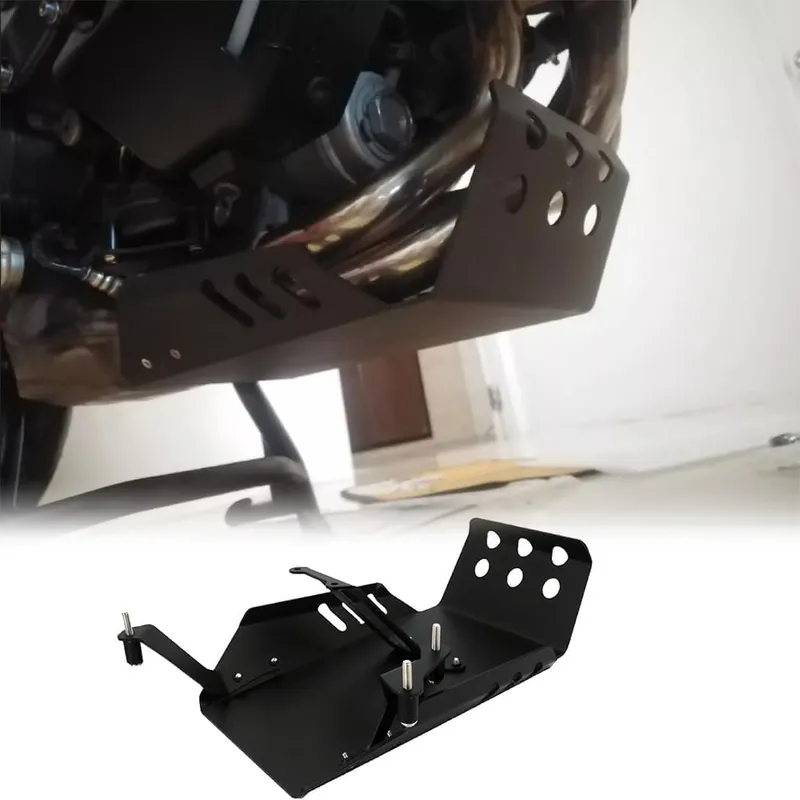
The last piece of the core stack is the motorcycle skid plate. The tray under the engine that takes the hit when a hidden rock comes up to meet your sump or cases. On tarmac you’ll never need it; the first time you ground out on a trail, it’s the difference between a clang and a cracked engine case and a recovery truck.
Like crash bars, skid plates are model-specific. They bolt to your bike’s frame mounts and have to clear the exhaust and oil filter. So buy the one made for your machine rather than a universal tray. If your riding is mostly road with the occasional gravel detour, this can wait; if you genuinely go off-road loaded, it belongs in the core four alongside handguards and the radiator guard.
- Saves engine cases and sump off-road
- Essential once you ride loaded on rocks
- Model-specific fit required
- Overkill for road-only riding
How to Choose: A Quick Buying Guide
- Follow the order. Handguards → radiator guard → crash bars → skid plate. Cheap and likely first, expensive and rare last.
- Wrap-around handguards for mixed riding, flags only if you just want wind and brush deflection. Check you have open bar ends.
- Buy a quality radiator guard, not the cheapest mesh; a good one barely touches cooling and saves the trip.
- Crash bars and skid plates are model-specific. Fitment quality is everything; never force a universal part.
- Match it to your bike and riding. See how each part suits the Ténéré 700, Himalayan 450 or R 1300 GS, and read our off-road tips for loaded bikes for where the damage actually happens.
FAQ
The questions riders ask most — what to buy first, wrap-around vs flag handguards, the radiator-overheating myth, whether crash bars can do more harm than good, and how bars, sliders and skid plates differ; are answered in full at the top of this page.
The short version: spend in order. Handguards first (Barkbusters, or Kemimoto on a budget), a quality radiator guard next, then model-specific crash bars and a skid plate if your riding earns them. It’s the cheap parts, fitted early, that save the most bikes.
Prices and availability change constantly. The figures here are approximate guides, not live quotes. Check the current price through any link before buying.
Disclosure: Some links in this article are affiliate links. If you buy gear through them, we may earn a small commission at no extra cost to you.
Frequently Asked Questions
What protection should I buy first for an adventure bike?
Handguards, then a radiator guard, then crash bars and a skid plate. The order matters because it tracks how likely each kind of damage is against how much it costs to prevent. Handguards are cheap and stop the most common, most annoying damage — snapped levers and bruised hands in a tip-over or from trail brush. A radiator guard is the next-cheapest insurance against a genuinely trip-ending failure: one thrown stone through the radiator core and you're leaking coolant in the middle of nowhere. Crash bars and skid plates cost more, are bike-specific, and protect against bigger but less frequent hits. Spend from the cheap, high-probability end first.
Wrap-around or open (flag) handguards — which should I get?
For mixed road-and-trail adventure riding, wrap-around guards with a solid alloy backbone. Wrap-arounds bolt at two points — the bar end and the clamp near the controls — so they protect both your hands and your levers in a fall; that two-point mount is what actually saves a lever off-road. Open 'flag' guards mount at one point, weigh less and deflect wind and brush well, but offer little real impact protection. The one caveat: wrap-arounds need open or hollow bar ends to bolt into, can clash with bar-end weights, and a few riders avoid them because a hand can get trapped in a heavy crash. For most ADV riders the protection wins; pure-tarmac riders who just want wind and stone deflection can run flags.
Will a radiator guard make my bike overheat?
A good one won't; a cheap one might, slightly. This isn't a pure myth — a flat mesh panel mounted too close to the core does reduce airflow, and some riders measure a few degrees Fahrenheit of increase. But a well-designed guard, especially one with angled louvres that channel air rather than just block it, shows negligible change. Weigh that against the alternative: a single stone through an unprotected radiator ends your trip and costs far more than the guard. The answer isn't to skip protection — it's to buy a quality guard, not the cheapest flat mesh you can find.
Are crash bars worth it, or can they do more harm than good?
They're worth it for the crashes that actually happen most — low-speed tip-overs, parking-lot drops, slow off-road get-offs — where they protect the engine cases, tank and bodywork. Their benefit drops at high speed, and there's a real, long-running debate that poorly-fitted or cheap bars can transfer crash loads into the frame or tank, or change how a crash plays out. The honest conclusion from that debate is that fitment quality matters more than whether you have bars at all: buy properly engineered, model-specific bars and mount them correctly, and they're a sound investment; buy a vague universal bar and bolt it on badly and you may not be helping.
What's the difference between crash bars, frame sliders and a skid plate?
They protect different things for different riding. Crash bars (engine/highway bars) are tubular hoops that shield the engine and tank in a tip-over — best for adventure and touring bikes. Frame sliders are compact pucks that bolt to the frame and let a bike slide in a low-side without digging in — they suit street and sport bikes. A skid plate (bash plate) is a tray under the engine that protects the cases and sump from rocks — essential off-road. Many adventure riders run handguards, a radiator guard and a skid plate as the core, then add crash bars on top. They're complementary, not alternatives.