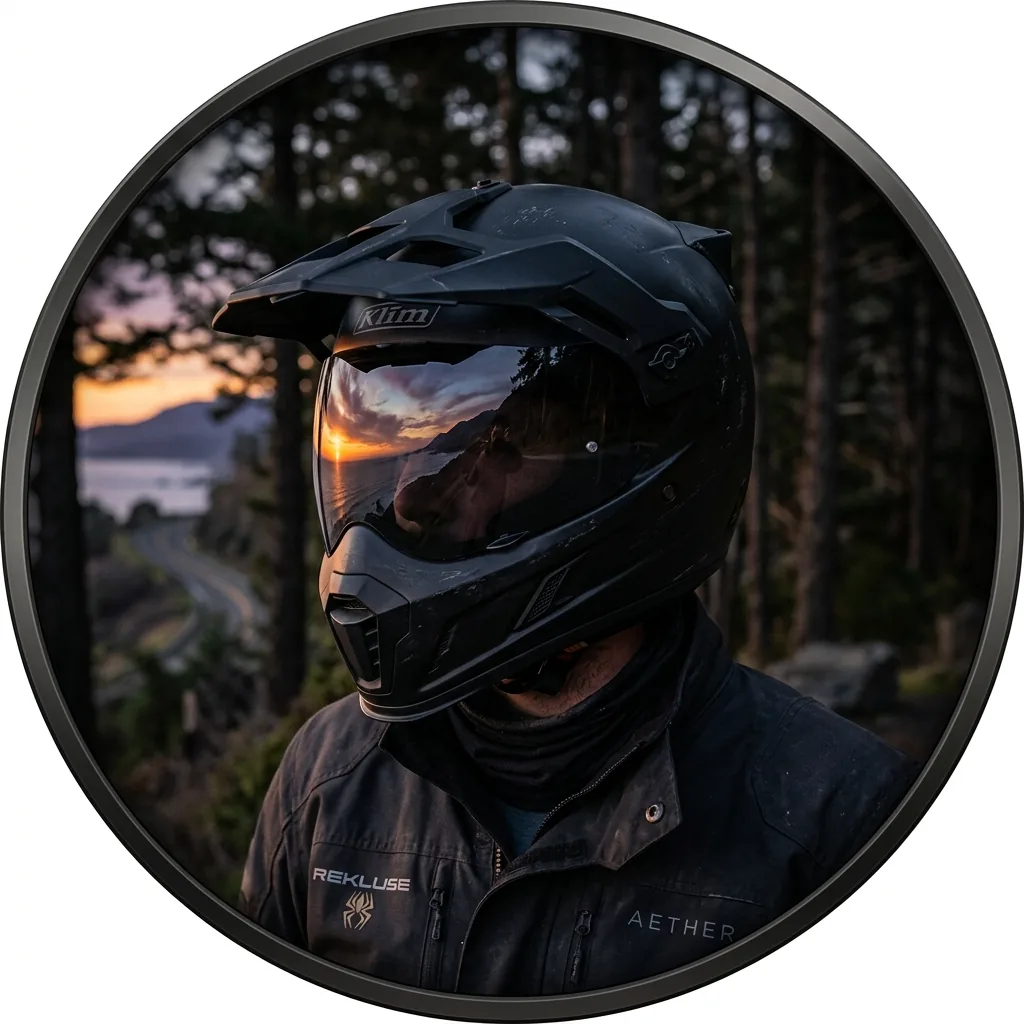
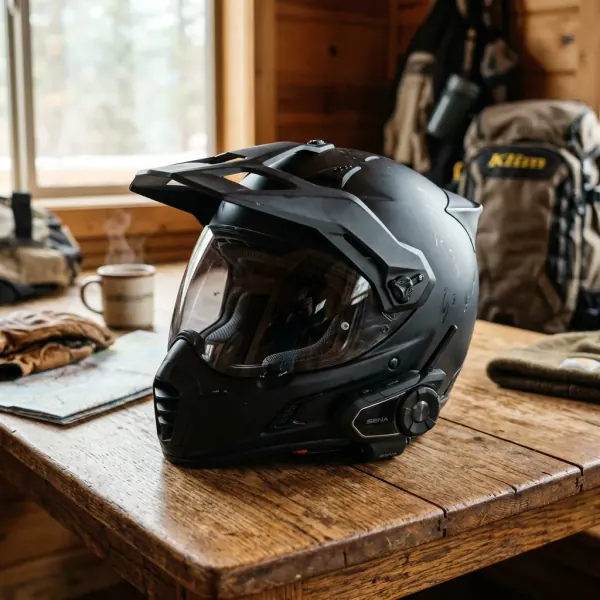
The first intercom I owned was a $40 Chinese unit that connected to my partner’s helmet exactly twice on a 600 km coastal ride and then quit halfway through day three. We rode the rest of the trip hand-signaling at gas stops. I learned two things that week. The first is that intercom audio quality scales almost linearly with price. The second is that a unit that drops connections is worse than no unit at all, because you spend half the ride futzing with it instead of riding.
Three seasons and four intercoms later, I’ve used the Cardo Packtalk Edge through Turkish mountain rain, the Sena 50S on a 9-day Aegean coast trip, and a handful of budget units in between. This guide is the honest version of what to buy in 2026 — the best motorcycle intercom systems I’d recommend to a friend, with notes on what they’re actually like to live with.
Why Intercom Choice Matters More Than You Think
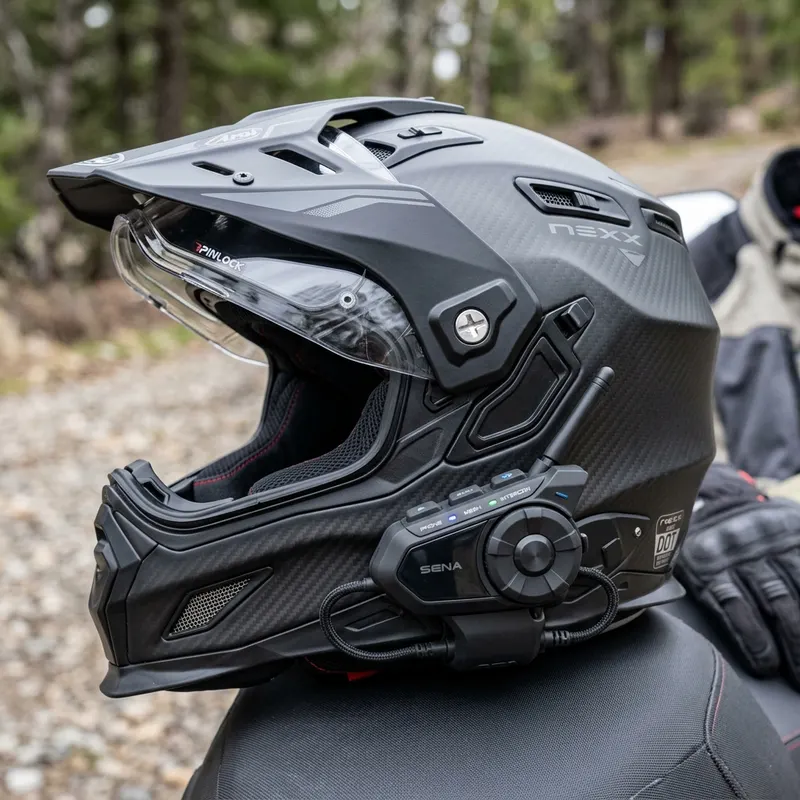
A good intercom disappears. You forget it’s on your helmet. You hit a button, the bike behind you hears you, you keep riding. The voice prompts are clean, the music doesn’t distort at highway speeds, and the unit reconnects automatically when you pull out of a tunnel.
A bad intercom is the opposite. You spend the ride troubleshooting. You miss a turn because the GPS voice cut out. You yell into the mic three times because your partner can’t hear you over wind noise. By day two, you turn it off and ride in silence — which means you wasted $300.
The gap between good and bad is mostly in three places: audio quality (speakers and DSP), mesh reliability (how the units find each other when conditions change), and wind noise rejection (the mic). Battery life, app features, and waterproofing all matter, but those three are the ones that decide whether you keep the intercom on your helmet after the first long trip.
Cardo vs Sena: The Core Difference
Cardo and Sena both make mesh-networking intercoms in the same $250-400 price band, and on paper they look identical. The differences show up in how each company prioritizes its engineering.
Cardo’s bet is audio. The Packtalk Edge ships with JBL-tuned 40mm speakers and a custom EQ profile developed with JBL’s engineers. The result is the cleanest music reproduction in the category — actual bass, clear vocals, almost no distortion at full helmet volume. The DMC (Dynamic Mesh Communication) network is mature, reconnects fast, and handles 15 riders in a single group.
Sena’s bet is the ecosystem. The Sena 50S ships with Harman Kardon speakers that sound very good but a touch flatter than the JBL tuning. Sena’s Mesh 2.0 supports up to 24 riders in a group — useful for organized rides and clubs. The Sena companion app is deeper than Cardo’s, with more firmware update flexibility, more EQ control, and better support for third-party integrations.
If you care most about music and small-group reliability, Cardo. If you care most about big-group mesh and app customization, Sena. Both are excellent. There is no wrong answer.
Best Motorcycle Intercom Options List 2026
5 Intercoms — Side by Side
Click any column to sort ↕| Intercom | Network | Speakers | Max Group | Price | Rating |
|---|---|---|---|---|---|
| Editor's PickCardo Packtalk Edge | DMC Mesh | JBL 40mm | 15 riders | $300 | |
| Sena 50S | Mesh 2.0 | Harman Kardon | 24 riders | $299 | |
| Cardo Packtalk Pro | DMC Mesh + Crash Detect | JBL 45mm | 15 riders | $380 | |
| Best ValueCardo Spirit | Bluetooth | Cardo Standard | 2 riders | $110 | |
| Fodsports M1-S Pro | Bluetooth | Generic 40mm | 8 riders | $75 |
1. Cardo Packtalk Edge — The One I Reach For
The Packtalk Edge is the unit on my helmet right now. Around $300 retail, sometimes $250 on sale. It replaces an older Cardo I’d run for two seasons, and the upgrade is genuinely felt the first time you use it.
The headline feature is the Air Mount — a magnetic cradle that replaces the old screw-clamp design. You slide the intercom onto the helmet base, the magnets snap it into place, and the connection is rock solid. Removing it for charging takes one second instead of unscrewing a clamp in the rain. Small thing. Changes the experience.
The JBL audio is the headline you can hear. Music sounds like music at highway speed. The bass is present without being muddy, the vocals are forward without being shrill. Voice prompts from Google Maps come through clear at 130 km/h with the visor down. On the Packtalk Edge, I actually listen to podcasts on long touring days. On the budget Chinese unit I owned before, I never could — the speakers distorted past about 70% volume.
DMC mesh handles the network side. If your group has 3 riders and one falls off the back, the mesh reroutes through the rider in the middle. When the dropped rider catches back up, the network re-stitches automatically in 3-4 seconds. Old Bluetooth intercom chains break and require manual repair. DMC just works.
Range is rated at 1.6 km between two units, up to 8 km in a 15-rider chain. In real-world Turkish mountain riding with line-of-sight broken by terrain, I get reliable comms at maybe 400-600 meters between two bikes — about three switchbacks. Good enough for any real group ride.
Check Cardo Packtalk Edge on Amazon →
- JBL speakers — cleanest audio in the category
- Magnetic Air Mount makes daily handling effortless
- DMC mesh reconnects in seconds when riders drop
- IP67 rating handles real rain
- ~13 hours battery rated, 9-10 hours real-world with music
- Around $300 — not casual money
- Companion app is less feature-rich than Sena's
- Max 15 riders in a mesh group (Sena does 24)
2. Sena 50S — Best for Larger Groups
The Sena 50S is the unit I’d buy if I rode regularly with a club or organized group of 5+ riders. Around $299, sometimes discounted to $250 on sales. Same price band as the Cardo, different priorities.
Mesh 2.0 is Sena’s network protocol, and it supports up to 24 riders in a single group — the largest in the consumer intercom market. For organized rides, charity rides, or clubs that move together in large packs, this matters. Cardo’s 15-rider DMC limit is fine for most riders but caps you below a typical club ride.
The Harman Kardon speakers sound very good. Slightly flatter EQ than the Cardo JBLs, less bass impact, but very clean across the midrange. If you mostly listen to GPS prompts and conversation, you’ll never notice the difference. If you ride with music and care about how it sounds, the Cardo edges it out by a clear margin.
The Sena app is where the 50S earns its place. EQ presets, custom EQ curves, firmware update flexibility, voice command customization, and dozens of paired-device options. If you like tinkering with settings, this is the unit for you. If you want to plug it in and forget it, Cardo’s simpler app is less work.
IPX7 waterproofing is functionally equivalent to Cardo’s IP67 for any real riding condition. Both survive heavy rain. Both have charging-port covers you need to remember to close.
- 24-rider mesh — largest group capacity available
- Deepest companion app and customization in the category
- Harman Kardon speakers — clean, balanced sound
- Strong firmware update history and long-term support
- Music doesn't quite match the Cardo JBL tuning
- Larger unit on the helmet than the Packtalk Edge
- App depth is overkill if you just want it to work
3. Cardo Packtalk Pro — When You Ride Solo and Far From Help
The Packtalk Pro is the 2024 upgrade above the Edge, and the one feature that justifies the extra $80 is automatic crash detection. If the unit senses a crash (high-g impact followed by no motion), it sends an SOS to your emergency contact with your last GPS location. The contact gets a text and an option to call you back through the unit.
For most riders who stay in cell coverage and ride with company, this feature is duplicated by other devices — a Garmin inReach Mini 2 covers the same emergency case with global satellite coverage. But if your weekend rides put you on remote dual-sport trails where cell coverage is patchy and nobody else is watching, crash detection is genuinely useful. It’s the difference between a quiet roadside crash being noticed in 30 minutes versus 6 hours.
The other Pro upgrades are subtler. Slightly larger JBL 45mm speakers, slightly improved DSP, slightly louder voice prompts. All real, none worth the upgrade on their own. Buy the Pro for crash detection. Buy the Edge for everything else.
Check Packtalk Pro on Amazon →
4. Cardo Spirit — The Best $109 You’ll Spend
If you’ve never owned an intercom and you’re not ready to drop $300 on something you might use four weekends a year, the Cardo Spirit is the easy first buy. Around $110 for a single unit, $210 for a paired set. Bluetooth-only (no mesh), 13-hour battery, IP67 rated, 2-rider intercom range up to 400 meters.
The audio is not JBL-tuned and you’ll know it. The unit is fine for voice intercom and GPS prompts, acceptable for music, never excellent. The Bluetooth-only protocol means two-rider pairing is solid but chains of three or more fall apart fast.
For a rider doing weekend trips with one consistent passenger or partner, the Spirit is honestly enough. The battery lasts a riding day, the waterproofing is real, and the Cardo Connect app handles setup cleanly. The upgrade path to a Packtalk later is straightforward — Cardo units interoperate over their Open Bluetooth Intercom protocol.
Check Cardo Spirit on Amazon →
5. Fodsports M1-S Pro — Best Under $80
There is a real category below the premium brands, and the Fodsports M1-S Pro is the unit I’d recommend in it. Around $75 for a single unit, $130 for a paired set. Bluetooth 5.0, claimed 8-rider intercom group, real IP65 waterproofing, FM radio.
The audio is what you’d expect at this price — clear enough for voice, distorted at high volume with music, fine for GPS prompts. The buttons are larger and easier to operate with winter gloves than the premium units. Battery life is rated 15 hours and I get maybe 10-11 real-world.
The honest truth: this is a unit for the rider who wants intercom-capable for occasional use without committing $300. You’ll feel the audio gap if you’ve used a Cardo. You won’t feel it if this is your first intercom.
Check Fodsports M1-S Pro on Amazon →
Audio Quality: JBL vs Harman Kardon
The audio difference between Cardo and Sena is real but smaller than the marketing suggests. Both are excellent. The JBL tuning on the Packtalk Edge has more low-mid presence — bass guitar, kick drum, male vocals all sit forward. The Harman Kardon on the Sena 50S is flatter and more analytical — clean across the frequency range, slightly less impact in the low end.
For voice intercom, they’re identical in practice. Both crystal clear. For music, the Cardo is the more enjoyable listen. For audiobooks and podcasts, both work equally well.
The bigger audio variable is helmet fit. If your speakers don’t sit directly over your ear canals, no amount of premium tuning will save you. Most modern helmets have molded speaker pockets — make sure your intercom’s speakers fit those pockets without spacing. A cheap $10 adhesive foam spacer kit can fix a poor speaker position and add more audio quality than upgrading from a Cardo Spirit to a Packtalk Edge.
Mesh Networking Explained: DMC vs Mesh 2.0
Old Bluetooth intercoms work as a chain. Rider A connects to Rider B, who connects to Rider C. If Rider B’s battery dies or they fall off the back, the chain breaks and Riders A and C lose contact.
Mesh networks (Cardo DMC, Sena Mesh 2.0) work as a web. Every rider talks to every other rider directly or through any available path. When a rider drops out, the network reroutes automatically. When they rejoin, they slot back in without manual pairing.
In practice, this matters when groups split, stop at different gas stations, or get separated in traffic. With a Bluetooth chain, every rejoin is a manual process. With mesh, you just ride.
Cardo DMC holds 15 riders, Sena Mesh 2.0 holds 24. Both reconnect in 2-5 seconds when conditions allow. Range between two riders is around 1.5 km line-of-sight. Mesh is the right answer for any group of 3+. For two-rider setups, Bluetooth-only units like the Cardo Spirit are functionally identical and save you $200.
Waterproofing and Durability
Every intercom on this list is rated for real rain. IP67 (Cardo) and IPX7 (Sena) both mean immersion-rated — the unit survives being dropped in a puddle for 30 minutes. In normal riding, neither will fail in rain.
The failure point I’ve seen on three different units is the charging port cover. Rubber flap, hinged, sits over the USB-C port. Leave it open while riding through heavy rain and water gets directly into the charging port. The unit usually still works but corrosion starts immediately and the charging contacts can fail within a season.
Rule: charge the intercom at night, close the port cover firmly, and never open it while riding. If you need to charge on the bike, use the official Cardo or Sena right-angle charge cable, which seats inside the cover hole without exposing the port.
Cross-Brand Compatibility
Cardo’s Open Bluetooth Intercom and Sena’s Universal Intercom both let you pair across brands. They work, with caveats. You’re connecting over old-school Bluetooth, not mesh. The chain is limited to 4 riders maximum. Reconnection after a drop is manual.
For a mixed-brand group, the practical answer is: standardize on one brand if you ride together regularly. The mesh advantage only exists inside one ecosystem. If half your riders run Cardo and half run Sena, you might as well all run Bluetooth-only units and save the mesh premium.
Which One for Solo ADV Riders?
If you ride solo on remote dual-sport trails — TET, ADV routes, mountain passes — the intercom decision shifts. Group communication doesn’t matter. What matters is:
- GPS prompts and music — Cardo Packtalk Edge wins on audio quality.
- Crash detection — Cardo Packtalk Pro is the only one with this feature built in.
- Battery life — Both Cardo and Sena hit a real 9-10 hours under music streaming. Both are enough.
- App simplicity — Cardo’s simpler app is easier to set up at a fuel stop.
For a solo ADV rider, the Packtalk Pro is the best buy if budget allows. The Packtalk Edge plus a Garmin inReach Mini 2 ($350 plus subscription) covers the same emergency case with global satellite coverage and is the setup I’d recommend for anyone going seriously remote.
FAQ
The five most common questions I get about intercoms are answered in the FAQ section at the top of this page. The short version: buy Cardo for audio, Sena for big groups, Cardo Pro for solo remote riding, and Cardo Spirit or Fodsports M1-S Pro if you’re just dipping your toes in.
Whatever you end up with from this list of best motorcycle intercom systems, the unit that earns its place is the one you forget about. The one that just works while you ride.
Disclosure: Some links in this article are affiliate links. If you buy gear through them, we may earn a small commission at no extra cost to you. Every intercom on this list was tested on real rides before it made the cut.
Frequently Asked Questions
Cardo or Sena — which one should I actually buy?
If you ride mostly solo or with one or two regular partners and you care most about audio quality in the helmet, get the Cardo Packtalk Edge. The JBL speakers and DMC mesh are the cleanest combination on the market right now. If you ride in larger groups (5+ riders), or you want the deepest app and firmware customization, the Sena 50S is the better tool. Both are excellent. The decision is about your riding pattern, not which brand is 'better.'
Do mesh intercoms really work with mixed-brand groups?
Yes, but with caveats. Cardo's Open Bluetooth Intercom and Sena's Universal Intercom let you pair a Cardo to a Sena over Bluetooth — not mesh. That means slower reconnection if someone drops out, and a hard limit of three or four riders in the chain. If half your group is Cardo and half is Sena, you're back to old-school Bluetooth intercom limits. The mesh advantage only works inside one brand's ecosystem.
Is IP67 actually enough for heavy rain?
IP67 means the unit survives full immersion in shallow water for 30 minutes. In practice, every premium intercom on this list shrugs off the kind of rain that makes you pull over and rethink your life choices. The weak point isn't the unit — it's the charging port cover. Leave that cover open while riding through a downpour and you've created a direct path for water into the electronics. Close it. Always.
How long does the battery actually last on a full day's ride?
Both Cardo and Sena rate their top models at 13 hours. Real-world, with music streaming, GPS prompts, and intercom chatter, I get closer to 9-10 hours from a full charge. That's still a full riding day. If you ride 12-hour days, carry a small USB power bank and a right-angle USB-C cable — most units charge while in use on the helmet.
Do I need the crash detection feature on the Packtalk Pro?
If you ride solo in remote areas — TET, ADV trails, mountain passes — yes. The Pro detects a crash and automatically sends an SOS with your GPS location to an emergency contact. For most riders who stay within cell coverage and ride with company, a Garmin inReach Mini 2 covers the same need with broader coverage. The crash detection is a nice-to-have, not a must-have, unless you specifically ride alone and far from help.