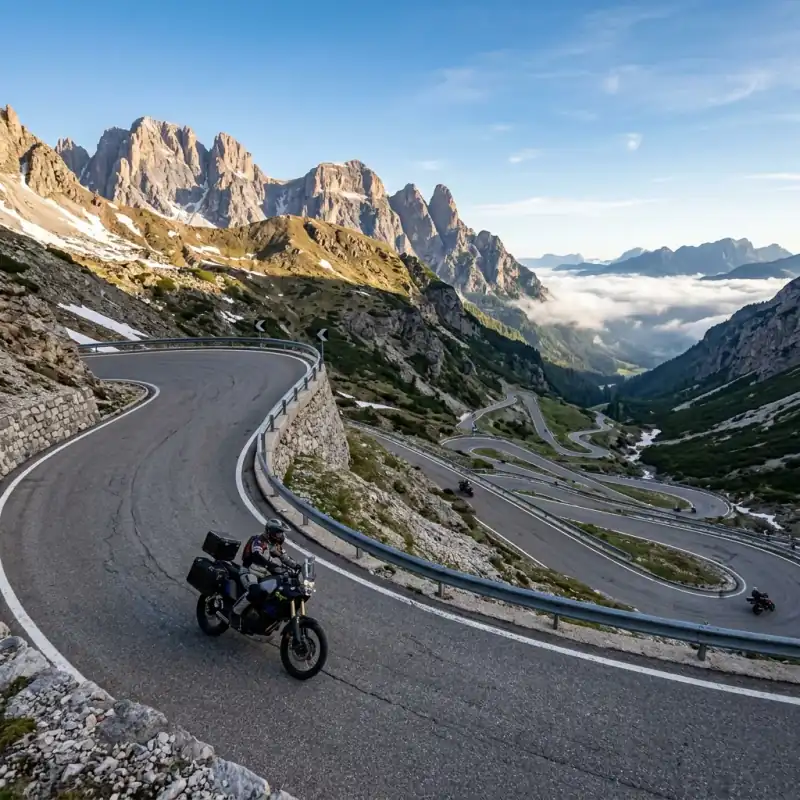
It’s fair to wonder whether the hype outruns the reality here. It doesn’t. Crest the top of the Stelvio, look back down at that stack of hairpins folding away beneath you, and it’s instantly clear why riders cross half a continent for these passes. There is nothing else like the high Alps on a motorcycle. The engineering, the scale, the sheer relentless quality of the roads.
This is a working Alps motorcycle route built around the best of it: the legendary Stelvio and its quieter, wilder neighbour the Gavia, then east into the Dolomites for the great pass-hopping loops that string four summits together before lunch. Six days, the finest mountain roads in Europe, and a plan that gets you onto the famous passes before the buses do.
If your idea of a great ride has so far been coastal. The best coastal routes in the Mediterranean. The Alps are the vertical opposite, and every bit as addictive.
Why the Alps Are the Benchmark
Coastal roads give you views and rhythm. Alpine passes give you craft. These roads were cut into the mountains over a century ago to link valleys that snow cut off for half the year, and the engineering. The stacked hairpins, the galleries, the impossible gradients held at a steady climb; turns every pass into a puzzle you solve corner by corner.
The density is what gets you. In the stretch of the eastern Alps this route covers, you’re never more than an hour from another world-class pass. You crest one summit, drop into a valley, and climb straight into the next. The surfaces are mostly excellent, the corners are endlessly varied, and the scenery shifts from the bare high rock of the Stelvio to the pink limestone towers of the Dolomites in a single day’s ride.
It is, simply, the most concentrated great riding on the continent. The only enemies are traffic and weather, and both are beatable with an early start and a flexible plan.
The Route at a Glance
| Day | Stage | Distance | Highlight |
|---|---|---|---|
| 1 | Lake Como → Bormio | 200 km | Approach climb, settle at the foot of the Stelvio |
| 2 | Stelvio + Umbrail + Gavia loop | 130 km | The headline day — 48 hairpins and the Gavia |
| 3 | Bormio → Canazei (Dolomites) | 220 km | Tonale & Mendola passes, transfer east |
| 4 | Sella Ronda loop | 110 km | Four Dolomite passes in one circuit |
| 5 | Great Dolomite Road → Cortina | 120 km | Pordoi, Falzarego, Giau to Cortina |
| 6 | Cortina → Bolzano via passes | 180 km | Last summits and the ride out |
Total: roughly 960 km over six days. But distance is a poor measure in the Alps. The days are short on paper and long in the saddle, because a 110 km pass loop can take all day when every corner is worth riding twice and every summit has a view you stop for.
Day 1: Lake Como to Bormio (200 km)
Start low and climb. From the Lake Como area — a logical arrival point with airports, rental shops and, for the bike-history minded, the Moto Guzzi works at Mandello del Lario nearby — ride north up the lake and into the mountains toward Bormio. The road climbs steadily through the Valtellina, the air cools, and by the time you reach Bormio you’re at the foot of the giants.
Bormio is the perfect base: an old spa town right at the southern foot of the Stelvio, with everything you need and the pass starting almost from the edge of town. Settle in, eat a big dinner, and set your alarm early. Tomorrow is the headline.
Road notes: Easy valley riding that gets better as it climbs. Italian autostrada tolls if you use the motorway to reach Como; the valley roads are free. Fuel in the valley towns; top up before Bormio.
Day 2: The Stelvio, Umbrail and Gavia Loop (130 km)
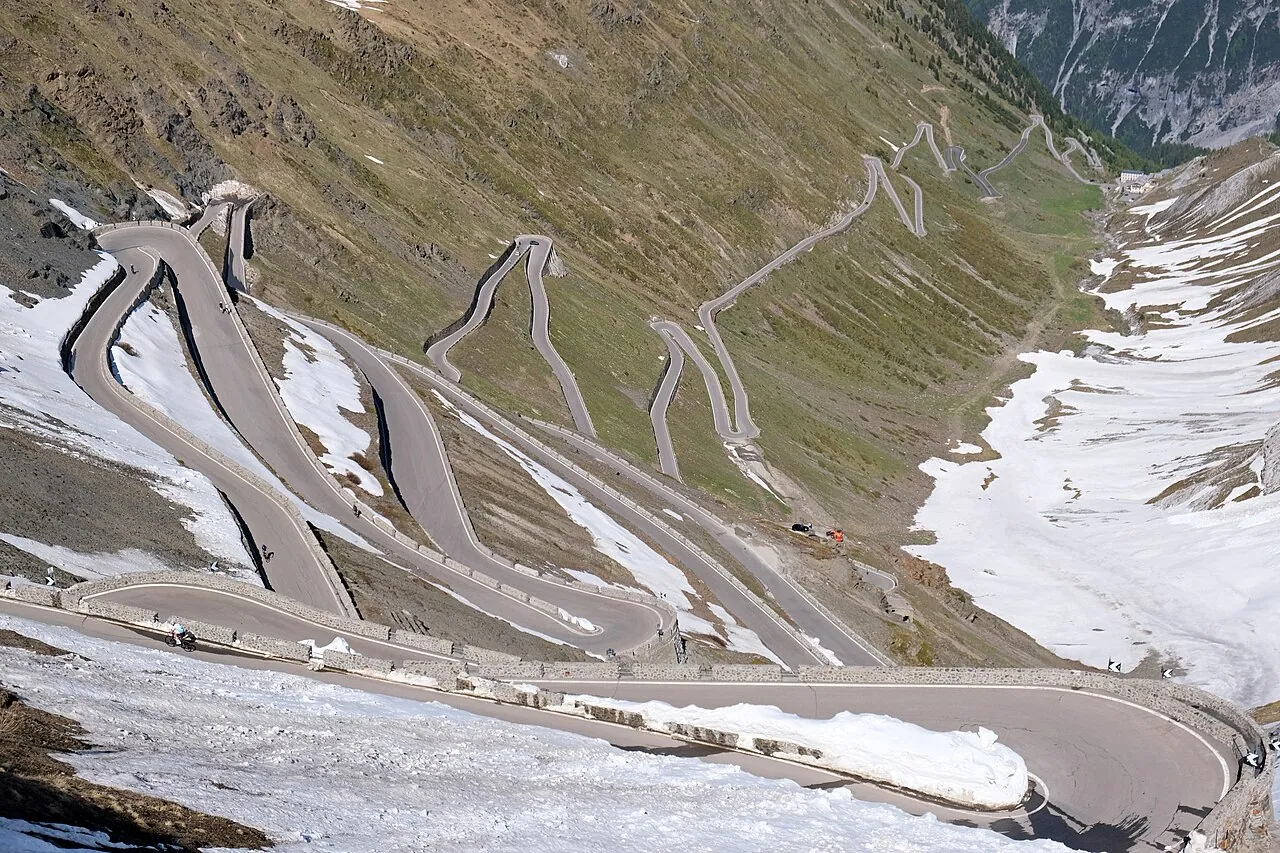
The day you came for. From Bormio, climb the southern side of the Stelvio Pass to 2,757 meters. The highest paved pass in the eastern Alps. At the top, the view back down the 48 numbered hairpins of the northern (Prato) side is the most photographed sight in alpine motorcycling, and riding down through them is even better than looking at them. The pass numbers 60 hairpins in total across both sides; the famous 48 are the ones stacked on the Prato descent.
The classic loop comes back via Switzerland: from the Stelvio summit, drop to the Umbrail Pass and down into the Swiss Münster valley, then climb back toward Bormio. (Dip into Switzerland and you’re technically into vignette territory on Swiss motorways, though the passes themselves aren’t tolled — know the current rules before you cross; the border-crossing documentation guide covers the paperwork.)
Then, while you’re here, ride the Gavia. Just south of Bormio, the Gavia is the Stelvio’s wilder, narrower, far quieter sibling — tight hairpins, almost no guardrail, sheer drops, and a fraction of the traffic. Plenty of riders rate it above the Stelvio for the riding itself. Do both in a day and you’ve had one of the great days on two wheels anywhere.
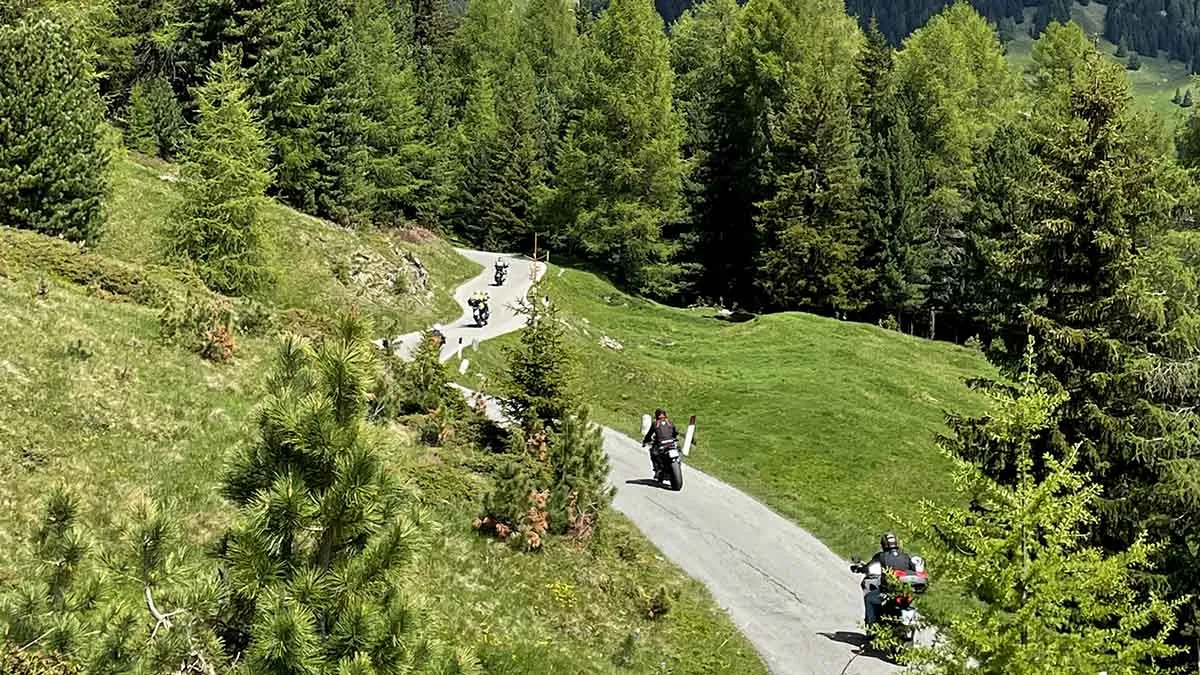
Road notes: Be on the Stelvio by first light to beat the buses. It’s cold at the top even in July — carry a layer. The Gavia is narrow and exposed; ride it within yourself. Fuel at the summit cafés is pricey; fill in Bormio.
Day 3: Bormio to Canazei via the Dolomites Gateway (220 km)
A transfer day east toward the Dolomites, but a scenic one. Drop south from Bormio and work east over the Tonale and Mendola passes, leaving the bare grey high Alps behind and climbing into the pink-and-gold limestone country of the Dolomites. The change in the rock is startling. The mountains go from brutal to almost beautiful.
Aim for Canazei in the Val di Fassa, the perfect Dolomites base — right in the middle of the great pass loops, with hotels, food and bike-friendly everything. This puts you one short ride from the best pass-hopping in Europe.
Road notes: Good roads, more traffic on the valley transits. Fuel widely available; Italian fuel runs around €1.90/litre for unleaded (see the cost section). Settle in early; tomorrow is a riding day, not a transit one.
Day 4: The Sella Ronda Loop (110 km)
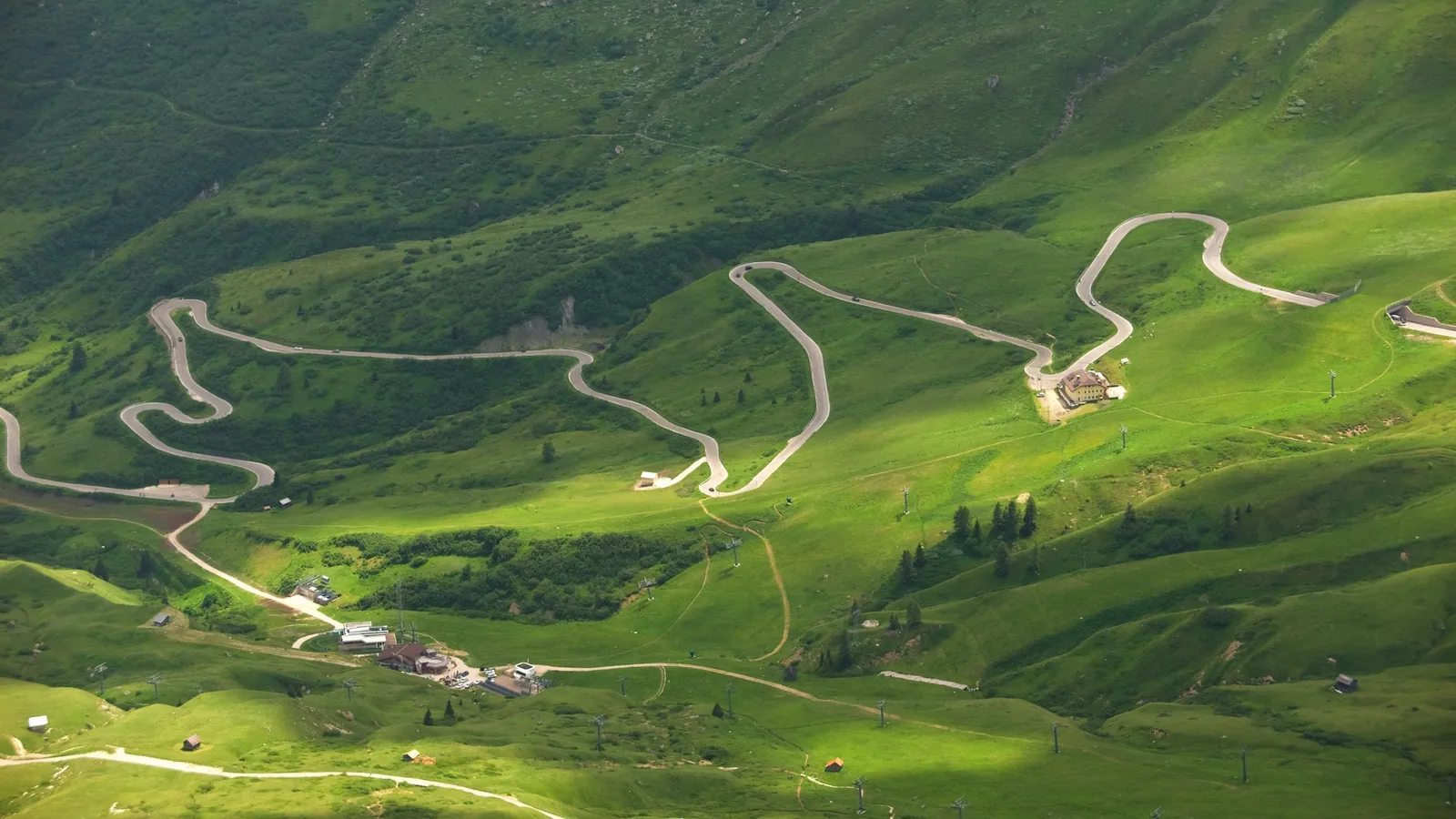
The single best day in the Dolomites, and you barely cover any distance doing it. The Sella Ronda is a compact circuit of four passes that ring the Sella massif — Pordoi, Sella, Gardena and Campolongo — all linked in a loop you can ride in either direction from Canazei in a relaxed day with time for coffee at every summit.
The Pordoi alone has 33 hairpins on the eastern side; the Sella stacks 23 from Canazei; the Gardena adds another 19. String them together and you ride well over a hundred numbered hairpins in a single loop, with the Sella towers glowing pink above you the whole way. It’s touristy and it’s busy at midday in summer — ride it early or split it across the cooler ends of the day. But it earns every bit of its fame.
Road notes: Ride clockwise or anticlockwise; both work. Early start beats the crowds. The surfaces are excellent. This is hairpin riding all day; easy on the brakes and pick smooth lines.
Day 5: The Great Dolomite Road to Cortina (120 km)
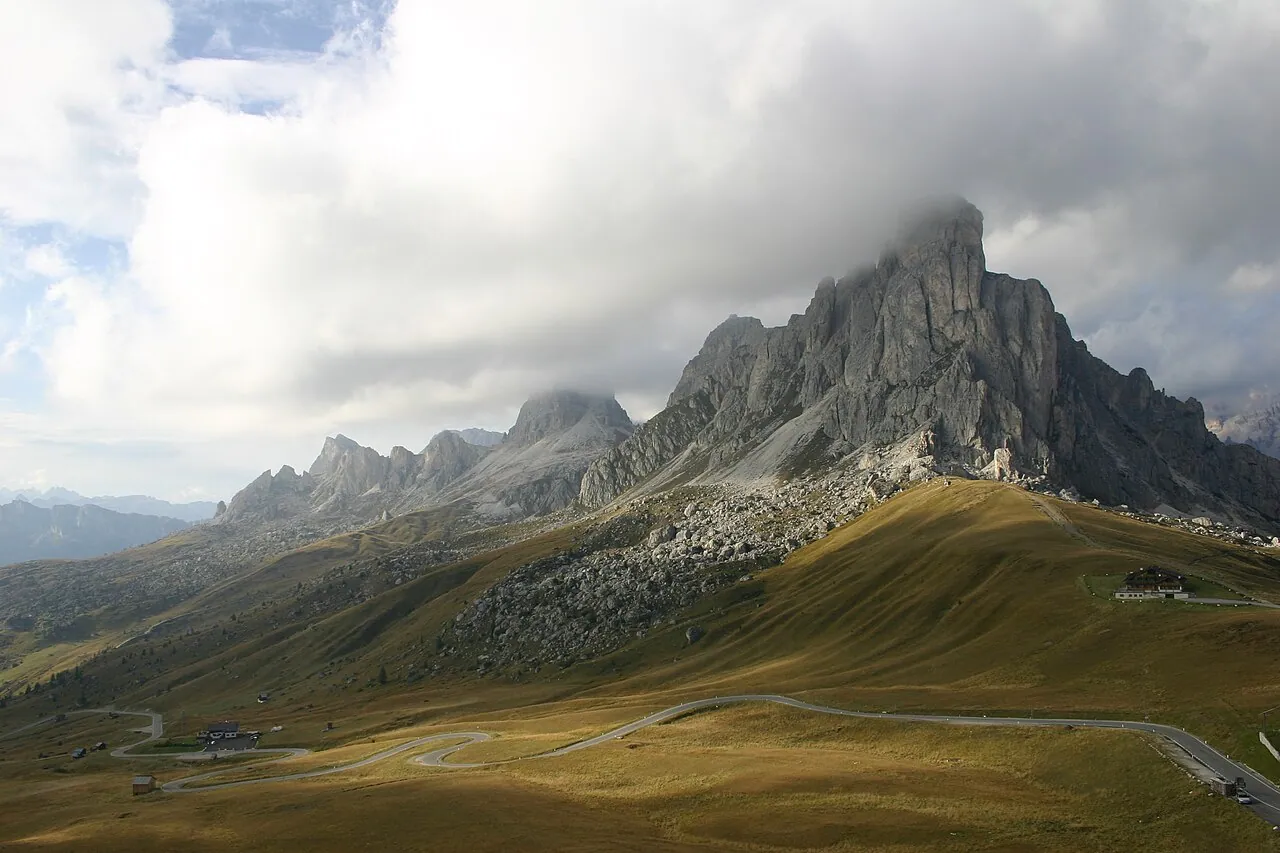
From Canazei, ride the classic Great Dolomite Road east. Climb the Pordoi again (no hardship), then take the Falzarego with its 17 switchbacks, and — if you want the best of the lot — detour over the Passo Giau, a quieter, sinuous pass that many riders rate as the most beautiful in the Dolomites. Everything funnels toward Cortina d’Ampezzo, the glossy resort town ringed by the most dramatic peaks in the range.
Cortina is expensive but spectacular, and it makes a fitting overnight near the eastern edge of the Dolomites. Spend the evening looking up at the Tofane and Cristallo massifs going pink at sunset. The “enrosadira” the locals named for exactly this.
Road notes: The Giau detour is the highlight — don’t skip it for the sake of distance. Busy around Cortina. Fuel before the high passes; the summits are dear.
Day 6: Cortina to Bolzano via the Last Passes (180 km)
The ride out, but you don’t waste it. Loop back west and south through more passes. The Valparola above the Falzarego, or south over the Passo San Pellegrino — winding gradually down toward Bolzano and the valley floor, where the Dolomites release you back to the modern world. From Bolzano you’re connected to the autostrada network for the run home, or onward to the lakes, or down toward Italy proper.
Take the high road as long as you can. The valley comes soon enough.
Road notes: Choose your descent by weather and energy. There’s no wrong pass here. Italian autostrada tolls on the motorway out. Top up before you leave the mountains.
What the Alps Cost in Fuel and Tolls (2026)
The Alps are not Turkey. This is some of the priciest riding in Europe, so budget for it. As of mid-2026:
- Italy: unleaded 95 around €1.90/litre, diesel near €2.00. Note that motorway (Autogrill) stations charge noticeably more than town stations; fill up in the valleys, not on the autostrada.
- Switzerland: the dearest of all if you dip in — around CHF 1.88/litre (roughly €2.00), plus a motorway vignette if you use Swiss motorways.
- Austria: cheaper at around €1.73/litre for unleaded, with a vignette required for motorways.
Add Italian autostrada tolls on the transit sections (distance-based. You take a ticket and pay on exit) and the occasional pricey summit-café fuel, and a week in the Alps costs real money compared to Turkey or the Balkans. The mountain passes themselves, mercifully, are free. You pay for the motorways and the petrol, not the views. A light bike pays for itself here: on a 250 the whole 960 km route is a fraction of the fuel bill of a big tourer.
Alpine Packing Notes
The mountains make their own weather, and altitude is the thing flat-country riders underestimate:
- Proper layers — a pass summit can be 15°C colder than the valley you left (300 g+)
- Quality rain gear; alpine weather turns in minutes, not hours
- Warm gloves even in summer — see the heated gear guide if you ride the shoulder season
- Good tyres with life left in them. You’ll work the edges hard all day (tyre guide)
- A vignette or the cash/app to buy one before you cross into Switzerland or Austria
- Sunglasses and high-altitude sunscreen. The UV up high is fierce
- A camera you can reach fast; you’ll want it at every summit
Best Season and Weather
Mid-June to mid-September: the reliable window — high passes open and clear, settled weather, long daylight. Peak traffic in July-August.
Early June and mid-to-late September: the sweet spot for riders — passes open, cooler air, far fewer cars. Watch for the first and last snows on the highest passes.
October: the Stelvio and the high passes start closing for the season; rideable early in the month in good years, gone by the end. The closures aren’t scheduled — Switzerland’s Furka and Susten passes went into winter closure at 08:00 on 27 October 2025 on a few days’ notice. Our autumn riding guide has the official dates that do exist, plus where the season is still running once the Alps shut.
November to May: the high passes are closed by snow. The Alps are a summer motorcycle destination. There’s no riding the Stelvio in winter.
Internal Connections
The Alps slot into the wider European riding on Bikes and Bays:
- For the mountain-pass riding closest in spirit, see the Transfăgărășan and Transalpina route in Romania.
- For island riding with a mountainous core, compare Sardinia and Corsica.
- For the paperwork of crossing into Switzerland and Austria, read the European border-crossing documentation guide.
- For the cold-weather kit the high passes can demand even in summer, see the best heated motorcycle gear.
FAQ
Five common questions are answered at the top of this page. The short version: base in Bormio for the Stelvio and Gavia, move to Canazei for the Dolomites, ride the famous passes early, and don’t try to bag every summit; three or four great passes a day beats six rushed ones.
The Alps reward the rider who slows down to ride them properly. Whatever shape your own Alps motorcycle route takes, get on the Stelvio at dawn at least once. Standing at the top in the cold morning light, looking down at those hairpins with the road to yourself, is one of the few motorcycling experiences that genuinely lives up to a lifetime of photographs. And if the Alps are one leg of a bigger trip, our Europe adventure motorcycle routes guide connects this route to the fjords, the TET and its natural twin — the Pyrenees and Picos de Europa route, the same kind of riding with a fraction of the traffic.
This guide is based on personal trips along the route. Some links in this article are affiliate links — if you buy gear through them, we may earn a small commission at no extra cost to you.
Frequently Asked Questions
When is the best time to ride the Alps passes?
Mid-June to mid-September is the reliable window — that's when the high passes are reliably open and clear of snow. The Stelvio typically opens in early June and closes by late October, weather depending; the Gavia and the high Dolomite passes follow roughly the same calendar. July and August give you the most settled weather but the heaviest tourist traffic and the busiest pass summits. Early June and September are the sweet spot: open roads, cooler air, fewer cars and camper vans. Always check live pass-status pages before you ride — a freak snowfall can close the Stelvio in any month.
How do I avoid the cars and buses on the Stelvio?
Timing is everything. Ride the famous passes before about 9am or after 5pm and you'll have them comparatively empty; ride them at midday in August and you'll spend the hairpins stuck behind a rental car or a tour bus that can't take the turn in one go. Base yourself right at the foot of a pass (Bormio for the Stelvio) so you can be on it at first light. Weekdays beat weekends everywhere. The early start is the single best thing you can do for the riding.
Do I need a Swiss vignette or Austrian toll sticker?
It depends where you stray. Italy's motorways are toll-by-distance (you take a ticket and pay at the exit), and the passes themselves are free. If you dip into Switzerland — for example over the Umbrail pass on the classic Stelvio loop — you technically need a motorway vignette for Swiss motorways, though the mountain passes themselves aren't tolled; check current rules before you cross. Austria requires a vignette for its motorways too. For the route here, which stays mostly on Italian passes, you mainly deal with Italian autostrada tolls on the transit sections. See the border-crossing guide for the paperwork details.
Can I ride the Alps on a small or mid-size bike?
Absolutely — and on the tight stuff, smaller is more fun. The passes are all about first-and-second-gear hairpins, not top speed, so a light bike that flicks from lock to lock is a joy here. riders take small 250s over these passes and never feel short-changed on the switchbacks; you only miss the bigger engine on the motorway transits between mountain groups. A mid-size naked or adventure bike is the ideal all-rounder. Whatever you ride, good tyres and brakes matter far more than power — you'll be hard on both all day.
How many passes can I realistically do in a day?
Three or four big ones is a satisfying day; five or six is possible but turns the riding into a checklist. The Sella Ronda loop in the Dolomites links four passes (Sella, Pordoi, Gardena, Campolongo) in a single compact circuit you can ride in a relaxed day with stops. The Stelvio plus Gavia plus Umbrail makes a full, demanding day on its own. Don't over-program it — alpine passes are tiring, the views deserve stops, and quality beats quantity every time up here.