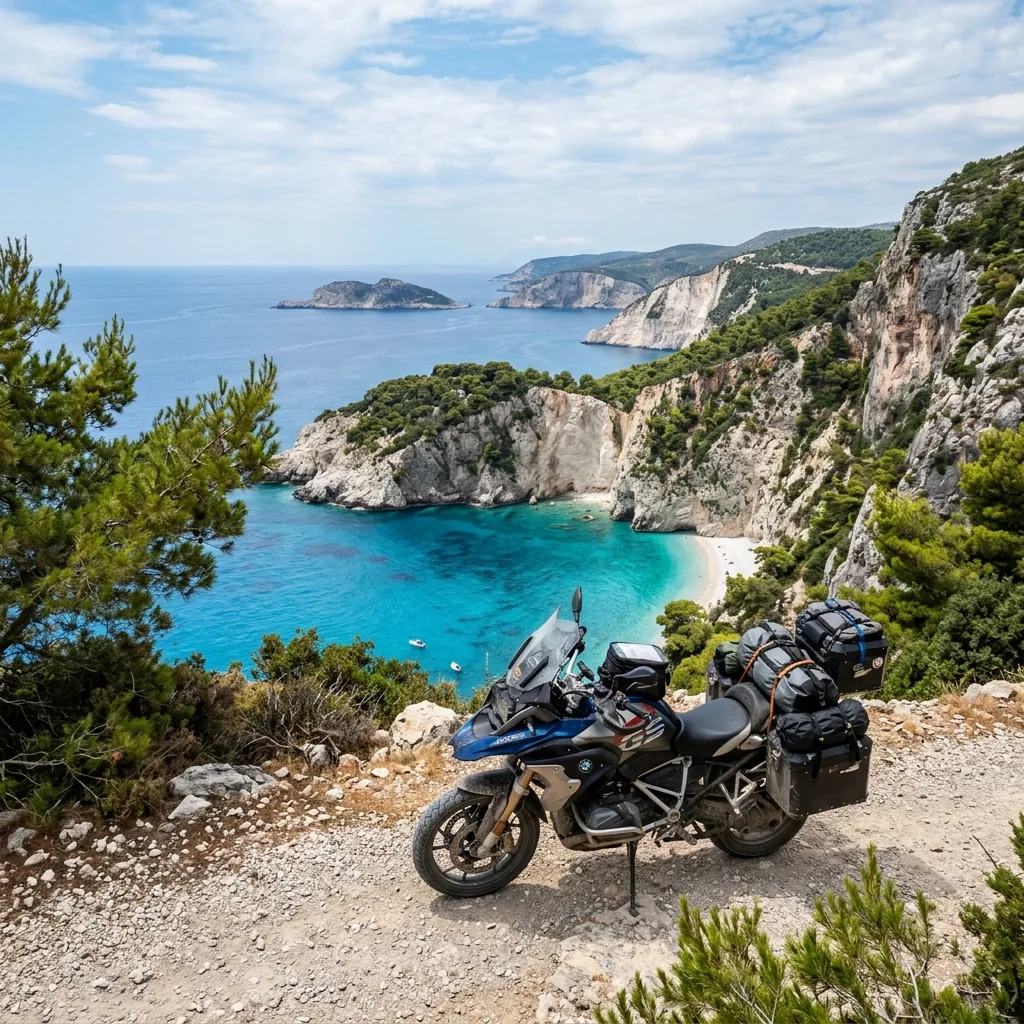
Sardinia is the bigger, wilder, less-talked-about Italian island. Where Sicily gets the cultural attention and Corsica gets the dramatic mountain photos, Sardinia gets the riders who’ve done both and want somewhere quieter.
The island is 24,000 square kilometres, twice the size of Corsica, with a coastline that runs 1,800 km and an interior that still feels remote in 2026. The SS125 down the east coast is one of the great motorcycle roads of the Mediterranean. The wild camping at Cala Gonone bays is the reason riders come back.
This sardinia motorcycle tour guide lays out the routes, the ferries, the timing, and the six-day itinerary that hits the highlights without rushing.
Introduction: Italy’s Other Island That Gets It Right
Sardinia avoids most of what makes Mediterranean tourism exhausting. It’s not crowded outside July-August. The roads outside the resort areas are quiet. The prices are noticeably lower than the mainland or Corsica. The food culture is distinct and excellent.
For a motorcyclist, the island offers more variety per kilometre than almost anywhere else in southern Europe — coastal cliff roads, limestone plateau riding, fast forest curves through cork oak, and genuine off-road piste in the interior if you want it.
The locals (Sards) treat motorcyclists better than most European destinations. Bikes are normal here. Nobody waves you away from a campsite or charges you a premium because you’re a foreigner.
Getting There: Ferries from Mainland Italy
Three main ferry routes:
Civitavecchia to Olbia or Cagliari: closest port to Rome, 5-7 hours fast or 12 hours overnight. Tirrenia and Grimaldi.
Livorno to Olbia: closest port from Tuscany, 7-10 hours.
Genoa to Porto Torres: longest crossing (10-12 hours), useful from northern Italy.
Olbia in the northeast is the most rider-friendly entry point — it puts you within easy reach of both the Costa Smeralda and the start of the SS125 coastal route south.
Sardinia connects to Corsica via Santa Teresa Gallura to Bonifacio in about an hour. Riders combining both islands typically enter Sardinia at Olbia, ride south, return north, ferry to Corsica, then exit at Bastia.
The East Coast: SS125 and the Supramonte
The SS125 runs from Olbia south down the eastern side of the island. The section between Dorgali and Tortoli is the headline ride — about 70 km of twisting road threading between the Supramonte limestone plateau on one side and the Tyrrhenian Sea on the other.
The road climbs and drops constantly. There are sections where you can see the coast 800 metres below you and the road continuing along the cliffs for kilometres ahead. Photographs don’t quite capture how committing the riding feels.
The Supramonte itself is a limestone karst plateau covering most of central-east Sardinia. The interior roads through it (SP46, SS389) are technical, lightly trafficked, and genuinely remote. Fuel up before you leave the coast.
Cala Gonone: The Bay Road Worth Every Kilometer

Cala Gonone is the small coastal town that serves as the entry to a string of remote bays — Cala Luna, Cala Mariolu, Cala Goloritzé — that have become iconic for Mediterranean wild swimming.
Most of these bays are only accessible by boat or by serious hiking. But the road down to Cala Gonone itself, descending from the SS125 through limestone switchbacks to the turquoise bay at the bottom, is one of the great approach roads of any Mediterranean destination.
Stay overnight. Eat at one of the small family restaurants. Take a boat the next morning to one of the bays you can’t reach by road.
The Interior: Gennargentu and Barbagia
The Gennargentu mountains form Sardinia’s interior spine, peaking at 1,834 metres at Punta La Marmora. The Barbagia region surrounding the range is the cultural heart of traditional Sardinia — small villages, distinct language, a slower rhythm.
Riding the interior is different from coastal Sardinia. The roads are slower, the villages are quieter, and the landscape is more austere. The SS389 north-south is a good route to traverse the region. Side roads to villages like Orgosolo, Mamoiada, and Fonni reward the detour.
A common observation from riders who’ve done both Sardinia and Corsica: Sardinia’s interior feels older and emptier. Corsica is dramatic. Sardinia is mythological.
Sardinia Rider Checklist
The basics for a six-day Sardinia loop.
- Ferry booked — Civitavecchia or Livorno to Olbia recommended (0 g)
- Offline maps downloaded — OsmAnd or Maps.me (0 g)
- Cash in euros — rural villages cash preferred (minimal)
- Swim gear — bays are the point of the trip (200 g)
- Quick-dry travel towel (180 g)
- Insect repellent for interior evenings (80 g)
- Sunscreen SPF50+ (100 g)
- Italian translation app offline (0 g)
- Snorkel and mask — bays are crystal clear (250 g)
Shop Quick-Dry Travel Towels on Amazon →
Shop Waterproof Dry Bags on Amazon →
Wild Camping on Sardinian Beaches
Outside July-August, wild camping at remote bays is broadly tolerated. The rules:
Arrive late, leave early. Park the bike out of sight from the road. Leave no trace. Don’t pitch on tourist beaches. Don’t make fires under any circumstances — fire risk is severe and authorities don’t tolerate it.
Bays north of Olbia (around the Costa Smeralda) are heavily resort-developed and not suitable. Bays south of Dorgali and along the southwest coast are much more workable. The southwest Sulcis region is particularly lightly developed.
A common rider mistake: pitching too close to a road in a populated area. Discreet inland camping is safer and easier than visible coastal camping outside the shoulder season.
Best Time to Visit
May to mid-June: ideal. Sea warming up, beaches empty, interior temperatures comfortable.
September to mid-October: also ideal. Sea still swimmable, summer crowds gone, light is excellent.
July to August: avoid coastal areas unless you’ve booked accommodation months ahead. Interior remains workable but hot.
November to April: workable but variable. Coast is mild, mountains can be wet or foggy.
6-Day Sardinia Itinerary
A balanced loop covering the east coast highlights and a taste of the interior.
Day 1: Arrive Olbia, ride south to Dorgali via inland route. Overnight Dorgali.
Day 2: Cala Gonone descent and boat trip to remote bays. Overnight Cala Gonone.
Day 3: SS125 south through the Supramonte to Tortoli. Overnight Tortoli or remote bay south.
Day 4: Inland to Barbagia villages (Orgosolo, Mamoiada). Overnight Fonni.
Day 5: West across the island via SS389 and SS131 to Bosa on the west coast. Overnight Bosa.
Day 6: North up the west coast through Alghero, then to Olbia for evening ferry.
FAQ
For more Mediterranean coastal riding, see our best coastal motorcycle routes in the Mediterranean, best wild camping bays in the Mediterranean, and Europe motorcycle border crossing guide.
Disclosure: Some of the links in this article are affiliate links. If you buy gear through them, we may earn a small commission at no extra cost to you. It helps fund the road trips that make these independent route guides possible.
Frequently Asked Questions
When is the best time to ride a motorcycle in Sardinia?
May-June and September-October. Summer heat in the interior reaches 38°C+ and tourist crowds peak in August. May offers warm days, empty beaches, and full mountain road access. September keeps the warm sea but loses the crowds. Winter is mild on the coast but mountain passes can be wet and some interior roads see fog.
How do I get to Sardinia with a motorcycle?
Ferry from mainland Italy. Main routes: Civitavecchia (near Rome) to Olbia or Cagliari, Livorno to Olbia, and Genoa to Porto Torres. Crossings run 6-18 hours depending on speed and distance. Tirrenia and Grimaldi Lines operate most departures. Book three months ahead for July-August. Day ferries also run Corsica to Sardinia in about an hour from Bonifacio to Santa Teresa.
Is wild camping legal in Sardinia?
Officially restricted, in practice broadly tolerated outside designated tourist beaches and protected reserves. Interior camping inland from the coast generally goes unbothered. Beach camping outside the peak July-August window is widely accepted at remote bays. Avoid the popular tourist beaches and you'll be fine. As with all of Italy, no fires — fire risk is severe in summer.
What are the best motorcycle roads in Sardinia?
SS125 along the east coast is the headline road — dramatic, twisty, threading between mountains and sea. SS133 across the north between Olbia and Tempio Pausania offers fast curves through forest. SP38 in the southwest Sulcis region is a less-known but rewarding mountain road. The SP46 down the spine of the Supramonte is technical and remote — the kind of road riders return for.
Is Sardinia good for ADV motorcycle riding?
Yes — Sardinia has more off-road and gravel-track riding than most Mediterranean islands. The Supramonte interior includes legitimate ADV terrain. The east coast offers paved riding with gravel detours to remote bays. Bring a 90/10 or 80/20 tyre if you're sticking to roads, or 50/50 if you're planning interior piste exploration.