

The case for a camping cot makes itself on a multi-night basecamp where the only flat ground is a slab of cold, damp rock. A sleeping pad slides off it, and you wake every two hours with the chill of the stone leaching up through the pad. Meanwhile the rider with a Helinox cot sleeps like a baby a foot off the ground, and won’t stop mentioning it the next day. The cot is one half of the camp-comfort upgrade most riders eventually carry; the other is a proper camp chair for the hour between dinner and sleep.
That’s the case for a cot in one sentence: it gets you off the ground — off the cold, off the wet, off the rocks and roots that no pad fully smooths out. It’s a real upgrade in the right conditions.
But it’s not free. A cot costs pack space and weight that a good sleeping pad doesn’t, and for a lot of touring it’s solving a problem you don’t actually have. So before the rankings, the honest framing: most riders are better served by a quality inflatable pad. This guide is for the rider who already knows a pad isn’t enough. The side sleeper, the basecamper, the person who camps on rough ground, and wants the best motorcycle camping cot that won’t wreck their packing.
Helinox Cot One Convertible
The most refined packable cot — fast setup, rock-solid, fits a pannier.
Check Helinox Cot One on Amazon →What Makes a Cot Good for Motorcycle Travel

A motorcycle cot has to clear a bar that a backpacking cot doesn’t quite, and that a car-camping cot fails completely: it has to pack small enough for a pannier. That immediately rules out the steel-framed fold-in-half cots from the camp store — 4 to 9 kilos and the size of a folded chair. The only cots that belong on a bike are the aluminum, shock-corded, break-down-into-a-bundle designs that pack to roughly the size of a rolled tent.
Pack size is therefore the first and most important variable. The best moto cots collapse to a 50–60 cm bundle of poles plus a folded fabric bed. That’s the difference between a cot you can actually carry and one that swallows a whole pannier.
Weight matters less than on foot — your bike carries it. But it’s not nothing, because cots are heavy relative to pads. A 1.2 kg ultralight cot versus a 2.4 kg standard cot is a real difference when you’re already carrying a tent, bag, pad, and stove. Be honest about whether you’ll use the comfort enough to justify the kilo.
Setup time and stability round it out. Some cots assemble in under a minute; others fight you with tensioned bars that need real force to seat (the trade-off for a taut, comfortable bed). And the feet matter: more feet, capped and rounded, mean a stable cot that won’t tip on uneven ground or punch a hole in your tent floor.
The cold-from-below catch deserves its own warning, covered in detail later: a cot suspends you in moving air, so below ~15°C you’ll want a pad on top for insulation. Plan for it.
Best Motorcycle Camp Cot Options List 2026
5 Camp Cots — Side by Side
| Cot | Weight | Pack Size | Max Load | Price | Rating |
|---|---|---|---|---|---|
| Editor's PickHelinox Cot One Convertible | 2.2 kg | 53 × 16 × 16 cm | 145 kg | $350 | |
| Therm-a-Rest LuxuryLite UltraLite | 1.2 kg | 41 × 13 × 13 cm | 136 kg | $230 | |
| Helinox Lite Cot | 1.3 kg | 53 × 13 × 13 cm | 120 kg | $230 | |
| Best ValueNaturehike Folding Cot | 2.2 kg | 46 × 16 × 16 cm | 150 kg | $95 | |
| Desert Walker Ultralight | 1.4 kg | 44 × 14 × 14 cm | 200 kg | $70 |
1. Helinox Cot One Convertible — Best Overall (2.2 kg)
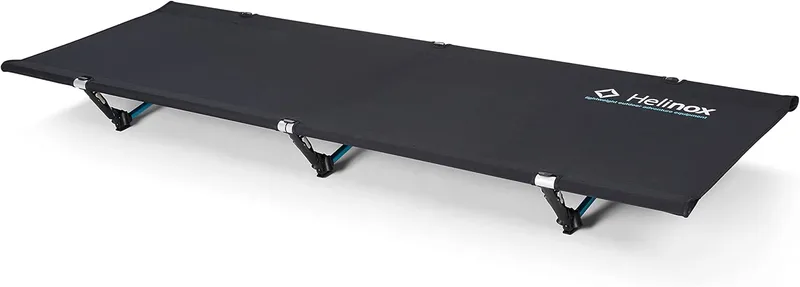
The Cot One Convertible is the cot I’d point most riders toward if they’ve decided they want one. Around $350, 2.2 kg, and it packs to a bundle about the size of a rolled-up two-person tent that fits a pannier without a fight.
What you’re paying for is the same thing that makes Helinox chairs worth it: build and refinement. The DAC aluminum frame is light and stiff, the fabric bed is taut and comfortable, and the whole thing assembles in under two minutes once you’ve got the technique for seating the tension bars. “Convertible” means you can buy add-on legs that raise it higher off the ground — useful if you want chair-height entry or more storage underneath.
The feet are the detail that matters for tent use: rounded, load-spreading, and far less likely to punch through a groundsheet than a cheap cot’s tube ends. It holds 145 kg comfortably and doesn’t creak or sag under a rider plus gear.
The honest downsides are price and weight. $350 is a lot for a place to sleep, and 2.2 kg is real mass on top of your existing sleep system. But if you’ve decided a cot is for you, this is the one that does it properly and lasts. The tension-bar setup also takes a bit of hand strength, that’s the price of a bed that doesn’t sag.
Disclosure: some links below are affiliate links. If you buy through them we may earn a small commission at no extra cost to you.
Check Helinox Cot One on Amazon →
- Refined DAC alloy frame, taut comfortable bed
- Packs to roughly the size of a rolled 2P tent
- Rounded feet that spare your tent floor
- Optional legs to raise it to chair height
- Holds 145 kg without sag or creak
- $350 — expensive for a sleep surface
- 2.2 kg on top of your existing pad/bag
- Tension bars need real hand strength to seat
2. Therm-a-Rest LuxuryLite UltraLite — Lightest Serious Cot (1.2 kg)
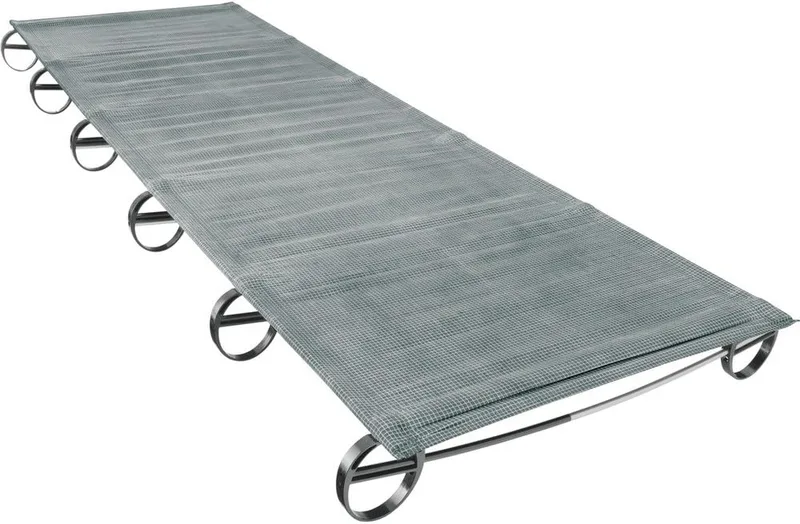
The Therm-a-Rest LuxuryLite UltraLite is the cot for the rider who wants off the ground but refuses to carry 2.2 kg to do it. Around $230, just 1.2 kg, and it packs to the smallest bundle here; roughly 41 cm long.
Therm-a-Rest’s design uses curved tension poles that thread through sleeves under the bed and a row of “feet” that snap into place. The result is the lightest legitimate cot on the market and a pack size that genuinely disappears in a pannier. For a weight-conscious rider, nothing else here competes.
The trade-offs are honest. The setup is fiddlier than the Helinox — those snap-in feet take patience the first few times and the cot sits low, only a few centimetres off the ground, so it’s about ground clearance and a flat surface rather than chair-height comfort. The taut bed is firm; some sleepers love it, some find it less plush than the Helinox.
If grams matter to you and you want the off-the-ground benefit at the lowest possible weight and pack size, this is the pick. If you want a more forgiving setup and a higher, more chair-like cot, the Helinox is worth the extra kilo.
Check Therm-a-Rest LuxuryLite Cot on Amazon →
3. Helinox Lite Cot — Lighter Helinox (1.3 kg)
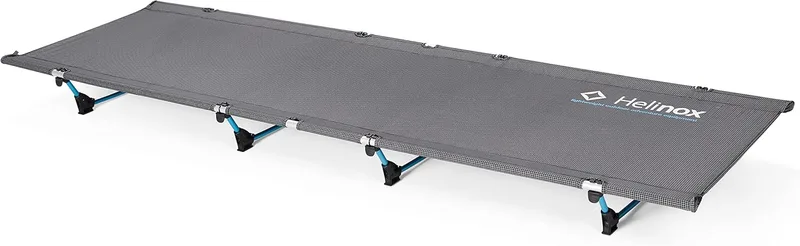
The Helinox Lite Cot is the Cot One’s lighter, simpler sibling. Around $230, just 1.3 kg, and it keeps the Helinox build quality while shedding more than a kilo versus the Cot One.
You give up the “convertible” leg option and a little load capacity (120 kg vs 145 kg), and it sits low — about 13 cm off the ground — with a slightly narrower bed. In exchange you get a cot that’s over a kilo lighter, cheaper, and just as well made. For a solo rider of average build who wants the Helinox refinement at the lightest Helinox weight, the Lite Cot is the sensible middle.
It sets up the same way — tension bars seated into the frame, and uses the same load-spreading feet. The honest note: if you’re a larger rider or you want the option to raise the cot to chair height, get the Cot One. For everyone else who wants a Helinox cot, the Lite is the better-value choice.
Check Helinox Lite Cot on Amazon →
4. Naturehike Folding Cot — Best Value (2.2 kg)
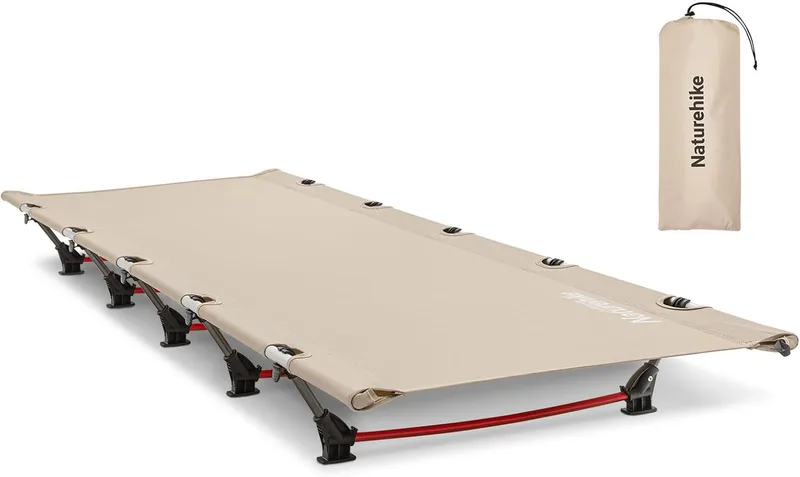
The Naturehike folding cot is the value pick that gets you off the ground for under $100. Around $95, 2.2 kg, with an aluminum frame and a design that clearly borrows from the premium cots at a fraction of the price.
Naturehike has built a reputation making competent gear that undercuts the big brands, and the cot follows the pattern. The frame is aluminum, the bed is taut enough, it holds a generous 150 kg, and it packs to a pannier-friendly bundle. For a rider who wants to try cot camping without spending $350, or who just camps a handful of nights a year, it’s a sensible buy.
What you give up versus the Helinox is refinement and confidence over the long haul. The aluminum is heavier, the tension mechanism feels less polished, and the feet are less sophisticated — keep an eye on them against your tent floor or add foot caps. But at a third of the Helinox price, it does the core job: a flat, raised, comfortable bed.
Check Naturehike Cot on Amazon →
5. Desert Walker Ultralight — Cheapest Packable Cot ($70)
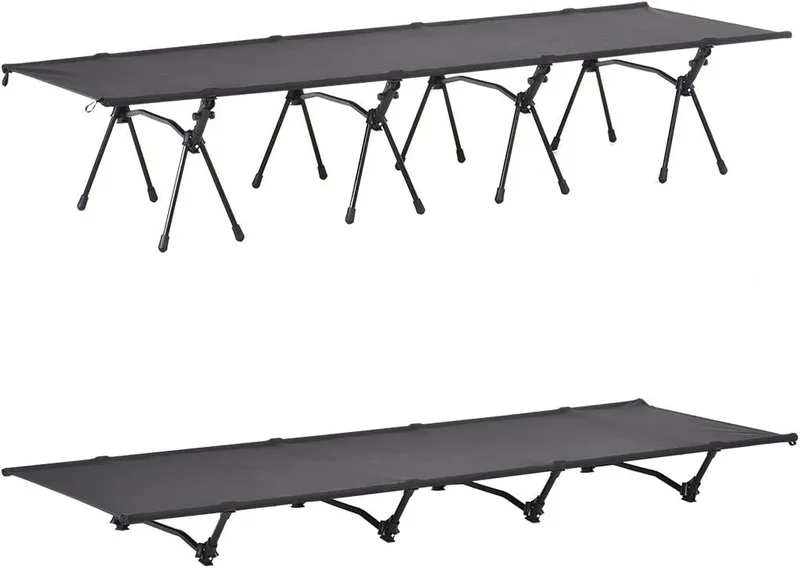
The Desert Walker ultralight cot is the budget end of the packable-cot market. Around $70, roughly 1.4 kg, copying the curved-tension-pole design of the premium ultralight cots at the lowest price here.
For $70 you get a working low-profile cot: 7075 aluminum poles, a fabric bed, snap-in feet, and a stuff sack. It sits low like the Therm-a-Rest, packs reasonably small, and the frame is rated to a generous claimed 200 kg. As a first cot to find out whether cot camping is for you, or a backup, it’s hard to fault on price.
The concerns are the predictable budget ones. The setup is the fiddly snap-in style and the feet can be stiff to seat. The aluminum and fabric are less refined, and long-term durability is unproven. This isn’t a cot I’d bet a six-month overland trip on. But for occasional use at the lowest cost, it works, and the low-profile design is actually well suited to fitting inside a small tent.
Check Desert Walker Cot on Amazon →
The Cold-From-Below Problem (Read Before Your First Cold Night)
The mistake almost everyone makes with their first cot is sleeping on it bare on a cold night and waking up freezing. Here’s why: a cot suspends you in moving air. There’s nothing under you trapping a layer of still, warm air the way insulated ground does. So on a cold night you lose body heat from underneath far faster than you’d expect — sometimes colder than just sleeping on a good pad on the ground.
The fix is simple and you should plan for it: put a sleeping pad on top of the cot. A closed-cell foam pad or an inflatable pad with a decent R-value sits on the cot bed and gives you the insulation the cot can’t. This is the standard cold-weather cot setup — cot for the flat, off-the-ground platform, pad on top for warmth.
The rough rule: above ~15°C, a bare cot is fine and the airflow is pleasant on a warm night. Below that, add the pad. Below ~5°C, use a genuinely warm pad (R-value 4+) on top, exactly as you would on the ground. For the pad side of that equation, our best compact sleeping pads guide covers the warm, packable options that pair well with a cot.
Cot vs Pad: The Honest Recommendation
Before you spend $70–300 on a cot, be honest about whether you need one. For the majority of touring riders, a good inflatable sleeping pad is the better choice. It packs far smaller, weighs a fraction as much, and a modern pad with an R-value of 4+ is warm and comfortable.
A cot earns its place when:
- You camp on wet, rocky, or root-covered ground a lot. The cot floats above all of it.
- You’re a side sleeper who feels the ground through any pad.
- You have back issues that a flat, firm, raised surface helps.
- You basecamp for several nights in one spot, where setup time and pack size matter less.
If none of those are you, put the money toward a better pad and bag instead. If one or more is you, and especially if you’ve already tried a pad and it isn’t working — a cot is a real, life-improving upgrade. For the rest of the sleep system, the best sleeping bag for motorcycle camping guide and the motorcycle camping gear checklist cover what pairs with whichever you choose.
FAQ
Five common questions are answered at the top of this page. The short version: get a Helinox Cot One Convertible if you want the most refined cot done properly. Get a Therm-a-Rest LuxuryLite if weight and pack size are everything. Get a Naturehike folding cot for most of the function at a third of the price. And get a sleeping pad instead of any of them if you camp mostly on normal ground.
Whatever you choose from this list of the best motorcycle camping cot options, remember the two rules that make a cot actually work: pick one that packs small enough for a pannier, and put a pad on top when it’s cold. Get those right and a cot turns a bad pitch — cold rock, wet grass, gnarled roots; into a flat, dry, comfortable bed a foot off the ground.
Prices and availability change constantly. The figures here are approximate guides, not live quotes. Check the current price through any link before buying.
Disclosure: Some links in this article are affiliate links. If you buy gear through them, we may earn a small commission at no extra cost to you. Every cot on this list was slept on across multiple trips before it made the cut.
A note on the prices: these are indicative US retail figures as of June 2026, not live quotes. Gear pricing moves constantly and varies by region and retailer — the figure on the linked product page is always the one that counts.
Frequently Asked Questions
Cot or sleeping pad for motorcycle camping?
For most riders, a good inflatable sleeping pad is the better choice — it packs smaller, weighs less, and modern pads (R-value 4+) are warm and comfortable. A cot earns its place in specific cases: if you camp on wet, rocky, or root-covered ground a lot; if you're a side sleeper who hates feeling the ground through a pad; if you have back issues that a flat raised surface helps; or if you stay in one basecamp for several nights. The honest answer for a typical touring rider is a pad. The cot is an upgrade for the rider who already knows a pad isn't cutting it for them.
Do camping cots pack small enough for a motorcycle?
The good ones do. Ultralight cots like the Therm-a-Rest LuxuryLite and Helinox Cot One break down into a bundle of shock-corded poles plus a fabric bed, packing to roughly the size of a 1L water bottle or a rolled-up tent. That fits a pannier. The cots you should avoid on a motorcycle are the steel-framed 'camp store' cots that fold in half — those are 4–9 kg and the size of a folded camp chair, and they have no business on a bike. Stick to the backpacking-oriented aluminum cots.
Are cots cold to sleep on?
They can be — that's the catch nobody mentions. A cot suspends you in moving air, so on a cold night you lose heat from underneath faster than you would on the insulated ground. Above roughly 15°C it's a non-issue and the airflow is actually pleasant. Below that, put a foam or inflatable sleeping pad on top of the cot for insulation. This is the standard cold-weather setup: cot for the flat, off-the-ground platform, pad on top for the R-value. Plan for it rather than being surprised by a cold night.
How much weight can an ultralight cot hold?
More than you'd expect. The Helinox Cot One is rated to 145 kg, the Therm-a-Rest LuxuryLite to around 136 kg, and most quality aluminum cots sit in the 120–200 kg range — comfortably above a rider plus gear leaning on it. The thing to check isn't the static load rating but the leg design: cots with more feet (and feet that don't concentrate load on tent floors) are more stable and less likely to puncture a groundsheet. Some cots include or sell foot caps for exactly this reason.
Will a cot damage my tent floor?
It can, if the feet are sharp and concentrate weight on a small area — the classic way to put a hole in a tent groundsheet. Quality ultralight cots use rounded or capped feet that spread the load, and several sell dedicated foot pads. If your cot has hard tube ends, add foot caps or place a small piece of foam under each foot. Many riders also run a footprint or groundsheet under the tent regardless, which adds a layer of protection. It's a manageable problem, not a reason to avoid cots — just don't ignore it.