
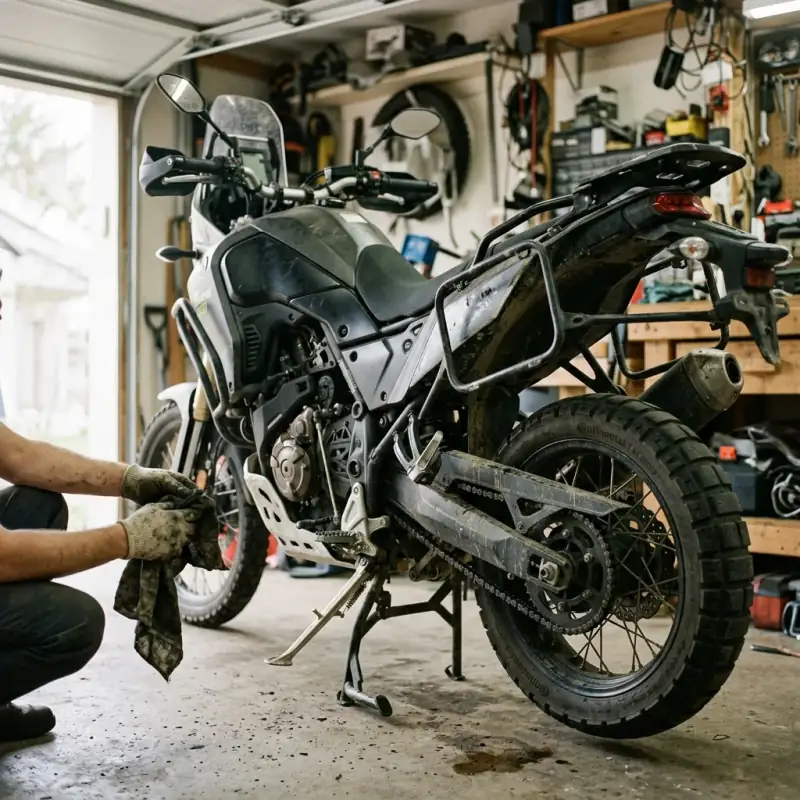
A used adventure bike is usually the smart money. The first owner has already swallowed the steepest depreciation, adventure bikes are built to last, and the money you save buys a lot of fuel, ferries and tyres. But there’s a catch that doesn’t apply the same way to a used commuter: adventure bikes get ridden hard, loaded heavy, taken off-road, and dropped. That’s the whole point of them. So the used market is a wider spread than most, from cherished garage-kept tourers to thrashed, crash-repaired project bikes wearing a fresh coat of optimism.
The good news is that adventure bikes hide their history badly if you know where to look, and each popular model has a short list of known weak spots that a ten-minute inspection can screen for. This guide is that inspection. The ADV-specific checks first, then the model-by-model faults on six of the most-bought used adventure bikes, and a rough sense of what they cost in 2026.
The ADV-Specific Inspection (Do This on Every Bike)
A used adventure bike needs everything you’d check on any used motorcycle — matching VIN, clean title, straight forks, healthy brakes, good rubber — plus a layer of checks that only matter because these bikes live a harder life.
Start with the paperwork, cold. Match the VIN on the frame to the registration document, exactly. Insist on seeing the bike cold — a cold start reveals rattles, smoke and hard-starting that a pre-warmed engine hides. Blue smoke on start-up means it’s burning oil; white smoke that doesn’t clear can mean coolant getting where it shouldn’t.
Then read the bike for its life story:
- Off-road abuse vs honest use. Scuffed handguards, a scraped sump guard and a scratch on the crash bars are normal and honest — these bikes are meant to be dropped. What you’re screening for is damage: bent or buckled rims, cracked or flattened radiator fins, a cracked sump guard hiding a cracked sump, and bar-end or lever damage on both sides (a sign of more than one tip-over).
- Water-crossing evidence. Pull the dipstick or check the oil sight glass — milky, coffee-coloured oil means water has got into the engine, often from a deep water crossing. Walk away, or budget for the worst.
- Chain, sprockets and tyres as a set. A hooked, worn sprocket and a stretched chain are a $200–350 job and a sign of a skipped maintenance culture. Check the tyre date codes and type; knobblies worn square tell you how it’s been ridden.
- Suspension. Look for oil weeping from the fork seals and rear shock, and bounce the bike to feel for notchy or dead damping. Adventure suspension works hard and is expensive to rebuild.
- Electronics. Cycle through the rider modes, ABS, traction control and the TFT dash, and test heated grips and any electronic suspension. On modern bikes this is where the expensive faults hide.
Paint that doesn’t match, panel gaps that don’t line up, or a suspiciously fresh set of plastics all point to a crash repair the seller isn’t mentioning. Ask directly.
The Six Bikes, and What Each One Hides
Every model has a personality in the used market. Here’s what owners and the big forums consistently report on the most popular used adventure bikes — the specific things to check before you hand over the money.
Yamaha Ténéré 700 (2019–on)
The T7’s reputation is well earned: the parallel-twin engine is one of the most reliable in the class, good for well past 60,000 miles with basic care. The things to check are small. Get the valve-clearance history. It’s a periodic check that’s easy to skip and worth confirming was done. Ask about the clutch (worn friction plates on hard-used bikes), and on early examples look for corroded wheel spokes and paint/tank rust, a known finish niggle rather than a mechanical one. A few owners report the heated-grip throttle side working loose, and the occasional idle stall (usually a throttle-position-sensor quirk). None of it is a deal-breaker; it’s a genuinely solid used buy. Rough 2026 US price: used examples commonly sit around $8,000–9,500, with newer, low-mileage bikes at the top.
Honda Africa Twin (CRF1000L / CRF1100L)
Very reliable, with one specific thing to confirm: certain 2020–2021 DCT models were recalled for an ECU/transmission fault that could cause a stall or loss of drive — check the VIN against the recall and confirm the fix was carried out. Beyond that, the reported niggles are mostly switchgear-related (the DCT mode and starter switches can stick, causing odd shifting or starting), often traced back to a weak battery, so test with a healthy battery. The DCT gearbox itself is robust and doesn’t add much to servicing costs, despite forum folklore. A manual or DCT Africa Twin with full history is a lot of capable bike for the money. Rough 2026 US price: roughly $9,000–13,000 depending on year, spec and DCT.
BMW R 1250 GS (2019–2023)
The default big adventure bike, and mostly a very reliable one. But do your homework on recalls. BMW recalled all 2019–2023 R 1250 GS and GS Adventure models for a gearbox input-shaft issue that, in the worst case, could block the rear wheel — NHTSA recall 23V-011, January 2023, fixed with a free ECU software update. Check the VIN against BMW’s recall records; there were several, and a reputable seller will have had the work done. Then look for the well-documented smaller items: a cam-chain tensioner “tick” on some engines (there’s an updated part), weeping ESA electronic-suspension shocks, occasional dash misting or glitches, and the odd sensor or battery gremlin. With a full BMW service history these are reliable, long-legged bikes; without one, walk carefully. Rough 2026 US price: standard GS commonly $12,000–18,000; the GS Adventure runs higher, roughly $14,000–23,000 by year.
KTM 1190 / 1290 Super Adventure
Superb to ride, and the one that most rewards a careful used inspection, because the common thread in owner reports is electrical. Failing TFT screens, dead-bike no-starts, “GENERAL FAILURE” warnings, and switchgear and sensor faults all show up, and the risk tends to climb after roughly five to six years or 50,000 miles, when expensive electronics and semi-active suspension can start to fail. Owners also report rear wheel-bearing and crash-bar corrosion, front-caliper bolt issues and warped front discs, plus fuel-pump-related stalling on some. The 1290 is reported as more troublesome than the 1190. Plenty have covered 100,000 miles. But buy one with history, budget for electronics, and test every switch, mode and screen on the test ride. Rough 2026 US price: used 1290 Super Adventures span widely, roughly $11,500–15,500 for mainstream years, with outliers either side.
Suzuki V-Strom 650 (DL650)
The reliability benchmark of the class, and the value champion. Owners describe it as “gas up and ride”, and the known issues are few: the most cited is a tendency to fry the headlight wiring on full beam (the standard fix is to fit relays — check whether a previous owner already has), the possibility of stator failure (a Suzuki-wide item, not V-Strom-specific), and worn steering-head bearings giving a vague feel through corners on higher-mileage bikes. If you want the lowest-stress route into adventure riding on a budget, this is it. Rough 2026 US price: tidy examples from around $4,000, which is a lot of dependable bike for the money.
Triumph Tiger 800 (XC / XR)
A characterful triple that’s reliable when maintained, with a handful of known habits. Watch for oil leaks from the sump and clutch cover, and a genuine appetite for oil — some (especially post-2015) can be a quart low after ~5,000 miles, so check the level and ask the owner about consumption. There are scattered reports of idle stalling (idle-control stepper motor), some front-suspension “bounce”, and gear-selector play. The 2011–2012 Tiger 800 and XC had a centre-stand return-spring recall — confirm it was done on early bikes. The engine also runs warm, noticeable in traffic. Well looked-after, it’s a rewarding and good-value used tourer. Rough 2026 US price: commonly $5,000–8,000 depending on year, spec and mileage.
Buying It Well
Once you’ve found a clean example, the last few habits are what separate a good buy from a regret.
Bring the right tools to the viewing. On the electronics-heavy bikes — any KTM, the BMWs — a cheap OBD/fault-code reader earns its place, because stored fault codes reveal gremlins a seller’s “runs perfect” won’t. A multimeter lets you check charging output and screen for a tired stator (a known weak spot on several of these). Add a torch, a tyre-tread gauge, and an eye for filler and mismatched paint.
See it cold, ride it properly. Insist on the cold start — it exposes the rattles, smoke and hard-starting a pre-warmed engine hides. Then ride it long enough and varied enough to get everything hot and loaded: not a lap of the block, but enough to work the gearbox and clutch, feel the brakes and suspension under load, and let any fuelling or overheating quirk surface.
Check the mileage is real. On higher-value used adventure bikes, odometer tampering is a genuine risk. Cross-check the reading against the service history and inspection records, and against the wear on the grips, pegs and seat — a mileage that doesn’t line up, or that jumps around between services, is a red flag worth walking away from.
VIN, title and finance/lien check. Match the VIN to the paperwork, and make sure there’s no outstanding loan or lien against the bike before money changes hands.
Weigh private sale against a dealer. A private seller is usually cheaper and closer to the bike’s real story; a dealer costs more but often includes a warranty and has at least done the basic checks. On the electronics-heavy bikes especially, that warranty safety net can be worth the price gap — decide honestly how much risk you want to carry.
The service folder is the real MOT — and budget the first service in. Receipts for valve checks, oil changes, chain and sprocket sets and tyres tell you more than the odometer; one owner with a fat folder beats three with none. Whatever you buy, assume a round of consumables (oil, filters, maybe chain and sprockets, maybe tyres) in the first few months and price that into the deal.
If you’re still deciding which used bike to hunt for, our best ADV bikes for short riders guide and the Ténéré 700 vs Africa Twin comparison help narrow the shortlist, and when you’ve bought, the best adventure motorcycle tires guide is the first upgrade most used bikes actually need.
A note on prices: the used figures here are broad US-market ballparks as of July 2026, meant to orient you rather than value a specific bike. Used prices move constantly with condition, mileage, spec, region and the wider market — always check current listings for the exact model and year you’re chasing, and remember that a well-kept example with history is worth paying over the odds for.
Frequently Asked Questions
What should I check first when buying a used adventure bike?
Before the engine, check that the VIN on the frame matches the registration document exactly — if it doesn't, walk away, no exceptions. Then look for signs the bike has been ridden hard off-road or dropped: bent or scuffed handguards and levers, scraped crash bars, cracked or dented radiator fins, buckled rims, and mismatched paint that hints at a crash repair. Adventure bikes are built to be dropped, so a scuff or two is normal and honest; what you're screening for is a bike that's been abused and neglected rather than used and maintained. Ask to see it cold — a seller who has 'just warmed it up' may be hiding a cold-start rattle.
How many miles is too many on a used adventure bike?
High mileage matters far less than how the bike was maintained. A big adventure twin like a Ténéré 700, Africa Twin or R 1250 GS with a full service history will happily run past 60,000–100,000 miles; plenty of examples have done far more. A low-mileage bike with no history and signs of neglect is the worse buy. What you're really pricing is the service record: valve checks done on schedule, regular oil changes, chain and sprockets replaced as a set. A fat folder of receipts is worth more than a low number on the clock.
Which used adventure bike is the most reliable?
By reputation, the Suzuki V-Strom 650 is the class's reliability benchmark — owners describe it as 'gas up and ride', with little to go wrong beyond a known headlight-wiring quirk. The Yamaha Ténéré 700 has a similarly strong record for its engine. At the premium end, the BMW R 1250 GS and Honda Africa Twin are very reliable when they have a full service history, but they carry more expensive electronics and had specific recalls worth checking. The bikes that demand the most careful used inspection are the big KTM Super Adventures, where electrical faults are the common thread.
Do adventure bikes that have been off-road make bad used buys?
Not automatically — these bikes are built for it, and a bike ridden gently on trails can be in better health than one thrashed on motorways. What you're checking for is damage and neglect, not dirt. Look for water-crossing evidence (milky oil on the dipstick or in the sight glass, which suggests water in the engine), grit-worn chain and sprockets, notchy or leaking suspension, and impact damage to the frame, sump guard and rims. A tidy trail-ridden bike with clean fluids and a service history is a perfectly good buy; a road bike that's been curbed and neglected can be a worse one.
How much should I budget for a used adventure motorcycle in 2026?
It spans a huge range. As a rough 2026 orientation in the US market: a tidy Suzuki V-Strom 650 can be found from around $4,000; a used Yamaha Ténéré 700 sits roughly in the $8,000–9,500 band; big premium twins like the BMW R 1250 GS and KTM 1290 Super Adventure typically run from about $12,000 up towards $20,000-plus depending on year, spec and mileage. These are broad ballparks, not valuations — used prices swing hard with condition, history, region and how the market's moving, so check current listings for the exact model and year you want.